Pages

Showing posts with label conference. Show all posts

Saturday, May 13, 2017

Happy 15th Birthday, Neuroethics!


By Henry T. Greely


Henry T. (Hank) Greely is the Deane F. and Kate Edelman Johnson Professor of Law and Professor, by courtesy, of Genetics at Stanford University. He specializes in ethical, legal, and social issues arising from advances in the biosciences, particularly from genetics, neuroscience, and human stem cell research. He directs the Stanford Center for Law and the Biosciences and the Stanford Program on Neuroscience in Society; chairs the California Advisory Committee on Human Stem Cell Research; is the President Elect of the International Neuroethics Society; and serves on the Neuroscience Forum of the National Academy of Medicine; the Committee on Science, Technology, and Law of the National Academy of Sciences; and the NIH Multi-Council Working Group on the BRAIN Initiative. He was elected a fellow of the American Association for the Advancement of Science in 2007. His book, THE END OF SEX AND THE FUTURE OF HUMAN REPRODUCTION, was published in May 2016. 


Professor Greely graduated from Stanford in 1974 and from Yale Law School in 1977. He served as a law clerk for Judge John Minor Wisdom on the United States Court of Appeals for the Fifth Circuit and for Justice Potter Stewart of the United States Supreme Court. After working during the Carter Administration in the Departments of Defense and Energy, he entered private law practice in Los Angeles in 1981. He joined the Stanford faculty in 1985. 


Fifteen years ago, on May 13, 2002, a two-day conference called “Neuroethics: Mapping the Field” began at the Presidio in San Francisco. And modern neuroethics was born. That conference was the first meeting to bring together a wide range of people who were, or would soon be, writing in “neuroethics;” it gave the new field substantial publicity; and, perhaps most importantly, it gave it a catchy name. 


That birthdate could, of course, be debated. In his introduction to the proceedings of that conference, William Safire, a long-time columnist for the NEW YORK TIMES (among other things), gave neuroethics a longer history: 


The first conference or meeting on this general subject was held back in the summer of 1816 in a cottage on Lake Geneva. Present were a couple of world-class poets, their mistresses, and their doctor. (Marcus) 


Safire referred to the summer holiday of Lord Byron and Percy Bysshe Shelley; Byron’s sometime mistress, Claire Clairmont; and Shelley’s then-mistress, later wife, known at the time as Mary Godwin and now remembered as Mary Wollstonecraft Shelley. The historically cold and wet summer of 1816 (“the year without a summer”) led them to try writing ghost stories. Godwin succeeded brilliantly; her story eventually was published in 1818 as FRANKENSTEIN: OR, THE NEW PROMETHEUS.


Camillo Golgi, image courtesy of

Wikipedia.


Safire’s arresting opening gives neuroethics either too little history or too much. If, like Safire, one allows neuroethics to predate an understanding of the importance of the brain, early human literature – both religious and secular – show a keen interest in human desires and motivations. So does philosophy, since at least classical Greece. But without a recognition of a critical role of the physical brain in human behavior and consciousness, I do not think those discussions should be called “neuroethics,” though they are its precursors. 


It was not until the late 19th century that we saw the beginnings of deeper understanding of not only the role of the brain but of how it might function, notably through the (dueling) work of Camillo Golgi and Santiago Ramón y Cajal. Al Jonsen has noted that many twentieth century issues and events posed issues we would today consider “neuroethics.” (Johnson) The issues seemed particularly intense in the 1960s and early 1970s, with active debates ranging from the uses of electroconvulsive therapy and frontal lobotomies; to legal and medical uses of brain death; to research with psychedelic drugs, aversion therapy, and “mind control.” 


But the nascent field calmed down again, until the rise of good neuroimaging in the 1990s, largely through magnetic resonance imaging, first structural and then functional. These took major steps toward connecting the physical brain to the intangible mind and thus linking neuroscience more directly to human society. People began to write about them for both specialized and general audiences. (Kulynych 1996, Kulynych 1997, Carter 1998, Blank 1999). And academics noticed. In 2000, based on planning begun by Paul Root Wolpe in 1998, the Bioethics Center at the University of Pennsylvania held three experts’ meetings, the first in January, the second in March, and the third in June. 


In retrospect, though, 2002 was clearly the crucial year for neuroethics. It started in January when the American Association for the Advancement of Science and the journal Neuron jointly sponsored a symposium, was called “Understanding the Neural Basis of Complex Behaviors: The Implications for Science and Society.” Then, on February 7, 2002, Penn Bioethics held a public conference on “Bioethics and the Cognitive Neuroscience Revolution” as the culmination of its three meetings in 2000. 


But the most important meeting was held on May 13 and 14 at the San Francisco Presidio. Sponsored by the Dana Foundation and jointly hosted by UCSF and Stanford, this conference, called “Neuroethics: Mapping the Field,” brought together about 150 neuroscientists, philosophers, bioethicists, lawyers, and others. The Dana Press published the conference proceedings later in 2002; the book was fascinating reading then, and remains so today. 
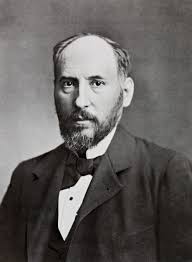


Santiago Ramon y Cajal, image

courtesy of Wikipedia.

Zach Hall of UCSF and Barbara Koenig of Stanford were the main organizers of the meeting. Hall was a neuroscientist, who had returned to the UCSF faculty after serving as Director of the National Institute of Neurological Disease and Stroke at NIH. Koenig was the Executive Director of the Stanford Center for Biomedical Ethics (SCBE). Koenig, a bioethicist who did not then have a deep background in neuroscience, was assisted by others at SCBE, notably Judy Illes, a neuroscience Ph.D. who had recently joined the Center. 


Hall, mainly from the neuroscience side, and Koenig, mainly from the bioethics side, organized the meeting but William Safire was its prime mover. Safire was one of the most interesting people I have ever met. (McFadden) He dropped out of Syracuse University after two years and boasted to me – probably accurately – that he was the last person in American politics to be a college dropout. From 1955 until 1968 he worked in public relations firms, his own after 1961, with occasional time out to work on Republican political campaigns. In 1968 he joined the transition team and then the Nixon White House as a special assistant with a focus on speech writing, coining, among other phrases, “the nattering nabobs of negativism” for a speech by Vice President Agnew. He left the Nixon Administration to become a political columnist for the New York Times, which he did until 2005. He remained with the Times, however, continuing to write the “On Language” column he started in the New York Times magazine in 1979 until shortly before his death from pancreatic cancer in September 2009. 


Safire’s New York Times obituary makes no mention of neuroscience or neuroethics, but his involvement was quite real. In 1993 he became a member of the Board of Directors of the Dana Foundation, a private charitable foundation created in the 1950 by Charles A. Dana, a lawyer and businessman; in 1998 he became its vice chairman and then in 2000 its chairman. As chairman Safire made neuroscience the Foundation’s almost exclusive focus. 


Hall’s welcome to start the Conference, as published in the conference proceedings, explains Safire’s role in it: 


This meeting had its genesis in a visit to San Francisco by Bill Safire about a year and a half ago, I took Bill down to the new Mission Bay campus at UCSF and we were talking about all the brain research that would be going on there, I said that we also hoped to have a bioethics center. As we were talking about the need for discussion of these issues with respect to the brain, Bill suddenly turned to me and said, neuroethics. It was like that magic moment – “plastics” in the movie The Graduate. Bill said, “neuroethics,” and I thought, “that’s it.” (Marcus) 


William Safire. (Image courtesy of Wikimedia.)

The conference had four sessions, each with a moderator and three or four speakers, several mealtime speeches, and a concluding section. The sessions were called Brain Science and Self, Brain Science and Social Policy, Ethics and the Practice of Brain Science, and Brain Science and Public Discourse. (In retrospect, and in light of my preferred scope for the field, “Brain Science” would have been a better, broader term than “Neuroscience,” but “neuroethics” and “neurolaw” both sound much better than “brain science ethics” or “brain science law.”) 


The speakers and moderators came from both neuroscience and ethics (broadly construed). Many of them were prominent at the time of the conference; many played important continuing roles in the development of neuroethics. From neuroscience came Marilyn Albert, Colin Blakemore, Antonio Damasio, Michael Gazzaniga, Steven Hyman, William Mobley, Daniel Schacter, and Kenneth Schaffner, as well as Zach Hall. Arthur Caplan, Judy Illes, Albert Jonsen, Barbara Koenig, Bernard Lo, Jonathan Moreno, Erik Parens, William Safire, William Winslade, Paul Root Wolpe, and I all spoke from ethics, law, politics, or philosophy. And at least three speakers did not fit neatly into that divide – Patricia Smith Churchland, a philosopher of the mind deeply involved in neuroscience; Donald Kennedy, a biologist and former president of Stanford who, at that time, was the editor of Science magazine; and Ron Kotulak, a science journalist. 


Like many conferences, this one claimed to want more discussion than presentations. My recollection, supported by the conference proceedings, is that, unlike most conferences, it succeeded in this goal. The general discussions between and among the speakers and the invited audience were insightful, and sometimes heated. 


Also like many conferences, this one was created in the hope that it would have some lasting impact. The most immediate consequence was the publication, with impressive speed, of the conference proceedings in July 2002, but perhaps more important was the publicity given to the idea of neuroethics. 


Two days after the conference ended, Safire used his NEW YORK TIMES column to write about

neuroethics generally and the conference. After starting the column with the Congressional debate over banning human cloning, Safire moved to the importance of neuroethics, ending with “The conference 'mapping the field' of neuroethics this week showed how eager many scientists are to grapple with the moral consequences of their research. It's up to schools and media and Congress to put it high on the public's menu.” (Safire) 


(Image courtesy of Flickr.)

The following week, the cover of THE ECONOMIST proclaimed “The Future of Mind Control” with an image of a shaved head with a dial implanted in its forehead. The issue contained both a long science story on the ethical issues arising from neuroscience and a leader (editorial) on the same subject. (The Economist) While neither ECONOMIST piece used the term “neuroethics” or mentioned the Presidio conference (and the story at least must have been in preparation well before the conference), the effect, especially in conjunction with Safire’s column, was more attention for the issues. 


But perhaps the most important result of the Presidio conference was the field’s name. Safire first used it in print in his May 2002 column, but, according to Hall, had used it with him about 18 months earlier. Although searchers have found earlier uses of the term (Illes, Racine), no one disputes that Safire was the first to use it publicly in its current sense or that he was the one who popularized it. 


It is, in some ways, a poor name for the field. Calling the area “neuroethics” risks limiting it. After all, much of the interest in ‘neuroethics” is in its legal and social implications, not just its “ethical” ones. And using “ethics” also raises a longstanding difficulty between philosophers who sometimes act as though they own the term, and bioethics. I made these arguments at the Presidio conference, but, even as I did so, conceded “I’m afraid this is a doomed argument because I don’t have a better word. ‘Neuroethics’ sounds great.” (Marcus) 


On that point at least, I was right. So tonight I’ll raise a glass to “neuroethics” and wish it “Happy birthday, and many happy returns!” And I hope the readers of this blog will join me. 


References


Rita Carter, MAPPING THE MIND (1998, Berkeley, CA: U. Calif. Press).


Robert H. Blank, BRAIN POLICY: HOW THE NEW NEUROSCIENCE WILL CHANGE OUR BRAINS AND OUR POLITICS (1999, Washington, D.C.: Georgetown Univ. Press)


The Ethics of Brain Science: Open Your Mind, THE ECONOMIST (May 23, 2002), accessed on Apr. 29, 2017 at http://www.economist.com/node/1143317.


The Future of Mind Control, THE ECONOMIST, (May 23, 2002), accessed on Apr. 29, 2017 at http://www.economist.com/node/1143583.


Judy Illes, Neuroethics in a New Era of Neuroimaging, 24 Am. J. Neurorad. 1739 (2003)


Albert R. Jonsen, Nudging toward Neuroethics: An Overview of the History and Foundations of Neuroethics in THE DEBATE ABOUT NEUROETHICS: PERSPECTIVES ON THE FIELD’S DEVELOPMENT, FOCUS, AND FUTURE (ed. Eric Racine and John Aspler, forthcoming 2017, Springer:)


Jennifer Kulynych, Brain, Mind, and Criminal Behavior: Neuroimages as Scientific Evidence, JURIMETRICS 235-244 (1996) 


Jennifer Kulynych, Psychiatric Neuroimaging Evidence: A High-Tech Crystal Ball? 49 STAN. L. REV. 1249 (1997)


Steven J. Marcus, ed., NEUROETHICS: MAPPING THE FIELD, Conference Proceedings at 4 (2002, Dana Press: New York).


Robert D. McFadden, William Safire, Political Columnist and Oracle of Language, Dies at 79, New York Times (Sept. 27, 2009), accessed on January 1, 2017 at http://www.nytimes.com/2009/09/28/us/28safire.html. (This is my source for most of the biographical information about Safire.)


Eric Racine, in PRAGMATIC NEUROETHICS (2010 MIT Press: Cambridge, Mass)


William Safire, the “But What If” Factor, NEW YORK TIMES (May 16, 2002), accessed on Apr 29, 2017 at http://www.nytimes.com/2002/05/16/opinion/the-but-what-if-factor.html.


Want to cite this post?


Greely, H. (2017). Happy 15th Birthday, Neuroethics! The Neuroethics Blog. Retrieved on , from http://www.theneuroethicsblog.com/2017/05/happy-15th-birthday-neuroethics.html

Tuesday, May 10, 2016

Notes from the field: Critical Juncture at Emory


by Lindsey Grubbs


Early in April, Emory University hosted the third iteration of Critical Juncture. This annual(ish) graduate-student-led conference focuses on intersectionality, examining interconnecting dynamics of systems of oppression including racism, sexism, ableism, and classism. This year’s conference, while maintaining a broader focus on the complexities of identity and oppression, took as its theme “representations of the body”: which bodies are, and perhaps more importantly which are not, represented in science, politics, the arts, and the academy, and what forms do these representations take?


From its beginning, the conference has links to neuroethics at Emory. One of the co-founders of the conference, Jennifer Sarrett, was a past Neuroethics Scholars Program Fellow. This year, I—one-time managing editor of this blog and current intrepid neuroethics blogger—served as one of the co-organizers.


The focus at this year’s conference was on increasing opportunities for interdisciplinary engagement. The disciplinary backgrounds of our organizational team made this possible: we had one doctoral student in English and bioethics (me), one in public health (Ilana Raskind), a third in microbiology and molecular genetics (Kellie Vinal), and (now Dr.) Jennifer Sarrett stepped in as faculty mentor from the Center for the Study of Human Health. We arranged for a variety of presentation and conversation formats in the hopes of inspiring more cross-talk and examination: seminars with established thinkers at Emory, a poster reception with flash talks (and plenty of food and drink), and interdisciplinary panels arranged, when possible, with an eye to disciplinary diversity. For example, one panel brought together speakers from the medical school, English, history, and Behavioral Science & Health Education to tackle intersections of race, gender, and medicine.


Altogether, the conference drew participants nationally and even internationally for a day and a half of exciting conversations and connections that will hopefully thrive in the months and years to come. Although the conference wasn’t focused specifically on the brain, we solicited presentations investigating representations of mental illness, biological psychiatry, and the mind-body connection. The vibrancy of talks verging on the “neuro” serves as a reminder of how these questions transcend and bridge disciplines, and the ways that these interdisciplinary encounters can spur interesting questions for work on the mind and brain.


A seminar with Emory neuroscientist and feminist theorist Deboleena Roy, for example, drew an attentive crowd to discuss her recent article interrogating the uneasy intersection between neuroscience and feminist theory—the lively discussion pulled together participants from women’s, gender, and sexuality studies, English, psychology, the medical school, immunology, the visual arts and beyond.


Portrait of William Wordsworth by Benjamin Robert Haydon

from Wikimedia Commons


Interestingly, the panel most explicitly focused on mind and brain was populated almost entirely by literary scholars, highlighting what a robust exciting field literary and cultural studies approaches to the brain has become (references for this kind of work can be found here and here and here). Hardly an easy incorporation of pop psychology and neuroscience into the humanities, these thinkers showed how medical or scientific concepts have charted uneasy paths—simultaneously integrated and resisted—through arts and culture.


UCLA English doctoral candidate Jess Horvath looked at the relationship between psychiatric disability and literary form, for example in the schizophrenic break of Pecola in Toni Morrison’s The Bluest Eye. Emory’s Corey Goergen read William Wordsworth’s poem “Peter Bell” as a literary case study challenging dominant discourses about embodied cognition and metaphor as articulated by philosophers Lakoff and Johnson and their theoretical descendants. In this way, he highlights the complex contributions literary texts—deeply idiosyncratic and unique—can make to cognitive theory.


Chandler Batchelor, from UNC Chapel Hill’s graduate program in Literature, Medicine, and Culture, spoke in the same session about how people involved in the Hearing Voices Movement forge individual challenges to medical narratives of pathology and normality without simply falling under the rubric of anti-psychiatry. By paying close attention to the language used by voice hearers, Batchelor advocates for more nuanced, individualized approaches to care. (Stay tuned from a post by Batchelor later this summer!)


Photo courtesy of Full Radius Dance.

Photo by Bubba Carr.


Neuro-discourses even cropped up in the unlikely venue of an evening performance by Full Radius, an Atlanta-based dance company integrating wheelchair users and able-bodied dancers. Director Douglas Scott set up one piece by commenting on the power of partnership and touch in dance. He said, “I wanted to know what about touch is so powerful. What's the science behind touch?” The answer led him from initial contact, to pacinian corpuscles, to the vagus nerve, the heart, to oxytocin, and beyond. This reminder—that curiosity and inspiration extend beyond narrow disciplinary bounds—was one of the most exciting things to witness at Critical Juncture.


Perhaps fittingly (though admittedly not by design), the final panel of the conference was the one focused most explicitly on interdisciplinary endeavors and initiatives. Though none of these talks were neuro-specific, they captured the spirit of mutual inquiry and creativity that makes fields like neuroethics thrive. One exciting example was the collaboration of art theorist Charissa Terranova and biologist David Wessner on the digital exhibition Gut Instinct: Art, Design, and the Microbiome, which emerged from a collaboration through the SciArt Center of New York. (They also kept a joint blog as part of this project that’s worth a read!)


Another exciting project came from Kym Weed, who talked about her work in the HHIVE lab (Health and Humanities: An Interdisciplinary Venue for Exploration) at UNC Chapel Hill. Specifically, she introduced a collaboration between English and Occupational Therapy students on gathering and analyzing narratives of falls in older adults. She shared both the interesting results they gathered and equally interesting perspectives on the logistical and theoretical challenges of working across disciplines.


Neuroethics is of course already thriving as a uniquely interdisciplinary field, composed of laboratory scientists, philosophers, social scientists, and beyond. The excitement and engagement I witnessed through interdisciplinary ventures and conversations at Critical Juncture (while occasionally hitting snags of language or methodology) felt vibrant and generative, and served as a reminder that neuroethics must continue to explore new interdisciplinary methods and interests: generating projects across disciplines, co-writing articles with strange bedfellows, and embracing the creativity and idiosyncrasy of the arts. (This recent book by Felicity Callard and Des Fitzgerald provides a frank, illuminating discussion of interdisciplinary possibilities in the neurosciences and humanities.)


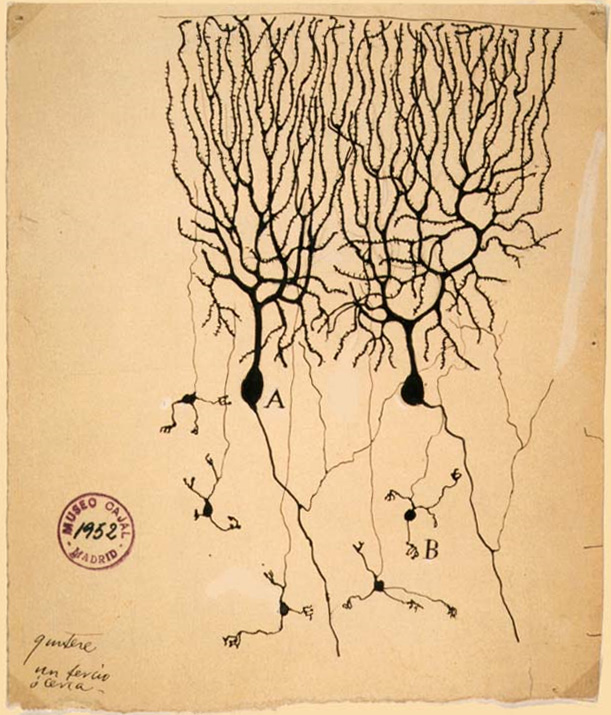
Santiago Ramón y Cajal's drawing of Purkinje cells


Judging from even the small percentage of talks that emphasized the neuro-fields, I can easily imagine a future iteration of Critical Juncture—or some other conference/workshop/organization entirely—fruitfully focusing specifically on interdisciplinary approaches to mind and brain (I leave it to you, organizers of the future, to generate some witty wordplay relying on synaptic junctions).


Beyond just talking between academic disciplines, conversations could link the academy with local artists and community-based movements (perhaps in the vein of Sickle and Flow, a project Christopher Lewis discussed at Critical Juncture). Such an event could draw together neuroscience and cognitive science researchers, visual and performance artists, activists and science communicators, scholars of the humanities and social scientists. Through mutual inquiry, perhaps participants could come away with new perspectives—a deeper sense of the historical context of a contemporary field of research (and why that might matter in the first place), a demystified understanding of the process by which colorful images are crafted from magnetic imaging, or a clearer awareness of the concerns and priorities of patients with neurological conditions.


What might emerge from a panel discussion of representations of mental illness including a mad pride activist, neuropsych researcher, science journalist, and a sociologist of health?


How might a conversation with a neuroscientist provide inspiration for piece of visual art? How might that art in turn help the neuroscientist see or teach their research in a new way? How might co-curating an exhibit, as Terranova and Wessner did, help people with different disciplinary training find mutual ground?


Could community-based projects and partnerships be initiated or strengthened through connections with new networks? (Eddie Gonzales, of StoryCorps Legacy, spoke on a panel at Critical Juncture, showing the emotional force of testimony and connection, but also calling for researchers to make use of the huge bank of archival documentation this project has amassed.)


A project of this kind need not take on a utopian or uncritical tone to be of use. As transdisciplinary team Des Fitzgerald, Melissa Littlefield, Kasper Knudsen, James Tonks, and Martin Dietz articulate in their fascinating article, “Ambivalence, equivocation and the politics of experimental knowledge: A transdisciplinary neuroscience encounter,” such encounters are not universally productive and can be hotbeds of negative affect. My own attempt to work across disciplines leaves me with significant anxiety about what is “lost in translation” as I try to render myself legible to a variety of readers or listeners—do I bastardize the specialized knowledge of my home discipline by oversimplifying or cutting jargon that has developed through decades of scholarly inquiry? To what extent is it possible to incorporate the insights of a field I don’t have five years of graduate training in? Interdisciplinary encounters, though, don’t need to ignore or sidestep these problems, but can make space to talk about them freely and collaborate nevertheless—to receive mentorship from others who have succeeded (or perhaps more productively, failed) in prior attempts to tackle these problems. I, for one, would love to attend a roundtable titled “my biggest interdisciplinary failure.”


Ultimately, it seems that one of the most concrete benefits emerging from sharing interdisciplinary spaces is the reminder of how our “home disciplines” are put together—their strengths, weaknesses, and methodologies. Other than the occasional sobering attempt to define our research interests at family gatherings, many of us end up spending a great deal of time with people who share our training, and hence, often, our assumptions about how the world works. Unless you have a special gift, trying to explain the tenets of your field to someone who hasn’t taken the same “methods” course as you is a humbling endeavor, but, I think, a crucial one. Our own ideologies and organizing principles have a way of becoming invisible to us, and at the very least, it’s worth shining a light a little brighter on them.


PS:


The conference is organized by graduate students each year, and only takes place when two or three students take on the task—so if any of you out there are reading and are interested in taking on the conference in years to come, this could be you! Feel free to reach out to me with questions.


Want to cite this post?


Grubbs, L. (2016). Notes from the field: Critical Juncture conference at Emory. The Neuroethics Blog. Retrieved on , from http://www.theneuroethicsblog.com/2016/05/notes-from-field-critical-juncture.html

Thursday, March 19, 2015

The Montreal Neuroethics Conference for Young Researchers 2015

The Montreal Neuroethics Conference for Young Researchers 2015 will be held in Montréal, Québec, on April 17th, 2015 at the Institut de recherches cliniques de Montréal (IRCM), Montréal, Quebec. This one-day international conference is aimed at young researchers, trainees, and students from all fields interested in neuroethics. In addition to the program on the day of the event, we are hosting an essay competition where 5 winning papers in English will be candidates for fast-tracked publication in a special issue of the journal Neuroethics and 5 winning papers in French will be candidates for fast-tracked publication in a special issue of the journal Bioéthique Online. 


Special Note from the Organizers:


"Our immediate goals in organizing this conference are to increase the visibility of neuroethics among different international student populations and to bring young researchers in neuroethics together to facilitate future collaborations. Young researchers are the future of neuroethics. We feel that a conference specifically tailored for them – no registration fee, opportunities to meet their peers and present their work, panels on hot topics in neuroethics and on career development, etc. – helps to highlight their importance and encourage future work in this field. Montreal is in an excellent position to kick off an event specifically targeted to young researchers because of the institutional support neuroethics has received here over the past several years. The IRCM’s Neuroethics Research Unit was one of the first dedicated Neuroethics Units in the world and it collaborates with Université de Montréal and McGill University to train the next generation of neuroethicists, including through the offer of neuroethics courses and graduate training."


-- Veljko Dubljevic Ph.D./D.Phil, Victoria Saigle, and Eric Racine Ph.D.,

Montreal Neuroethics Conference for Young Researchers

Local Organizing Committee


PROGRAM


8:30-9:00 Welcome


9:00-10:00 Panel: Social responsibility of neuroscience 

John Breitner, M.D. (McGill); Emily Bell, Ph.D. (IRCM); Artur Kania, Ph.D. (IRCM) 


10:00-10:15 Break (coffee)


10:15-11:15 Panel: Cognitive enhancement  

Jennifer Chandler, LL.M. (UOttawa); Alexandre Erler, Ph.D. (UdeM); Veljko Dubljevic,  Ph.D./D.Phil. (IRCM); Walter Glannon Ph.D./D.Phil. (UCalgary) 


11:15-12:30 Poster session & lunch


12:30-1:30 Roundtable: How to be successful in your early Neuroethics career   

Eric Racine, Ph.D. (IRCM), Tommaso Bruni, Ph.D. (UWestern), Lucie Wade, M.Sc. (McGill/JGH), Jaime Flamenbaum, M.D. (CIHR) 


1:30-1:45 Break (coffee)


1:45-2:45 Oral presentations of essay winners


2:45-3:00 Break (coffee)


3:00-3:30 Keynote: The Neurobiology of Morality, James Blair, Ph.D. (NIH) 


3:30-4:00 Awards Ceremony and Closing Statement


 For more information, click here.


Local Organizing Committee


Monday, July 2, 2012

Call for "Late Breaking" Abstracts


*Deadline for abstract submissions: August 13, 2012* 


Brain Matters 3: 


Values at the Crossroads of Neurology,

Psychiatry and Psychology 


October 24th-25th, 2012


This conference provides a venue for
collaboration and learning in the area of neuroethics. The plenary
speakers of this conference will address ethical challenges in the
treatment and research for conditions with neurological symptomatology
but that are without identifiable biological correlates/causes. The
complexities of suffering and disability experienced by individuals with
these conditions are significant, including exposure to dangerous and
futile treatments.


Parallel sessions will include accepted
abstracts from a broad range of neuroethics interests.  At this
conference, presentations will be given by patients, physicians,
neuroscientists, and ethicists and is intended to appeal to a broad
audience.  Please see the call for abstracts and conference information
at http://www.clevelandclinic.org/BrainMatters3.


Please email abstracts to fordp@ccf.org by August 13, 2012.


Topics

In recognition of the fast-paced nature of the neurosciences, we invite scholars and researchers to submit abstracts for poster presentations on specific topics that fall into one of the following 3 categories


  1. Empirical research projects that are works in progress or pilot projects

  2. Reviews of emerging controversies in the scientific or popular discourse

  3. Analysis of emerging legal and regulatory challenges in the neurosciences


The abstracts will be judged on relevance to novel and emerging topics, academic quality, and responsiveness to one or more categories of interest.


Format


Please structure submissions according to the following sections:Background, Methods, Results/Analysis, Discussion, and Conclusion. Abstracts shouldbe no more than 250 words.


Please submit in a standard Microsoft Word file format with contact information and all of the authors' names within the body of the file.


Submission Process


Please email the completed abstract to fordp@ccf.org by August, 13, 2012 with a subject line of "late breaking abstract." Early proposals are strongly encouraged.


Conference Registration


Email notification of acceptance will be sent by September 13, 2012. There will be a two-week


opportunity to confirm attendance at the conference once notification has been sent. Attendance is required for accepted submissions to be included in the program. All


presenters must register for Brain Matter 3 and are responsible for their travel, lodging


expenses, and registration fees for the conference. Please
note that the number of attendees will be limited due to meeting space
restrictions, therefore early registration is strongly encouraged. 


In collaboration with:

        Cleveland Clinic Epilepsy Center

        International Neuroethics Society

Wednesday, May 30, 2012

International Neuroethics Society: Call for Abstracts


Abstract submission for the 2012 International Neuroethics Society meeting in New Orleans is now open!


 The International Neuroethics Society welcomes abstracts
reporting recent results in the field of neuroethics and related topics.
Investigators at any career stage are encouraged to submit abstracts.


Five submissions will be selected for Oral Presentations. Two submissions will receive a $250 Travel Award. Twenty-five abstracts will be published in the online version of American Journal of Bioethics Neuroscience.


The deadline is 5:00 p.m. EDT on JULY 2, 2012. Submit your abstract to administrator@neuroethicssociety.org. Accepted presentations will receive notification by August 1.

Thursday, April 19, 2012

Brain Matters 3 Conference! Values at the crossroads of Neurology, Psychiatry, and Psychology


*Deadline for abstract submissions: May 15, 2012* 


Brain Matters 3: 


Values at the Crossroads of Neurology,

Psychiatry and Psychology 


October 24th-25th, 2012


This conference provides a venue for
collaboration and learning in the area of neuroethics. The plenary
speakers of this conference will address ethical challenges in the
treatment and research for conditions with neurological symptomatology
but that are without identifiable biological correlates/causes. The
complexities of suffering and disability experienced by individuals with
these conditions are significant, including exposure to dangerous and
futile treatments.


Parallel sessions will include accepted
abstracts from a broad range of neuroethics interests.  At this
conference, presentations will be given by patients, physicians,
neuroscientists, and ethicists and is intended to appeal to a broad
audience.  Please see the call for abstracts and conference information
at http://www.clevelandclinic.org/BrainMatters3.


The submission form is directly available at: http://my.clevelandclinic.org/Documents/Bioethics/abstract-submission-form.pdf


Applicants


We invite scholars from the fields of neuroscience, ethics, philosophy, law, medicine, and


other relevant disciplines to submit abstracts for oral or poster presentations on topics that


fall at the intersection of neuroscience, society, and ethics. Abstracts from trainees and junior


scholars are especially encouraged.


Topics


Abstracts may address a wide variety of topics related to neuroethics, including topics


unrelated to conference theme. These topics could be clinical, research, policy, or theoretical


perspectives in neuroethics. Accepted abstracts will demonstrate scholarly excellence, an


innovative approach, and relevance to neuroethics.


Format


We welcome abstracts in standard scientific format (introduction, methods, results, and


conclusion) as well as traditional scholarly format (clear background, thesis, and argument)


in a fillable PDF form available at www.clevelandclinic.org/BrainMatters3. Abstracts should


be no more than 250 words. Multiple submissions are permitted.


Submission Process


Please email the completed abstract PDF form to neuroethics@ccf.org by May 15, 2012. Early


proposals are encouraged. Submissions received after May 15, 2012 will not be considered.


Conference Registration


Email notification of acceptance will be sent before July 15, 2012. There will be a two-week


opportunity to confirm attendance at the conference once notification has been sent. All


participants must register for Brain Matter 3 and are responsible for their travel, lodging


expenses, and registration fees for the conference. Registration will open in June 2012.


Attendance is required for accepted submissions to be included in the program.


*Please note that the number of attendees will be limited due to meeting space restrictions, therefore early registration is strongly encouraged.*


Want to cite this post?


Rommelfanger, K. (2012). Brain Matters 3 Conference! Values at the crossroads of Neurology, Psychiatry, and Psychology. The Neuroethics Blog. Retrieved on
, from http://www.theneuroethicsblog.com/2012/04/brain-matters-3-conference-values-at.html