Pages

Showing posts with label brain matters. Show all posts

Tuesday, November 5, 2013

Experimental Neuroethics


By Peter Reiner, VMD, PhD


Dr. Reiner is Professor in the National Core for Neuroethics, a member of the Kinsmen Laboratory of Neurological Research, Department of Psychiatry and the Brain Research Centre at the University of British Columbia, and a member of the AJOB Neuroscience Editorial Board.


Four years ago, Neil Levy gave the concluding lecture at the first Brain
Matters conference in Halifax. He alerted the audience of neuroethicists to the
fact that the field of philosophy was undergoing a revolution – rather than muse
from their armchairs in the ivory tower, a group of renegade philosophers were
carrying out real experiments, asking people what their intuitions were about central
issues in philosophy. Dubbed experimental
philosophy
, the new initiative was met with more than passing resistance
from traditional philosophers. The apostate experimental philosophers responded
by developing a logo of a burning armchair.



Photo credit: Timothy Epp, Shutterstock


The landmark experiment was carried out by Josh Knobe, and its findings
subsequently became known as the Knobe effect (you can watch a great recreation
of the phenomenon in this
YouTube video). Essentially, what Josh did was repurpose an old method from
social psychology called the contrastive vignette technique (CVT)1. At its simplest, the CVT
involves designing a pair of vignettes that carefully describe a particular situation
(in the case of experimental philosophy, one that is often morally charged) but
crucially differ in one detail, hence the term contrastive. Respondents see one
and only one version of the vignette, and are then asked questions about what
they have just read, with responses commonly recorded as a numerical rating on
a Likert scale. By comparing the averaged responses between separate groups of
people who have read the vignettes, the experimenter can systematically investigate
the effects of small changes (of which the respondents are entirely unaware)
upon attitudes towards nearly any topic. The experimental philosophers tend to
use the technique to explore the meaning of concepts. Neil Levy pointed out
that this same approach could, in principle, be applied to the full range of
issues in neuroethics.


Neil’s presentation struck me like a thunderbolt. I had come to the field of neuroethics with a background in cellular and molecular biology, and had spent much of my career as a card-carrying reductionist: as a graduate student in the 1980’s, I championed the then-novel technique of recording from single neurons in freely moving animals, and as a postdoc I moved on to the better controlled (if less naturalistic) technique of patch clamp analysis of identified neurons in slices of brains. My subsequent rise through the ranks of academia was one in which I applied quantitative rigor to every question that I asked, and in the circles in which I traveled, this was lauded as the ultimate way to provide reproducible (and by inference, meaningful) results. I saw at once that the CVT opened the door towards doing something similar in the field of neuroethics.


My research group at the National Core for Neuroethics has embraced the use of contrastive vignettes wholeheartedly, and with a nod to the experimental philosophy camp, we call the approach Experimental Neuroethics. The team is applying the technique to a range of issues in contemporary neuroethics, probably best exemplified by our recent publications exploring public attitudes towards cognitive enhancement2 as well as the acceptability of overt and covert nudges3.


If the vignettes appear simple, I can assure you that properly crafting them is hard work. We begin with a carefully considered hypothesis and regularly find that the hypothesis morphs substantially (usually into something much more insightful) as the process unfolds. We then compose two or more contrastive vignettes, working hard to have the vignettes as minimally contrastive as possible (one word differences between vignettes is the ultimate goal, but this is often not feasible). Finally, we develop questions; we like to have the wording of the questions always be identical irrespective of the contrastive nature of the vignette.
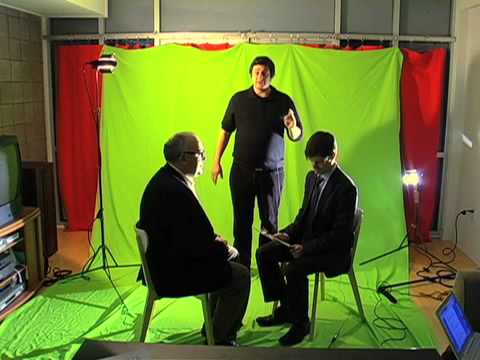


Filming a vignette (Source)


Then the real fun begins. After a day or two, we assemble as a team and attack our previous work. Inevitably, we find it wanting in some respect. Sometimes, embarrassingly so. We find it best to begin by asking whether the vignette and the questions directly address the hypothesis. Sometimes that means that the hypothesis changes. Nearly always, that means that the vignette changes. This process is repeated again and again, over days and weeks and sometimes months (yes, and even sometimes years!) until we have a set of vignettes that get to the heart of the matter.


At some point late in the process we carry out cognitive pre-testing. This involves sharing the vignette and the questions with someone who has no particular expert knowledge (friends of friends are likely culprits), and debriefing them about what they read. We are sometimes amazed to find that what we intended for people to glean from a vignette is at odds with their reading of the vignette. That sends us back to the drawing board.


We also run some metrics to determine whether the words we have used are
understandable by a general audience. We use online readability tests such as this
one
to establish the educational level required for understanding the
vignette; our goal is that no more than a high school education is required. Finally,
we launch the survey, recruiting respondents from amongst the thousands of
people who have signed up on Amazon’s Mechanical Turk – they’re more
representative of the real population and aren’t as blatantly WEIRD as typical
undergraduate samples. And then we hold our breath.


Once the data is analyzed, we get mired once again in deep discussion. For it is not just the quantitative aspect of Experimental Neuroethics that is satisfying (to me), but also that the data gives us an entirely new benchmark for engaging in the process of wide reflective equilibrium. Throughout this process we remain aware that an ought can not derive from is, but having the data at hand, our version of ought is very much informed by the is. Ultimately, our data emerge in concert with our normative insights, and then one more advantage of Experimental Neuroethics is realized: it is easy for others to replicate our experiments, or even to improve them by taking our vignettes and modifying them to further test their own. This iterative process of replication, critique, and systematic modification has proven to be a robust strategy for advancing insights into the nature of biological and physical phenomena. Only time will tell whether Experimental Neuroethics catches fire in our discipline as it has in the field of philosophy (where it remains controversial). If it does, we can trace it back to Neil’s presentation in Halifax….


Cross posted on Neuroethics at the Core


References


1. Burstin K, Doughtie E, Raphaeli A. Contrastive Vignette Technique: An indirect Methodology Designed to Address Reactive Social Attitude Measurement. Journal of Applied Social Psychology. 1980;10(2):147–65.


2. Fitz NS, Nadler R, Manogaran P, Chong EWJ, Reiner PB. Public attitudes toward cognitive enhancement. Neuroethics. 2013 doi: 10.1007/s12152-013-9190-z.


3.Felsen G, Castelo N, Reiner PB. Decisional enhancement and autonomy: public attitudes towards overt and covert nudges. Judgment and Decision Making. 2013;8(3):202–13.


Want to cite this post?


Reiner, P. (2013). Experimental Neuroethics. The Neuroethics Blog. Retrieved on
, from http://www.theneuroethicsblog.com/2013/11/experimental-neuroethics_2.html.

Monday, July 2, 2012

Call for "Late Breaking" Abstracts


*Deadline for abstract submissions: August 13, 2012* 


Brain Matters 3: 


Values at the Crossroads of Neurology,

Psychiatry and Psychology 


October 24th-25th, 2012


This conference provides a venue for
collaboration and learning in the area of neuroethics. The plenary
speakers of this conference will address ethical challenges in the
treatment and research for conditions with neurological symptomatology
but that are without identifiable biological correlates/causes. The
complexities of suffering and disability experienced by individuals with
these conditions are significant, including exposure to dangerous and
futile treatments.


Parallel sessions will include accepted
abstracts from a broad range of neuroethics interests.  At this
conference, presentations will be given by patients, physicians,
neuroscientists, and ethicists and is intended to appeal to a broad
audience.  Please see the call for abstracts and conference information
at http://www.clevelandclinic.org/BrainMatters3.


Please email abstracts to fordp@ccf.org by August 13, 2012.


Topics

In recognition of the fast-paced nature of the neurosciences, we invite scholars and researchers to submit abstracts for poster presentations on specific topics that fall into one of the following 3 categories


  1. Empirical research projects that are works in progress or pilot projects

  2. Reviews of emerging controversies in the scientific or popular discourse

  3. Analysis of emerging legal and regulatory challenges in the neurosciences


The abstracts will be judged on relevance to novel and emerging topics, academic quality, and responsiveness to one or more categories of interest.


Format


Please structure submissions according to the following sections:Background, Methods, Results/Analysis, Discussion, and Conclusion. Abstracts shouldbe no more than 250 words.


Please submit in a standard Microsoft Word file format with contact information and all of the authors' names within the body of the file.


Submission Process


Please email the completed abstract to fordp@ccf.org by August, 13, 2012 with a subject line of "late breaking abstract." Early proposals are strongly encouraged.


Conference Registration


Email notification of acceptance will be sent by September 13, 2012. There will be a two-week


opportunity to confirm attendance at the conference once notification has been sent. Attendance is required for accepted submissions to be included in the program. All


presenters must register for Brain Matter 3 and are responsible for their travel, lodging


expenses, and registration fees for the conference. Please
note that the number of attendees will be limited due to meeting space
restrictions, therefore early registration is strongly encouraged. 


In collaboration with:

        Cleveland Clinic Epilepsy Center

        International Neuroethics Society

Tuesday, June 5, 2012

Gay Brains, Gay Gene, Gay Rights: The Double-Edged Sword of Essentialism


As the semester drew to an end, and Kristina Gupta and I
closed out our course on Feminism, Sexuality, and Neuroethics, I have been
thinking a lot about the science of sexual identity. Participants in our class set out to consider the ethics of separating human beings into distinct kinds and
conducting neuroscientific research into those separations. Along the way, we
all thought about what the boundaries of sexuality and gender were, how they
are culturally bound, how desire is measured (and mismeasured), both in the
contemporary era and throughout history. We considered the use of these
differences to create legislation and the effects of both medicalization and
pathologization for members of sexual minorities.


I'm sure this is exactly what happens.

(Original image from hyperboleandahalf.com)


On the last day of class, we asked our students to take into
consideration all the discussions we had had over the course of the semester
and reflect on their own opinions about the scientific study of sexuality. One
student answered almost immediately.[1] Of
course it is appropriate for science to study sexuality, said the first student. Science is
always appropriate. It is always better to know than not to know. There were
nods. Yes – we were all solidly on board with the acquisition of knowledge. But
then a second student responded. This is an area where we have to be careful. Any advance in the study of sexuality could be taken as evidence of
an essential difference between gay and straight people. The second student could think of no
positive use for such knowledge, given the prejudice towards gay people in much
of the world.  Science, the student concluded,
should not be used to make the lives of these people worse.


These two viewpoints get at a question I am often asked (this is what happens when you introduce yourself as a sexuality scholar at parties) – Do I think gay people are born that way? (I generally answer that I don’t think it matters, for reasons I hope are about
to become clear.)


To explain, I will go back a little bit to 1994, when legal scholar Janet Halley published an article in
the Stanford Law review called “Sexual Orientation and the Politics of Biology:
a Critique of the Argument from Immutability.”[2]
The article is largely a critique of a certain legal strategy in which the biological basis of homosexuality is used to argue
for making gay men and lesbian a suspect class under the Equal Protection
Clause of the constitution. I won’t go into the details of that here, both
because it isn’t really the main reason I bring up Halley’s argument and
because this strategy is less relevant than it once was,[3]
except to say that Halley argues for abandoning the use of biological arguments
as a premise for gay and lesbian rights.


Halley points out that
the argument from immutability is not, in and of itself, necessarily pro-gay.
That is, there is no correlation between ethical beliefs about homosexuality
and the supposed “naturalness” of that sexuality. Regardless of whether finding a gay gene would help secure
equal marriage rights,[4]
finding a gay gene won’t even necessarily convince people that being gay is
morally acceptable.


Halley’s article contains a clear and concise map of what she sees as four opposing positions in the argument for gay and lesbian rights. She separates theories of sexuality into two basic types: essentialist arguments, which include any theory that sexuality is fixed, whether it be material or pathological, and constructivist ones, in which sexuality is fluid. Either argument can be used in a pro-gay or an anti-gay way, leaving us with the four opposing positions: : pro-gay essentialism, pro-gay constructivism, anti-gay essentialism, and anti-gay constructivism. She argues that legal theorists should seek out the
support of pro-gay constructivist activists, because this, in the end, is the
model that would achieve the widest social change.


Pro-Gay


Anti-Gay


Essentialism


Born This Way!


Aberration!


Constructivism


Sexual Freedom!


Corruption!


Looking at Halley’s four categories, we can see that some of
them are pretty straightforward, while others are a bit more complicated. One
particular brilliant part of Halley’s system is how quickly these categories
can unfold. For example, if we consider the idea of anti-gay constructivism, it
allows us to see how the arguments that homosexuality is a choice or a
lifestyle are related to arguments for how legalizing
same-sex marriage undermines different-sex marriage. That is, the mutability of
heterosexuality is implicit in any argument that “promoting the gay lifestyle”
is eroding family values because this argument assumes that straight people could choose to become gay.


However, these categories are not absolute, nor do they map perfectly onto our current understanding of sexuality. For Halley, seeing homosexuality as a psychological perversion is a form of anti-gay essentialism because it assumes gayness can be cured under treatment by a doctor. This always makes sense to me initially, but then I think, wait, if sexuality can be changed by talk therapy, is it an essential material truth? What if it requires medication? Shock therapy? Exorcism? The line here is much harder to see, which, of course, belies the true aim of this article: that actual human sexual behavior is too complex to fit into discreet categories.


Anti-gay Essentialism...?


Now- what does this have to do with the science of
sexuality? It comes down to this: our student expressed a concern about
doing research in an area of current social and moral debate where it was possible scientific knowledge could be used in a way the researchers had not intended.
If neuroscientific research were to uncover a biological basis for sexuality,
or a correlation between a certain brain region and certain sexual thoughts,
there is no question that there would be some people who would see this as an
opportunity to control homosexual behavior.


Yet, at the same time, greater understanding of human sexual
behavior does lead to wider acceptance. Take that anti-gay therapy I just mentioned.
There has been a recent spate of news articles about the widespread failure of
what was once promoted as a cure for homosexuality.[5]
There is a feeling of triumph of nature (whatever that may mean to each of us)
over nurture, that is, it seems that many assume the reason psychological
treatments and behavioral modification therapies do not work is because gayness
is innate, and innate in a way that cannot be reached psychologically. This is a monumental triumph for many, many men and women who
suffered in silence in these treatment programs, who internalized their
inability to change and viewed it as their own personal failure. To people in
these situations, scientific proof of innate sexual difference would come as a
reprieve.


Pro-Gay Essentialism


And this is the double-edged sword of biological determinism.
On the one hand, proof that gay people are born this way could put the final
nail in the coffin of the Exodus movement, and could, perhaps, begin to build
the foundation for a new form of sexual ethics. On the other hand, material
difference in sexuality could lead to a whole new form of gay cures and
treatments. For some, this treatment may come as a different kind of reprieve.
Others might not be given a choice.


In the end, the question “Are gay people born that way?” matters because whether or not someone is gay matters, and why it matters has more to do with people's ethical beliefs about sexual practice than with any concept of the natural. What dictates the acceptability of material proof of sexuality is the acceptability of sexuality, not the form of material proof. Further, although these discussions tend to break down into deciding the difference between "gay" and "straight," the fact of the matter is that there is a staggering array of diversity in sexual practice and sexual identity. It is not as simple as deciding
what we should or should not do about the “gay gene” or the “gay brain:”[6]
not only because of the complexities of genes, brains and gayness, but also
because it is impossible to imagine a one-size-fits all ethics for the study of
sexuality. As we close out another school year, I imagine, or at least I hope, the participants in our class this semester go out into the world with a greater appreciation for this complexity. I wish you all enjoyable and restful summers!


Want to cite this post?


Cipolla, C. (2012). Gay Brains, Gay Gene, Gay Rights: The Double-Edged Sword of Essentialism. The Neuroethics Blog. Retrieved on
, from http://www.theneuroethicsblog.com/2012/06/gay-brains-gay-gene-gay-rights-double.html


[1] I paraphrase here because my memory is not perfect and my note-taking skills leave something to be desired. I believe I have gotten
the spirit of their comments right if not the exact form.


[2] Janet E. Halley, "Sexual Orientation and the Politics
of Biology: A Critique of the Argument from Immutability," Stanford Law Review 46, no. 3 (1994). http://www.jstor.org/stable/1229101


[3] Lawrence v. Texas; Evan Gerstmann, The
Constitutional Underclass : Gays, Lesbians, and the Failure of Class-Based
Equal Protection
(Chicago ; London: University of Chicago Press, 1999).


[4] Spoiler
alert: It probably wouldn’t, see note 3.


[5] See Gabriel Arana’s
account
of his own experience in ex-gay therapy, and Robert
L. Spizter apologizing
for backing the idea.


[6] Both of
which seemed much more plausible in 1994, when Halley’s article was published.


Thursday, April 19, 2012

Brain Matters 3 Conference! Values at the crossroads of Neurology, Psychiatry, and Psychology


*Deadline for abstract submissions: May 15, 2012* 


Brain Matters 3: 


Values at the Crossroads of Neurology,

Psychiatry and Psychology 


October 24th-25th, 2012


This conference provides a venue for
collaboration and learning in the area of neuroethics. The plenary
speakers of this conference will address ethical challenges in the
treatment and research for conditions with neurological symptomatology
but that are without identifiable biological correlates/causes. The
complexities of suffering and disability experienced by individuals with
these conditions are significant, including exposure to dangerous and
futile treatments.


Parallel sessions will include accepted
abstracts from a broad range of neuroethics interests.  At this
conference, presentations will be given by patients, physicians,
neuroscientists, and ethicists and is intended to appeal to a broad
audience.  Please see the call for abstracts and conference information
at http://www.clevelandclinic.org/BrainMatters3.


The submission form is directly available at: http://my.clevelandclinic.org/Documents/Bioethics/abstract-submission-form.pdf


Applicants


We invite scholars from the fields of neuroscience, ethics, philosophy, law, medicine, and


other relevant disciplines to submit abstracts for oral or poster presentations on topics that


fall at the intersection of neuroscience, society, and ethics. Abstracts from trainees and junior


scholars are especially encouraged.


Topics


Abstracts may address a wide variety of topics related to neuroethics, including topics


unrelated to conference theme. These topics could be clinical, research, policy, or theoretical


perspectives in neuroethics. Accepted abstracts will demonstrate scholarly excellence, an


innovative approach, and relevance to neuroethics.


Format


We welcome abstracts in standard scientific format (introduction, methods, results, and


conclusion) as well as traditional scholarly format (clear background, thesis, and argument)


in a fillable PDF form available at www.clevelandclinic.org/BrainMatters3. Abstracts should


be no more than 250 words. Multiple submissions are permitted.


Submission Process


Please email the completed abstract PDF form to neuroethics@ccf.org by May 15, 2012. Early


proposals are encouraged. Submissions received after May 15, 2012 will not be considered.


Conference Registration


Email notification of acceptance will be sent before July 15, 2012. There will be a two-week


opportunity to confirm attendance at the conference once notification has been sent. All


participants must register for Brain Matter 3 and are responsible for their travel, lodging


expenses, and registration fees for the conference. Registration will open in June 2012.


Attendance is required for accepted submissions to be included in the program.


*Please note that the number of attendees will be limited due to meeting space restrictions, therefore early registration is strongly encouraged.*


Want to cite this post?


Rommelfanger, K. (2012). Brain Matters 3 Conference! Values at the crossroads of Neurology, Psychiatry, and Psychology. The Neuroethics Blog. Retrieved on
, from http://www.theneuroethicsblog.com/2012/04/brain-matters-3-conference-values-at.html