Pages

Showing posts with label interdisciplinary. Show all posts

Tuesday, February 21, 2017

When Neuroethicists Become Labmates


By Timothy Brown and Margaret Thompson


Timothy Brown is a doctoral student and research assistant at the University of Washington (UW). He works with the Center for Sensorimotor Neural Engineering's (CSNE) Neuroethics Trust, where he explores the broader moral and societal implications of neural engineering and neural technology use. Through the CSNE’s support, he is also embedded in the UW's BioRobotics Lab, where he investigates issues of autonomy and agency that arise for people with motor disorders who use next-generation, neurally-controlled deep-brain stimulators to manage their symptoms. 


Margaret Thompson is a doctoral student in the BioRobotics Laboratory in the Electrical Engineering department at University of Washington, Seattle; she is also president of the Student Leadership Council at the CSNE. She received her Master’s in Electrical Engineering from University of Washington in 2016 and her Bachelor’s in Engineering from Harvey Mudd College in 2014. She researches side-effect mitigation methods for deep brain stimulation, as well as how human subjects learn to use brain-computer interfaces over months to years at a time. 


Maggie Thompson and Tim Brown are graduate students at the University of Washington—Maggie studies electrical engineering, and Tim studies philosophy (in particular, neuroethics). They are both members of the Biorobotics Laboratory—a multidisciplinary lab investigating the interface between human bodies and machines. Tim serves as the lab’s “embedded ethicist” through the support of the 
Center for Sensorimotor Neural Engineering (CSNE).


Together, Maggie and Tim work on projects related to deep brain stimulators (or DBS, where electrodes implanted in key areas of the brain apply enough current to treat various disorders) and brain computer interfaces (or BCI, where changes in the brain are read by sensors and used to control a computer system). Their current study collects patient perspectives in “real-time” while they test the next-generation of deep brain stimulators. Their goal is to see how patients relate to their implant and how this relationship changes with different kinds of control over the implant and its parameters. 


At conferences and meetings, people are almost more interested in how Maggie and Tim collaborate than what they collaborate on. After all, there are calls for scientists and engineers to work with humanists but it’s not clear how to get started or what that collaboration looks like. In this post, Maggie and Tim continue their work (i) in a conversation answering some of the common questions people have asked about what it’s like to have an ethicist in the lab, and how to collaborate with one.


1. What were your hopes for the collaboration before you started? What concerns did you have beforehand? 


Tim Brown (TEB): When I started working with the lab, several students were working on the security of brain-computer interfaces (ii) and adaptive control of deep-brain stimulators (iii). I hoped that I would be able to contribute to one of these projects, but I would have considered myself lucky just to be able to sit in lab meetings. I was concerned at first that everyone in the lab would consider me too much of an outsider to understand their high-level discussions. I was also worried that I wouldn’t be able to explain why my work was relevant or why I should be allowed to attend lab meetings.  


Maggie Thompson (MCT): These were the same concerns that I had in joining the team despite my shared background in engineering. It's always a little daunting to join a new team. When I joined, I was excited to look at questions like "how can the philosophy and ethics work strengthen the engineering work?" and vice versa.  


One concern has been balancing my engineering research interests with this collaboration. Doctoral programs will consume all of your work, social, and personal time if given the chance, and so to carve out time for a project like this was a challenge. Another concern I had was that adding an ethics collaboration made me seem too "touchy-feely," or somehow softened my engineering in a detrimental way. This was a heightened concern since I'm a woman in a male-dominated field, so I already felt pressure to validate my technical skills without adding a humanities focus into the mix. I tried to remind myself that this collaboration would help me produce a higher quality system; if other researchers can't appreciate the merit in that, then they are the ones who need recalibrating.  


TEB: My experience is the converse of Maggie’s. Some philosophers discourage taking an empirical approach to philosophical problems—they prefer to leave data collection and analysis to the scientists. Some philosophers, then, worry that our work is not philosophy. As a person of color, this is particularly damning: many philosophers of color worry about being perceived as “real” philosophers, and some struggle to find a place in the academy (iv). But if our work is “too touchy-feely” to be engineering and “too empirical” to be philosophy, where does that leave us?   


Tim and Maggie working together in the BioRobotics lab.


2. How does your collaboration work on a daily basis? What are your main "modes of operation," or features that you think keep the collaboration running smoothly? 


MCT: Tim and I work as Ph.D. students under the program requirements of our respective departments. We each have unique research goals and our own dissertations to write. But there is overlap in our research questions, and some of Tim's research requires asking questions during experimental testing of our neural devices. Similarly, I have questions that can't be answered without tools from Tim's domain. So periodically, we meet to discuss this crossover and identify a plan of attack to answer these questions that rely on one-another's research. Between these meetings, we share papers, design and execute experiments, review data, and write articles together.  


There's no magic; Tim and I are just willing to peel time away from our individual research interests and lend it to this collaborative work. Since I'm not as familiar with some subfields that Tim works in, when he sends me a paper to read, I have to recognize that it will take some time for me to fully appreciate it, and there's no way around that. But by lending each other time for reading and discussion, we build this shared understanding for each other's work that ultimately enriches the quality of work that we produce together (v). It's definitely a process of growing your collaboration together, so it's good to start simple with a couple of shared questions and build from there.  


TEB: This is extremely important, I think. There is no a magic formula that makes this kind of collaboration work. We both have our own interests and areas of expertise and we both contribute what we can when we can. I don’t think this is any different from how labs work in general. In our case, I contribute skills and knowledge from the humanities, but I also contribute skills I picked up as a kid tinkering with computers.  


MCT: Tim also has a desk in our lab, which is important for a few reasons. First, being able to turn around and brainstorm with each other when we’re working is much more spontaneous and convenient than drafting an email every time we individually think of something. More information gets communicated and in a more organic way.  


Second, regardless of which department we are coming from, it’s important that we are mutually concerned with things like desk space issues, lab website management, how meetings are scheduled, etc. These unglamorous tasks are a place to connect in terms of shared effort. You probably all want a similar outcome such as more desk space, a clean lab environment, an effective website, etc., but some amount of time and effort has to be put in to get there. When you all work on those things, you can't help but become more of a team. Practicing shared effort is where your collaboration grows.


TEB: Yes. Unfortunately, folks in the humanities worry that they don’t have anything to contribute to a laboratory, or that they will not become a part of the community. Conversely, folks in science, technology, engineering, and mathematics fields say that they don’t know how to navigate ethical issues, or that ethics is best left to “experts.” But Maggie has personal experience thinking about the social justice implications of how people use technology at large. So, it only makes sense that she can recognize the ethical problems with the technology that she works on. And so another important part of keeping the collaboration alive is pushing through imposter syndrome and just contributing whatever we can to it.  


Close contact is the most important feature of my collaboration with my labmates. I try to meet with my labmates regularly, maintain a presence in the lab, and stay as engaged as possible. I also try make myself accountable to my labmates, and I encourage them to do the same for me. We do this by working on projects together—where I hold Maggie accountable to recent neuroethical concerns, she holds me accountable to real-world uses of BCIs.  


Some argue that when ethicists collaborate with scientists or engineers, they ought to maintain a “critical distance” from them to avoid being co-opted and used to “rubber stamp” the lab’s activities (vi). I think co-optation, however, is just the sign of a one-sided, distant relationship. After all, good colleagues don't just use one another as tokens, they take each other’s interests, projects, and methods seriously. I think we try to do that for one another, and that’s a large part of why our collaboration works. 


Image courtesy of Pixabay.

3. What do you think shows success in your collaboration? What outcomes have been good for you individually, the continuing collaboration, or both? 


TEB: I think our success can be described in terms of the unique skills and ideas we’ve developed as researchers. I find it easier to write and talk about neural technology now that I’ve seen so many people using and investigating it first-hand. Maggie is great at describing the technologies we use and the design of our experiments using them—so I’ve learned a great deal from her.  


I now feel confident doing empirical research in a multidisciplinary setting. Philosophers generally don’t pick up any of these skills in graduate school: we just learn to read texts closely and develop arguments. This collaboration has made my philosophical work better in that I don’t just work from thought-experiments. These empirical research skills also put me in a better place to “pull my weight” in the lab.  


MCT: A lot of researchers are interested in what we're doing and want to know recommendations for starting similar collaborations with their own teams. I think a lot of people recognize our type of work and collaboration as valuable even if they haven't participated in it themselves. It also gets cited as a positive aspect of our work by grant reviewers, and their opinions carry a lot of weight.  


This collaboration has helped me personally in a couple of ways. I've been able to better motivate our pursuit for neural technology. Having ethical considerations in the mix means more than just saying "this is a technical improvement," it means considering richer aspects of improvement that might be different from my preconceptions as an able-bodied engineer. I'm also gaining skills for working on multidisciplinary teams—and this isn't just the type of multidisciplinary teams where engineers talk to scientists, it's bridging larger gaps that a lot of engineers or scientists haven't had the opportunity to work across before. 


Tim and Maggie will continue this conversation later this year in a paper where they will offer concrete recommendations for successful embedded ethics efforts. By reflecting on their collaborative experience, they aim to inspire and embolden other researchers to implement similar embedded ethics approaches within their own area of study. They will also continue their research on Brain Computer Interfaces and Deep Brain Stimulators in their respective dissertations. While Maggie’s dissertation will develop methods for side-effect mitigation in closed-loop deep–brain stimulation, Tim’s dissertation will explore how different methods of controlling a deep brain stimulator effect the user’s feelings of identity, autonomy, and agency. They both anticipate graduating from their doctoral programs (Electrical Engineering and Philosophy, respectively) in 2018. 


References 


i) T Brown, M C Thompson, “When Neuroethicists Become Labmates: Obstacles, Recommendations, and (Non-)Metrics for Success,” International Neuroethics Society Annual Meeting, 2016. 


ii) Bonaci, T, J Herron, C Matlack, and H J Chizeck. “Securing the Exocortex: a Twenty-First Century Cybernetics Challenge.” 2014 IEEE Conference on Norbert Wiener in the 21st Century (21CW), 2014. 


iii) Herron, J, and H J Chizeck. “Prototype Closed-Loop Deep Brain Stimulation Systems Inspired by Norbert Wiener,” 2014 IEEE Conference on Norbert Wiener in the 21st Century (21CW), 2014 


iv) Dotson, Kristie. “How Is the Paper Philosophy?.” Comparative Philosophy 3, no. 1 (December 30, 2011). 


v) Campo-Englestein, Lisa, and Sarah B Rodriguez. “Two Chicks in a Lab with Eggs.” The Hastings Center Report 41, no. 3 (May 1, 2011): 21–23. 


vi) Barnard, D. “Reflections of a Reluctant Clinical Ethicist: Ethics Consultation and the Collapse of Critical Distance.” Theoretical Medicine and Bioethics, 1992.


Want to cite this post?


Brown, T and Thompson, M. (2017). When Neuroethicists Become Labmates. The Neuroethics Blog. Retrieved on , from http://www.theneuroethicsblog.com/2017/02/when-neuroethicists-become-labmates.html


Tuesday, November 15, 2016

The 2016 Kavli Futures Symposium: Ethical foundations of Novel Neurotechnologies: Identity, Agency and Normality


By Sean Batir (1), Rafael Yuste (1), Sara Goering (2), and Laura Specker Sullivan (2)


Image from Kavli Futures Symposium

(1) Neurotechnology Center, Kavli Institute of Brain Science, Department of Biological Sciences, Columbia University, New York, NY 10027


(2) Department of Philosophy, and Center for Sensorimotor Neural Engineering, University of Washington, Seattle, WA 98195


Detailed biographies for each author are located at the end of this post


Often described as the “two cultures,” few would deny the divide between the humanities and the sciences. This divide must be broken down if humanistic progress is to be made in the future of transformative technologies. The 2016 Kavli Futures Symposium held by Dr. Rafael Yuste and Dr. Sara Goering at the Neurotechnology Center of Columbia University addressed the divide between the humanities and sciences by curating an interdisciplinary dialogue between leading neuroscientists, neural engineers, and bioethicists across three broad topics of conversation. These three topics include conversations on identity and mind reading, agency and brain stimulation, and definitions of normality in the context of brain enhancement. The message of such an event is clear: dialogue between neurotechnology and ethics is necessary because the novel neurotechnologies are poised to generate a profound transformation in our society.


With the emergence of technology that can read the brain’s patterns at an intimate level, questions arose about the implications for how these methods could reveal the core of human identity – the mind. Jack Gallant, from UC Berkeley, reported on a neural decoder that can identify the visual imagery used by human subjects (1). As subjects in Gallant’s studies watched videos, the decoder determined how to identify which videos they were watching based on fMRI data. Gallant is convinced that “technologically, ubiquitous non-invasive brain decoding will happen. The only way that’s not going to happen is if society stops funding science and technology.”


Other panelists at the symposium shared Gallant’s confidence in the advent of technology that can decode the content of mental activity, and discussed how motor intentions can be decoded and used to control external objects, like a computer cursor or robotic arm. For instance, Miguel Nicolelis from Duke University discussed a Brain Net that merged neural commands from the brains of three monkeys “into a collective effort responsible for moving a virtual arm.” As the leader of one of the laboratories at the forefront of improving brain computer interfaces for prosthetic control, Nicolelis raised the question of whether such technologies “should be used for military applications.” Beyond specialized use, Nicolelis expressed concern that access to new technologies could be limited – who will be using brain decoders or multiple brain machine interfaces, and why?


Neural technologies that access our internal mental processes may have the potential to shift our understanding of human identity and our sense of ourselves as individual agents. In thinking about identity, philosopher Francoise Baylis of Dalhousie University discussed neuromodulation devices, invoking deep brain stimulation treatments (DBS) as an example. She stated, “DBS is not a challenge or threat to identity. I think people are conflating changes in personality with changes in personal identity. I do not think these are the same… at the end of the day, identity rests in memory, belonging, and recognition.” Baylis argued that our identities are always dynamic and relational, and neural technologies are another way that our relational identities can shift, without threatening who we are. Still, some felt that neural devices may call into question our sense of agency and responsibility for our actions. In considering the issues raised during this panel, Patricia Churchland, from UCSD, emphasized that in 15 sensational accounts of the limits that new technologies will impose on free choice and responsibility for action, she stated that a key question about new neurotechnologies is: “What will it do for us?” There is a need for a balanced approach between speculation about future possibilities, reflection about what science and technology are already doing, and how this will affect society in the short term.


Since sophisticated brain stimulation technologies are already capable of eliciting complex behaviors in lower mammals, ethicists discussed an array of concerns related to agency: how we can know whether our actions and behaviors actually result from our own intentions when adaptive neural devices interact with our brains? Pim Haselager of Radboud University explored our “sense of agency” in experiments designed to separate our belief in our agency from our actual causal efficacy in acting (2). His work suggests that “the harder you work, the more agency you feel,” and he notes that maintaining a strong sense of agency while using a BCI may be linked to a relatively high level of effort on the part of user. Haselager described the sense of agency as multi-faceted – while we are learning more about the dimensions of agency, interpersonal and psychosocial issues are still emerging with neurotechnological research. Ed Boyden from MIT, whose laboratory is developing tools for mapping and controlling the brain through optogenetics, continued the discourse surrounding the multifaceted nature of agency, by questioning, “Can detailed models of an individual’s [mental] traits be reconstructed to the point in which simulation could be possible?” He suggested that as the ability to probe neural circuits expands, we will face increasingly complex questions about ourselves and our priorities. If a human-like simulation could be developed, would it possess the same internal dilemma of agency that persists in any decision-making human?


Leigh Hochberg, from Brown University, whose laboratory focuses on brain computer interfaces for paraplegic patients and the clinical trials of BrainGate technology, suggested that how and why privacy of neural data is ascertained depends on what we think is in the data – what does it tell us? This affects how he assesses risk and benefit in his own work – in a trial with a small number of participants, clinical data might be easily identifiable. This requires what Hochberg described as an “extraordinary consent process.” With evidence of the safety and efficacy of BCIs, increasing numbers of participants in BCI clinical trials and changes to consent requirements, more thinking is needed about how neural data and security are handled. Finally, Martha Farah, from the University of Pennsylvania, raised important conceptual questions about agency. She proposed that agency is ethically significant because it is necessary for freedom and autonomy, which underlie commonsense notions of moral responsibility. The concern with neurotechnology and agency is not whether an intervention is “in the head,” but whether it is quantitatively different from preceding technologies, like pharmaceuticals – does it allow for drastically more control over individuals and their agency? Farah suggested that new neural technology might allow for more fine-grained control of human thoughts and behavior, a possibility that raises economic and regulatory issues in the short term, equality and opportunity questions in the medium term, and existential questions about humanity in the long term.


The sheer existence of mind and brain enhancing technologies belies a tenuous and fundamental assumption that both ethicists and neuroscientists believe should be addressed: What exactly does it mean to be normal, and is achieving normality a reasonable aim? Blaise Aguera from Google opened the floor, starting a discussion about gender as an instance of the social tendency to impose a structure of normality (e.g., binary genders) when a much wider array of gendered possibilities is available – not even just on a spectrum, but across a “a multidimensional vectorial space.” Neural technologies should not inadvertently be designed in ways that exacerbate existing biases such as gender or limited appreciation for the diversity of modes of being in the world. Rather, Aguera asserted that “those of us who create these systems” of human enhancement should “explore a deontology” with “something like science, wellbeing, equity, freedom, and progress” as initial guiding principles. Polina Anikeeva at MIT then shared her work on new devices that match the flexible material properties of the brain, explaining her motivation to make devices less invasive because an “ethical implication is that when we introduce a rigid device, then we destroy the surrounding tissue,” creating glial scars that “don’t interact the same way as neurons do.” Her work shows how even upstream material design of electrodes for neural technology may have a significant impact on the end-user’s experience of the technology


Gregor Wolbring from the University of Calgary expanded the conversation on normality and enhancement to address “ability privilege,” which is the idea that “individuals who enjoy the advantages are unwilling to give up their advantages,” because for many people the judgment of abilities is intrinsic to one’s self-identity and security. He posed questions regarding how we determine ability expectations, and how those expectations alter the treatment of people whose bodies are not typical. Will disabled people want neurotechnologies? Perhaps, if they are understood as tools to achieve well-being, rather than as ways to “fix” people. When asked about the role of neuroprosthetics in the disability world, Wolbring expressed “Tool, yes. Identity, no.” David Wasserman from NIH turned the conversation to neurodiversity, and the movement to reframe some neuroatypical forms of processing as forms of valuable diversity. Such individuals may not need medical technology, but better social accommodation. Thus, Wasserman argued for a more pecuniary focus, emphasizing “more funding ought to be given to…biomedical research that would increase the flourishing” of people living with various neuroatypical conditions. Wasserman suggests that such research should be less focused on medical “fixes”, even though the public tends to be moved by research justifications focused on medical advancement. This latter point was confirmed by Gallant, who noted that “while scientists do a bad job of explaining how science works, the public knows they get sick, and they go to the hospital. This is why the NIH budget is 10 times greater than NSF….medicalizing research has the good effect of attracting funding to biomedical research.” Equipped with this knowledge, a slightly clearer picture begins to emerge, where research at the frontiers of neurotechnology may be forced to address normalization in a medical context for the sake of funding further research, unless funding structures change.


An open discussion held at the end of the Kavli Futures Symposium with all speakers and members of the NIH BRAIN Neuroethics Workgroup synthesized separate kernels of knowledge shared throughout the event. This included a sense of urgency for funding ethical and legal work in order to guide the development of new technologies that have the capacity to radically transform the human experience. There is a need to ensure that multiple stakeholders, including scientists, disabled people, members of the general public, and ethicists work together to consider the ethical aspects of scientific and technological developments. These ethical aspects are clearest in the short term, such as issues about funding priorities, institutional space for ethics, translational goals, and social support for individuals using novel technologies. Long-term questions can also be raised, including the value of preserving the separateness of individuals with private mental space, the potential for combining consciousness toward shared tasks, and the significance of potential enhancements that radically alter what we can directly control with our brains.


By exploring the collective web of thought that connects the humanities and the sciences, several profound issues were identified. Attending to these issues should galvanize the relevant public and private entities to attend more fully to the integration of neurotechnological research with human values.


Author Biographies


Rafael Yuste is a professor of biological sciences and neuroscience at Columbia University. Yuste is interested in understanding the function and pathology of the cerebral cortex, using calcium imaging and optogenetics to “break the code” and decipher the communication between groups of neurons. Yuste has obtained many awards for his work, including those from the New York City Mayor, the Society for Neuroscience and the National Institutes of Health’s Director. He is a member of Spain’s Royal Academies of Science and Medicine. Yuste also led the researchers who proposed the Brain Activity Map, precursor to the BRAIN initiative, and is currently involved in helping to launch a global BRAIN project and a Neuroethical Guidelines Commission.  He was born in Madrid, where he obtained his medical degree at the Universidad Autónoma. He then joined Sydney Brenner's laboratory in Cambridge, UK. He engaged in Ph.D. study with Larry Katz in Torsten Wiesel’s laboratory at Rockefeller University and was a postdoctoral student of David Tank at Bell Labs. In 2005, he became a Howard Hughes Medical Institute investigator and co-director of the Kavli Institute for Brain Circuits. Since 2014, he serves as director of the Neurotechnology Center at Columbia.


Sean Batir is currently a PhD candidate rotating the Dr. Rafael Yuste's laboratory. Previously, he helped co-found two companies in the Bay Area and Boston that developed inconspicuous wearable devices and augmented reality. He also worked as a software developer at Oracle Corporation, creating unified archives that could deploy cloud-enabled databases in a virtual zone and web-based applications that enabled user-friendly visualization of Oracle Supercluster system features. Academically, he earned his M.Res in Bioengineering at the Imperial College of London, in Dr. Simon Schultz's Neural Coding lab.  He developed a new method for complex spike classification in the cerebellum. Prior to his Master's work, Sean studied optogenetic interrogation of the amygdala-hippocampal circuit and  contributed to the automated patch clamping device developed in Dr. Ed Boyden's Synthetic Neurobiology Group at MIT. As a SENS Summer Research Fellow at the Buck Institute of Aging, Sean also characterized therapeutic effects of lithium as a tentative treatment to Parkinson's disease. Sean is driven to develop transformative technologies that redefine what it means to be human. He believes that innovation occurs through interdisciplinary dialogue, both within academia and outside of it, and seeks to facilitate interactions that drive creation.


Laura Specker Sullivan is a postdoctoral fellow in neuroethics at the Center for Sensorimotor Neural Engineering, University of Washington. Her position is jointly held with the National Core for Neuroethics at the University of British Columbia. She conducts conceptual research on issues in practical ethics relating to the justification and goals of biomedical practices as well as empirical research on stakeholder attitudes and perceptions towards emerging technologies such as brain-computer interfaces. Her work often takes a cross-cultural approach, focusing on Japanese and Buddhist perspectives. She received her PhD from the Department of Philosophy at the University of Hawaii at Manoa in 2015.


Sara Goering is Associate Professor of Philosophy at the University of Washington, Seattle, and affiliated with the Program on Values and the Disability Studies Program. She leads the ethics thrust at the Center for Sensorimotor Neural Engineering.


References


1. Naselaris et al. 2015. A voxel-wise encoding model for early visual areas decodes mental images of remembered scenes. Neuroimage 105(15): 215-228.


2. Haselager, W.F.G. 2013. Did I do that? Brain-Computer Interfacing and the sense of agency. Minds and Machines 23(3): 405-418.


Want to cite this post?


Batir S, Yuste R, Goering S, and Specker Sullivan L. (2016). The 2016 Kavli Futures Symposium: Ethical foundations of Novel Neurotechnologies: Identity, Agency and Normality. The Neuroethics Blog. Retrieved on , from http://www.theneuroethicsblog.com/2016/11/the-2016-kavli-futures-symposium_14.htm


Tuesday, May 10, 2016

Notes from the field: Critical Juncture at Emory


by Lindsey Grubbs


Early in April, Emory University hosted the third iteration of Critical Juncture. This annual(ish) graduate-student-led conference focuses on intersectionality, examining interconnecting dynamics of systems of oppression including racism, sexism, ableism, and classism. This year’s conference, while maintaining a broader focus on the complexities of identity and oppression, took as its theme “representations of the body”: which bodies are, and perhaps more importantly which are not, represented in science, politics, the arts, and the academy, and what forms do these representations take?


From its beginning, the conference has links to neuroethics at Emory. One of the co-founders of the conference, Jennifer Sarrett, was a past Neuroethics Scholars Program Fellow. This year, I—one-time managing editor of this blog and current intrepid neuroethics blogger—served as one of the co-organizers.


The focus at this year’s conference was on increasing opportunities for interdisciplinary engagement. The disciplinary backgrounds of our organizational team made this possible: we had one doctoral student in English and bioethics (me), one in public health (Ilana Raskind), a third in microbiology and molecular genetics (Kellie Vinal), and (now Dr.) Jennifer Sarrett stepped in as faculty mentor from the Center for the Study of Human Health. We arranged for a variety of presentation and conversation formats in the hopes of inspiring more cross-talk and examination: seminars with established thinkers at Emory, a poster reception with flash talks (and plenty of food and drink), and interdisciplinary panels arranged, when possible, with an eye to disciplinary diversity. For example, one panel brought together speakers from the medical school, English, history, and Behavioral Science & Health Education to tackle intersections of race, gender, and medicine.


Altogether, the conference drew participants nationally and even internationally for a day and a half of exciting conversations and connections that will hopefully thrive in the months and years to come. Although the conference wasn’t focused specifically on the brain, we solicited presentations investigating representations of mental illness, biological psychiatry, and the mind-body connection. The vibrancy of talks verging on the “neuro” serves as a reminder of how these questions transcend and bridge disciplines, and the ways that these interdisciplinary encounters can spur interesting questions for work on the mind and brain.


A seminar with Emory neuroscientist and feminist theorist Deboleena Roy, for example, drew an attentive crowd to discuss her recent article interrogating the uneasy intersection between neuroscience and feminist theory—the lively discussion pulled together participants from women’s, gender, and sexuality studies, English, psychology, the medical school, immunology, the visual arts and beyond.


Portrait of William Wordsworth by Benjamin Robert Haydon

from Wikimedia Commons


Interestingly, the panel most explicitly focused on mind and brain was populated almost entirely by literary scholars, highlighting what a robust exciting field literary and cultural studies approaches to the brain has become (references for this kind of work can be found here and here and here). Hardly an easy incorporation of pop psychology and neuroscience into the humanities, these thinkers showed how medical or scientific concepts have charted uneasy paths—simultaneously integrated and resisted—through arts and culture.


UCLA English doctoral candidate Jess Horvath looked at the relationship between psychiatric disability and literary form, for example in the schizophrenic break of Pecola in Toni Morrison’s The Bluest Eye. Emory’s Corey Goergen read William Wordsworth’s poem “Peter Bell” as a literary case study challenging dominant discourses about embodied cognition and metaphor as articulated by philosophers Lakoff and Johnson and their theoretical descendants. In this way, he highlights the complex contributions literary texts—deeply idiosyncratic and unique—can make to cognitive theory.


Chandler Batchelor, from UNC Chapel Hill’s graduate program in Literature, Medicine, and Culture, spoke in the same session about how people involved in the Hearing Voices Movement forge individual challenges to medical narratives of pathology and normality without simply falling under the rubric of anti-psychiatry. By paying close attention to the language used by voice hearers, Batchelor advocates for more nuanced, individualized approaches to care. (Stay tuned from a post by Batchelor later this summer!)


Photo courtesy of Full Radius Dance.

Photo by Bubba Carr.


Neuro-discourses even cropped up in the unlikely venue of an evening performance by Full Radius, an Atlanta-based dance company integrating wheelchair users and able-bodied dancers. Director Douglas Scott set up one piece by commenting on the power of partnership and touch in dance. He said, “I wanted to know what about touch is so powerful. What's the science behind touch?” The answer led him from initial contact, to pacinian corpuscles, to the vagus nerve, the heart, to oxytocin, and beyond. This reminder—that curiosity and inspiration extend beyond narrow disciplinary bounds—was one of the most exciting things to witness at Critical Juncture.


Perhaps fittingly (though admittedly not by design), the final panel of the conference was the one focused most explicitly on interdisciplinary endeavors and initiatives. Though none of these talks were neuro-specific, they captured the spirit of mutual inquiry and creativity that makes fields like neuroethics thrive. One exciting example was the collaboration of art theorist Charissa Terranova and biologist David Wessner on the digital exhibition Gut Instinct: Art, Design, and the Microbiome, which emerged from a collaboration through the SciArt Center of New York. (They also kept a joint blog as part of this project that’s worth a read!)


Another exciting project came from Kym Weed, who talked about her work in the HHIVE lab (Health and Humanities: An Interdisciplinary Venue for Exploration) at UNC Chapel Hill. Specifically, she introduced a collaboration between English and Occupational Therapy students on gathering and analyzing narratives of falls in older adults. She shared both the interesting results they gathered and equally interesting perspectives on the logistical and theoretical challenges of working across disciplines.


Neuroethics is of course already thriving as a uniquely interdisciplinary field, composed of laboratory scientists, philosophers, social scientists, and beyond. The excitement and engagement I witnessed through interdisciplinary ventures and conversations at Critical Juncture (while occasionally hitting snags of language or methodology) felt vibrant and generative, and served as a reminder that neuroethics must continue to explore new interdisciplinary methods and interests: generating projects across disciplines, co-writing articles with strange bedfellows, and embracing the creativity and idiosyncrasy of the arts. (This recent book by Felicity Callard and Des Fitzgerald provides a frank, illuminating discussion of interdisciplinary possibilities in the neurosciences and humanities.)


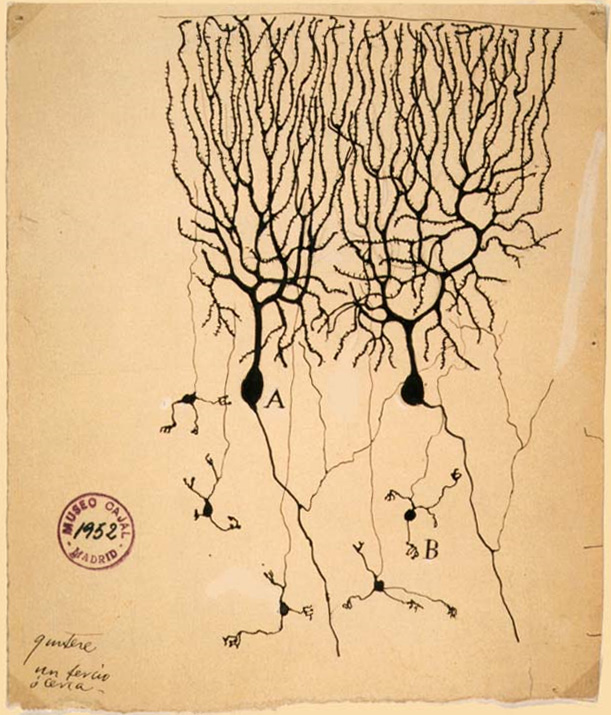
Santiago Ramón y Cajal's drawing of Purkinje cells


Judging from even the small percentage of talks that emphasized the neuro-fields, I can easily imagine a future iteration of Critical Juncture—or some other conference/workshop/organization entirely—fruitfully focusing specifically on interdisciplinary approaches to mind and brain (I leave it to you, organizers of the future, to generate some witty wordplay relying on synaptic junctions).


Beyond just talking between academic disciplines, conversations could link the academy with local artists and community-based movements (perhaps in the vein of Sickle and Flow, a project Christopher Lewis discussed at Critical Juncture). Such an event could draw together neuroscience and cognitive science researchers, visual and performance artists, activists and science communicators, scholars of the humanities and social scientists. Through mutual inquiry, perhaps participants could come away with new perspectives—a deeper sense of the historical context of a contemporary field of research (and why that might matter in the first place), a demystified understanding of the process by which colorful images are crafted from magnetic imaging, or a clearer awareness of the concerns and priorities of patients with neurological conditions.


What might emerge from a panel discussion of representations of mental illness including a mad pride activist, neuropsych researcher, science journalist, and a sociologist of health?


How might a conversation with a neuroscientist provide inspiration for piece of visual art? How might that art in turn help the neuroscientist see or teach their research in a new way? How might co-curating an exhibit, as Terranova and Wessner did, help people with different disciplinary training find mutual ground?


Could community-based projects and partnerships be initiated or strengthened through connections with new networks? (Eddie Gonzales, of StoryCorps Legacy, spoke on a panel at Critical Juncture, showing the emotional force of testimony and connection, but also calling for researchers to make use of the huge bank of archival documentation this project has amassed.)


A project of this kind need not take on a utopian or uncritical tone to be of use. As transdisciplinary team Des Fitzgerald, Melissa Littlefield, Kasper Knudsen, James Tonks, and Martin Dietz articulate in their fascinating article, “Ambivalence, equivocation and the politics of experimental knowledge: A transdisciplinary neuroscience encounter,” such encounters are not universally productive and can be hotbeds of negative affect. My own attempt to work across disciplines leaves me with significant anxiety about what is “lost in translation” as I try to render myself legible to a variety of readers or listeners—do I bastardize the specialized knowledge of my home discipline by oversimplifying or cutting jargon that has developed through decades of scholarly inquiry? To what extent is it possible to incorporate the insights of a field I don’t have five years of graduate training in? Interdisciplinary encounters, though, don’t need to ignore or sidestep these problems, but can make space to talk about them freely and collaborate nevertheless—to receive mentorship from others who have succeeded (or perhaps more productively, failed) in prior attempts to tackle these problems. I, for one, would love to attend a roundtable titled “my biggest interdisciplinary failure.”


Ultimately, it seems that one of the most concrete benefits emerging from sharing interdisciplinary spaces is the reminder of how our “home disciplines” are put together—their strengths, weaknesses, and methodologies. Other than the occasional sobering attempt to define our research interests at family gatherings, many of us end up spending a great deal of time with people who share our training, and hence, often, our assumptions about how the world works. Unless you have a special gift, trying to explain the tenets of your field to someone who hasn’t taken the same “methods” course as you is a humbling endeavor, but, I think, a crucial one. Our own ideologies and organizing principles have a way of becoming invisible to us, and at the very least, it’s worth shining a light a little brighter on them.


PS:


The conference is organized by graduate students each year, and only takes place when two or three students take on the task—so if any of you out there are reading and are interested in taking on the conference in years to come, this could be you! Feel free to reach out to me with questions.


Want to cite this post?


Grubbs, L. (2016). Notes from the field: Critical Juncture conference at Emory. The Neuroethics Blog. Retrieved on , from http://www.theneuroethicsblog.com/2016/05/notes-from-field-critical-juncture.html

Tuesday, January 19, 2016

Integration without reduction: What the philosophy of empathy can learn from mirror neurons

by Georgina Campelia


Georgina Campelia is currently a Ph.D. Candidate in Philosophy at the Graduate Center, CUNY, working under the supervision of Virginia Held. Her dissertation, “Virtue’s Web: The Virtue of Empathic Attunement and the Need for a Relational Foundation,” develops an account of empathic attunement, defends its status as a virtue, and sketches a relational ontology of virtue that would better accommodate the relationality of this and other important virtues.


Georgina is currently an affiliate instructor at the Montefiore Einstein Center for Bioethics, where she teaches in their Certificate and Masters Programs. She also serves on the Steering Committee at the New York Society for Women and Philosophy (NYSWIP) and is a co-organizer of SWIPshop (a workshop for feminist philosophy).


As the lack of empathy in the world has become particularly apparent and troubling in light of the resistance to offering asylum for Muslim refugees (see this recent article from The Guardian), perhaps it makes sense that the study of empathy is booming (Coplan, 2014; Decety, 2012; de Waal, 2009). Philosophers question and defend its moral worth (Bloom, 2014), psychologists and primatologists consider its nature and origin (Hoffman, 2000; Waal, 2012), and neuroscientists explore its metaphysical structure (Singer, 2009; Zaki & Ochsner, 2012). Empathy offers a distinctive ground for interdisciplinary work and, yet, little has been done to advance cross-field communication. While some popular work offers broadly incorporated perspectives (de Waal, 2009), and there are some anthologies that include multiple disciplines (Coplan & Goldie, 2014; Decety, 2012), there is room for more robustly integrated research.


Image of a baby macaque imitating facial expressions, courtesy of Wikimedia.


Experiments on mirror neurons began with the objective of understanding goal-directed movement and action-imitation using monkeys (Pellegrino, Fadiga, Fogassi, Gallese, & Rizzolatti, 1992). Di Pellegrino et al. found that many of the same neurons that were active when the monkey performed an action (e.g. grasping a piece of food) were also active when the monkey observed an experimenter performing the same movement. The fact that there were motor neurons that were active when a monkey merely observed another’s action seemed to strongly suggest some kind of empathic mechanism.


The discussion around mirror neurons continues to evolve (see a response from Catmur et al. here and special AJOB Neuroscience issue edited by Jean Decety here), but communication across disciplines is still lacking. This is especially true of philosophy and neuroscience. On the one hand, the philosophy of empathy largely neglects the findings of experiments that study mirror neurons or the general networks of brain activity that reflect some kind of mirroring the other or feeling with the other (Coplan & Goldie, 2014; Slote, 2007). To ignore these findings is to ignore our own physicality and, potentially, to imply that empathy is merely ‘substantial,’ ‘non-physical,’ ‘mental’ (i.e. not real). One reason for unease here rests on how such assumptions maintain the dualisms and binaries that many feminists have sought to resist. If empathy is ‘merely’ mental, emotional, feminine, it is all too easy to discount its epistemic, moral and metaphysical import. On the other hand, much work in neuroscience and cognitive science seems to proceed with a notion of ‘empathy’ that is not fully analyzed and rarely questioned (Singer & Lamm, 2009; Zaki & Ochsner, 2012). Why think that some affective resonance in witnessing a partner’s pain (Singer, Seymour, et al. 2004) is a matter of empathy rather than sympathy or compassion? Does it not pain me to see a refugee tripped by a camera-person even though I can’t possibly know how that feels (i.e. empathize)? How are we to differentiate this form of affective resonance from actually understanding how another feels (i.e. empathizing)? This vagueness holds many dangers, including the epistemic and moral injustices that arise in conflating empathy with sympathy and other forms of affective responsiveness. The assumption that fMRI imaging proves empathic understanding (i.e knowing how another feels) (Singer, Seymour, et al. 2004) when it could be sympathy or compassion instead (merely feeling badly for another), could be used to justify the false assumptions of empathy that deepen marginalization and dehumanization, e.g. a politician’s claim to understand (and empathize with) the plight of a Syrian refugee while denying asylum. As Singer and Lamm’s more recent evaluation of the current status of the social neuroscience of empathy suggests, there is reason to proceed with caution and make efforts to enhance differentiation (Singer & Lamm 2009).


Further, there is work on both sides that is guilty of overly extoling or too quickly dismissing the connections between mirror neurons/systems, empathy, and moral value. For instance, Jesse Prinz argues that empathy is “not necessary” for morality (Prinz 2011), which is a far cry from it having no role in morality (or even a substantial role depending on the definition of empathy). Similarly, critiques of mirror neurons in cognitive science sometimes neglect the space between mirror neurons as the basis of action theory and mirror neurons as completely devoid of import to cognition (see Gregory Hickock’s recent book review from AJOB Neuroscience here). The pitfalls on all sides are troublesome, but all the more reason to find means of reflective integration. In particular, I have found that work in neuroscience on mirror neurons may help to challenge atomistic views of the self. Studies of mirror neurons and mirror systems suggest that, at least at times, self and other are not easily divisible. In empathizing (or otherwise affectively mirroring), we engage with others in ways that are more integrative of feelings, perspectives, and subjective experiences, i.e. more deeply relational.


File:Empathy Children.jpg
Children shown images of painful accidents have activation

of some pain circuits in the brain. Image courtesy of Wikimedia.


As suggested above, multiple studies have found that “vicariously experiencing pain activates part of the neural network that is also activated when we are in pain ourselves” (Singer & Lamm, 2009, p. 85). In one such experiment, Singer et al. (2004) studied the reactions of participants to a partner experiencing pain by using fMRI to measure patterns of neural activation. As Singer & Lamm conclude, “The results suggest that parts of the so-called pain matrix (Derbyshire, 2000)… were activated when participants experienced pain themselves as well as when they saw a signal indicating that their loved one would experience pain” (Singer & Lamm, 2009, p. 85), also formerly discussed on the blog here.


First, while this work does not conclusively demonstrate empathy, it does support the claim that we can ‘feel-with’ (Code, 1995). In other words, when we observe another in pain, can mirror the person’s affective state (at least to some degree), thus engaging in some level of empathic resonance (even if we cannot fully understand how the other feels). While much work must be done regarding the methods by which we achieve such mirroring and what that mirroring amounts to (e.g., could it be that we are only projecting ourselves into the experience of the other?), we certainly and at the very least see a minimal level of interconnected brain states. Rather than avoidance, neglect, or detached perception, connections reliably develop between experiential states. This is not to say that we feel the other’s emotion, but we can and do feel-with the other to some extent or another.


Second, this research presents a picture of the self that does not only externally react or respond to others, does not only cognitively consider the experiences of others and then respond (as in theory-theory of mind) (Baren-Cohen, 2011; Zahavi & Overgaard, 2012), but rather possesses an internal experiential state that regularly emotionally engages with and reflects the experiences of others. This fits with phenomenological and psychological claims about empathy’s role in development and day-to-day interactions with others (Code, 1995; Hoffman, 2000; Keysers, 2011; Slote, 2007; de Waal, 2009). If, as these accounts suggest, we are so continuously and deeply affected by the emotional experiences of others, then we have some reason to conclude that the self is developed in relation to others and persistently connected to the experiences of others as many feminist theorists have contended (Bartky, 1997; Code, 1995; Fricker, 2007; Held, 2006; Kittay, 1999; Nedelsky, 2011; Tietjens Meyers, 1997; Whitbeck, 1983).


This is not to say that all mental states are so connected, or even mental states beyond the experience of pain; we simply do not yet know. Further, while there is a significant degree of overlap, there is also a significant degree of distinction in the two neurological processes (self-experience and vicarious experience), and we still know very little about the specific functions of the relevant brain areas (nevermind individual neurons and networks). However, these studies suggest a greater degree of affective interconnection than originally supposed by a vast amount of neurological, psychological and philosophical literature.


Ultimately, if we are more deeply relational selves, then the relations we hold with others matter to who we are and to our moral responsibility [1]. For instance, according to most ethical theories, a politician who spouts anti-Muslim views could be responsible for psychological harm and maybe, with some stretching, for physical harm that results from others acting on those views. But a relational view of the self and a relational ethics will offer something different. In addition to the harming of other individuals, the politician could be responsible for forming uncaring relationships. In particular, perhaps we can say that the fault lies in the failure to develop empathic connections with those who need them most. In this way, the wrongdoing of the opposition to accepting refugees can be said to be a failure of empathic engagement. The politician does not really try to understand how the refugees feel and, therefore, does not take the subjective experience of the refugee seriously. This is a substantial form of disrespect and dehumanization that is only available once we take relationality and empathy seriously.


Now, as some philosophers have argued, one might say that the politician’s stereotypes obstruct empathy (Prinz, 2011) and that empathy is or becomes impossible (Goldie, 2014). Without the ‘is’ we cannot get the ‘ought’ claim off the ground. However, neuroscience largely suggests that stereotypes do not necessarily prevent empathy. Positive stereotypes can enhance empathy (Jussim, Harber, Crawford, Cain, & Cohen, 2005; Lewis & Hodges, 2012). And even the research that suggests that empathy is affected by in-group and out-group biases fails to demonstrate that these biases are immovable or impossible to overcome (De Dreu, Greer, Van Kleef, Shalvi, & Handgraaf, 2010; Lewis & Hodges, 2012). Thus, any obstruction to empathy that stereotypes might provide does not necessarily excuse empathic failure. In fact, given the relational view above, it calls all such dimensions of empathic relationships into the bounds of individual responsibility.


So, while the main question here is an ontological one and, therefore, largely leaves open questions about if, when and how we should engage empathically with others, it does lead us toward new dimensions of responsibility and wrongdoing. These are dimensions of our ethical lives that dig into our psychological relations with others and plunge us into broader ethical concerns. Can a human rights framework of justice ultimately succeed if it obligates tolerance but not empathic or otherwise caring relations? Similarly, might a strong handed focus on the principle of autonomy ultimately steer medicine deeper into the abyss of consumerism and liability rather than into structures of caring and affectively engaged relations? Ultimately, it will be a reflective integration of philosophy and neuroscience, not a reduction to one or the other, that leads us to ask these very important questions and gets us on the track of providing more comprehensive answers.


[1] Here, I do not make any claim that a relational account of the self is holistic or collectivist as it is in some Eastern Philosophy (Chan, 1999). Further, taking relationality seriously does not entail that we are mere nodes of relations (as in some postmodern sociology, e.g. (Taylor, 2001). Nor does it entail a loss of individuality or individual responsibility, as relations can still be embodied.


Bibliography


Baren-Cohen, S. (2011). The Science of Evil: On Empathy and the Origins of Cruelty. Philadelphia: Basic Books.


Bartky, S. (1997). Sympathy and Solidarity: On a Tightrope with Scheler. In D. T. Meyers (Ed.), Reminists Rethink the Self. Oxford: Westview Press.


Bloom, P. (2014). Against Empathy. Boston Review: A Political and Literary Forum. Chan, J. (1999). A Confucian Perspective on Human Rights for Contemporary China. In J. R. B. Bell & D.A (Eds.), The East Asian Challenge for Human Rights. New York: Cambridge University Press.


Code, L. (1995). Rhetorical Spaces: Essays on Gendered Locations. New York: Routledge. Coplan, A. (2014). Understanding Empathy: Its Features and Effects. In A. Coplan & P. Goldie (Eds.), Empathy: Philosophical and Psychological Perspectives. New York: Oxford University Press.


Coplan, A., & Goldie, P. (Eds.). (2014). Empathy: Philosophical and Psychological Perspectives. Oxford: Oxford University Press.


De Dreu, C. K., Greer, L. L., Van Kleef, G. A., Shalvi, S., & Handgraaf, M. J. J. (2010). Oxytocin promotes human ethnocentrism. Proceedings of the National Academy of Sciences of the United States of America, 108(4), 1262-1266.


Decety, J. (Ed.) (2012). Empathy: From Bench to Bedside. Cambridge, Massachusetts: The MIT Press.


Fricker, M. (2007). Epistemic Injustice: Power & the Ethics of Knowing. New York: Oxford University Press.


Goldie, P. (2014). Anti-Empathy. In A. Coplan & P. Goldie (Eds.), Empathy: Philosophical and Psychological Perspectives. Oxford: Oxford University Press.


Haraway, D. J. (1991). Situated Knowledges: The Science Question in Feminism and the Privilege of Partial Perspective Simians, Cyborgs and Women: The Reinvention of Nature. New York: Routledge.


Held, V. (2006). The Ethics of Care: Personal, Political, and Global. Oxford: Oxford University Press.


Hoffman, M. L. (2000). Empathy and Moral Development: Implications for Caring and Justice. New York: Cambridge University Press.


Jussim, L., Harber, K. D., Crawford, J. T., Cain, T. R., & Cohen, F. (2005). Social reality makes the social mind: Self-fulfilling prophecy, stereotypes, bias, and accuracy. Interaction Studies, 6, 85-102. 


Keysers, C. (2011). The Empathic Brain: Christian Keysers: Social Brain Press. Kittay, E. (1999). Love's Labor: Essays on Women, Equality, and Dependency. New York: Routledge.


Lewis, K. L., & Hodges, S. D. (2012). Empathy is Not Always as Personal as You May Think: The Use of Stereotypes in Empathic Accuracy. In J. Decety (Ed.), Empathy: From Bench to Bedside. Cambridge, MA: Massachusetts Institute of Technology.


Nedelsky, J. (2011). Law's Relations: A Relational Theory of Self, Autonomy, and Law. New York: Oxford University Press.


Prinz, J. J. (2011). Is Empathy Necessary for Morality? In A. Coplan & P. Goldie (Eds.), Empathy: Philosophical and Psychological Perspectives (pp. 211-229). New York: Oxford University Press.


Singer, T., & Lamm, C. (2009). The Social Neuroscience of Empathy. The Year in Cognitive Science, 1156, 81-96.


 Singer, T. Seymour, B., O'Doherty, J., Kaube, H., Dolan, R. J., Frith, C. (2004). Empathy for Pain Involves the Affective but not Sensory Components of Pain. Science, 303, 1157-1162.


Slote, M. (2007). The Ethics of Care and Empathy. New York: Routledge. Taylor, M. C. (2001). The Moment of Complexity: Emerging Network Culture. Chicago: University of Chicago Press.


Tietjens Meyers, D. (Ed.) (1997). Feminists Rethink the Self. United States of America: Westview Press.


de Waal, F. (2009). The Age of Empathy: Nature's Lessons for a Kinder Society. New York: Three Rivers Press.


de Waal, F.  (2012). Empathy in Primates and Other Mammals. In J. Decety (Ed.), Empathy: From Bench to Bedside (pp. 87-106). Cambridge, MA: Massachusetts Institute of Technology.


Whitbeck, C. (1983). Feminist Ontology: A Different Reality. In C. Gould (Ed.), Beyond Domination. Towota, N.J.: Rowman and Allenheld.


Zahavi, D., & Overgaard, S. (2012). Empathy without Isomorphism: A Phenomenological Account. In J. Decety (Ed.), Empathy: from Bench to Bedside. Massachusetts: Massachusetts Institute of Technology.


Zaki, J., & Ochsner, K. N. (2012). The neuroscience of empathy: progress, pitfalls and promise. Nature Neuroscience, 15(5), 675-680.


Want to cite this post?


Campelia, G. (2016). Integration without reduction: What the philosophy of empathy can learn from mirror neurons. The Neuroethics Blog. Retrieved on , from http://www.theneuroethicsblog.com/2016/01/integration-without-reduction-what.html

Tuesday, August 18, 2015

Why I teach with an English professor

by Krish Sathian, MD, PhD


Dr. Sathian is Professor of Neurology, Rehabilitation Medicine, and Psychology at Emory University, and directs the Neurorehabilitation Program in the Department of Neurology. The recipient of Emory’s 2001 Albert Levy senior faculty award for excellence in scientific research, he is Executive Director of the Atlanta VAMC Rehabilitation R&D Center for Visual and Neurocognitive Rehabilitation and immediate Past President of the American Society of Neurorehabilitation.


Editor's note: The following post is the second of a pair of essays about interdisciplinary teaching we will feature on the blog. Please see its companion piece from last week, Dr. Laura Otis's "Why I teach with a neurologist." It is often said that academic fields are becoming increasingly siloed as specializations become more and more detailed and jargon-filled with each new peer-reviewed paper. The classes co-taught by Professors Otis and Sathian were unique interdisciplinary spaces where students across traditional disciplinary divides were able to wrestle with topics shared by the humanities and sciences: perception, imagination, and art. Is this kind of interdisciplinary inquiry a necessary counterbalance to the siloing of the disciplines? Or could it even be seen as part of the ethical practice of science? Might having more of such classes improve the science literacy of those in the humanities, and keep scientists in touch with the depth of expertise that other fields can contribute (as I have argued in an earlier post)? Should we begin to find ways to institutionalize more of this type of work into the higher education system, or provide more movement between the disciplines? Or is interdisciplinarity merely a fad? Readers: what do you think? 


I consider myself very fortunate to work both as a clinical neurologist in academia, and as a neuroscientist investigating fundamental questions about the brain that may in time have an impact on how we treat people with neurological disorders. My own research over many years has concentrated on studies of perception, but I recently began to study how the brain handles metaphor.


This may seem like quite a jump, but it turns out that sensory and motor regions of the brain are involved not only in the expected sensory and motor functions, but also serve to “ground” metaphors relating to particular sensory or motor processes. For example, when we hear the sentence “She had a rough day,” the part of our brain that is important for judging roughness by touch actually becomes active. This kind of finding supports the idea that metaphors begin as conceptual abstractions from our experience.


Literature, of course, has an abundance of metaphors, as well of sensory images that are evoked by the words on the page. My background in perception had taught me that the experience of imagery depends on activity in much the same brain areas as are relevant for sensory experience, e.g., when one visualizes, the visual cortex, which is necessary for vision, gets engaged. Thus, one can conceive of literary writers as people who have mastered the ability to trigger the neural processes underlying imagery and metaphor (and other literary devices) in the reader, albeit not necessarily with the neuroscientific facts in mind. And of course, I should emphasize that our study of the underlying neural processes is still inchoate.


The Center for Mind, Brain and Culture (CMBC) at Emory University brings together scholars from a variety of disciplines to examine specific issues from multiple perspectives. One of the ways they do this is a call for interdisciplinary course proposals. With my interests in the neuroscience underlying literary images and metaphors and the expertise of Professor Laura Otis in teaching English in relation to cognitive science, it seemed to us that an ideal course to propose would be one that intertwined literary and neuroscientific readings.


The CMBC agreed to sponsor our course, and I can honestly say that the course we ran in 2012 and its successor in 2014 were the most fun courses I have ever been involved in! In both, we had a good mix of students from various aspects of the humanities and sciences, keenly interested in the material, and the classes saw a host of animated discussions from a range of viewpoints. I went into the first course confident that it would be a good one, especially because Professor Otis, while being an expert in literature and its pedagogy, also has a background in neuroscience. I thought, however, that we would have to work very hard to eke out a few intersections between the language of storytelling and poetry on the one hand, and that of cognitive neuroscience on the other. Boy, was I wrong! I was simply blown away by the profusion of connections between disciplines. Professor Otis had a knack for bringing in just the right creative works, and just the right writer-scholars to talk about them, to match up with the relatively fledgling attempts to tackle how the brain works to enable the glorious acts of literary writing, and the consumption of the products of these acts by readers at large. These pairings really made the courses tick.


Based on my experiences, I highly recommend joint teaching of interdisciplinary courses. It takes some thought and care to select the best topics and generate the appropriate blend of approach and content, and of course the right chemistry between the professors, and a willingness of students to be open and participatory. When all these work out, as they miraculously did in our courses, a splendid time can be guaranteed for all, to paraphrase John Lennon.


Want to cite this post?


Sathian, K. (2015). Why I teach with an English professor. The Neuroethics Blog. Retrieved on , from http://www.theneuroethicsblog.com/2015/08/why-i-teach-with-english-professor.html