By Henry T. Greely
 Henry T. (Hank) Greely is the Deane F. and Kate Edelman Johnson Professor of Law and Professor, by courtesy, of Genetics at Stanford University. He specializes in ethical, legal, and social issues arising from advances in the biosciences, particularly from genetics, neuroscience, and human stem cell research. He directs the Stanford Center for Law and the Biosciences and the Stanford Program on Neuroscience in Society; chairs the California Advisory Committee on Human Stem Cell Research; is the President Elect of the International Neuroethics Society; and serves on the Neuroscience Forum of the National Academy of Medicine; the Committee on Science, Technology, and Law of the National Academy of Sciences; and the NIH Multi-Council Working Group on the BRAIN Initiative. He was elected a fellow of the American Association for the Advancement of Science in 2007. His book, THE END OF SEX AND THE FUTURE OF HUMAN REPRODUCTION, was published in May 2016.
Professor Greely graduated from Stanford in 1974 and from Yale Law School in 1977. He served as a law clerk for Judge John Minor Wisdom on the United States Court of Appeals for the Fifth Circuit and for Justice Potter Stewart of the United States Supreme Court. After working during the Carter Administration in the Departments of Defense and Energy, he entered private law practice in Los Angeles in 1981. He joined the Stanford faculty in 1985.
Fifteen years ago, on May 13, 2002, a two-day conference called “Neuroethics: Mapping the Field” began at the Presidio in San Francisco. And modern neuroethics was born. That conference was the first meeting to bring together a wide range of people who were, or would soon be, writing in “neuroethics;” it gave the new field substantial publicity; and, perhaps most importantly, it gave it a catchy name.
That birthdate could, of course, be debated. In his introduction to the proceedings of that conference, William Safire, a long-time columnist for the NEW YORK TIMES (among other things), gave neuroethics a longer history:
The first conference or meeting on this general subject was held back in the summer of 1816 in a cottage on Lake Geneva. Present were a couple of world-class poets, their mistresses, and their doctor. (Marcus)
Safire referred to the summer holiday of Lord Byron and Percy Bysshe Shelley; Byron’s sometime mistress, Claire Clairmont; and Shelley’s then-mistress, later wife, known at the time as Mary Godwin and now remembered as Mary Wollstonecraft Shelley. The historically cold and wet summer of 1816 (“the year without a summer”) led them to try writing ghost stories. Godwin succeeded brilliantly; her story eventually was published in 1818 as
FRANKENSTEIN: OR, THE NEW PROMETHEUS.
Safire’s arresting opening gives neuroethics either too little history or too much. If, like Safire, one allows neuroethics to predate an understanding of the importance of the brain, early human literature – both religious and secular – show a keen interest in human desires and motivations. So does philosophy, since at least classical Greece. But without a recognition of a critical role of the physical brain in human behavior and consciousness, I do not think those discussions should be called “neuroethics,” though they are its precursors.
It was not until the late 19th century that we saw the beginnings of deeper understanding of not only the role of the brain but of how it might function, notably through the (dueling) work of
Camillo Golgi and
Santiago Ramón y Cajal. Al Jonsen has noted that many twentieth century issues and events posed issues we would today consider “neuroethics.” (Johnson) The issues seemed particularly intense in the 1960s and early 1970s, with active debates ranging from the uses of electroconvulsive therapy and frontal lobotomies; to legal and medical uses of brain death; to research with psychedelic drugs, aversion therapy, and “mind control.”
But the nascent field calmed down again, until the rise of good neuroimaging in the 1990s, largely through magnetic resonance imaging, first structural and then functional. These took major steps toward connecting the physical brain to the intangible mind and thus linking neuroscience more directly to human society. People began to write about them for both specialized and general audiences. (Kulynych 1996, Kulynych 1997, Carter 1998, Blank 1999). And academics noticed. In 2000, based on planning begun by Paul Root Wolpe in 1998, the Bioethics Center at the University of Pennsylvania held three experts’ meetings, the first in January, the second in March, and the third in June.
In retrospect, though, 2002 was clearly
the crucial year for neuroethics. It started in January when the American Association for the Advancement of Science and the journal
Neuron jointly sponsored a symposium, was called “
Understanding the Neural Basis of Complex Behaviors: The Implications for Science and Society.” Then, on February 7, 2002, Penn Bioethics held a public conference on “Bioethics and the Cognitive Neuroscience Revolution” as the culmination of its three meetings in 2000.
But the most important meeting was held on May 13 and 14 at the San Francisco Presidio. Sponsored by the Dana Foundation and jointly hosted by UCSF and Stanford, this conference, called “Neuroethics: Mapping the Field,” brought together about 150 neuroscientists, philosophers, bioethicists, lawyers, and others. The Dana Press published the conference proceedings later in 2002; the book was fascinating reading then, and remains so today.
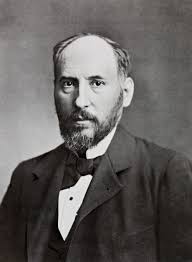 |
Santiago Ramon y Cajal, image
courtesy of Wikipedia. |
Zach Hall of UCSF and Barbara Koenig of Stanford were the main organizers of the meeting. Hall was a neuroscientist, who had returned to the UCSF faculty after serving as Director of the National Institute of Neurological Disease and Stroke at NIH. Koenig was the Executive Director of the Stanford Center for Biomedical Ethics (SCBE). Koenig, a bioethicist who did not then have a deep background in neuroscience, was assisted by others at SCBE, notably Judy Illes, a neuroscience Ph.D. who had recently joined the Center.
Hall, mainly from the neuroscience side, and Koenig, mainly from the bioethics side, organized the meeting but William Safire was its prime mover. Safire was one of the most interesting people I have ever met. (McFadden) He dropped out of Syracuse University after two years and boasted to me – probably accurately – that he was the last person in American politics to be a college dropout. From 1955 until 1968 he worked in public relations firms, his own after 1961, with occasional time out to work on Republican political campaigns. In 1968 he joined the transition team and then the Nixon White House as a special assistant with a focus on speech writing, coining, among other phrases, “the nattering nabobs of negativism” for a speech by Vice President Agnew. He left the Nixon Administration to become a political columnist for the New York Times, which he did until 2005. He remained with the Times, however, continuing to write the “On Language” column he started in the New York Times magazine in 1979 until shortly before his death from pancreatic cancer in September 2009.
Safire’s New York Times obituary makes no mention of neuroscience or neuroethics, but his involvement was quite real. In 1993 he became a member of the Board of Directors of the Dana Foundation, a private charitable foundation created in the 1950 by Charles A. Dana, a lawyer and businessman; in 1998 he became its vice chairman and then in 2000 its chairman. As chairman Safire made neuroscience the Foundation’s almost exclusive focus.
Hall’s welcome to start the Conference, as published in the conference proceedings, explains Safire’s role in it:
This meeting had its genesis in a visit to San Francisco by Bill Safire about a year and a half ago, I took Bill down to the new Mission Bay campus at UCSF and we were talking about all the brain research that would be going on there, I said that we also hoped to have a bioethics center. As we were talking about the need for discussion of these issues with respect to the brain, Bill suddenly turned to me and said, neuroethics. It was like that magic moment – “plastics” in the movie The Graduate. Bill said, “neuroethics,” and I thought, “that’s it.” (Marcus)
 |
| William Safire. (Image courtesy of Wikimedia.) |
The conference had four sessions, each with a moderator and three or four speakers, several mealtime speeches, and a concluding section. The sessions were called Brain Science and Self, Brain Science and Social Policy, Ethics and the Practice of Brain Science, and Brain Science and Public Discourse. (In retrospect, and in light of my preferred scope for the field, “Brain Science” would have been a better, broader term than “Neuroscience,” but “neuroethics” and “neurolaw” both sound much better than “brain science ethics” or “brain science law.”)
The speakers and moderators came from both neuroscience and ethics (broadly construed). Many of them were prominent at the time of the conference; many played important continuing roles in the development of neuroethics. From neuroscience came Marilyn Albert, Colin Blakemore, Antonio Damasio, Michael Gazzaniga, Steven Hyman, William Mobley, Daniel Schacter, and Kenneth Schaffner, as well as Zach Hall. Arthur Caplan, Judy Illes, Albert Jonsen, Barbara Koenig, Bernard Lo, Jonathan Moreno, Erik Parens, William Safire, William Winslade, Paul Root Wolpe, and I all spoke from ethics, law, politics, or philosophy. And at least three speakers did not fit neatly into that divide – Patricia Smith Churchland, a philosopher of the mind deeply involved in neuroscience; Donald Kennedy, a biologist and former president of Stanford who, at that time, was the editor of Science magazine; and Ron Kotulak, a science journalist.
Like many conferences, this one claimed to want more discussion than presentations. My recollection, supported by the conference proceedings, is that, unlike most conferences, it succeeded in this goal. The general discussions between and among the speakers and the invited audience were insightful, and sometimes heated.
Also like many conferences, this one was created in the hope that it would have some lasting impact. The most immediate consequence was the publication, with impressive speed, of the conference proceedings in July 2002, but perhaps more important was the publicity given to the idea of neuroethics.
Two days after the conference ended, Safire used his NEW YORK TIMES column to write about
neuroethics generally and the conference. After starting the column with the Congressional debate over banning human cloning, Safire moved to the importance of neuroethics, ending with “The conference 'mapping the field' of neuroethics this week showed how eager many scientists are to grapple with the moral consequences of their research. It's up to schools and media and Congress to put it high on the public's menu.” (Safire)
The following week, the cover of THE ECONOMIST proclaimed
“The Future of Mind Control” with an image of a shaved head with a dial implanted in its forehead. The issue contained both a long science story on the ethical issues arising from neuroscience and a leader (editorial) on the same subject. (The Economist) While neither ECONOMIST piece used the term “neuroethics” or mentioned the Presidio conference (and the story at least must have been in preparation well before the conference), the effect, especially in conjunction with Safire’s column, was more attention for the issues.
But perhaps the most important result of the Presidio conference was the field’s name. Safire first used it in print in his May 2002 column, but, according to Hall, had used it with him about 18 months earlier. Although searchers have found earlier uses of the term (Illes, Racine), no one disputes that Safire was the first to use it publicly in its current sense or that he was the one who popularized it.
It is, in some ways, a poor name for the field. Calling the area “neuroethics” risks limiting it. After all, much of the interest in ‘neuroethics” is in its legal and social implications, not just its “ethical” ones. And using “ethics” also raises a longstanding difficulty between philosophers who sometimes act as though they own the term, and bioethics. I made these arguments at the Presidio conference, but, even as I did so, conceded “I’m afraid this is a doomed argument because I don’t have a better word. ‘Neuroethics’ sounds great.” (Marcus)
On that point at least, I was right. So tonight I’ll raise a glass to “neuroethics” and wish it “Happy birthday, and many happy returns!” And I hope the readers of this blog will join me.
ReferencesRita Carter, MAPPING THE MIND (1998, Berkeley, CA: U. Calif. Press).
Robert H. Blank, BRAIN POLICY: HOW THE NEW NEUROSCIENCE WILL CHANGE OUR BRAINS AND OUR POLITICS (1999, Washington, D.C.: Georgetown Univ. Press)
The Ethics of Brain Science: Open Your Mind, THE ECONOMIST (May 23, 2002), accessed on Apr. 29, 2017 at
http://www.economist.com/node/1143317.
The Future of Mind Control, THE ECONOMIST, (May 23, 2002), accessed on Apr. 29, 2017 at
http://www.economist.com/node/1143583.
Judy Illes,
Neuroethics in a New Era of Neuroimaging, 24 Am. J. Neurorad. 1739 (2003)
Albert R. Jonsen,
Nudging toward Neuroethics: An Overview of the History and Foundations of Neuroethics in THE DEBATE ABOUT NEUROETHICS: PERSPECTIVES ON THE FIELD’S DEVELOPMENT, FOCUS, AND FUTURE (ed. Eric Racine and John Aspler, forthcoming 2017, Springer:)
Jennifer Kulynych,
Brain, Mind, and Criminal Behavior: Neuroimages as Scientific Evidence, JURIMETRICS 235-244 (1996)
Jennifer Kulynych,
Psychiatric Neuroimaging Evidence: A High-Tech Crystal Ball? 49 STAN. L. REV. 1249 (1997)
Steven J. Marcus, ed., NEUROETHICS: MAPPING THE FIELD, Conference Proceedings at 4 (2002, Dana Press: New York).
Robert D. McFadden,
William Safire, Political Columnist and Oracle of Language, Dies at 79, New York Times (Sept. 27, 2009), accessed on January 1, 2017 at
http://www.nytimes.com/2009/09/28/us/28safire.html. (This is my source for most of the biographical information about Safire.)
Eric Racine, in PRAGMATIC NEUROETHICS (2010 MIT Press: Cambridge, Mass)
William Safire,
the “But What If” Factor, NEW YORK TIMES (May 16, 2002), accessed on Apr 29, 2017 at
http://www.nytimes.com/2002/05/16/opinion/the-but-what-if-factor.html.
Want to cite this post?Greely, H. (2017). Happy 15th Birthday, Neuroethics! The Neuroethics Blog. Retrieved on , from http://www.theneuroethicsblog.com/2017/05/happy-15th-birthday-neuroethics.html