Pages

Thursday, March 12, 2015

Primordial soup to nuts: are some men naturally selected to be better dads?

Children are the future. So “why do some men choose not to invest in their children?” This was the question that Dr. James Rilling set out to answer over the last few years. Dr. Rilling is the head of the Laboratory for Darwinian Neuroscience in the Anthropology Department at Emory University and states one of the lab’s aims is “exploring the neural basis of human social cognition and behavior, particularly those aspects that have been under strong evolutionary selection pressure.” But are absent fathers the result of natural selection?


In the last half-century, the basic structure of American families has been changing. Within two-parent households, fathers are spending more time with their children than they used to as more mothers work outside the home. However, there are also many more single mothers raising children without any paternal help and roughly half of all American children are raised by a single parent at some point during childhood [1].


These changes have occurred far too rapidly to be the result of natural selection, but this trend compels additional study into the factors underlying paternal commitment. It is not known if there may in fact be an evolutionary explanation for why some men are more committed fathers than others. More to the point, do biological differences between men influence behavioral variation? Life History Theory posits that natural selection shapes the allocation of finite resources toward aspects of growth, survivorship, and reproduction. Within reproduction, there is arguably a trade-off in this zero-sum game between parenting and mating activities, and natural selection shapes phenotypes to support optimal strategies.


In the non-human world, there is evidence for a connection between mating strategy and testicular size in males. For example, gorillas, who typically live in harem-like situations with little competition from other males have rather small testes for their body weight whereas chimpanzees, who typically face much more mating rivalry are much better-endowed [2]. Other studies have found a relationship between testicular volume and mating success within species [3,4].


Dr. Rilling’s group reasoned that perhaps testicular volume would also be indicative of mating investment within a species (ours) and tested whether testicular size or testosterone levels correlated with measures of paternal involvement. To take it a step further, they also used fMRI to examine the activation of reward pathways in fathers’ brains while viewing photographs of their children. The researchers recruited fathers of children (age 1-2) in Atlanta, GA who were co-habitating with their partner and child. They then asked the fathers – and also the mothers – to come into the lab and answer a series of questions designed to gauge the fathers’ involvement and parenting responsibilities, and also their desired level of involvement.


They then asked the fathers – and also the mothers – to come into the lab and answer a series of questions designed to gauge the fathers’ involvement and parenting responsibilities, and also their desired level of involvement. The survey assessed involvement by asking who is responsible for the child on a 1 – 5 scale (1 being mother almost always to 5 father almost always) in 24 different tasks and situations like bathing the baby or getting up at night to attend to waking. The mothers’ ratings served to corroborate the fathers’ self-reported involvement and supplemental information showed that there was in fact a very high level of agreement. The fathers then provided blood samples for hormonal measures and received structural and functional MRI scans. In the fMRI scanner, they were shown pictures of their own child, an unknown child, and an unknown adult with neutral, happy, or sad facial expressions. Finally, testicular volume was measured by structural MRI.


They hypothesized that the more invested fathers would have lower testosterone levels and smaller testes – reflecting more of an energetic investment in parenting than in mating behavior. Furthermore, they reasoned that this behavior may be related to activity in the ventral tegmental area – a part of brain’s reward system – because more involved fathers may find interaction with their children more rewarding. Indeed, this is what they found.


Mascaro and colleagues published the results of their study entitled “Testicular volume is inversely correlated with nurturing-related brain activity in human fathers” in PNAS [5]. As one might expect, headline writers (this one included) made the most of this opportunity: “Men with smaller gonads are better dads”, “Have you got the balls to be a good dad?”, “How your big balls lead to bad parenting”, etc., etc.


From The Onion


Some Internet commenters and science bloggers who, admittedly, are not by-and-large known for their levelheadedness and foresight, found the study pointless or a waste of money. These remarks may reflect a public attitude that scientific research reported by the mainstream press needs to have some impact on our daily life. They also reflect a lack of understanding of the way science funding works, as this finding was a small piece of a larger study that examined the more general biological influences on paternal behavior and which has resulted in multiple non-testes related publications. This quick-trigger dismissal of science as a waste of money is worrisome given the current state of science funding.


One couldn’t be faulted for asking, “what am I supposed to do with this information?” Does this mean that deadbeat dads should be excused for their irresponsibility so long as they are well-endowed? Not so fast. The authors were careful to note that this study does not establish causality: “it remains unclear whether greater testes volume is a cause or a consequence of male life-history strategies.” In other words, it might also be the case that fathers who choose to be more invested in child rearing experience a drop in testosterone and mating drive (but this doesn’t mean that changing diapers will shrink your manhood!). One limitation of this study is that it confined its analysis to the heteronormative parenting model. An interesting next step could be to determine if these correlations also hold in same-sex male couples.


This study, presented by lead author Dr. Jenny Mascaro at the Emory Neuroethics Program’s monthly Neuroscience, Ethics, and the News Journal Club, is exactly the type of article that this forum was created to discuss. It was published in a high-impact journal and distributed to a wide audience in many fields. The press immediately pounced on it and broadly disseminated the main findings, which is understandable due to how the topic is relatable and digestible (not to mention provocative). In addition, these findings raise interesting questions about biological reductionism and what it means for individual responsibility.


It is difficult to communicate findings such as these – which shed light on our nature and tendencies but do not necessarily explain any single individual’s behavior – to the general public without misinterpretation. Still, it is relatable, fascinating studies like this one that can keep the public engaged with scientific research and help all of us understand a little more about the complexity of human nature.


References


1. Cabrera, Natasha J., Catherine S. Tamis-LeMonda, Robert H. Bradley, Sandra Hofferth, and Michael E. Lamb. “Fatherhood in the Twenty-First Century.” Child Development 71, no. 1 (January 1, 2000): 127–36.


2. Harcourt, A.H., P.H. Harvey, S.G. Larson, and R.V. Short. “Testis Weight, Body Weight and Breeding System in Primates.” Nature 293, no. 3 (September 3, 1981): 55–57.


3. Schulte-Hostedde, Albrecht I., and John S. Millar. “Intraspecific Variation of Testis Size and Sperm Length in the Yellow-Pine Chipmunk (Tamias Amoenus): Implications for Sperm Competition and Reproductive Success.” Behavioral Ecology and Sociobiology 55, no. 3 (October 31, 2003): 272–77.


4. Preston, B. T., I. R. Stevenson, J. M. Pemberton, D. W. Coltman, and K. Wilson. “Overt and Covert Competition in a Promiscuous Mammal: The Importance of Weaponry and Testes Size to Male Reproductive Success.” Proceedings of the Royal Society of London B: Biological Sciences 270, no. 1515 (March 22, 2003): 633–40.


5. Mascaro, Jennifer S., Patrick D. Hackett, and James K. Rilling. “Testicular Volume Is Inversely Correlated with Nurturing-Related Brain Activity in Human Fathers.” Proceedings of the National Academy of Sciences of the United States of America 110, no. 39 (September 24, 2013): 15746–51.


Want to cite this post?


Purcell, R. (2015). Primordial soup to nuts: are some men naturally selected to be better dads? Retrieved on , from http://www.theneuroethicsblog.com/2015/03/primordial-soup-to-nuts-are-some-men.html

Tuesday, March 3, 2015

Diversity in Neuroethics: it’s more important than you might think

By Nicholas Fitz and Roland Nadler**


Nicholas Fitz

Nick is a Graduate Research Assistant at the National Core for Neuroethics at the University of British Columbia. 


Roland is a third-year J.D. student at Stanford Law School and previously worked as a Graduate Research Assistant at the National Core for Neuroethics at the University of British Columbia.


**equal contribution


Roland Nadler

The second decade of neuroethics is now well underway. Much like the human brain itself, some of its developmental “critical periods” have run out, but many others remain open. How will we use these remaining opportunities to shape the field?


Junior participants in these spaces should take the initiative to engage with unresolved questions about the nature and structure of neuroethics as a discipline. After all, those of us at the beginning of our careers have a particularly significant stake in the answers to those questions, with most of our academic and professional lives still ahead of us. As we work to integrate society’s growing technological power with best ethical practices and societal values, we must ask: whose practices, whose values?


Last year, in a bid to foster this discussion, we offered three visions for diversity in neuroethics. In that article, we devoted much attention to diversity along intellectual, disciplinary, and political lines.


Today, we offer a few more thoughts on the importance of diversity in neuroethics in the more familiar sense of having a wide array of identities and backgrounds represented in the field.


Chiefly, we hope to convince you that robust identity diversity is beneficial — indeed, crucial — to neuroethics. The field simply could not provide the kinds of insights that it promises if its practitioners were a homogenous group of people speaking comfortably from positions of social power and privilege.


To be sure, neuroethics is off to a strong start in establishing itself as a diverse field. The successes of Neuroethics Women Leaders, especially well-represented at this year’s Society meeting, deserve special recognition in this regard. While there is always room for improvement, we can be glad that neuroethics is not especially male-dominated as disciplines go.


Our purpose in this post, then, is not to allege that neuroethics is insufficiently diverse — though we should and surely can do better. Our aim, rather, is to highlight that our existing levels of diversity are not merely tangential goods. Heterogeneity is in no way incidental to the field’s ability to carry out its job effectively — much less mere window dressing, a matter of appearances.


Much more than simply insulating the discipline from charges of being exclusionary, diversity positively contributes to the mission of neuroethics. Its contribution can be understood in two senses: a generating sense and an inoculating sense.


Bringing a wide variety of personal experiences and worldviews — along the axes of race, gender, socioeconomic status, (dis)ability, and more — to bear on neuroethics acts as a generator for novel perspectives. If neuroethics is to help steer the responsible use of emerging technology and knowledge, it must acknowledge the ways in which that project touches on bias (from implicit identity biases to larger structural inequalities) and on the heterogeneity of lived experience. And it needs a maximally broad pool of perspectives to draw its critiques from: if that pool lacks, for example, the perspective of transgender people, we may go a long time without realizing how our conversations about the relationship between personal identity and the brain skate blithely over flawed assumptions about gender.


Concretely, then, those at the field’s power centers must reach out in support of investigators from a variety of backgrounds. There is much wisdom to be found in a diverse crowd.


From Phillips, 2014


Meanwhile, one of the greatest pitfalls for any meta-scientific discourse is the tendency to interpret seemingly neutral or objective facts in ways that serve established ideologies. This risk is heightened even more when the science under discussion has some claim to dealing with the “essence” or fundamental nature of human beings — as the history of research on race and IQ so chillingly reminds us. Diversity in the ranks of neuroethics helps inoculate us against this threat. Ideology has a characteristic way of quietly infecting the way we talk about “the big questions,” and bringing people who are ordinarily pushed to the edges of the discourse into the conversational spotlight is the first step towards immunity.


As we know all too well from recent work on biological essentialism, stereotyping, and the seductive allure of neuroscientific explanations, contemporary neuroscience does not operate in a vacuum, but rather can reinforce social categories. The fact that neuroscience is science — not pseudoscience like its predecessors, craniometry and phrenology — affords little defense against its potential to serve such unacknowledged agendas. As the late Stephen Jay Gould put it, “Shall we believe that science is different today simply because we share the cultural context of most practicing scientists and mistake its influence for objective truth?” By fostering a mosaic community of practicing neuroethicists, the field can help protect itself — and society — from these side effects of neuroessentialism.


Indeed, neuroethicists are especially well-situated to understand the value of diversity. Given that the literature on the causes and consequences of biased and motivated reasoning is an essential point of departure for neuroethical investigation, those in the field already have access to tools and techniques that reduce these biases. But we still have work left to do.


Our next step is to brainstorm ways to collectively wield these tools, and to do so effectively and responsibly. As we further diversify the field, we have a responsibility to convince rather than foist, and to seek grassroots engagement rather than tokenize. Having lent our voices in this call to action, the two of us writing here — hardly embodiments of the diversity we are extolling, after all — ought to step back and open up the space for underrepresented neuroethicists to helm the conversation. We hope our readers will join us in helping this happen!


Want to cite this post?


Fitz, N. and Nadler R. (2015). Diversity in Neuroethics: it’s more important than you might think. The Neuroethics Blog. Retrieved on , from http://www.theneuroethicsblog.com/2015/02/diversity-in-neuroethics-its-more.html

Tuesday, February 24, 2015

Neuroimaging in the Courtroom

If just any picture is worth a thousand words, then how much weight should we ascribe to a picture of our own brain? Neuroimaging can be quite compelling, especially when presented in the media as evidence for neuroscientific findings. Many researchers have pointed out though that the general public may be too entranced by fMRI images highlighting which parts of the brain are activated in response to certain stimuli, such as your iPhone, high-fat foods, or even Twitter. Neuro-realism is the idea that attaching a brain scan to a scientific finding suddenly makes the conclusion more credible, and examples of this have populated the media and the scientific literature1. But, from where does this theory of “neuro-seduction” really stem and is there even ample evidence to support it? For the first journal club of the new semester Emory undergraduate student and AJOB Neuroscience Editorial Intern Julia Marshall along with Emory professor Scott Lilienfeld discussed the role that neuroimaging plays in the courtroom, and whether brain scans have the potential to help or hurt those convicted of crimes in light of neuro-realism, neuro-seduction, and neuroredundancy.


from Scientific American blog


Recently, an article by Martha Farah and Cayce Hook2 took a critical look at the two studies that are most frequently cited as being evidence for neuro-realism and discussed why this theory has continued to persist despite its lack of evidence. The first study by McCabe and Castel3 analyzed whether people consider scientific findings more believable when accompanied by functional brain images, and the collected data suggested that scientific reasoning in research descriptions made more sense to participants when a brain image was provided as evidence. However, Farah and Hook point out that these brain images are actually more informative than a bar graph or topographic map, and participants should find them more compelling. The second paper often cited in relation to neuro-realism is a study by Weisberg, et al.4 which asked participants to consider whether an explanation for a psychological phenomenon, which did or did not include irrelevant neuroscientific rationale, was good or bad. Participants that were not neuroscience experts were more likely to rate a bad explanation as favorable when accompanied by neuroscience data. This study, however, did not include images, and even the authors of the paper admit that people may respond in a similar fashion to information that comes from specialties outside of neuroscience and psychology; there could be a general fascination with science that makes poor explanations appear reasonable. Farah and Hook also highlight a number of experiments5–7 that have been unable to replicate the findings from these two studies, helping to cast a shadow of doubt on neuro-realism.


Whether or not we really are unnecessarily enthralled by brain images is still out for debate, but is neuro-seduction real in the courtroom when neuroimaging is presented as evidence? This is relevant because a study by Bright and Goodman-Delahunty 8 found that mock jurors presented with gruesome and neutral images of a crime scene convicted defendants at a significantly higher rate than jurors that were not exposed to any images. These results beg the question that if a neutral image can provoke a response, then what is the effect of an image of a brain? Schweitzer et al.9 conducted four experiments in an attempt to determine the effect of neuroimaging in cases involving the mens rea defense where jurors did not need to decide whether a defendant was guilty or not, but instead whether or not the defendant possessed the mental state to be guilty. In brief, researchers found that neuroimages had no significant effect on the proportion of guilty verdicts or sentence recommendation length compared to other types of evidence for a neurological defect (specifically a defect in the frontal lobe). The mock jurors were either subjected to evidence of neurological damage that could render the fictional defendant unable to have mens rea in the form of a clinical psychiatrist describing behavioral traits, a clinical neurologist who identified brain damage based on a physical exam, a neuroscientist only describing a neuroimage that was not presented, a neuroscientist describing brain injury accompanied by a graph, and a neuroscientist describing injury accompanied by an image of the brain. Interestingly, when jurors judged the responsibility of the defendant, those who heard testimony from a clinical psychiatrist actually judged the defendant to have to more control over his actions than those that were exposed to neuroscientific testimony in any form. The only significant finding from the experiments was that neurological data – that which included images and that which did not – was more persuasive than data from a clinical psychiatrist when judging responsibility, but this judgment did not translate during the conviction and sentencing phase of the mock trial.


How relevant is neuroimaging in the courtroom based on the results? According to Stephen J. Morse in a recent AJOB Neuroscience article,10 neuroimaging has very little relevance in cases that require judges and jurors to evaluate the mental capacity of a defendant, and this view is supported by the findings from the experiments conducted by Schweitzer et al.9,11 While there may be less bias toward neuroimages than was initially believed, neuroscience and neurotechnologies are constantly evolving. Brain scans require the viewer to make a reverse inference, which is to “infer the engagement of particular cognitive functions based on activation in particular brain regions.”12 This requires reasoning backwards, and an example of this would be that low activity in your frontal lobe area means you are psychopath. This assumes though that specific brain activity can be directly correlated to thoughts, behaviors, or tendencies, and we know that obtaining and interpreting the images is much more complicated. At this time it is probably reassuring that juries do not appear to take brain scans more seriously than other factors in cases where neuroimaging could help to provide evidence of intent. However, there could be a time in the future when neuroimaging can provide more compelling evidence than only expert testimony and at that time it may be reasonable to assume that neurological data could not be faked. In this future scenario, neuroimaging should play a larger role in sentencing and convictions, but we are not there yet. There is still much to consider when it comes to neuroimaging, but neuroscientists must work with lawyers, judges, and the media to ensure that neuroscientific findings and results are appropriately applied to courtroom scenarios.


References


(1)  Racine, E.; Bar-Ilan, O.; Illes, J. fMRI in the Public Eye. Nat. Rev. Neurosci. 2005, 6, 159–164.


(2)  Farah, M. J.; Hook, C. J. The Seductive Allure of “Seductive Allure.” Perspect. Psychol. Sci. 2013, 8, 88–90.


(3)  McCabe, D. P.; Castel, A. D. Seeing Is Believing: The Effect of Brain Images on Judgments of Scientific Reasoning. Cognition 2008, 107, 343–352.


(4)  Weisberg, D. S.; Keil, F. C.; Goodstein, J.; Rawson, E.; Gray, J. R. The Seductive Allure of Neuroscience Explanations. J. Cogn. Neurosci. 2008, 20, 470–477.


(5)  Gruber, D.; Dickerson, J. A. Persuasive Images in Popular Science: Testing Judgments of Scientific Reasoning and Credibility. Public Underst. Sci. 2012, 21, 938–948.


(6)  Hook, C. J.; Farah, M. J. Look Again: Effects of Brain Images and Mind–Brain Dualism on Lay Evaluations of Research. J. Cogn. Neurosci. 2013, 25, 1397–1405.


(7)  Michael, R. B.; Newman, E. J.; Vuorre, M.; Cumming, G.; Garry, M. On the (non)persuasive Power of a Brain Image. Psychon. Bull. Rev. 2013, 20, 720–725.


(8)  Bright, D. A.; Goodman-Delahunty, J. Gruesome Evidence and Emotion: Anger, Blame, and Jury Decision-Making. Law Hum. Behav. 2006, 30, 183–202.


(9) Schweitzer, N. J.; Saks, M. J.; Murphy, E. R.; Roskies, A. L.; Sinnott-Armstrong, W.; Gaudet, L. M. Neuroimages as Evidence in a Mens Rea Defense: No Impact; SSRN Scholarly Paper ID 2018114; Social Science Research Network: Rochester, NY, 2011.


(10)  Morse, S. J. Brain Imaging in the Courtroom: The Quest for Legal Relevance. AJOB Neurosci. 2014, 5, 24–27.


(11)  Roskies, A. L.; Schweitzer, N. J.; Saks, M. J. Neuroimages in Court: Less Biasing than Feared. Trends Cogn. Sci. 2013, 17, 99–101.


(12)  Poldrack, R. A. Can Cognitive Processes Be Inferred from Neuroimaging Data? Trends Cogn. Sci. 2006, 10, 59–63.


Want to cite this post?


Strong, K. (2015). Neuroimaging in the Courtroom. The Neuroethics Blog. Retrieved on

, from http://www.theneuroethicsblog.com/2015/02/neuroimaging-in-courtroom.html

Tuesday, February 17, 2015

Exchanging 'Reasons' for 'Values'

Julia Haas is a McDonnell Postdoctoral Fellow in the Philosophy-Neuroscience-Psychology program at Washington University in St. Louis. Her research focuses on decision-making.


Over the past two decades, computational and neurobiological research has had a big impact on the field of economics, bringing into existence a new and prominent interdisciplinary field of inquiry, ‘neuroeconomics.’ The guiding tenet of neuroeconomics has been that by combining both theoretical and empirical tools from neuroscience, psychology and economics, the resulting synthesis could provide valuable insights into all three of its parent disciplines (Glimcher 2009). And although some economists have resisted the influence of neuroscience research (Gul and Psendorfer 2008), neuroeconomics has by all measures thrived as a theoretical endeavor, and proven itself as a discipline capable of marshaling substantial institutional and financial resources.


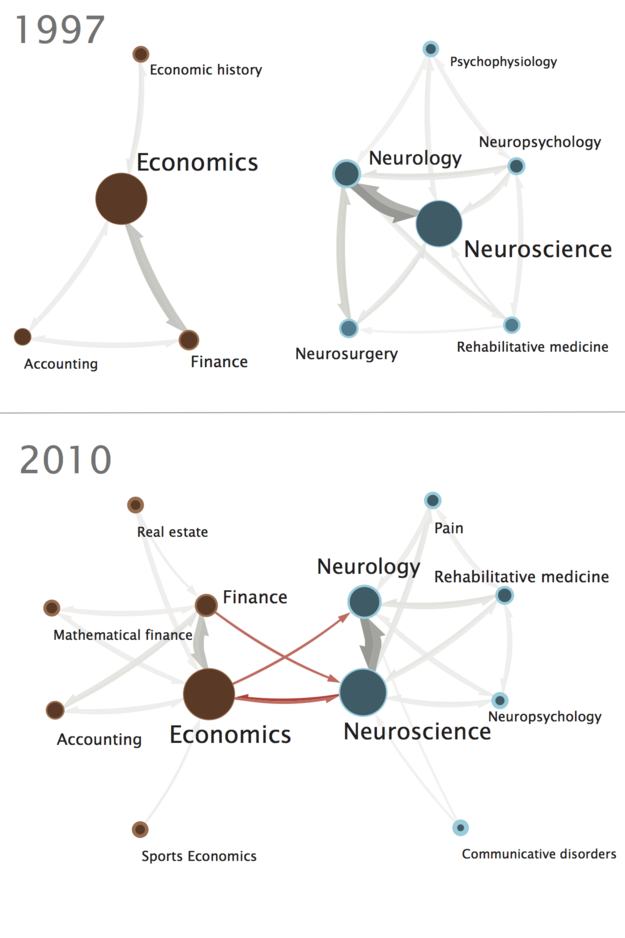
For example, theories from economics and psychology have already begun to restructure our neurobiological understanding of decision-making, and a number of recent neurobiological findings are beginning to suggest constraints on theoretical models of choice developed in both economic and psychological domains. Similarly, a study by the Eigenfactor project at the University of Washington showed that while there were no citations from either of these disciplines to the other in 1997, by 2010, there were 195 citations from economics journals to neuroscience journals, and 74 citations from neuroscience journals to economics journals.


Disciplinary cross-pollination 

This interdisciplinary partnership has caught the attention of the National Institutes of Health, which finances 21 current research projects with "neuroeconomics" in their descriptions, to the tune of $7.6-million. The agency gives out many more millions for other neurobiology work related to decision-making: Caltech got $9-million this month to establish a center in this field. The National Science Foundation has backed eight neuroeconomics projects with $3.5-million in research money.


Neuroeconomics: A Role Model for the Neuroscience of Ethics 


Neuroeconomics has thus been one of the most significant and astute beneficiaries of computational and neuroscientific research on decision-making. By contrast, the discipline of philosophy has fallen behind. Although many insights from computational and decision neuroscience are directly relevant to philosophical discussions about deliberation and choice, the vast majority of them have fallen by the philosophical wayside. This is not to say that philosophy has ignored neuroscience: this would not at all be true. Beginning with the publication of Patricia Churchland’s Neurophilosophy in 1985, both neurophilosophy and the philosophy of neuroscience have become active research areas across philosophy departments. But many of these neuroscientific contributions have focused on issues pertaining to traditional metaphysics (such as consciousness and free will) and epistemology (such as perception and representation). By contrast, the implications of computational and decision neuroscience for philosophical theories of decision-making and practical reasoning have yet to be realized.


Where it all got started

Again, this is not to say that neuroscience has not been brought to bear on issues in ethics! I have written about Molly Crockett’s research on this blog, Neil Levy and Julian Savulescu have made important contributions, and there are many valuable neuroscientific contributions to the study of altruism, utilitarianism, spirituality, aggression, and so on. But what I want to suggest that is that the neuroscience of decision-making can help philosophers arrive at a more wide-ranging theory underlying specific kinds of moral decisions: namely, it can help us understand how we make decisions in general. And this understanding should in turn provide a valuable constraint and useful platform for understanding what happens in moments of having to make tough, moral decisions.


Some general principles are, I think, beginning to emerge. For example, while philosophers frequently turn to concepts such as reasons and intentions to try and explain human action, there is good evidence to suggest that human beings rely on something that is closer to the metaphor of evaluating or ‘weighing.’ We come to value objects and actions over the course of our experiences, and these positive valuations lead us to elect those objects or actions when it comes time to make a concrete decision. Moreover, computational neuroscientists are beginning to understand the mechanisms whereby these valuations are carried out in the mind/brain, and they are increasingly in position to make detailed predictions about how human beings make decisions in all kinds of situations involving risk, delay and stress. From my perspective, these same situations often form the backdrop for our toughest ethical dilemmas, so we should gradually be able to untangle why people ‘mis-value’ certain options and make unethical decisions.


Some might argue that moral decisions are too complex for neuroscience to help us understand them. But the same was once said of economic choices, and it is safe to say that neuroeconomics has come a long way in advancing our understanding of them. I look forward to, and hope to be a part of, seeing practical and moral philosophy follow suit.


References


Glimcher, P. W. (2009). Choice: towards a standard back-pocket model. Neuroeconomics: Decision making and the brain, 501-519.


Gul, F., & Pesendorfer, W. (2008). The case for mindless economics. The foundations of positive and normative economics, 3-42.


Want to cite this post?

Hass, J. (2015). Exchanging 'Reasons' for 'Values'. The Neuroethics Blog. Retrieved on

, from http://www.theneuroethicsblog.com/2015/02/exchanging-reasons-for-values.html

Tuesday, February 10, 2015

Obama’s BRAIN and Free Will

By Eddy Nahmias, PhD


Eddy Nahmias is professor in the Philosophy Department and the Neuroscience Institute at Georgia State University. He is also a member of the AJOB Neuroscience editorial board.


On April 2, 2013 President Barack Obama announced the BRAIN Initiative, a 10-year, $3 billion research goal to map all of the neurons and connections in the human brain. The BRAIN (Brain Research through Advancing Innovative Neurotechnologies) Initiative is modeled on the Human Genome Project, which successfully sequenced the entire DNA code of the human genome in 2003. Our brains, with 100 trillion neuronal connections, are immensely more complicated than our DNA, so the BRAIN Initiative has a much higher mountain to climb.


But let’s suppose that, finally, during the next Clinton presidency, the BRAIN Initiative is completed…. that is, the presidency of Charlotte Clinton, Bill and Hilary’s grandchild. In fact, suppose that eventually neuroimaging technology advances to the point that people’s brains can be mapped fully enough to allow real-time computations of all of their occurrent brain activity. Neuroscientists can then use this information to predict with 100% accuracy every single decision a person will make, even before the person is consciously aware of their decision. Suppose that a woman named Jill agrees to wear the lightweight BrainCapTM for a month. The neuroscientists are able to detect the activity that causes her thoughts and decisions and use it to predict all of Jill’s thoughts and decisions, even before she is aware of them. They predict, for instance, how she will vote in an election. They even predict her attempts to trick them by changing her mind at the last second.


From interbilgisayar.com


Question: Do you think it is possible for such technology to exist in the future (the “near” future of Charlotte Clinton’s presidency or perhaps a more distant future)? And if such technology did exist, what would it tell us about whether we have free will?


Some people have used such neuro-prediction scenarios to explain why they think free will is an illusion. For instance, in his book Free Will (2012) Sam Harris asks us to “imagine a perfect neuroimaging device that would allow us to detect and interpret the subtlest changes in brain function.” He concludes, “You would, of course, continue to feel free in every present moment, but the fact that someone else could report what you were about to think and do would expose this feeling for what it is: an illusion” (10-11; see also Greene and Cohen 2004, p. 1781).


Others have drawn on recent neuroscientific experiments in which information about brain activity from EEG or fMRI that proceeds awareness provides predictive information about simple decisions, and they extrapolate from these experiments to conclude that all of our decisions are caused by brain activity that bypasses conscious activity, challenging free will. For instance, neuroscientist John Dylan Haynes (2008) says, “Our decisions are predetermined unconsciously a long time before our consciousness kicks in… It seems that the brain is making the decision before the person themselves.”1


I call those who claim that science shows free will is an illusion, willusionists. Typically, they assume that free will would require that the conscious mental activity involved in our deliberation and decision-making is distinct from brain activity. And they assume that the ordinary definition of ‘free will’ requires this dualistic view of the mind. If they are right, then they should predict that most people would reject the possibility that the BRAIN Initiative could succeed in the way I describe above. After all, non-physical minds could never be fully understood or predicted based on a complete mapping of brain activity. And if we had a magical free will untethered to brain activity, then we could exercise it to make some decisions that could not be predicted by neuroscientists scanning our brain. Are the willusionists’ accurate in their predictions about how most people understand free will?


Fortuitously, while the BRAIN Initiative was being hatched, my collaborators and I were working on a much less complicated (or expensive!), project in ‘experimental philosophy’, an emerging field that uses empirical methods to consider people’s views about philosophical questions. Two former neurophilosophy MA students at Georgia State, Jason Shepard (a Neuroethics Scholars Program Alum and Psychology PhD student at Emory University) and Shane Reuter (now in the PNP Program at Washington University St. Louis), and I developed various detailed descriptions of the neuro-imaging technology above that allow perfect prediction of decisions based on prior brain activity. One scenario concluded with a statement of physicalism about the mind-body relationship: “These experiments confirm that all human mental activity just is brain activity such that everything that any human thinks or does could be predicted ahead of time based on their earlier brain activity.”


Dilbert, by Scott Adams


We asked our participants (students at GSU) whether such technology was possible. Contrary to the predictions of willusionists, we found that 80% said yes. Of the 20% who said no, most did not explain their response by referring to non-physical minds or souls or free will. Instead, most raised ethical concerns (society would not allow anyone to gain so much information about our minds) or financial limitations, or they mentioned problems pointing towards what I think is actually the right answer: No, the technology could never be that perfectly predictive because the brain is too complex for real-time calculations to occur faster than the brain actually carries out complex deliberations and decision-making. But these responses do not suggest a commitment to a non-physical mind.


Furthermore, the vast majority of participants did not respond as willusionists predict regarding free will: three-quarters or more said that Jill had free will even though her decisions were predicted by the neuroscientists and that, even if such technology existed, people would have free will and would be morally responsible for their actions. The only scenarios that led people to respond that the technology would undermine free will were ones in which we added that the neuroscientists could also alter people’s brain activity, and hence their decisions. (See our article in Cognition for more details.)


The question is why our participants do not seem to be ‘freaked out’ by the possibility of such neuro-prediction, while willusionists assume they would be, and should be.


One possibility is that our participants just didn’t get it. Perhaps they have a deep, implicit commitment to dualist free will such that they either reject the stipulations of the scenarios or ignore their implications when responding to the questions about free will (while nonetheless saying the technology is possible). I think this explanation is likely true for some of our participants, but unlikely for most of them, given the patterns of responses to the many questions we asked.


Instead, I think most of our participants simply do not have an implicit or explicit commitment to dualist free will. Most people, even some who may talk as if the mind is non-physical or have religious beliefs about souls, seem ‘theory-lite’ about the mind and free will. They know we are conscious and make choices, but they don’t know how (or in what) these mental processes are implemented. And for good reason, since we don’t yet have a neuroscientific theory to explain things like conscious deliberation, reasoning, and imagination of future options for action. But most people seem willing to accept that neuroscience might explain how these mental processes work… at least as long as it does not thereby explain them away.


For instance, most participants responded that the neuroimaging technology does not mean that “people’s reasons have no effect on what they do,” and that seems to be the right way to interpret it. When people’s decisions are predicted while wearing this futuristic technology, it’s based on information about the neural activity that implements their conscious reasons and reasoning. That activity is not bypassed by earlier brain activity; it is a crucial cause of some decisions we make. When we imagine future options, it opens up those options as possibilities for action, even if our brains carry out the imagining.


Why then do willusionists seem to neglect this possibility that free will could be understood in terms of the complex activity of the human brain? I think it is because they are not theory-lite. Instead, they theorize that a neuroscientific explanation of behavior either replaces an explanation in terms of conscious mental processes (a form of eliminativism) or cuts those processes out of the causal picture (a form of epiphenomenalism). Such views are understandable. Neuroscience is a relatively young science, and we lack a theory to explain how consciousness works in terms of neural activity. So, for scientists who are used to thinking in terms of physical mechanisms such as neurons causing physical events such as bodily movements, it may be hard to see how conscious mental events—yet to be explained in terms of neural mechanisms—get into the story.


Some willusionists argue that getting people to recognize that free will is an illusion will have beneficial consequences, especially for our legal system. For instance, if criminals lack free will, then they don’t deserve the harsh retributive punishment typically meted out to them. If we come to accept that no one deserves such punishment, we’ll focus on more useful solutions to crime, such as deterrence, rehabilitation, and restoration. We may also be more understanding, and less judgmental, of people in poverty or with mental illnesses or addictions. (See, e.g., Harris and Greene & Cohen).


I too think our legal system is overly retributive and that criminals, and the rest of us, would typically be better served if we focused more of our resources on alternatives to retributive punishment. I also think we should give up our ‘just world’ beliefs that lead us to think people are responsible for their unfortunate circumstances or deserve all their good fortune (or literal fortunes). But I think the willusionist view of free will may influence us to see people as objects or mechanisms, some of which need to be repaired, perhaps even opening up problematic forms of brain manipulation.


A naturalistic view instead says that we have degrees of free will to the extent that we possess the psychological capacities for imagining and assessing various future options and for self-control to actualize the better options. But this view also reminds us that we often have less free will than we tend to think, and that some people’s opportunities to develop and exercise the capacities for free will are far more constrained than others.


The BRAIN Initiative won’t lead to BrainCaps that allow perfect neuro-prediction. But even if it could, it would not illuminate some new challenge to the possibility of human free will. Instead, the BRAIN Initiative will continue the recent trend of helping people come to recognize and accept that everything we think and do is enabled by what our amazingly complex brains do. It may even provide information that leads to a satisfying theory of how our brains explain consciousness and decision-making. It will surely provide more information about when and why people’s decision-making and self-control are diminished, suggesting mitigated responsibility. And it will also raise difficult neuroethical questions about whether and how we should use all this information to alter people’s brains and hence their minds.


1 Haynes’ and his collaborators’ fMRI studies carry on the tradition of the infamous studies by Benjamin Libet. For explanations for why these studies, along with others thought to challenge free will (such as Daniel Wegner’s), do not have these implications, see, e.g., Mele (2009) and Nahmias (2014).


References


Greene, J. & Cohen J. (2004). For the law, neuroscience changes nothing and everything. Philosophical Transactions of the Royal Society of London B, 359, 1775-1778.


Mele, A. (2009). Effective intentions: the power of conscious will. New York: Oxford University Press.


Nahmias, Shepard, Reuter. 2014. It’s OK if ‘My Brain Made Me Do It’: People’s Intuitions about Free Will and Neuroscientific Prediction. Cognition 133(2): 502-513.


Nahmias, E. 2014. Is Free Will an Illusion? Confronting Challenges from the Modern Mind Sciences. In Moral Psychology, vol. 4, Free Will and Moral Responsibility, ed. by W. Sinnott-Armstrong (MIT Press, 2014), 1-25.


Soon, C., Brass, M., Heinze, H., & Haynes, J. (2008). Unconscious determinants of free decisions in the human brain. Nature Neuroscience, 11, 543-545.


Related Reading


Nahmias, E. 2011. Is Neuroscience the Death of Free Will? The New York Times


Nahmias, E. 2015. Why We Have Free Will. Scientific American 312(1).


Shepard, J. (2012). Who is redefining free will? The Neuroethics Blog. Retrieved on February 9, 2015, from http://www.theneuroethicsblog.com/2012/09/who-is-redefining-free-will-response-to.html


Want to cite this post?


Nahmias, E. (2015). Obama’s BRAIN and Free Will. The Neuroethics Blog. Retrieved on

, from http://www.theneuroethicsblog.com/2015/02/obamas-brain-and-free-will.html


Tuesday, February 3, 2015

When the Hype Doesn’t Pan Out: On Sharing the Highs-and-Lows of Research with the Public

By Jared Cooney Horvath


Jared Cooney Horvath is a PhD student at the University of Melbourne in Australia studying Cognitive Psychology / Neuroscience.


15-years ago, a group of German researchers decided to revive the ancient practice of using electricity to effect physiologic change in the human body. Using modern equipment and safety measures, this group reported that they were able to alternately up- and down-regulate neuronal firing patterns in the brain simply by sending a weak electric current between two electrodes placed on the scalp1.


tDCS electrode placement


Today, this technique is called Transcranial Direct Current Stimulation (tDCS) and over 1,400 scientific articles (calculated by combining non-replicated articles from a joint PubMed, ISI Web of Science, and Google Scholar search using the keywords “Transcranial Direct Current Stimulation”: October 15, 2014) have been published suggesting that passing an arguably innocuous amount of electricity through the brain of a healthy individual can improve his/her memory, learning, attention, inhibitory control, linguistic function, etc. In parallel with these findings (often fueled by the researchers themselves), the public hype surrounding tDCS has grown to impressive proportions: in fact, in the last year alone, stories about this device and its ability to improve cognition and behavior have appeared in popular news outlets ranging from the BBC2 to Wired3 to The Wall Street Journal4.


Doubtless fueled by this hype, there are currently 3 tDCS devices (and 2 in development) available for public purchase without the need of a medical prescription. In fact, as you read this, there are likely hundreds of people around the world trying to ‘boost’ their own brain power using these unregulated devices.


Unfortunately, a series of quantitative reviews undertaken by this group5, 6 has revealed that tDCS does not generate a significant or reliable effect on neurophysiology, cognition, or behavior. When combined, the last 15-years of data strongly suggest that either, A) tDCS does not have an actual effect, or B) tDCS generates an effect that we can neither explain, elucidate, nor predict.


This raises an incredibly important question: what are the responsibilities of a researcher when data he/she once publicized comes under question? More specifically, the tDCS data makes it quite clear that we do not have a solid handle on the mechanisms or effects of this device. As such, what role do we (researchers) play in ensuring the public are made aware of these developments and protected from possible neural injury or, at the least, economic waste?


It seems acceptable (almost expected) that researchers will publicize positive, potentially beneficial results – especially with regards to health and well-being. But, as has recently been reported in areas of research beyond tDCS7, 8, 9, the number of retractions and amendments made to scientific articles is growing wildly. Unfortunately, the public is rarely made aware of these changes, leaving them expecting results utilizing paradigms that may no longer be viable or accepted in the scientific cannon.


From someecards.com


One reason we (researchers) chose to avoid hyping our negative results is obvious: research is a very messy endeavor and there’s always danger in letting the customer see inside the kitchen. It’s an intelligent, safe decision to put only the most exciting, interesting, and applicable work forward for public scrutiny. However, as is becoming clear in articles like those cited above, more and more people are becoming aware of the fact that science is not the ideal, straightforward endeavor it’s often claimed to be - in fact, it is rife with the same unpredictable changes and sudden shifts that define all human endeavors. I fear if we continue to ignore the uncertain, vacillatory nature of our profession in the public and continue to only hype ‘success’, we will quickly lose the faith of the very people we are trying to inspire.


It will certainly be interesting to see how the most prominent voices in the field chose to respond to the changing, increasingly less-certain landscape of tDCS. Is it safe to let the public know that we may have jumped-the-gun, and that we require more time and basic research before we can determine whether or not this is an efficacious tool? I believe that, although this type of message may damage our reputation in the short-term, not being honest with the public and trying to keep controversies ‘in-house’ will only serve to damage our reputation far more in the long-term.


References


  1. Nitsche, M. A., & Paulus, W. (2000). Excitability changes induced in the human motor cortex by weak transcranial direct current stimulation. The Journal of physiology, 527(3), 633-639. 

  2. Mosley, M. (2014, October 30). Unexpected Ways to Wake Up Your Brain. Retrieved from http://www.bbc.com/news/magazine-29817519.

  3. Miller, G. (2014, May 5). Inside the Strange New World of DIY Brain Stimulation. Retrieved from http://www.wired.com/2014/05/diy-brain-stimulation/

  4. Kangaris, S. (2014, Feb. 18). Can Electric Current Make People Better at Math? Retrieved from http://www.wsj.com/articles/SB10001424052702303650204579374951187246122

  5. Horvath, J. C., Forte, J. D., & Carter, O. (2015). Evidence that transcranial direct current stimulation (tDCS) generates little-to-no reliable neurophysiologic effect beyond MEP amplitude modulation in healthy human subjects: A systematic review. Neuropsychologia, 66, 213-236.

  6. Horvath, J. C., Forte, J. D., & Carter, O. (2015). Quantitative Review Finds No Evidence of Cognitive Effects in Healthy Populations from Single-Session Transcranial Direct Current Stimulation (tDCS). Brain Stimulation. [EPub before Print].

  7. The Economist (2013, October 19). Unreliable Research: Trouble at the Lab. Retrieved from http://www.economist.com/news/briefing/21588057-scientists-think-science-self-correcting-alarming-degree-it-not-trouble

  8. The Economist (XXX). How Science Goes Wrong. Retrieved from http://www.economist.com/news/leaders/21588069-scientific-research-has-changed-world-now-it-needs-change-itself-how-science-goes-wrong

  9. Ioannidis, J. P. (2005). Why most published research findings are false. PLoS medicine, 2(8), e124.


Want to cite this post?


Horvath, J. (2015). When the Hype Doesn’t Pan Out: On Sharing the Highs-and-Lows of Research with the Public. The Neuroethics Blog. Retrieved on

, from http://www.theneuroethicsblog.com/2015/02/when-hype-doesnt-pan-out-on-sharing.html

Tuesday, January 27, 2015

Neuroscience in the Courtroom: An Attempt for Clarity

*Editor’s note: You can catch a lengthier discussion of this topic at our Jan 29th session of Neuroscience and Neuroethics in the News.


When people think about functional magnetic resonance imaging (fMRI) and the courtroom, many often think of mind reading or colorful images of psychopathic brains. Portable fMRI machines capable of reading our personal thoughts pop into our heads and arouse a fear that one day a neuroscientist could reasonably discern our deepest secrets through a brain scan. Despite recent scholarship that suggests a world filled with covert fMRI lie detection devices is far away (if ever attainable), I think further attention should be paid to how people think about neuroscience and interpret scientific information that draws on brain-laden language, particularly in the courtroom (Farah, Hutchinson, Phelps, & Wagner, 2014). This topic is of special interest to me as it is the focus of my undergraduate research thesis. I also think it should be relevant to neuroscientists, ethicists, and journalists as well because the way in which people interpret and understand aspects of the brain and human behavior is perhaps a consequence of how such information is portrayed to the public.


Photo from Ali, Liftshitz, & Raz, 2014

The seductive allure of neuroscience information has captivated many researchers as brain imaging and neural explanations begin to seep into the legal realm and fascinate the media (Jones, Wagner, Faigman, & Raichle, 2013). This idea—the seductive allure hypothesis—refers to the notion that people find neurological justifications of behavior to be a marker of a sound explanation for an action or tendency, regardless of the quality of the information (Weisberg, Keil, Goodstein, Rawson, & Gray, 2008; McCabe & Castel, 2008). Understanding whether people are captivated by neural information has largely shifted into a debate about the persuasive and informative value of brain images (Farah & Hook, 2013).  Some of this research has involved measuring the impact of brain images on sentencing verdicts and punishment determinations in legal cases (Schweitzer, Saks, Murphy, Roskies, Sinnott-Armstrong, & Gaudet, 2011). The results of these studies are largely mixed, with many more research findings not corroborating the seductive allure hypothesis (Roskies, Schweitzer, & Saks, 2013), suggesting that neurological explanations are particularly compelling. Should this lead us to believe that the debate surrounding the persuasiveness of brain images is over?


I think not. In an effort to infuse some clarity in the neuro-seduction debate, I will discuss two overarching questions that I find particularly relevant to this ongoing discussion: first, what precisely does it mean to be neuroscientific? And, second, assuming that neuroscience has some potential to unduly sway people, is it also reasonable to assume neuroscience has equal pull amongst people with differing beliefs about the mind, the brain, neuroscience, and psychology generally? I will attempt to address both of these issues below.


Prefrontal cortex, impulse control, brain images—oh my!

 Lots of explanations, pictures, graphs, journal articles, and books could constitute neuroscience. Take, for instance, an fMRI brain image of a person with psychopathy: to a general audience, such a picture could convey lots of different types of information, ideas, or concepts about the mind and the brain. To some, an fMRI image may suggest that a particular pathology is “real” or that someone’s deviant or anti-social behavior is “hardwired” in the brain. Now, take a lawyer merely describing adolescents as particularly impulsive bunch because of their delayed development of the pre-frontal cortex. This latter form of argumentation may also convey very similar ideas to certain people, as is the case in the former example, even though it does not rely on an image per se.


In studies examining the persuasive power of brain images, we need to be careful not to conflate the power of an explanation and the power of an image. In other words, if we are going to argue that neuroscience is unduly persuasive, we need a better conceptualization of what it means to be neuroscientific, and I think neuroscience is much more than just fMRI images. The distinction between explanation and image is of particular relevance; one less discussed yet consistent finding is that neurological information (which I will later refer to as neuro-information) tends to affect people’s judgments, such as a defendant’s guilt, an article’s scientific credibility, or a supposed criminal’s deserved punishment (Weisberg, et al., 2008; Schweitzer, Saks, Murphy, Roskies, Sinnott-Armstrong, & Gaudet, 2011; Michael, Newman, Cumming, & Garry, 2013; Roskies, et al., 2013). Given this finding, it is still not clear what part of the explanation (e.g., the neuro-language, the image, or both) sways people to think that neuroscience tells us something above and beyond the neuroscience explanation itself.


This lack of clarity is particularly problematic insofar as a lengthy debate surrounding just the admission of brain images as evidence has also unfolded in recent years (Morse, 2014). In my opinion, the role of just plain ol’ brain-sounding language has been overshadowed by the debate about the glitziness of brain images. I am not attempting to provide a solution to this definitional and conceptual conundrum; however, I do think that it would be erroneous to conclude either that brain images are entirely not biasing or that all neuroscience possesses unparalleled persuasive power given the disparate and sometimes confusing findings within this area of research.


Image from BosLaw


Shouldn’t individual differences matter? 

It is also important to consider whether all people are truly likely to be swayed by neural language. Researchers have yet to fully explore if there are specific people who are particularly compelled by neural language. One study has examined education level differences, but there are potential other factors that may influence one’s likelihood to fall prey to inaccurately interpreting neural information, such as previous beliefs about neuroscience and motivation to confirm such beliefs (Weisberg, et al., 2008; Scurich & Shniderman, 2014). For instance, people often differ in how they conceptualize psychology. I could see how people who tend to think psychology lacks scientific rigor may tend to believe that neuroscience offers a greater opportunity to understand behavior. Similarly, for some people, the motivation to confirm or disconfirm an issue that a neuroscientific explanation seeks to uphold may matter. For instance, in an interesting variation on these neuro-seduction studies, a group of researchers had people rate the validity of an article that described how neuroscience could or could not support the notion that the death penalty deters people from committing crimes (Scurich & Shniderman, 2014). The authors found that people tended to give more favorable ratings to a particular neuroscientific article when it supported their initial beliefs about the death penalty. Overall, it seems unlikely that neuroscience or neuro-images have the power to overwhelmingly persuade everyone in all circumstances or overturn existing beliefs.


What should we do?

The verdict is not out on the influence of brain imaging in the courtroom. This area of research continues to grow and change as people devise nuanced ways to test why brain images may change behavioral outcomes and who is most likely to succumb to the seductive power of brain information or brain images. Nonetheless, this research has potential to impact our legal system. Ultimately, aside from addressing my two aforementioned questions, I do think that it is important for scientists of all disciplines to continue attempting to explain findings regarding the brain and behavior in the clearest terms possible. As more people learn about what brain imaging and brain information can tell us about behavior, we as researchers must be ever aware of the potential for our findings to be misconstrued in the public or in the courtroom.


References


Farah, M. J., & Hook, C. J. (2013). The seductive allure of “seductive allure”. Perspectives on Psychological Science, 8(1), 88-90.


Farah, M. J., Hutchinson, J. B., Phelps, E. A., & Wagner, A. D. (2014). Functional MRI-based lie detection: scientific and societal challenges. Nature Reviews Neuroscience, 15(2), 123-131.


Jones, O. D., Wagner, A. D., Faigman, D. L., & Raichle, M. E. (2013). Neuroscientists in court. Nature Reviews Neuroscience, 14(10), 730-736.


Morse, S. J. (2014). Brain imaging in the courtroom: the quest for legal relevance. AJOB Neuroscience, 5(2), 24-27.


Roskies, A. L., Schweitzer, N. J., & Saks, M. J. (2013). Neuroimages in court: less biasing than feared. Trends in cognitive sciences, 17(3), 99-101.


Saks, M. J., Schweitzer, N. J., Aharoni, E., & Kiehl, K. A. (2014). The impact of neuroimages in the sentencing phase of capital trials. Journal of Empirical Legal Studies, 11(1), 105-131.


Schweitzer, N. J., Saks, M. J., Murphy, E. R., Roskies, A. L., Sinnott-Armstrong, W., & Gaudet, L. M. (2011). Neuroimages as evidence in a< em> mens rea</em> defense: No impact. Psychology, Public Policy, and Law, 17(3), 357.


Scurich, N., & Shniderman, A. (2014). The Selective Allure of Neuroscientific Explanations. PloS one, 9(9), e107529.


Weisberg, D. S., Keil, F. C., Goodstein, J., Rawson, E., & Gray, J. R. (2008). The seductive allure of neuroscience explanations. Journal of Cognitive Neuroscience, 20(3), 470-477.


Want to cite this post?


Marshall, J. (2015). Neuroscience in the Courtroom: An Attempt for Clarity. The Neuroethics Blog. Retrieved on

, from http://www.theneuroethicsblog.com/2015/01/neuroscience-in-courtroom-attempt-for.html