Pages

Showing posts with label court evidence. Show all posts

Tuesday, February 24, 2015

Neuroimaging in the Courtroom

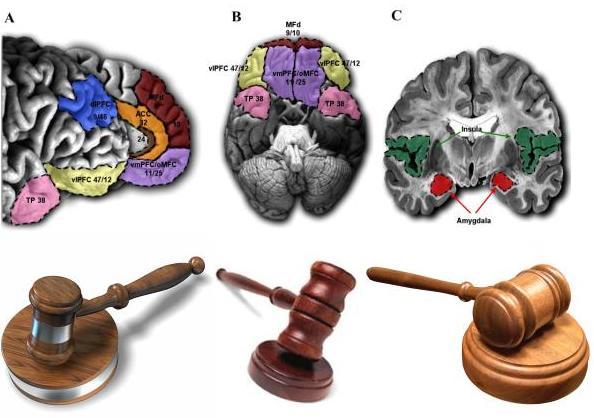
If just any picture is worth a thousand words, then how much weight should we ascribe to a picture of our own brain? Neuroimaging can be quite compelling, especially when presented in the media as evidence for neuroscientific findings. Many researchers have pointed out though that the general public may be too entranced by fMRI images highlighting which parts of the brain are activated in response to certain stimuli, such as your iPhone, high-fat foods, or even Twitter. Neuro-realism is the idea that attaching a brain scan to a scientific finding suddenly makes the conclusion more credible, and examples of this have populated the media and the scientific literature1. But, from where does this theory of “neuro-seduction” really stem and is there even ample evidence to support it? For the first journal club of the new semester Emory undergraduate student and AJOB Neuroscience Editorial Intern Julia Marshall along with Emory professor Scott Lilienfeld discussed the role that neuroimaging plays in the courtroom, and whether brain scans have the potential to help or hurt those convicted of crimes in light of neuro-realism, neuro-seduction, and neuroredundancy.


from Scientific American blog


Recently, an article by Martha Farah and Cayce Hook2 took a critical look at the two studies that are most frequently cited as being evidence for neuro-realism and discussed why this theory has continued to persist despite its lack of evidence. The first study by McCabe and Castel3 analyzed whether people consider scientific findings more believable when accompanied by functional brain images, and the collected data suggested that scientific reasoning in research descriptions made more sense to participants when a brain image was provided as evidence. However, Farah and Hook point out that these brain images are actually more informative than a bar graph or topographic map, and participants should find them more compelling. The second paper often cited in relation to neuro-realism is a study by Weisberg, et al.4 which asked participants to consider whether an explanation for a psychological phenomenon, which did or did not include irrelevant neuroscientific rationale, was good or bad. Participants that were not neuroscience experts were more likely to rate a bad explanation as favorable when accompanied by neuroscience data. This study, however, did not include images, and even the authors of the paper admit that people may respond in a similar fashion to information that comes from specialties outside of neuroscience and psychology; there could be a general fascination with science that makes poor explanations appear reasonable. Farah and Hook also highlight a number of experiments5–7 that have been unable to replicate the findings from these two studies, helping to cast a shadow of doubt on neuro-realism.


Whether or not we really are unnecessarily enthralled by brain images is still out for debate, but is neuro-seduction real in the courtroom when neuroimaging is presented as evidence? This is relevant because a study by Bright and Goodman-Delahunty 8 found that mock jurors presented with gruesome and neutral images of a crime scene convicted defendants at a significantly higher rate than jurors that were not exposed to any images. These results beg the question that if a neutral image can provoke a response, then what is the effect of an image of a brain? Schweitzer et al.9 conducted four experiments in an attempt to determine the effect of neuroimaging in cases involving the mens rea defense where jurors did not need to decide whether a defendant was guilty or not, but instead whether or not the defendant possessed the mental state to be guilty. In brief, researchers found that neuroimages had no significant effect on the proportion of guilty verdicts or sentence recommendation length compared to other types of evidence for a neurological defect (specifically a defect in the frontal lobe). The mock jurors were either subjected to evidence of neurological damage that could render the fictional defendant unable to have mens rea in the form of a clinical psychiatrist describing behavioral traits, a clinical neurologist who identified brain damage based on a physical exam, a neuroscientist only describing a neuroimage that was not presented, a neuroscientist describing brain injury accompanied by a graph, and a neuroscientist describing injury accompanied by an image of the brain. Interestingly, when jurors judged the responsibility of the defendant, those who heard testimony from a clinical psychiatrist actually judged the defendant to have to more control over his actions than those that were exposed to neuroscientific testimony in any form. The only significant finding from the experiments was that neurological data – that which included images and that which did not – was more persuasive than data from a clinical psychiatrist when judging responsibility, but this judgment did not translate during the conviction and sentencing phase of the mock trial.


How relevant is neuroimaging in the courtroom based on the results? According to Stephen J. Morse in a recent AJOB Neuroscience article,10 neuroimaging has very little relevance in cases that require judges and jurors to evaluate the mental capacity of a defendant, and this view is supported by the findings from the experiments conducted by Schweitzer et al.9,11 While there may be less bias toward neuroimages than was initially believed, neuroscience and neurotechnologies are constantly evolving. Brain scans require the viewer to make a reverse inference, which is to “infer the engagement of particular cognitive functions based on activation in particular brain regions.”12 This requires reasoning backwards, and an example of this would be that low activity in your frontal lobe area means you are psychopath. This assumes though that specific brain activity can be directly correlated to thoughts, behaviors, or tendencies, and we know that obtaining and interpreting the images is much more complicated. At this time it is probably reassuring that juries do not appear to take brain scans more seriously than other factors in cases where neuroimaging could help to provide evidence of intent. However, there could be a time in the future when neuroimaging can provide more compelling evidence than only expert testimony and at that time it may be reasonable to assume that neurological data could not be faked. In this future scenario, neuroimaging should play a larger role in sentencing and convictions, but we are not there yet. There is still much to consider when it comes to neuroimaging, but neuroscientists must work with lawyers, judges, and the media to ensure that neuroscientific findings and results are appropriately applied to courtroom scenarios.


References


(1)  Racine, E.; Bar-Ilan, O.; Illes, J. fMRI in the Public Eye. Nat. Rev. Neurosci. 2005, 6, 159–164.


(2)  Farah, M. J.; Hook, C. J. The Seductive Allure of “Seductive Allure.” Perspect. Psychol. Sci. 2013, 8, 88–90.


(3)  McCabe, D. P.; Castel, A. D. Seeing Is Believing: The Effect of Brain Images on Judgments of Scientific Reasoning. Cognition 2008, 107, 343–352.


(4)  Weisberg, D. S.; Keil, F. C.; Goodstein, J.; Rawson, E.; Gray, J. R. The Seductive Allure of Neuroscience Explanations. J. Cogn. Neurosci. 2008, 20, 470–477.


(5)  Gruber, D.; Dickerson, J. A. Persuasive Images in Popular Science: Testing Judgments of Scientific Reasoning and Credibility. Public Underst. Sci. 2012, 21, 938–948.


(6)  Hook, C. J.; Farah, M. J. Look Again: Effects of Brain Images and Mind–Brain Dualism on Lay Evaluations of Research. J. Cogn. Neurosci. 2013, 25, 1397–1405.


(7)  Michael, R. B.; Newman, E. J.; Vuorre, M.; Cumming, G.; Garry, M. On the (non)persuasive Power of a Brain Image. Psychon. Bull. Rev. 2013, 20, 720–725.


(8)  Bright, D. A.; Goodman-Delahunty, J. Gruesome Evidence and Emotion: Anger, Blame, and Jury Decision-Making. Law Hum. Behav. 2006, 30, 183–202.


(9) Schweitzer, N. J.; Saks, M. J.; Murphy, E. R.; Roskies, A. L.; Sinnott-Armstrong, W.; Gaudet, L. M. Neuroimages as Evidence in a Mens Rea Defense: No Impact; SSRN Scholarly Paper ID 2018114; Social Science Research Network: Rochester, NY, 2011.


(10)  Morse, S. J. Brain Imaging in the Courtroom: The Quest for Legal Relevance. AJOB Neurosci. 2014, 5, 24–27.


(11)  Roskies, A. L.; Schweitzer, N. J.; Saks, M. J. Neuroimages in Court: Less Biasing than Feared. Trends Cogn. Sci. 2013, 17, 99–101.


(12)  Poldrack, R. A. Can Cognitive Processes Be Inferred from Neuroimaging Data? Trends Cogn. Sci. 2006, 10, 59–63.


Want to cite this post?


Strong, K. (2015). Neuroimaging in the Courtroom. The Neuroethics Blog. Retrieved on

, from http://www.theneuroethicsblog.com/2015/02/neuroimaging-in-courtroom.html

Tuesday, January 21, 2014

Neuroethics Journal Club Report: "Creating a false memory in the hippocampus" Ramirez et al. Science 2013

Our memory can be unreliable, that comes as no surprise. But beyond forgetting where the car is parked or misremembering a date, a perhaps more interesting phenomenon is that of false memories of events that have never happened, or at least not to us directly. In most cases, the fallibility of memory is benign or occasionally embarrassing, but in the courtroom it can have serious consequences. In the final Neuroethics Journal Club of the semester, Emory University graduate student and AJOB Neuroscience editorial intern, Katie Strong, led a thought-provoking discussion of Ramirez’s 2013 Science paper1 entitled “Creating a false memory in the hippocampus” with a focus on the potential neuroethical implications of this research on the justice system.


The discussion paper comes from 1987 Nobel laureate Susumu Tonegawa’s lab and is in some ways a sequel to their 2012 paper published in Nature2. In both studies this group utilized an elegantly-designed mouse model with the aim of targeting the cells in the hippocampus constituting the memory engram. The search for the engram, or memory trace in the brain, is not a recent pursuit. Karl Lashley’s seminal mid-20th century work suggested that memories are dispersed throughout the cortex. Lashley’s lesion studies surprisingly indicated that the amount of cortex damaged mattered far more than the location of the lesions3.


More recently the search has moved toward molecular changes in individual cells and at particular synapses4.  It is now thought that Lashley’s findings may have been the result of the complexity of the tasks that his animals performed, which involved multiple brain regions, since emerging evidence suggests that in some circumstances the same particular cells are activated during recall of certain memories5. Conversely, fear conditioning is a relatively simple paradigm that has been widely used because animals rapidly learn to pair an innocuous cue such as a light, tone, or an environment with an aversive stimulus such as a foot shock. Moreover, the neural circuitry controlling these behaviors has been extensively studied6.


In this paper, Ramirez and colleagues used a very similar approach to that in their 2012 paper in which they employed optogenetics (a technique to genetically target a group of cells that can later be activated by pulses to light) to label and reactivate hippocampal engram neurons2. Mice were unilaterally injected into the dentate gyrus of the hippocampus with a virus to drive the expression of a fluorescently-tagged, light-activated protein (channelrhodopsin-2) under the control of a drug-responsive promoter. These mice had been genetically engineered to activate this expression system when the immediate early gene c-fos, a marker of neuronal activity, is induced. The result was that expression of the light-activated channelrhodopsin-2 only occurs when (1) the animals are taken off of the expression-suppressing drug doxycycline and, (2) when neurons are sufficiently activated to induce expression of c-fos. This allowed the experimenters to essentially label the memory engram of a neutral context (context A) by removing doxycycline from the animals’ diet. Then, when doxycycline was replaced and neuronal labeling was halted, they were able to selectively re-activate the neutral context engram-bearing cells with rapid pulses of light.


In order to induce a false memory, the animals were removed from context A and placed in context B where the engram cells that encoded for context A were selectively stimulated with light while a foot shock was delivered. Later, when the animals were placed back in context A they demonstrated a typical fear response for rodents - freezing, even though they had actually experienced the foot shock in context B. The experimental group of mice exhibited a higher level of freezing than those animals that lacked the engram-labeling genetic engineering and were thus nonresponsive to the subsequent artificial light stimulation. As others7 have pointed out, this is not the first time that fear conditioning has been achieved with artificial stimulation in place of the conditioned stimulus, but it is the first time that this is been done by directly activating individual neurons in the brain.


These experiments may seem to be far-removed from typical human experience, but they may provide the basis to understand how false memories can be formed. As the authors point out, recall is known to make memories more labile and external information can occasionally be incorporated into existing memories over time. Moreover, they argue that these results may in fact be relevant to humans. In their words,


“we speculate that the formation of at least some false memories in humans may occur in natural settings through the internally driven retrieval of a previously formed memory and its association with concurrent external stimuli of high valence.”

For example, experimental psychologists have often been able to induce false memories in study participants through the use of leading questions and suggestion at a success rate of nearly 1 in 38. Often these paradigms use realistic and traumatic circumstances such as being lost as a small child in a mall. Perhaps the simultaneous recollection of a fear of being lost as a small child and memories of going to the mall at that age is enough to implant a false memory in some individuals.


Beyond the laboratory, false identification is an obvious and persistent problem for the justice system. The Journal Club discussion centered on a recent New Jersey case, State v. Henderson, which led to major reforms being enacted to change how eyewitness testimony is evaluated based on social science and psychology research9. This particular case involved the reliability of an eyewitness who encountered the suspect at gunpoint in a dark hallway when he had been drinking alcohol and smoking crack cocaine, and who continued to use crack daily until the police first contacted him more than a week later. Moreover, the witness reportedly struggled with a photo identification procedure and was pressured by the police to make a decision.


This case provides a hopeful example for how scientific research can spur progress improving accuracy and judicial outcomes, but what relevance does the Ramirez article really hold for understanding false memory? In these studies, the experimental group of animals – that which later displayed a false memory – had the memory of a neutral context linked to a foot shock by reactivating specific neurons using artificial means (optogenetics). This ability to activate a memory only by stimulating those (relatively few) neurons that were active during its encoding is strong, direct evidence for the existence and identification of the engram that can then be linked to a situation of high valence, such as a foot shock, to create a false fear memory. In reality, however, this is not how false memories are encoded in humans. It is an important step forward that elegantly demonstrates that the neurons involved in encoding a contextual fear memory are also sufficient for recall, but this technology is certainly not close to being used in humans. However, researchers have already found other ways to experimentally manipulate false memories in humans.


Transcranial magnetic stimulation (Source: TIME Magazine)


No one will be having viral injections and fiber optic cables implanted into their hippocampi anytime soon, but transcranial magnetic stimulation (TMS) is a safe, non-invasive technology that has already been used to affect false memory acquisition in humans10. Gallete and colleagues reasoned that since patients with left anterior temporal lobe (LATL) dementia often become very literal and less vulnerable to false memories, perhaps temporary inactivation of this brain area with TMS would reduce the rate of false memory acquisition and indeed it did. These results suggest that localized TMS to the LATL during learning could aid in factual recall so should it be more widely available to students?


Understanding how memories are encoded, consolidated, retrieved – and how this process can go awry – has long been a fundamental aim of neuroscience. New technologies such as optogenetics and TMS are allowing investigators to ask questions that were never possible until now. However, there is still much to learn in terms of how false memories are formed and how they can be minimized. While this aim will require continued work from social scientists, psychologists, and neuroscientists, neuroethical discussions will also be important in framing how false memories are understood and addressed from the laboratory to the courtroom.


References


1. Ramirez, S. et al. Science 2013.

2. Liu, X. and Ramirez, S. et al. Nature 2012.

3. Lashley, K.S. Physiological mechanisms in animal behavior 1950.

4. Govindarajan, A. et al. Nature Reviews Neuroscience 2006.

5. Josselyn, S.A. Journal of Psychiatry & Neuroscience 2010.

6. Kim, J.J. and Jung, S.W. Neuroscience and Biobehavioral Reviews 2006.

7. Saksida, L.M. Trends in Cognitive Science 2013.

8. Loftus, E.F. American Psychologist 2003.

9. Harvard Law Review 125:1514, 2012.

10. Gallate, J. et al. Neuroscience Letters 2009.


Want to cite this post?


Purcell, R. (2014). Neuroethics Journal Club Report: "Creating a false memory in the hippocampus" Ramirez et al. Science 2013. The Neuroethics Blog. Retrieved on

, from http://www.theneuroethicsblog.com/2014/01/neuroethics-journal-club-report.html

Thursday, July 12, 2012

Let's talk about "Precrime"

Last month I blogged a
little bit about constitutional protection, lie detection technology, and
wildly speculative but totally valid concerns about what happens if someone
else could tell what I was thinking. As promised, this month I’m going to
follow up with some information about “precrime”: what it is, outside of a
science-fiction context, what it could become, and what
neuroscientific knowledge contributes to the area.


I just really love the cover and wanted to plug the book, ok?
This is a wonderful book; everyone should go read it.


Pre-crime is exactly what it sounds like; it is the science
of predicting when crimes are likely to happen and trying to intervene and
prevent them. The idea that police officers could prevent crime by predicting
it captures the public imagination in a big way, leading to a lot of
sensationalism. There were a series of articles starting in 2004 about London’s
so-called “Homocide Prevention Unit,” which captured public imagination so much
it had a television show
based on it.[1]
According to more recent reports, the HPU identifies dangerous individuals
based on psychological
profile
and reportedly maintains a list of the top 100 most dangerous
individuals in London.
In 2006, the First Judicial District of Philadelphia announced a partnership
with the Jerry Lee Center of Criminology which, among other things, created a
special unit in the Philly police department to “treat
and supervise convicted felons who have the greatest risk of being charged with
murder.” 
In press releases, the organization was sometimes called the
Homicide
Prevention Unit
and sometimes called the Strategic
Anti-Violence Unit (SAV-U).


Image source: http://500year-diary.livejournal.com/

CSI: TARDIS.
The Doctor always knows.


(It’s a post mentioning sci-fi, crime, tv shows, and London.
I had to.)


However, in these cases, what the media are calling
“precrime” are criminal justice units tasked with identifying specific people
who are either at-risk of victimization or likely to commit violent crimes. This is not exactly science fiction. Police departments, like the section of the Met that made headlines in 2004, use intelligence units to predict the likelihood of
certain types of violent crime. Some
courts employ working units that use sociological and psychological research methods to identify
and supervise parolees who pose the greatest risk of recidivism. The city of
Philadelphia has an Anti-Violence Supervision Program  designed to help paroled offenders
who they predict will commit “murder,
attempted murder, rape (or other sex offenses), robbery, or aggravated
assault.”
[2] News media like to imagine these units are on
the forefront of precrime when in fact the tactics they employ are not all
that “futuristic.”


In fact, if we frame all crime prevention as precrime, then
it’s not hard to see how this is actually in effect all around us all the time. There are many general intervention strategies designed to lower crime rates or
educate vulnerable populations. Anyone of roughly my generation will remember
the D.A.R.E. program, which was both about preventing drug addiction and
lowering drug crime rates. (but by many accounts it failed spectacularly on both
fronts.) Programs like this could theoretically be seen as part of the
“precrime” umbrella, in that they are generally designed to target at-risk
populations (here, pre-teens) before they engage in criminal activity and try
to give them the education necessary to avoid that criminal behavior. Programs
like this also focus on prevention of victimization- and here you can imagine
the “Stranger Danger” programs of the same era (which also failed
spectacularly.)  There are much more effective modern versions
of these kinds of programs; CDC has an initiative specifically
aimed at violence prevention
.


Media sensationalism and television dramas aside, these
programs are widespread, and their methods are not really that experimental.
Whether criminologists are employing sociological or psychological methods, one
of the major points of understanding crime has always been to reduce the amount
of it that is happening. And as controversial as things like the forensic
psychiatric prediction of future dangerous are (and have been),[3]
the fact is that the actual strategies employed by criminal justice units
attempting to reduce crime rates are not exactly the stuff of science fiction.
It also isn’t what intrigues us about precrime in a neurological age.


© Nevit Dilmen [CC-BY-SA-3.0 (http://creativecommons.org/licenses/by-sa/3.0) or GFDL (http://www.gnu.org/copyleft/fdl.html)], via Wikimedia Commons
© Nevit Dilmen


To understand how precrime would work, neurologically, we
first have to understand the ways that neuroscience is already effecting
forensics.  As I mentioned previously, there is the idea that if fMRI brain scans
result in rudimentary “mind-reading,” then someone could be arrested if a brain
scan shows they are planning a crime. However, there is a giant difference between getting facts about
behavior and gleaning intent, and having this information via a brain scan does not mean we are actually "reading minds." Let me give an example: let’s say you have a
person who undergoes a brain scan, perhaps for medical reasons, or perhaps as
part of a futuristic lie detection test. The people reading the scan notice that this individual's brain shows evidence of prolonged and severe feelings of anger or depression, some preoccupation with death, and that they are telling the truth about a recent gun purchase. They alert the authorities because the pattern of facts
indicates this person may be a danger to themselves or to someone else.


Sound familiar?


This isn’t a new
procedure- this is, in fact, facts from a hypothetical brain scan being
interpreted in the same way facts from a verbal patient history or a psychological
evaluation would be interpreted. This individual might, based on this
information, be held on a psychiatric hold for a few hours or a few days, but
the intervention would be a medical one- not a criminal one. New technology does
not always result in total systemic change.


However, there is another area of neurology and precrime,
and this has to do with the idea that your brain contains your “fundamental
nature.” Neuroscience is imagined to uncover who you are in a way that prior
sociological or psychological methods alone could not.[4]
This includes being able to calculate things you are and are not likely to do, familiar territory for Neuroethics. Frequent readers of this blog have
seen discussions about free
will
, autonomy,
criminal
responsibility
, and the ethics
of prediction vs. intervention
. When it comes to neuroscience and the
courtroom, a lot of discussion centers on the fear of criminal actors blaming
their brains for their decisions and shirking actual responsibility. As a result,
you have neuroscience enthusiasts and neuroethics scholars debating what will
happen if researchers are able to prove, beyond a reasonable doubt, that every
action a person takes can be traced through a network of neurons firing. This,
as one set of scholars recently argued, “challenges
the very notion of conscious will on which the criminal system is based.” [5] 


Translation: it really, really messes with mens rea.

Now, consider what happens
when we reverse engineer “My Brain Made Me Do It.” Researchers figure out, a)
the specific characteristics of a “murderer’s brain” and b) the environmental
factors most likely to trip the “murderer’s brain” into committing murder.
Instead of using that information to retroactively explain a murder, “precrime”
technology would use it to contain people before
they commit murders
. This is of great ethical concern, and rightfully so,
as it is generally considered a violation of the U.S. Constitution to hold
someone just because they might commit a crime in the future. [6] In order to accurately match brain scans to criminal histories and then spot
patterns, researchers would have to keep large databases of personal
information, and these databases would have to include people who had not yet
committed crimes.


Given that these
issues are highly controversial, it is not that there will be a giant prison
built just to hold all of the future “brain-criminals” anytime soon. However – this does not mean that police
units cannot use this sort of information to help focus surveillance. And if
this sounds more immediately frightening to you than the “brain-criminal” prison,
perhaps that is because we know police units already do this. We know they do
this because we all already do this. This
is the exact reasoning behind sex offender registries, community notification
laws, and publicly searchable police records, systems built on the
understanding that past behavior is the best predictor of future behavior and
that knowledge is the best defense. What if patterns of past behavior were bolstered,
not only with a sense of “mental abnormality” as they are with sexual predators,
but with tags for “violence” alleles and “criminal impulsivity” brain
malformations? Is that a potentially problematic use of such information, or is
that just using science to design a more efficient criminal justice system? Let
me know what you think!


Want to cite this post?


Cipolla, C. (2012). Let's talk about "Precrime". The Neuroethics Blog. Retrieved on
, from http://www.theneuroethicsblog.com/2012/07/lets-talk-about-precrime.html


[1] I say
“so-called” because although it is identified as the HPU in a few press
releases, I cannot find any official documentation of this unit, although there is a Specialist Crime and Operations Bureau.


[2] It is
unclear whether the Anti-Violence supervision division mentioned later is a descendant of the prior relationship with UPenn.


[3] In the early 1990s, as laws targeting violent sex offenders were
weathering their first constitutional challenges, there were lawyers who
complained the study of predicting dangerousness was barely better then
phrenology. I also should add, at this point, if it hasn’t become
patently obvious to anyone who has read my blog posts previously or looked at
my website, I am a
Women’s, Gender, and Sexuality Studies scholar who studies sexuality and crime.
Sexually motivated crimes and the people who commit them are, by and large,
treated differently within the United States criminal justice system than
crimes (and criminals) that are not sexually-motivated. This is particularly
true when it comes to issues like harm reduction and recidivism, both of which
factor heavily in most discussions of “precrime.”


[4] There is
a simultaneous and related conversation going on regarding the use of genetics.
See: Michael T. Treadway and Joshua W. Buckholtz, "On the Use and Misuse
of Genomic and Neuroimaging Science in Forensic Psychiatry: Current Roles and
Future Directions," Child and
Adolescent Psychiatric Clinics of North America
20, no. 3 (2011).


[5] Giuseppe Sartori, Silvia Pellegrini, and Andrea Mechelli, "Forensic
Neurosciences: From Basic Research to Applications and Pitfalls," Current Opinion in Neurology 24, no. 4
(2011).

For a classic argument, see: Joshua Greene and Jonathan Cohen, "For the Law, Neuroscience Changes
Nothing and Everything," Philosophical
Transactions: Biological Sciences
359, no. 1451 (2004). Adina Roskies, "Neuroscientific Challenges to Free Will and
Responsibility," Trends in Cognitive
Sciences
10, no. 9 (2006). and Adina L. Roskies, "How Does the Neuroscience of Decision Making Bear
on Our Understanding of Moral Responsibility and Free Will?," Current Opinion in Neurobiology, no. 0.


[6] This is called preventive detention,
although there are giant exceptions: holding an accused criminal between when
he is charged and when he is tried, civil commitment, certain portions of the
PATRIOT act, etc. Violent sexual
predators who are indefinitely committed have to have been convicted of at
least one violent sexual crime.


Thursday, June 21, 2012

Who Owns My Thoughts?


I attended the excellent Neuroscience, Law, and Ethics of Lie Detection Technologies Symposium in May, and as a consequence, I have spent the last month trying to answer questions I hadn’t even thought to ask before: Who owns the thoughts in my head? Could I be compelled to submit them? Can someone else decide that keeping my ideas to myself is a violation of the law or a threat to my country? If they force me to surrender them, do I lose ownership? So this week, I thought I would share some of the things I learned as I tried to find out answers.


You can actually buy this online. I am considering getting it printed on a hat.


Two preliminary points: first, I want specify what I mean when I say “compelled” to undergo a brain scan. It seems, at least it seemed to me while sitting in the audience, that Americans are pretty afraid of having someone else read their minds without their permission, or, worse, being forced to have their minds read. This extends even to a simplistic form of mind reading such as rudimentary lie detection. I have to say, I understand this fear, and for me, it boils down to this – I would be afraid that the government could, by compelling me to undergo a brain scan, make me give up information that I didn't even know I was concealing. Lest I spin totally into conspiracy theory territory, I tried to approach the question more systematically by researching how brain scans fit into our current constitutional protections against unlawful search and seizure.


Second, a note about how lie detection is currently used. Both during the lunch we had earlier in the afternoon and the symposium itself, all of the featured speakers pointed out that fMRI lie detection evidence isn’t admissible in court.[1] Laken himself has even been involved in several landmark cases. In actuality, the forensic application of lie detection technology goes far beyond courtrooms. Results from a lie detector, including those done via fMRI, can be used in a variety of situations, including, but not limited to: arbitration, civil commitment, and parole, sentencing or administrative hearings. They can also, in theory, be used by law enforcement officials in the course of an investigation as long as such procedures lead to evidence that can be used in court, and nothing is obtained illegally (more on what that means later).[2] So, fMRI technology can already be used for legal applications, both in the civil and the criminal areas (although I am leaving aside some of the more complex legal arenas, like military courts and investigations done under the PATRIOT act). 


So, let’s go back to my original question: who owns the thoughts in my head? Do I own them? What process must someone follow in order to seize them?


I started by thinking about thoughts as a product of my body. After all, don’t I own what is inside my body?  Well, it turns out, I only own it until someone takes it from me. This might happen as part of a routine medical examination, where a doctor takes a blood or urine sample for testing. I might even request that someone remove something from inside of me- a tumor, for instance. But once they have taken it, guess what? I don’t own it anymore.[3] And that is just for medical use. Legally, persons can be compelled to give up physical evidence, such as DNA, or succumb to measurements and recording, such as fingerprints. All of these fall under the Fourth Amendment, meaning as long as law enforcement attains the proper warrants, they can gather physical evidence- even if that evidence is part of your body.


But thoughts are different- or, at least, they probably are. As both Paul Wolpe and Hank Greely emphasized during the symposium, lie detection technology, even technology measured through fMRI, is likely going to be considered testimony and not physical evidence. That is, it would be subject to the rules of the Fifth Amendment and not the Fourth.[4] The Fifth Amendment, for anyone who hasn’t spent a ridiculous amount of his or her life watching Law & Order, is the rule that says you can refuse to testify if the testimony you give would incriminate you. Since about the mid 1960s, physical evidence has been exempt from the Fifth Amendment, meaning you can be forced to surrender physical evidence (or, for example, try on a glove or clothing in front of a jury) even if that evidence would incriminate you. 


To paraphrase Nita Farahany, the Fifth Amendment covers what comes out of your mouth,

as long as what comes out is words and not saliva.


Okay, that’s all well and good - there are people considering how and when someone can scan my brain in the event that I am charged with a crime. But what about accidental discovery? What if, while being scanned about whether or not I ran that stop sign over on Clairemont Avenue last week (for the record, I absolutely did not), I happen to let slip that I’ve discovered the secret to safe, efficient nuclear power? (I also haven’t done that, just to be clear.) Does the person questioning me now own that statement too? Could they compel me to release it to the government? Or, worse yet, could they claim it as their own?


There are already laws and procedures in place for what happens if, in the course of the investigation of one crime, law enforcement officers find information about other criminal activity (you can, for example, give a witness immunity in order to convince them to testify.) But my right to protect my knowledge about nuclear power is another matter entirely. In fact, I’d be willing to bet that questions about brain images and ideas that only exist in someone’s head (i.e., haven’t been written down yet) get into a fair amount of copyright, trademark and patent law… and my head already hurts.


I know those feels, man.


Luckily for me and my aching head, legal scholar Nita Farahany has already started investigating these questions. In “Incriminating Thoughts” she points out that emerging neurotechnology has so changed the way we  measure the mind, it justifies an entirely new system of cataloging evidence.[5] She argues for abandoning the older physical/testimony dichotomy (which I’ve starting thinking of as the Fourth/Fifth Amendment dichotomy) in favor of a spectrum of evidence which includes “identifying, automatic, memorialized, and uttered.” This would cover all the different ways a person’s thoughts could be measured or recorded during the investigation of a crime.


In a newer article titled “Searching Secrets,” set to be published sometime later this year, she applies this standard to a wider spectrum of information, including “tangible and intangible thoughts, ambitions, and expressions.”[6] In her system, investigators would be guided by the rules of intellectual property law rather than more traditional Fourth Amendment concepts of property (home, possessions, papers.) This system integrates copyright concerns into discussions of what secrets can be investigated and uncovered, by whom, and for what purpose, and would offer more protection. This is largely because it would have a wider concept of the “reasonable expectation of privacy,” the guiding principle when deciding what can and cannot be collected as evidence without a warrant.[7] This integration would also, as far as I understand, allow for a more thorough investigation into how copyright functions when it comes to un-uttered and un-written ideas.


Alright, so, that covers whether or not I can be forced to submit my mind to scrutiny, and what people can do with the thoughts they may find there. The answers are far from set in stone, but there are definitely debates going on, which puts my mind at ease (har har.)


Except...


What about the things I am thinking of doing? What if, in the course of an investigation of my thoughts (admittedly one using a much more advanced system than we have now) law enforcement agents find that I am planning to commit a pretty terrible crime?


Precrime. It Works.


This may seem like I have ventured into the realm of science fiction (when an audience member asked a similar question during the symposium, Paul Wolpe answered "What you are talking about is Minority Report.") In fact, future dangerousness has long been a concern of forensic psychiatry, and there are forms of prediction in forensic application now. Civil commitment hearings are designed to determine the likelihood that someone will cause harm in the future, that is, whether the person in question is a danger to self and others, and therefore should be locked up. But what about beyond that? What about systems designed not only to curtail the actions of dangerously ill persons, but systems which attempt to prevent crime by predicting it?


In terms of brain imaging, and certainly as far as the technology discussed at the symposium, this is a futuristic vision indeed. But that doesn't mean there aren't emerging crime prediction technologies. (Go ahead and Google "precrime" if you don't believe me.) Tune in next month, where I’ll be blogging about how, where, and why "precrime" technology is being developed.


Want to cite this post?


Cipolla, C. (2012). Who Owns My Thoughts?. The Neuroethics Blog. Retrieved on
, from http://www.theneuroethicsblog.com/2012/06/who-owns-my-thoughts.html

So


[1] For details about the use of Steven Laken’s technology in court, see David Nicholson’s blog post. For an overview of the standards for admitting scientific evidence, see Jamie Witter’s guest post.  


[2] For an overview of emerging uses for neuroimagining,  including fMRI, see Joseph R. Simpson, Neuroimaging in Forensic Psychiatry : From the Clinic to the Courtroom (Chichester, West Sussex: Wiley-Blackwell, 2012).


[3] The rules of ownership governing medical tissue samples have been the subject of a lot of recent media attention, largely due to the publication of Rebecca Skloot’s The Immortal Life of Henrietta Lacks.


[4] Sarah E. Stoller and Paul Root Wolpe, “Emerging Neurotechnologies for Lie Detection and the Fifth Amendment,” 33 Am. J.L. & Med. 359 (2007).


[5] Nita A. Farahany, “Incriminating Thoughts,” Stanford Law Review Vol. 64, 351 (2012); Available at SSRN.


[6] Nita A. Farahany, “Searching Secrets,” University of Pennsylvania Law Review, (2012). Available via UChicago.edu.


[7] Basically, and I am really paraphrasing here, the key is that copyright also gives people the right not to publish something, that is, to keep it secret. Farahany uses the famous J.D. Salinger case as an example.

Wednesday, March 21, 2012

Daubert and Frye: Neuroscience in the Courtroom?

I recently found myself thinking about how we would allow evidence dealing with neuroscience into the courtroom. The question interested me because I wanted to know how our judicial system would differentiate between real and useful evidence versus what may seem no better than allowing a Shaman enter to argue a point based on "evidentiary mysticism".  What I found was that there are two different legal rules for allowing use of neuroscience evidence. The first is the Frye rule and the second is the Daubert rule. Daubert applies in Federal Courts and in States that have adopted it, while the Frye rule applies in all other courts.


The difference between the texts of the standards can seem nuanced but presents two different outcomes judicially. Joseph T. Walsh has a great primer on the two rules if you would like to explore them more, but the issue that I would like to deal with here is simple and does not require a complete knowledge of both rules. Basically you just have to understand the common interpretation of both rules.


For our purposes Frye states that: “Where novel scientific evidence is at issue, the Frye inquiry allows the judiciary to defer to scientific expertise precisely as to whether or not it has gained “general acceptance” in the relevant field. The trial court’s gatekeeper role in this respect is conservative, thus helping to keep “pseudoscience” out of the court”.


On the other hand Daubert states that: “General acceptance is an austere standard absent from and incompatible with the Rules of Evidence. “Scientific knowledge” must be derived from scientific method supported by “good grounds” in validating the expert’s testimony, establishing a standard of “evidentiary reliability”.


What we are concerned with is that under the latter rule the trial judge acts more as a gatekeeper. In this role s/he acts to keep evidence out of the courtroom, regardless of whether society has deemed it generally acceptable, because lay jurors should not consider neuroscience evidence unless it is deemed relevant and reliable by the judge. At first glance the change in rules stands against the beliefs that I hold. This is because, like most people, I believe that every American citizen is supposed to be guaranteed a right to a jury trial, but with our newer rule a judge can simply toss evidence out based on his subjective valuation of the evidence presented before him. This in effect denies someone a trial on that evidence.


Political beliefs aside we should still evaluate the rules objectively and neuroscience is but one method of looking at them. So what does neuroscience tell us about the two rules? Is a judge better suited to deal with judging neuroscientific evidence than a jury? To me the answer is a clear “yes”. The evidence I have found points to a jury being susceptible to being fooled by such evidence. For example, Weisberg et al. found that non-experts who are given the task to choose between two explanations for a problem view explanations with irrelevant neuroscience information as more satisfying than explanations without (1). McCabe and Castel published similar findings when looking at the effect that actual brain images had on our reasoning. They found that, when presenting articles summarizing cognitive neuroscience, articles featuring brain images received higher ratings with regards to scientific reasoning "as compared to articles accompanied by bar graphs, a topographical map of brain activation, or no image." (2)


This effect is explained by Jonathan Marks who issued a warning against what J.D. Trout has termed "explanatory neurophilia." (3) In coining this term Trout warns us that when faced with evidence, of any kind, "the promise of cognitive tractability enhances fluency, but not necessarily accuracy."(4) Marks uses Troudt's view to criticize the use of neuroscience in the national security apparatus and issues a warning against the fact that brain images are partly open to interpretation by experts and are ripe for misuse by government officials as a tool of interrogation (5).


Although I find Mark’s and Troudt’s arguments interesting I do not believe that we should be completely dissuade from using neuroscientific evidence in a court of law. This is because as Weisberg et al. found there is a limit to the impact that superfluous neuroscientific information can have on our judgments, and there is also a noticeable benefit to be gained from extended and specific training on the judgment of such explanations (6).  It is clear that neuroscience provides us with a clear-cut case in which the Frye rule as a standard is not as efficient as that of Daubert. This is because Daubert allows the judge to play a greater gate-keeping roll when allowing evidence into the courtroom. The judge, who we hope is an expert in dealing with such evidence, is less likely to face the same explanatory neurophilia which jurors and laymen are victim to. The Supreme Court agreed with this assessment in Allison v. McGhan Med. Corp., 184 F.3d 1300 (1999) when it stated that:


"While meticulous Daubert inquiries may bring judges under criticism for donning white coats and making determinations that are outside their field of expertise, the Supreme Court has obviously deemed this less objectionable than dumping a barrage of questionable scientific evidence on a jury, who would likely be even less equipped than the judge to make reliability and relevance determinations and more likely than the judge to be awestruck by the expert's mystique."


Even though giving the judge ultimate deciding authority supports the centralization of decision making in our court system, I wholeheartedly agree with the decision made in the Allison vs. McGhan Med. Corp. case. While as an individual, I typically advocate for a more democratic court system I believe this is a clear-cut situation in which my philosophical beliefs stand against reality.


With that said, however, I am curious. Faced with my arguments above, what do you, the reader, make of it all? Was moving away from Frye a good idea based on what we know of how our brains work? Can you suggest a more efficient way of evaluating scientific evidence?


--Jamie Witter (Guest Writer)

Law Student, Georgia State University


Want to cite this post?


Witter, J. (2012). Daubert and Frye: Neuroscience in the Courtroom? The Neuroethics Blog. Retrieved on
, from
http://www.theneuroethicsblog.com/2012/03/daubert-and-frye-neuroscience-in.htm


1. Weisberg, D. S., Keil, F. C., Goodstein, J., Rawson, E., & Gray, J. R. (2008). The seductive allure of neuroscience explanations. Journal of cognitive neuroscience, 20(3), 470-7. doi:10.1162/jocn.2008.20040

2. McCabe, D. P., & Castel, A. D. (2008). Seeing is believing: the effect of brain images on judgments of scientific reasoning. Cognition, 107(1), 343-52. doi:10.1016/j.cognition.2007.07.017

3. Marks, J. H. (2010). A Neuroskeptic ’ s Guide to Neuroethics and National Security. Defense, 1(2), 4-12.

4. Trout, J. D. (2008). Seduction without cause: uncovering explanatory neurophilia. Trends in cognitive sciences, 12(8), 281-2. doi:10.1016/j.tics.2008.05.004

5. Marks, J. H. (2010). A Neuroskeptic’s Guide to Neuroethics and National Security. Defense, 1(2), 4-12.

6. Weisberg, D. S., Keil, F. C., Goodstein, J., Rawson, E., & Gray, J. R. (2008). The seductive allure of neuroscience explanations. Journal of cognitive neuroscience, 20(3), 470-7. doi:10.1162/jocn.2008.20040


Editor's note: For more information on the McCabe & Castel article, please see our post here.  


Also, the Emory Neuroscience Graduate Students in partnership with Emory's Neuroethics Program will be hosting a symposium on this topic on May 25th: The Truth About Lies: the Neuroscience, Law, and Ethics of Lie Detection Technologies featuring  Drs. Hank Greely, director of the Center for Law and Biosciences at Stanford Law School, Daniel Langleben, a professor of Psychiatry at University of Pennsylvania and pioneer of using fMRI to detect lies, and Steven Laken, founder, president, and CEO of Cephos; a company that markets the use of fMRI for courtroom lie detection. Stay tuned for more information.

Tuesday, March 20, 2012

Neuroimaging in the Courtroom: Video by Neuroethics Creative Team


The undergraduate Neuroethics Program Creative Team embarked on making one of their first videos featuring Dr. Paul Root Wolpe.  This short 3 minute video discusses the ethical implications of using neuroimaging as evidence in the courtroom. This video is a teaser for our upcoming event on May 25th at Emory (see below for more information). 


Thanks to our Neuroethics Creative Team!


  • Giacomo Waller

  • Sabrina Bernstein

  • Lauren Ladov


The Truth About Lies: the Neuroscience, Law, and Ethics of Lie Detection Technologies


You Can’t Handle the Truth! The Neuroscience Program, Center for Ethics Neuroethics Program, and the Scholars Program in Interdisciplinary Neuroscience Research (SPINR) are combining forces to hold a symposium on the intersection of neuroscience and law pertaining to the use of fMRI and other lie detection technologies in the courtroom. Drs. Hank Greely, director of the Center for Law and Biosciences at Stanford Law School, Daniel Langleben, a professor of Psychiatry at University of Pennsylvania and pioneer of using fMRI to detect lies, and Steven Laken, founder, president, and CEO of Cephos; a company that markets the use of fMRI for courtroom lie detection will be providing their expertise through a series of talks. Following the talks, Emory’s Carolyn Meltzer, Chair of the Department of Radiology and Imaging Sciences, will join the speakers answering questions from the audience during a panel discussion moderated by Julie Seaman from Emory Law School. Mark your calendars for 1pm-5pm, May 25th, 2012 for this thought-provoking event. More information to come.