Pages

Tuesday, October 14, 2014

Ambivalence in the Cognitive Enhancement Debate

By Neil Levy, PhD


Neil Levy is the Deputy Director of the Oxford Centre for Neuroethics, Head of Neuroethics at Florey Neuroscience Institutes, University of Melbourne, and a member of the AJOB Neuroscience Editorial Board. His research examines moral responsibility and free will.


The most hotly debated topic in neuroethics surely concerns the ethics of cognitive enhancement. Is it permissible, or advisable, for human beings already functioning within the normal range to further enhance their capacities? Some people see in the prospect of enhancing ourselves the exciting prospect of becoming more than human; others see it as threatening our humanity so that we become something less than we were.


In an insightful article, Erik Parens (2005) has argued that truthfully we are all on both sides of this debate. We are at once attracted and repulsed by the prospect that we might become something more than we already are. Parens thinks both frameworks are deeply rooted in Western culture and history; perhaps they are universal themes. We are deeply attached to a gratitude framework and to a more Promeathean framework. Hence we find ourselves torn with regard to self-transformation.


When someone feels torn in this kind of way about how they should think about or respond to something, they are ambivalent. Parens thinks that ambivalence is in fact the right response to cognitive enhancement: we ought to recognize that we are torn in both directions and acknowledge and respect this fact. We should not seek to resolve the ambivalence; we ought to embrace it. While I think that Parens highlights something of great importance when he argues that we are torn, I think he is wrong that we ought to attempt to respect both frameworks.


The mere fact that we are torn is no reason to think we ought to give equal – or indeed, any – weight to both directions in which we are torn. There is plentiful evidence that many people are conflicted in their attitudes toward members of other races, for instance (Payne & Gawronski 2010). They have egalitarian beliefs but inegalitarian implicit attitudes. But they should not ‘respect’ those implicit attitudes; they should attempt to eliminate them.


If there is good reason to reject one (or both) the attitudes that we feel in response to cognitive enhancement, we ought to do so. I will not argue, here, that we ought to reject one or other attitude. Here I want to highlight the costs of ambivalence.


Image from Nature
452,
674-675
(2008)


There is a very large body of evidence that when people are strongly conflicted, they – unconsciously – seek to resolve the conflict, and they will do so even at the cost of confabulation. Consider the extensive data on cognitive dissonance (Cooper 2007). Cognitive dissonance paradigms induce people to be disposed to attribute contrary attitudes to themselves. For instance, college students may be led into a state of cognitive dissonance by gentle situational pressure to write an essay defending tuition fee rises. If they regard themselves as having willingly written the essays, and are unable to explain why they did so by reference to payment or reward, they are in a state of cognitive dissonance: they were antecedently disposed to judge that their fees shouldn’t rise, but they now have evidence that they have a different belief. In this kind of paradigm, they self-attribute the belief that fees should rise, even though matched controls (who, for instance, write an essay defending the same claim in exchange for payment) are very unlikely to agree that their tuition fees should rise.


When it would resolve cognitive dissonance to do so, people’s standards for accepting a claim are much lower than otherwise. It causes us to engage in highly motivated reasoning: for instance, accepting a weak argument just because committing to it resolves the ambivalence. Allan Buchanan (2011) is apparently puzzled that in the debate over human enhancement, incredibly intelligent and sophisticated thinkers often “substitute high-sounding rhetoric for reasoning” (Buchanan has the bio-conservatives in mind; I think the charge can be extended to some of those in the pro-enhancement camp as well). I think this is just what we ought to expect, if Parens is right. If cognitive enhancement causes ambivalence in us, then we should not be surprised to see bad arguments advanced and accepted by good thinkers.


The way forward is not to embrace ambivalence but to avoid triggering it in the first place. Just how to do that is not at all easy. One recommendation that seems to follow is that we ought to embrace a practice that we have independent reasons to adopt, in any case: avoid hype. Too often we greatly exaggerate the potential that existing drugs and other techniques of intervening in the mind have for enhancing ourselves. In fact, all the available methods seem to promise very little improvement for those who are already functioning well and what improvement they promise seems to come at a cost in other domains. Perhaps bearing these facts in mind will enable us to come to a more realistic and a more sober assessment of cognitive enhancement.


References


Buchanan, A. E. 2011. Beyond Humanity: The Ethics of Biomedical Enhancement. New York: Oxford University Press.


Cooper, J. 2007. Cognitive Dissonance: Fifty Years of a Classic Theory. Los Angeles: Sage Publications.


Parens, E. 2005. Authenticity and Ambivalence: Toward Understanding the Enhancement Debate. Hastings Center Report 35: 34-41.


Payne, B. K., & Gawronski, B. 2010. A history of implicit social cognition: Where is it coming from? Where is it now? Where is it going? In B. Gawronski, & B. K. Payne (Eds.), Handbook of implicit social cognition: Measurement, theory, and applications, New York, NY: Guilford Press, pp. 1–17.


Want to cite this post?


Levy, N. (2014). Ambivalence in the Cognitive Enhancement Debate. The Neuroethics Blog. Retrieved on , from http://www.theneuroethicsblog.com/2014/10/ambivalence-in-cognitive-enhancement_14.html




Tuesday, October 7, 2014

Can neuroscience discuss religion?

In a previous post, Kim Lang presented the views of several prominent neuroscientists and neurologists on spirituality and religion. With
the knowledge that atheism is prevalent in the scientific community, she wondered how is it that some neuroscientists are nevertheless able to integrate their
religious and scientific beliefs. One of the neuroscientists whose standpoint
she surveyed was Michael Graziano, a Professor of Neuroscience at the Princeton University Neuroscience Institute. Dr. Graziano believes that current research on the neurological basis of consciousness proves that spirituality is
not only a natural tendency of humans, but also that its foundations are visible in the very structure of the brain [1].


Several questions arise from Dr. Graziano’s statement, and I will try to shed some light on each.


To start with, is neurotheology actually studying spirituality, religion, or both?
What is the difference between the two? The conceptual separation between the
two terms is definitely blurred. In this interview for Big Think, American Buddhist writer and academic Robert Thurman says
that spirituality is “love and compassion”, is “going into a deeper area of
your mind where you are asserting your free will”, where “you let go of your
self-protective and defensive controls, and what you tap into is the nature of
the universe, the flow of energy interconnecting things”. In contrast, Thurman
believes religion is built upon spirituality, but has taken a secondary role
as a tool of social and state organizations. Rituals and rules specific to each
religion end up regulating the access to the spiritual, and become, in
Thurman’s words, a control rather than a regulating mechanism. Neuroscientist
and philosopher Sam Harris, who has recently authored a book called
Waking Up: A Guide to Spirituality Without Religion, seems to have similar views on the issue. He explains:


"Although
the claim seems to annoy believers and atheists equally, separating religion
from spirituality is a perfectly reasonable thing to do. It is to assert two
important truths simultaneously: Our world is dangerously riven by religious
doctrines that all educated people should condemn, and yet there is more to
understanding the human condition than science and secular culture generally
admit."


While Thurman and Harris see the separation of religion and spirituality as a necessity, Native American
specialist Jack Forbes defines religion in a way that resembles that in which the former two authors define spirituality. For Forbes, religion is the way we live and the dreams, hopes,
and aspirations we have. In Columbus and Cannibals: The Wétiko Disease of Exploitation, Imperialism, and Terrorism, he
says:


"Religion is not prayer, it is not church, it is not theistic, it is not atheistic, it
has little to do with what white people call ‘religion’. It is our every act."


The controversy around the meanings of religion and spirituality leads me into my next question: What are the research questions asked by neurotheologists? For example, Andrew Newberg,
a neuroscientist who studies the brain functions of various mental states, used
SPECT (single
photon emission computed tomography
) to scan the brains of Tibetan
Buddhists and to draw conclusions about “the neurophysiology of religious and
spiritual practices”.


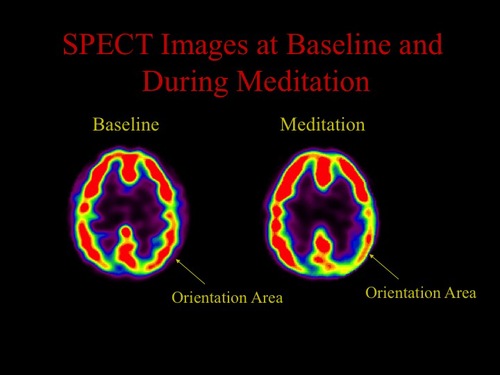
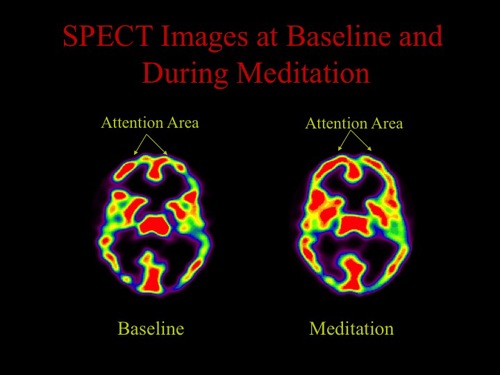
He found decreased activation in the parietal lobe (an area responsible for spatial and temporal orientation)
and increased activation in the frontal lobe (region responsible for attention and
concentration) of Buddhists who were instructed to meditate than in those of
participants who did not receive any instructions. In addition, activity in the
frontal lobe and inferior parietal lobe (a language area) increased during
prayer. Should meditation and prayer be taken as processes equally associated
with religion and spirituality? While the results of Dr. Newberg’s study are
truly thought provoking, it is important to not lose sight of what was actually
studied and what domains the results of the research can be extended to.


My third question is, what are the tools with which
neuroscientists are trying to study the brain’s take on religion and
spirituality?
I provoke you to the following thought experiment.


God.


Let your mind freely explore the meaning of the word. Allow your senses to paint an
image, produce sounds, smells, tastes, feelings. Embrace the physiological and
emotional states that the word creates within you. Equally welcome the absence
of a reaction.


Now imagine that you were doing this exercise inside an fMRI machine, with the
specific background noise
present at all times, and a gigantic magnet inches above your face. Unless you
have significant training in isolating background noise and other distractors
(or what Dr. Robert Puff calls “finding
the silence in which the noise resides”), you will probably not reach the same
level of focus as you would were you mediating or praying in a dimly lit room
infused with the smell of incense or in a natural setting that smelled of
blossom, either alone or with others who are also seeking that transcendental,
spiritual state of the mind.


Yet, these are the kind of
procedures from which the field of neurotheology extracts its data and draws
its conclusions. In 2008, for example, a team of neuroscientists led by Sam
Harris
at the University
of California in Los Angeles measured brain activation in committed Christian
believers and nonbelievers who were presented with various religious and
nonreligious propositions – like “The Biblical God really exists” and “Santa
Clause is a myth” – that they had to judge as either true or false [2]. The results of the study suggested that both religious and
nonreligious belief – in other words, statements that participants judged to be
true – was correlated with greater activation of the ventromedial prefrontal cortex (see image below).


Belief minus disbelief in Both
Categories, Both Groups – image from Harris et al, 2010


This area is associated with representation of self, theory of mind, reward,
emotional associations, and goal-driven behavior. Added to other studies that
found religion to be related to medial prefrontal cortex circuitry [3] [4] or
even to the activity of the left hemisphere [5], this
study seemed to suggest that sustaining religious activities requires the activation
of particular brain areas.


I will return to the fact that religion
is widespread. Nine-in-ten Americans believe in the existence of God or
consider themselves spiritual [6] Is the religious or spiritual experience
simply a cognitive tendency that has been shaped by evolution?
Cognitive
scientists such as Pascal Boyer, for example, have explained that the
propensity to religion is a consequence of the social nature of humans [7]. Our brains are built to deal with large amounts of social
information, and do that constantly. In order to integrate in today’s complex
societies, we spend incredible amounts of time creating, evaluating, and
updating our social relationships. Consider the amount of time we spend trying
to understand what others think and why they think it. Think about the ease
with which we remember faces, compared to other objects or even other parts of
the body [8]. Now, remember the occasion when you looked at the sky and
saw a cloud shaped like a human face, or when your breakfast toast had a
human-like design on it. We seek agency continuously, or, as Pascal Boyer calls
this phenomenon, we have a hyperactive agency detection system. So can it be
that gods and other supernatural agents exist because we are cognitively
disposed to believe in their existence? They certainly seem to master large
amounts of socially relevant information, and people often turn to them for
answers and guidance. The fact that gods and supernatural agents often have the
powers or characteristics of humans only makes them more memorable.


It might well be that spirituality is a cognitive by-product of the social
tendencies of humans. But even so, can
religion be a process within the reach of an empirical framework?
Few neuroscientists
venture so far as to say that religion/spirituality is a product of activating certain
brain areas, rather remaining in the more neutral territory of “associated
with” and “important for”. As neuroscience research attempts to penetrate
spirituality, it will be fascinating to discuss the diversity in religious
experience, atheism, and why people who live in radically different
circumstances nevertheless share a similar connection with a god, gods, or
other transcendental spirits.


As for now, I
suggest that the field of neuroscience is too young to draw any conclusions about
religion and spirituality. While questioning the neurological basis of spirituality
is indeed fascinating, there is no clear consensus on how these brain processes
should be studied. Furthermore, technology available to do so is still not
sensitive enough. And even if the research methods agreed, and technological
advancements promised accurate results, what are we to do with the findings of
this kind of research? I believe that while this research is indeed promising,
there are many ethical matters arising around assigning something as intangible
as spirituality to a brain mechanism. Those who study spirituality and
religion, therefore, should be sincere about the potency of their research
methods and techniques, meticulous about their generalizations, and straightforward
in their reports to the public.


References


[1] Graziano, Michael. "The Spirit Constructed in the Brain." The Huffington Post. TheHuffingtonPost.com,
29 Apr. 2011. Web.


[2] Harris S, Kaplan JT, Curiel A, Bookheimer SY, Iacoboni M, Cohen MS (2009) The neuralcorrelates of religious and nonreligious beliefPLoS One 4(10): e7272.


[3] Azari NP, Nickel J, Wunderlich G (2001) Neural correlates of religious experience. Eur. J. Neurosci.


[4] Muramoto O (2004) The role of the medial prefrontal cortex in human religious activity. Med Hypotheses. 62(4): 479-85.


[5] Ramachandran VS (2010) “Split Brain with One Half Atheist and One Half Theist”. Youtube video www.youtube.com/watch?v=PFJPtVRlI64


[6]"Summary of Key Findings." Statistics on Religion in America Report. PewResearch. http://religions.pewforum.org/reports#. Retrieved 04 Sept. 2014.


[7] Boyer, P (2001) Religion Explained: The Evolutionary Origins of Religious Thought.


[8] Waxman OB (2014) “It’s ‘Perfectly Normal’ to see Jesus in Toast, Study Says”. Time, Newsfeed Science http://time.com/90810/its-perfectly-normal-to-see-jesus-in-toast-study-says/


Forbes J.D. (2008) Columbus and Cannibals: The Wétiko
Disease of Exploitation, Imperialism, and Terrorism
. Seven Stories Press.


Want to cite this post?


Lucaciu, I. (2014). Can neuroscience discuss religion? The Neuroethics Blog. Retrieved on , from http://www.theneuroethicsblog.com/2014/10/can-neuroscience-discuss-religion.html

Thursday, October 2, 2014

Neuroethics and the Emory Tibet Science Initiative

I recently interviewed fellow Neuroethics Blog contributors Dr. Julia Haas and Dr. Gillian Hue about courses they taught during the summer at Tibetan Buddhist monasteries in South India as part of the Emory-Tibet Science Initiative (ETSI). Julia (who is a Postdoctoral Research Fellow in the Philosophy-Neuroscience-Psychology Program at Washington University) taught philosophy of science at Drepung Loseling Monastery in Karnataka, and Gillian (who is the senior program coordinator for the Emory University Initiative to Maximize Student Development, program associate in the Emory Neuroethics Program, and the Managing Editor for AJOB Neuroscience) taught neuroscience at the Sera Jey Monastery in Bylakuppe.


A neuroscience class at Sera Jey Monastery (Photo credit: Gillian Hue)


The ETSI (part of the Emory-Tibet Partnership) works to introduce science programs into the education of Tibetan Buddhist monks and nuns. Julia explained that “for the past six years they had a pilot program in the north of India [in Dharamsala], and now it is gradually being rolled out as part of the curriculum for some of the higher monastic degrees.” Such degrees are offered at Drepung Loseling and Sera Jey, which function as monastic universities.


In our interview, Julia said that she first heard about the ETSI from Neuroethics Blog contributor Brian Dias who taught in Dharamsala the previous year, and she joined the program when a professor in her department, Dr. Mark Risjord, was looking for interested students. According to Julia, the ETSI wants philosophers like her involved because the Tibetan monks' education is heavily based in philosophy and they “thought that might be a good entry point for the monks to start thinking about science before they started learning the specifics.”


The philosophy of science class was the introductory class for the program. Julia defines philosophy of science as “the methods and...practices that are involved in scientific research”. It deals with questions such as: “how are scientific discoveries made, ... how does scientific change come about, or what distinguishes science from non-science?” The class introduced scientific concepts and terminology such as correlation versus causation, measurements, the scientific method, and scientific theories and also “more abstract philosophical ideas.”


Julia Haas's philosophy of science course (Photo Credit: ETSI) 


Teaching in the monasteries is a unique and challenging experience for the ETSI instructors, due to the educational and cultural differences and the language barrier. The monastic students have less knowledge of Western science (though there is a Tibetan scientific tradition), but they have deep philosophical knowledge. Because of this, Julia explained that her course was more about teaching the concepts in a way that would fit into the knowledge they already had:


“These are the elite students in the Tibet tradition. … The monks are very advanced scholars already when you when you walk into the classrooms, so they have these rich and sophisticated worldviews that sometimes are compatible with a scientific approach and sometimes less so. It is a question of translating some of the scientific concepts as opposed to introducing them to a blank slate. You are mostly trying to make ideas fit with a very well developed worldview and find where the similarities are or where the differences are.”

The ETSI translated the American instructors' educational materials into Tibetan, and interpreters (monastic students who spoke English--oftentimes Tenzin Gyatso Science Scholars) translated in the classrooms. Julia did not find the language barrier to be much of a problem, stating that the main issue she had with it was having difficulty getting to know her students on a personal level. Gillian said that the language barrier and cultural differences did impact the way she taught and that she needed to remain aware of them in order to make sure she was communicating her lessons clearly.


A monk writing the names of the cerebral lobes in Tibetan (Photo credit: Gillian Hue)


The addition of the science program constitutes “the first change in the curriculum in the Tibetan monastic universities in 600 years.” But Julia noted that the students she taught “were incredibly open to the sciences, given how new it is to their tradition.” She contrasted their attitude with the resistance scientific thinkers faced from “philosophers and religious movements in Europe” when modern science started to emerge. Their attitude is encouraged by the Dalai Lama's enthusiasm for the program and his belief in the importance of science education for Buddhist monastics. Gillian elaborated, explaining that “neuroscience was the area of study that the Dalai Lama specifically asked to be a focus of the ETSI.” And he had expressed his interest in neuroscience before the creation of the Emory-Tibet partnership, including in a controversial talk at the 2005 Society for Neuroscience meeting where he stated his belief that a better understanding of the human brain could make us more ethical and compassionate: "I believe that the collaboration between neuroscience and the Buddhist contemplative tradition may shed fresh light on the vitally important question of the interface of ethics and neuroscience.”


Gillian said that such ideas are what excite her about the ETSI project and neuroethics in general, though they require background knowledge of neuroscience before they can be properly studied. She commended the ETSI neuroscience curriculum team and instructors for focusing on teaching the basics before discussing more complex issues such as the neuroscience of ethics and consciousness.


(Photo Credit: ETSI)


Both Americans and Tibetan members of the ETSI were aware that there could possibly be unintended results of introducing modern science to an insular and traditional community. Julia explained that she was concerned that it could lead to a decrease in the importance and prevalence of religion in their society, as occurred in Europe in response to the rise of modern science. The issue was also discussed by Dr. Risjord and some of the Tibetan religious leadership, but ultimately they believe that a collaborative program such as this can in fact allow the monks to reconcile science with their religion and “empower the tradition to engage with science, so instead of being threatened by it … they can bring their tradition into harmony with science.”


A project like the ETSI presents many challenges, but such a collaborative effort between different educational institutions can greatly benefit all involved. The ETSI hopes to eventually fulfill the Dalai Lama's dream of creating a sustainable and permanent science education program within the Tibetan monasteries. One of the main goals behind the Science Scholars program is to train monks to teach the science courses at their own monasteries, which should allow further integration of the science curriculums with Tibetan Buddhism.


Want to cite this post?


Queen, J. (2014). The Emory Tibet Science Initiative: Interview with Dr. Julia Haas and Dr. Gillian Hue. The Neuroethics Blog. Retrieved on , from http://www.theneuroethicsblog.com/2014/10/the-emory-tibet-science-initiative.html

Tuesday, September 23, 2014

Neuroethics in Theory and in Practice: A First-hand Look into the Presidential Commission for the Study of Bioethical Issues

Anyone who turned on CNN this past summer probably remembers the most popular news stories ranging from Obama’s recent efforts to quell political violence in Iraq to Emory University’s admission of two Ebola patients. What was missing from several (if not all of these newscasts), however, was any mention of the continuation of President Obama’s BRAIN initiative right here at Emory University. Specifically, this past June, the Atlanta university welcomed the prestigious Presidential Commission for the Study of Bioethical Issues to confer over many pertinent issues surrounding various ethical and neuroscientific issues. I was lucky enough to be able to attend the session and catch a glimpse of the commission in action. Upon the commission’s completion, I found myself excited while simultaneously confused about the group’s overall mission and decided it would be worthwhile to investigate the Bioethics Commission further. Particularly, I hoped to understand why it is that Obama created a group to investigate several important issues discussed on this blog every week.


From Center for Genetics and Society


First, some background information: Obama launched the “Brain Research through Advancing Innovative Neurotechnologies” Initiative (appropriately known as the BRAIN Initiative) in 2013 through executive order. In short, the initiative seeks to provide scientists and research organizations the appropriate tools (e.g., funding and support) to ascertain a better understanding of the brain and to develop breakthrough neuro-technologies to treat disorders such as Parkinson’s disease and PTSD, to name a few. However, some question whether Obama’s choice to fund the BRAIN initiative represents a truly transformative moment in neuroscience research. For example, many have spoken out against the project’s funding structure, feasibility, and goals1. Furthermore, similar to my sentiments after leaving the Atlanta Bioethics Commission meeting, many people felt that Obama’s BRAIN initiative was little more than a vague pronouncement of monolithic ideas with little substance 2. Nonetheless, in response to such outcries, Larry Swanson, the president of Society for Neuroscience, lauded Obama’s choice to fund and encourage research in important scientific areas 3.


To supplement the efforts of the BRAIN Initiative, the Obama administration also brought together a group of highly qualified individuals to also explore the potential bioethical implications that could arise as a result of the development of more advanced neuro-technologies. The Commission is also closely tied to Emory University given the Vice-Chair of the group is our own President James Wagner. Furthermore, the commission’s goals are largely advisory and interdisciplinary in nature. Specifically, the group meets at select locations throughout the United States and invites experts in particular research fields to meet and discuss their research.


From Emory University


To find out more about their past efforts, I’d highly suggest reading the Commission’s first report entitled “Gray Matters: Integrative Approaches for Neuroscience, Ethics, and Society.” This report outlines four broad areas of interest to the group: (1) neuroimaging and brain privacy; (2) dementia, personality, and changed preferences; (3) cognitive enhancement and justice; and (4) deep brain stimulation and the ethically difficult history of neurosurgery. Additionally, the report outlines four recommendations, one of which is a heavier emphasis on integrating ethics and science through education at all levels. The report mentions the importance of further developing models for bioethics education not only for graduate students, but also high school and undergraduate students. The report also recommends that neuroscience research be accompanied by ethical evaluations for the entirety of the research process. Such explicit recommendations demonstrate the ever-increasing importance of evaluating the ethical implications of certain neuroscientific developments. The group is now working towards putting together a second report that attempts to tackle a much broader task of discussing the applications and implications of neuroscience.


The sessions themselves often explore several different areas of interests. The meeting in Atlanta, in particular, included 8 different sessions over the course of two days. The webcast of the event is posted here (along with the video archives from other bioethics meetings throughout the country). I highly recommend sifting through this website because the meeting recordings are truly a goldmine for anyone interested in neuroethical issues. The topics discussed at the Emory University event included a talk about the potential of neuroscience research and also a report on the potential implications of advances in neuroscience research for ethics and moral decision making.


If you’re anything like me, you are probably wondering how the commission plans to integrate all the different areas of interest reviewed at the meetings and subsequently distill their findings to the president. Essentially, I wanted to understand the process and purpose of the meetings within the grander framework of Obama’s BRAIN initiative. To figure out more, I interviewed Dr. Nita Farahany, a member of both the AJOB Neuroscience editorial board and Bioethics commission. In response to a question I posed to her regarding the broad missions of the commission, she aptly noted that, first and foremost, the individual meetings help to provide each member of the commission a comprehensive understanding of the ethical issues that tend to arise when dealing with neuroscience. To that end, she noted that for some areas which have already been well debated in the neuroethics community, such as cognitive enhancement, the Commission is unlikely to “reinvent the wheel” in its report on the issues. Consequently, the mission of the group entails both determining how to frame a specific set of pre-determined issues and then deciding when and what recommendations would be most valuable for a particular field.


From MSNBC.com


Ultimately, my experience at the Commission was both enlightening and perplexing. I think many questions still remain regarding the ability of the Commission to institute change. As is the problem with other academic discussions, a gap often exists between those discussing problems in academic buildings and policy-makers hoping to enact change as a result. It remains to be seen how Obama responds to the recommendations of the Gray Matters report and other resources the commission develops in the future. Additionally, there are limits to the depth of information that can be discussed in a public arena between people with disparate research backgrounds. Given the speakers only have 15 minutes to present their research to a group of people with divergent areas of expertise, the commission usually does not have the time to delve into certain ethical issues that may warrant more attention. Regardless, I think that the entire effort is of incredible importance to anyone interested in neuroethics and points to the increasing significance of supplementing cutting edge neurological research with ethical deliberation. The process of considering the multitude of psychological and neurological consequences of certain research endeavors within the institutionalized setting of the bioethics commission meetings represents an important step in determining the relevant ethical questions surrounding brain technologies. To that end, the Commission serves as a groundbreaking model for vital interdisciplinary discussion that could not have been made possible without the support of the executive branch.


The success of the commission thus far also speaks to the mounting attention directed toward neuro-ethical and bioethical considerations in many areas of research and development. If a student, scholar, researcher or member of the general public takes anything away from watching a few webcasts of Commission meetings or reading the Gray Matters report, it should be noted that the ethical ramifications of research ought not to be ignored. Rather, the effort represents a different way to get involved in the increasingly important neuroethical conversation. In fact, the next meeting will take place on November 5th and 6th in Salt Lake City. The Commission ensures that there is a live-stream of the event on their website equipped with the ability to send in questions via email. The events are also open to the public upon registration. Be sure to tune into the upcoming event to both listen to experts discuss fascinating neuroscience developments and also to watch engaging conversations between scholars from a wide array of backgrounds debate about the ethical implications of such advances.


Citations


(1)  Leonard, A. (2013, April 15). Obama’s BRAIN gets hammered. Salon. From http://www.salon.com/2013/04/15/obamas_brain_gets_hammered/

(2) Shen, H. (2013, Nov 6). BRAIN storm. Nature. From http://www.nature.com/news/neurotechnology-brain-storm-1.14105

(3) Wadman, M. (2013, April 15). Society for Neuroscience quashing dissent on BRAIN Initiative, critic complains. Nature News Blog. From http://blogs.nature.com/news/2013/04/society-for-neuroscience-quashing-dissent-on-brain-initiative-critic-complains.html


Want to cite this post?


Marshall, J. (2014). Neuroethics in Theory and in Practice: A First-hand Look into the Presidential Commission for the Study of Bioethical Issues. The Neuroethics Blog. Retrieved on , from http://www.theneuroethicsblog.com/2014/09/neuroethics-in-theory-and-in-practice.html

Tuesday, September 16, 2014

Teaching Tactics - Neuroethics in the Curriculum

I made and abandoned several
attempts at an opening sentence for this post and all of them included a deft
way to bury the lead. The lead is this: I’m thrilled for two of my students
whose video, Empathy and your Brain, was selected as one of the top submissions to the 2014 Brain Awareness Video
Contest
. Their video
now has the chance to be selected as the fan favorite in the People’s Choice
contest.


But why was I burying it?


I suppose I’ve become
accustomed to integrating Neuroethics content and dialogue in courses that I teach,
sometimes as part of the formal curriculum, but more often as implicit or hidden curriculum. Since Neuroethics courses
are still not yet standard fare in most academic institutions, I generally
don’t have an opportunity to explicitly
test out some of the currently evolving creative techniques in Neuroethics education
like those featured on NeuroethicsWomen Leaders teaching resources page. Instead, I often work the ideas and concepts into
other more general courses. The examples and cases I select in Research Design
courses, Introduction to Psychology and even Statistics courses, usually have
some Neuroethics content, and I’ve assigned readings from AJOB Neuroscience and this blog as entry points to discuss topics in Neuroethics
and Neuroscience. From controversial to practical or current and topical, I’m
constantly seeking ways to engage a wide variety of students  in the course material. The dynamic nature and
novelty of the issues addressed in Neuroethics provide fertile ground for
discussion, engagement and the development of critical thinking and problem-solving
skills.


Student-Designed Teaching Ideas -  Candy Synapse


Student-Designed Teaching Ideas - Neuroanatomy


Ann and Kat’s video was
submitted as a final project in the undergraduate Biopsychology course I taught
at Georgia Gwinnett College in the spring semester 2014. For the final project,
students were given the choice to write a research proposal or develop and
produce a short educational video for an audience of their choosing. As I
always do, I encouraged the students to submit their final project to the Brain
Awareness Video Contest. I’m thrilled
that they accepted my challenge and their video now qualifies for the people’s
choice contest. I would be tickled if they won the $500 cash prize for fan
favorite video, but if I am to be completely honest, I’ll admit that I’m
equally thrilled that Empathy, ripe with its Neuroethics implications was
their topic of choice for not only this video, but for their independent
research projects. Voting is open from September 9 to September 30 at http://www.brainfacts.org/bavc.


Ann Gillman and Kat Kelkenberg, creators of the video


Want to cite this post?


Hue, G. (2014). Teaching Tactics - Neuroethics in the Curriculum. The Neuroethics Blog. Retrieved on , from http://www.theneuroethicsblog.com/2014/09/teaching-tactics-neuroethics-in.html

Tuesday, September 9, 2014

Big data and privacy on the Web: how should human research be conducted on the Internet?

“They said, ‘You can’t mess with my emotions. It’s like messing with me. It’s mind control.'” That’s what Cornell communication and information science professor Jeffrey T. Hancock reported in a recent New York Times article about the public outcry over the now infamous Facebook emotional manipulation study (read on for details). Hancock was surprised and dismayed over the response. He sees the advent of massive-scale sociology and psychology research on the Internet as a “new era” and he has a point. The days of mostly relying on college students as research subjects may be coming to an end. But how should research be conducted in this new online setting? Is it even appropriate to use data from web sites as it is collected now with little, if any, user knowledge and informed consent existing only in the form of privacy policies that nobody reads?1 In this post I argue that the Internet is not the Wild West and therefore internet-based research should not be allowed to side step established practices of informed consent. Furthermore, significant changes must be made so that these new research opportunities are maximized in the best way possible.


Via Linkedin


 Earlier this year Facebook, the social network with well over 1 billion users, found itself in hot water after publishing a study in collaboration with academic researchers (including Hancock above) that sought to measure “emotional contagion” online.2

In January of 2012 Facebook researchers altered the News Feed content of nearly 700,000 users without their knowledge or explicit consent. Users in a control group had random posts withheld from their News Feeds, irrespective of emotional content, whereas others either had some posts with a positive valence removed or some with a more negative tone hidden. They found that overall, omitting News Feed content – either negative or positive – seemed to affect the emotional valence of subsequent posts. And all those Facebook users who saw fewer emotion-tinged posts subsequently posted fewer updates. In effect, Facebook researchers were successfully able to manipulate the emotions of hundreds of thousands of users simply by altering their News Feed content. The researchers were able to study a phenomenon – emotional contagion – which can be very difficult to study in person due to a variety of potential experimental confounds and they were also able to achieve extraordinary statistical power. But by not explicitly asking for consent many users felt well, used.


In the paper, the authors state that would-be subjects gave informed consent for this research when creating an account. But this may not be true according to a report, which alleges that the word “research” was actually added to the privacy policy months after the study. Anyway, in my case, consent would have been given in the summer of 2005, nearly a decade ago. Even if I did agree to participate in research at that moment in time, I certainly don’t remember it and I could not have had any idea what would be possible on the Internet of 2014. Would you provide your consent today for a study of your Internet behavior in January of 2023? The journal that published the study, Proceedings of the National Academy of Sciences, updated the article with an attached “Editorial Expression of Concern” wherein the Editor-in-Chief Inder M. Verma noted that, as a private company, Facebook is not beholden to the US Government’s Department of Health and Human Services “Common Rule”, which guides human research best practices and advises that, in addition to documented informed consent, subjects should have the ability to opt out of a trial. This, however, is where journals need to step in to enforce ethical standards regardless of the research setting.


In another example, Christian Rudder, one of the founders of the free online dating site OkCupid.com, drew fire recently for revealing the details of an internal study. The website essentially told users who appeared to be poorly matched that they were in fact well-suited and vice versa. His reaction to it all, which may be indicative of the current gulf between traditional brick-and-mortar institution researchers and Silicon Valley entrepreneurs (who may, pardon the pun, have their heads in the cloud) was, effectively, “what’s the big deal?”


The prevailing business model of Web-based companies – offering services for free in exchange for information which they then hope to monetize – inherently disagrees with the ethos of human research. Skipping (for the moment) the issue of informed consent, researchers should first and foremost avoid harming the study participants physically, emotionally or otherwise and should endeavor to protect their subjects’ privacy rather than feed off of it. There does however seem to be an important difference between studying data that is passively collected from users – who should expect that they are forfeiting some amount of privacy in order to get a free service like Facebook in return – and actively manipulating the information that users see and observing their responses.


Via EyeWire


These studies are not limited to social networks and dating sites, however and are quite relevant to neuroscience. Lumosity.com, perhaps the largest brain training website with more than 50 million users around the world, has embarked on the Human Cognition Project. Preliminary results from this project were published in a proof-of-concept study that had N’s well over 100,000.3 However, Lumosity (which I have written about previously on this blog) is very up-front about the Project and seems to be tapping into a widespread desire among the public to get involved in neuroscience and cognitive science research.


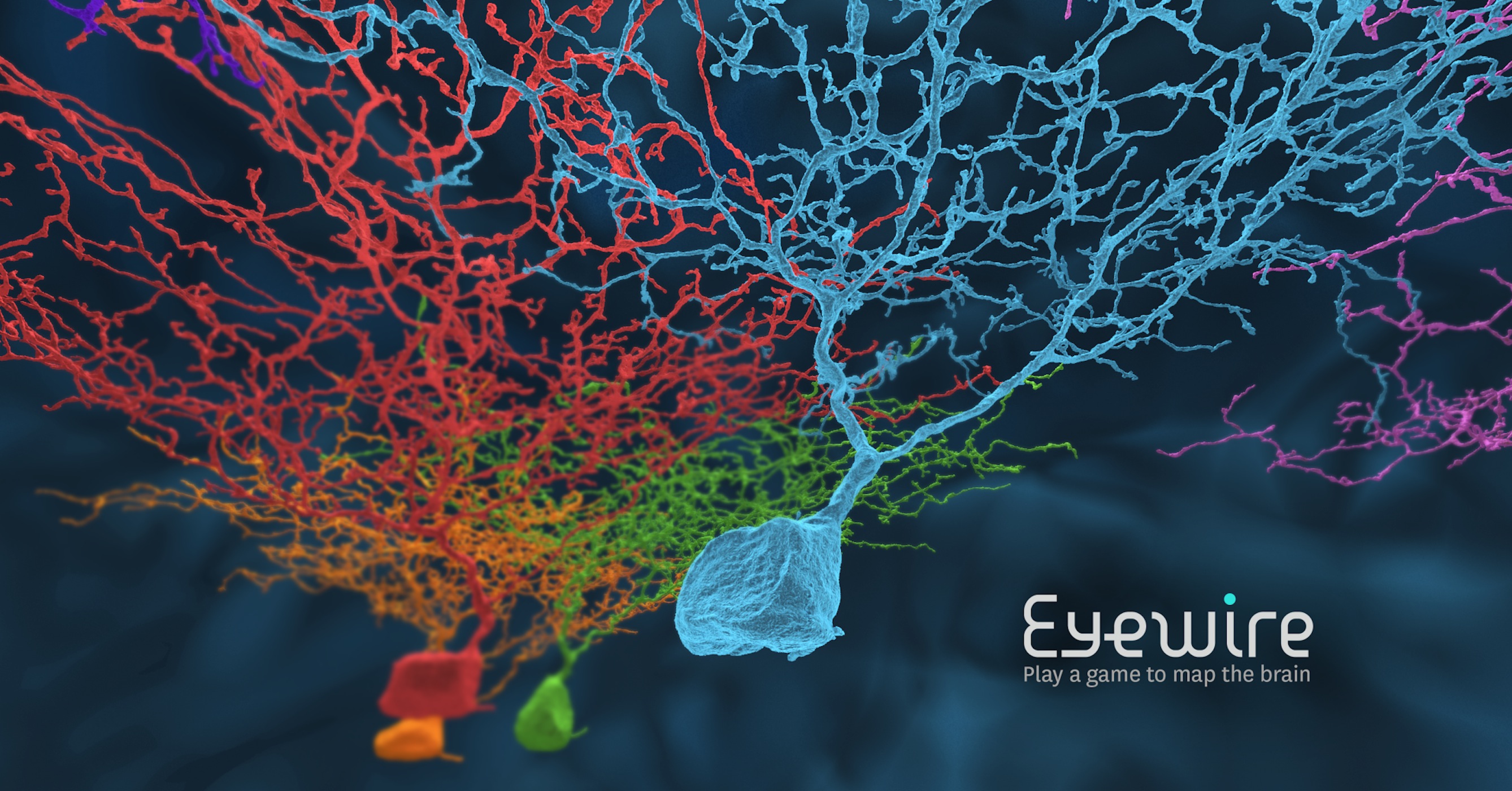
Academic researchers are taking advantage of crowdsourcing in neuroscience as well. MIT computational neuroscientist Sebastian Seung has found a solution to the image analysis bottleneck that was slowing down the progress of his group’s research. He developed Eyewire which, in their words, is “a game to map the brain...Anyone can play and you need no scientific background. Over 130,000 people from 145 countries already do. Together we are mapping the 3D structure of neurons; advancing our quest to understand ourselves.” This work has already produced a milestone paper in Nature.4


The landscape of Internet research is rapidly changing and, while it certainly presents a number of ethical challenges in terms of privacy and informed consent, there is vast potential for breakthrough studies – of a kind that have never been possible before – to answer important questions. The first question, though, is how to create a safe, effective, environment for research in a setting that is increasingly seen as insecure and where personal information is the most common currency. A necessary first step is to provide would-be subjects with the choice to opt out of a study. In addition, Internet privacy expert Helen Nissenbaum suggests there needs to be a fundamental shift in norms for conceptualizing privacy online. It is not reasonable to expect users to read all privacy policies for websites they visit and, even if they could, it is unlikely they could predict all the potential implications of those often nebulous terms.5 Moreover, some sites (such as Facebook) have become so widely used and so necessary for modern communication without any comparable competitors, that it could be argued that users do not really have a choice to take their business elsewhere, and are therefore implicitly coerced to participate.


The Internet offers incredible research opportunities, particularly to understand human behavior. But just because participants never actually step into the lab does not necessarily mean they don’t deserve the same protections as those who do. Besides, the literature is filled with clever, elegant experiments designed to prevent the participants from knowing the goals and hypotheses of the study – there is no reason that couldn’t also be done online. A major challenge facing academia is how to best partner with private companies who may be primarily interested in improving website functionality and in so doing collect large datasets that may be of interest to researchers. They must also address the issue of whether it is ethical to use data collected by private companies without real informed consent or the choice to opt out to answer academic questions. Internet connectedness has opened up incredible new opportunities for research into human behavior and cognition as well as for “citizen scientists” to help expedite progress in neuroscience. Now is the time to codify ethical standards for these studies to ensure that growth in this area continues in the best way possible.


 References 


1. Kelley, P. G., Bresee, J., Cranor, L.F., Reeder, R.W. in SOUPS '09 Proceedings of the 5th Symposium on Usable Privacy and Security. (ACM).


2. Kramer, A. D., Guillory, J. E. & Hancock, J. T. Experimental evidence of massive-scale emotional contagion through social networks. Proceedings of the National Academy of Sciences of the United States of America 111, 8788-8790, doi:10.1073/pnas.1320040111 (2014).


3. Sternberg, D. A. et al. The largest human cognitive performance dataset reveals insights into the effects of lifestyle factors and aging. Front Hum Neurosci 7 (2013).


4. Kim, J. S. et al. Space-time wiring specificity supports direction selectivity in the retina. Nature 509, 331-336, doi:10.1038/nature13240 (2014).


5. Nissenbaum, H. A Contextual Approach to Privacy Online. Daedalus 140, 32-48 (2011).


Want to cite this post?


Purcell, R. (2014). Big data and privacy on the Web: how should human research be conducted on the Internet? The Neuroethics Blog. Retrieved on , from http://www.theneuroethicsblog.com/2014/09/big-data-and-privacy-on-web-how-should.html

Monday, September 1, 2014

The sound of silence: Fetal alcohol spectrum disorder

By Emily Bell, PhD


Dr. Emily Bell is Researcher at the Neuroethics Research Unit, Institut de recherches cliniques de Montréal (IRCM). Dr. Bell’s MSc and PhD research in Psychiatry at the University of Alberta focused on investigating brain activity in mood and anxiety disorders using functional magnetic resonance imaging (fMRI). Her postdoctoral work shifted her into the field of neuroethics, where she examined ethical and social challenges associated with deep brain stimulation in psychiatric disorders. As an investigator of the Neuroethics Core of NeuroDevNet, a Canadian Network of Centres of Excellence, Dr. Bell has been involved in a wide range of network activities and research in the area of pediatric ethics. This includes recent work on the implications of stigma for public health policies and practices in fetal alcohol spectrum disorder and ethical concerns associated with the transition of youth with neurodevelopmental disorders to adult health services. Dr. Bell has been awarded support from the Social Sciences and Humanities Research Council (SSHRC), the Fonds de la recherche en santé du Québec (FRSQ), the Canadian Institutes of Health Research (CIHR), and the Killam Trust. She is currently lead co-investigator on two CIHR grants, including one in the area of vulnerability and mental health research ethics.


Let me start by saying that I never planned to have a research or action agenda in ethics and fetal alcohol spectrum disorder. Fetal alcohol spectrum disorder (FASD), as an umbrella term, describes a range of adverse developmental outcomes resulting from exposure to alcohol during pregnancy. Sure, my graduate degrees in psychiatry were an entry to understanding the challenges experienced by vulnerable patients, the social and relational aspects of health, and the deep and enduring force of stigma. All this prepared me to some degree for the complex web of ethical and social tensions in the study of FASD. These tensions cut across disciplines and domains and touch on alcohol policy, public health initiatives, concepts of motherhood, of maternal/fetal rights, and of specialized care for persons with disability throughout the life course. I was fortunate, the sheer complexity of the issues at stake also gave way to a network of colleagues (NeuroDevNet, a Canadian Network of Centres of Excellence) who themselves were jack of all trades; scientists and physicians with a sincere interest in and powerful grasp of the ethical issues faced by policy makers, pregnant women, and those affected by prenatal alcohol exposure.


From neurodevnet.ca


FASD is a leading cause of developmental disability and a significant public health issue accompanied by substantial lifelong burden, especially through secondary disabilities (i.e., difficulties at school, trouble with the law, challenges living independently). One of the key challenges associated with developing a comprehensive strategy for managing and preventing FASD is the need for a coordinated approach across a variety of social systems (i.e., foster care system, criminal justice system, health systems). Moreover, despite the fact that prenatal alcohol exposure continues to be a prevalent cause of developmental disability it receives far less attention than some other neurodevelopmental conditions such as autism. It’s probably not hard to imagine why the field as a whole might suffer from a lack of concerted attention. The stigma associated with drinking during pregnancy is well known and can dissuade women who drink during pregnancy from seeking treatment or disclosing their drinking habits (Eggertson, 2013). We anticipate that this stigma also filters down to the child or the individual with FASD (Bell et al., under review). The moral elements potentially influencing the construction of fetal alcohol syndrome have been well characterized. Armstrong (1998) has described how the diagnosis risks becoming just another way to label women and children who are “beyond hope and destined to be societal problems”.


The perception that FASD is a preventable disorder (i.e., there is no more research or science to do to understand the solution to the problem) may have resulted in less research or investment in this area, leaving FASD as the “poor cousin” to other less stigmatized conditions. Of course, a mission to carve out more attention for FASD is also hampered by the fact that beliefs about the risk and acceptability of drinking during pregnancy vary considerably. This may lead to confusion about whether those in the field even have the same ideas about the problem itself, or if their priorities for research are aligned with those of the public. For instance, one study has shown that there are strongly divergent perspectives on risk related to drinking alcohol during pregnancy across countries, including in Canada and the United Kingdom (Drabble et al., 2011). Others have shown that policy statements about alcohol use during pregnancy in even English-speaking countries vary considerably (O’Leary et al., 2007). All this means that alcohol use during pregnancy and FASD receive disparate attention and incongruent focus in both policy and practice internationally, never mind the fact that different interpretations of risk and appropriate action abound in policies (i.e., policies of abstinence, or certain tolerances to non-risky patterns of drinking or low intake during pregnancy).


What of those individuals who are impacted by alcohol use during pregnancy such as the families (foster, adoptive, or biological), the children, youth and adults? Where are their voices in the academic literature to influence or guide policies or practices? In a study we conducted on stigma and FASD (Bell et al., under review), we were only able to identify a small literature where the voices of those affected by FASD had been captured. In one qualitative study conducted with children living with FASD, researchers alluded to the fact that some professionals had questioned the insight and ability of the children to even participate in the research (Stade et al., 2011). Unfortunately, research on those affected by FASD is hampered by a number of factors. First, for those in foster care (a reality for many children and youth living with FASD), a complicated set of foster protections govern the participation of subjects who are wards of the state. Second, individuals affected by FASD (children, families both biological and adoptive) may experience significant shame and stigma which dissuades research participation. Social sciences research especially may touch on sensitive topics. Indeed, strategies to manage privacy and confidentiality, where breaches have the potential to have strong social risks such as stigmatization, need to be carefully considered in this type of research.


Complicated policy and practice problems should take into account the voice of those most impacted by the effects of alcohol consumed during pregnancy even if barriers to research participation exist. There are important gains that could be made by opening up real dialogue with those affected by FASD and by pursuing social science research in their interests. For example, broad deliberation is needed about social factors impacting the diagnosis of FASD, about public health campaigns and risks of drinking during pregnancy, and stakeholder perspectives are needed before public health tools such as newborn screening for prenatal alcohol exposure is widely implemented. These are delicate social and medical issues, and the way in which we handle policy and practice in these areas expose the potential for significant social harms (i.e., removal of children from families, criminalization of women, uneven or culturally biased diagnostic practices, stigmatization, unfair treatment in the justice system). Guided by erroneous assumptions the right approach adopted for prevention or diagnosis may be potentially harmful. The meaningful engagement of individuals affected by FASD, women, and specialists in alcohol and drug use is needed.


References


Armstrong EM (1998) Diagnosing moral disorder: The discovery and evolution of fetal alcohol syndrome. Soc Sci Med, 47(12): 2025-2042.


Bell E, Andrew G, Chudley A, Di Pietro N, Reynolds J, Racine E. It’s a shame! Stigma against fetal alcohol spectrum disorder: Examining the ethical implications for public health practices and policies, under review.


Drabble LA, Poole N, Magri R, Mbona Tumwesigye N, Li Q, Plant M (2011) Conceiving risk, divergent responses: Perspectives on the construction of risk of FASD in six countries. Subst Use Misuse, 46(8):942-958.


Eggertson L (2013) Stigma a major barrier to treatment for pregnant women with addictions. CMAJ, 185(18): 1562.


O’Leary CM, Heuzenroeder L, Elliott EJ, Bower C (2007) A review of policies on alcohol use during pregnancy in Australia and other English-speaking countries, 2006. Med J Aust, 186(9): 466-471.


Stade B, Beyene J, Buller K, Ross S, Patterson K, Stevens B, Sgro M, Ungar W, Watson W, Koren G (2011) Feeling different: The experience of living with fetal alcohol spectrum disorder. J Popul Ther Clin Pharmacol, 18(3): e475-e485.


Want to cite this post?


Bell, E. (2014). The sound of silence: Fetal alcohol spectrum disorder. The Neuroethics Blog. Retrieved on , from http://www.theneuroethicsblog.com/2014/09/the-sound-of-silence-fetal-alcohol_1.html