Pages

Showing posts with label President's Commission for the Study of Bioethical Issues. Show all posts

Tuesday, April 12, 2016

Neuroethics and the BRAIN Initiative

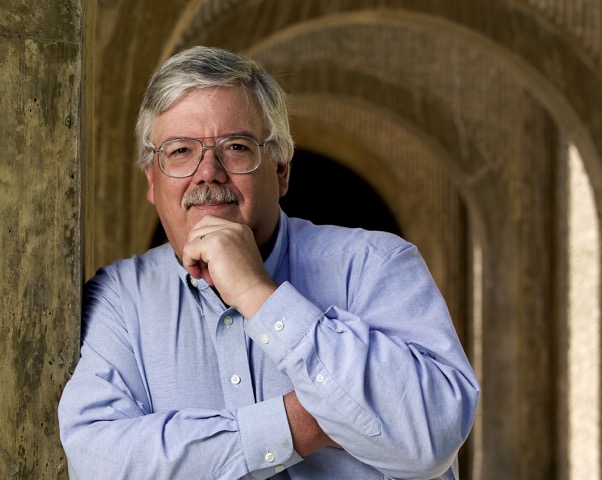
By Henry T. Greely


Hank Greely is the Deane F. and Kate Edelman Johnson Professor of Law and Professor, by courtesy, of Genetics at Stanford University. He specializes in ethical, legal, and social issues arising from advances in the biosciences, particularly from genetics, neuroscience, and human stem cell research. He directs the Stanford Center for Law and the Biosciences and the Stanford Program in Neuroscience in Society; chairs the California Advisory Committee on Human Stem Cell Research; and serves on the Neuroscience Forum of the Institute of Medicine, the Advisory Council for the National Institute for General Medical Sciences of NIH, the Committee on Science, Technology, and Law of the National Academy of Sciences, and the NIH Multi-Council Working Group on the BRAIN Initiative. He was elected a fellow of the American Association for the Advancement of Science in 2007. His book, THE END OF SEX AND THE FUTURE OF HUMAN REPRODUCTION, was published in May 2016.


Professor Greely graduated from Stanford in 1974 and from Yale Law School in 1977. He served as a law clerk for Judge John Minor Wisdom on the United States Court of Appeals for the Fifth Circuit and for Justice Potter Stewart of the United States Supreme Court. After working during the Carter Administration in the Departments of Defense and Energy, he entered private practice in Los Angeles in 1981 as a litigator with the law firm of Tuttle & Taylor, Inc. He joined the Stanford faculty in 1985.


On April 2, 2013, President Obama launched the Brain Research through Advancing Innovative Neurotechnologies (BRAIN) Initiative®. (Neuroscience has yet to reveal why an initiative about the brain had to have an acronym that spelled BRAIN; * legal issues explain the trademark notation.) Built on the report, BRAIN 2025: A SCIENTIFIC VISION, of a committee created to advise Francis Collins, the NIH Director, and chaired by neuroscientists Cori Bargmann of Rockefeller University and Bill Newsome of Stanford, the Initiative, in spite of political deadlock and budgetary woes, has survived and, in some respects, even thrived.


At its launch, the BRAIN Initiative was hailed as a project that would bring together at least three U.S. government agencies, charitable foundations, and industry. In reality, the initiative has been more decentralized. It has no overall director and no dedicated staff; it will only get an overall web page this summer. The various federal agencies stay in regular communication, some foundations and some foreign funders have played important roles, three international memoranda of understanding have been completed, and the Initiative has sponsored annual meetings of all BRAIN investigators whatever their funding. Still, it is more a confederation of individual activities, however inter-communicating, than a unitary project [1].


The National Institutes of Health (NIH) has taken the leading role in organizing the Initiative. This is partially because of its large financial stake in it; this fiscal year the NIH budget for the BRAIN Initiative is about $150 million. But other agencies are also spending large amounts on BRAIN – the Defense Advanced Research Projects Administration has a $95 million budget for it this year, the National Science Foundation expects to spend $72 million, and the Intelligence Advanced Research Projects Administration and the Food and Drug Administration both have multi-million dollar BRAIN budgets.


NIH’s role may be more a function of its own complexity than the size of its BRAIN budget. Ten Institutes and Centers at NIH are part of the BRAIN Initiative: the National Institutes of Aging, Alcohol Abuse and Alcoholism, Biomedical Imaging and Bioengineering, Child Health and Human Development, Deafness and Other Communication Disorders, Drug Addiction, Mental Health, Neurological Disorders and Stroke, the National Eye Institute, and the National Center for Complementary and Integrative Health. Many other Institutes and Centers have at least some central nervous system connection (the National Cancer Institute, for example, studies brain tumors). NIH needed to organize its own response to, and its role in, the Initiative.


President Obama speaking on the BRAIN initiative,

image courtesy of Flickr user Open Knowledge.


To do so, in 2014 it created the “Multi-Council Working Group on the NIH BRAIN Initiative,” happily shortened to MCWG. (I have tried to get people to pronounce the acronym as “McWig” but with very limited success.) MCWG has 14 members, one from each of the Advisory Councils for the 10 participating NIH Institutes and Centers and four “at large” members, including me. The directors of the relevant NIH entities normally attend; in addition there are “ex officio” members representing BRAIN activities at DARPA, FDA, IARPA, and NSF.


Since its first meeting in late August 2014, MCWG has met twice a year, summer and winter. Co-chaired by the directors of the National Institute of Neurological Disorders and Stroke, Dr. Walter Koroshetz, and the National Institute for Mental Health, initially Dr. Thomas Insel and now his acting successor, Dr. Bruce Cuthbert, MCWG tries to provide some of the kind of guidance that their Advisory Councils give NIH Institutes and Centers. The group is briefed on current funding areas and grants as well as proposed new funding areas and in turn provides its thoughts to the NIH.


“Thriving,” though doesn’t just mean “has big budgets and a fancy committee.” The BRAIN Initiative is funding exciting and important work. It has no grand substantive goal akin to “sequencing the human genome,” but instead wants to create tools to help us understand the brain (and, after all, the most important product of the Human Genome Project was nearly infinitely cheaper, faster, better sequencing, not the actual sequence).  You can find out more about BRAIN’s progress with things like photoacoustic imaging and miniaturized and highly sensitive electrophysiology and optical imaging instruments at the BRAIN Update blog.


Fine, you say, but what does all of this have to do with neuroethics?


Ethical questions were seen as part of the Initiative from before its beginning. BRAIN 2025 recognized that “Because the brain gives rise to consciousness, our innermost thoughts and our most basic human needs, mechanistic studies of the brain have already resulted in new social and ethical questions.” When President Obama announced the Initiative, he asked the President’s Commission for the Study of Bioethical Issues (PCSBI) to report to him on ethical issues it raised. It did, twice, in GRAY MATTERS, Volumes 1 and 2, which can be found here.


I was asked to serve as an at-large member of MCWG not just (?) for my good looks, but in the hope that I could bring some neuroethics experience to the group. It was immediately clear to me, and quickly became clear to the rest of MCWG, that the BRAIN Initiative needed more neuroethics input. The importance of those issues was also highlighted by a November 2014 neuroethics workshop held by NIH, discussed here.


The NIH has played a large role in the BRAIN initiative,

image courtesy of Wikipedia


For one thing, particular research areas or grants could raise very specific questions that were more granular than the recommendations in GRAY MATTERS. MCWG also recognized that there might be possibilities for the Initiative to lead to some general guidelines for approaching recurring problems in neuroscience research ethics, particularly in work with human subjects but also in research with non-humans. And finally the Working Group realized that the BRAIN Initiative might also be interested in funding some neuroethics research that could, by recommendations or criticism, support its work.


So, at the MCWG co-chairs suggestion, Dr. Christine Grady, Chief of the Department of Bioethics at the NIH Clinical Center and a member of PCSBI, and I were asked to prepare and present a plan for neuroethics activities to MCWG at its summer 2015 meeting. As a result MCWG approved the creation of a MCWG Neuroethics Work Group, co-chaired by Dr. Grady and myself and reporting to MCWG and its co-chairs. (Very happily for us, Dr. Koroshetz threw in from NINDS the very able support of Dr. Khara Ramos from his office as the Work Group’s Executive Secretary and liaison to NIH.) That fall the Work Group was chosen with members from both inside MCWG – Drs. James Eberwine of Penn, Bradley Hyman of Mass. General Hospital, and Rafael Yuste of Columbia – and outside it – Drs. Nita Farahany of Duke, Steve Hyman of the Broad Institute, Karen Rommelfanger of Emory, and Chandra Sripada of Michigan. Some of us met for a working dinner at the International Neuroethics Society annual meeting last fall in November, we’ve had several conference calls, and we held our first in-person meeting on February 9.


So, after just over a thousand words – what does this mean and why should you care?


Well, the MCWG Neuroethics Work Group is working. We are preparing two draft documents laying out ethical issues around data sharing in neuroscience research and about long-term obligations to human research participants who received implanted devices. We are working with other interested parties in cosponsoring workshops on neuroethics issues relevant to the BRAIN initiative. And, although we cannot claim too much credit for it, the NIH recently announced that it would be able to use funds from this fiscal year to support administrative supplements to existing NIH BRAIN Initiative Awards, including those about neuroethics.


Specifically, the PIs on BRAIN Initiative grants have been told that if there are any ethical considerations involved in their research, a supplement to explore those questions, as they fall within the funded specific aims of a given award, would be appropriate. The relevant grants are listed here. Applications for supplements are due May 2, and should follow these instructions. We hope that these will just be a new start for NIH-supported research on neuroethics.


We will have to see where neuroethics goes within the BRAIN Initiative, and, for that matter, what a future Administration holds for the whole initiative. But I think good starts have been made on both points. And I promise you that the MCWG Neuroethics Work Group will continue to look for good ways to apply neuroethics to the BRAIN Initiative – and to apply the BRAIN Initiative, and NIH more broadly, to neuroethics. Feel free to contact me, Dr. Grady, or Dr. Ramos directly with your thoughts or questions at hgreely@stanford.edu, CGrady@cc.nih.gov, or ramoskm@ninds.nih.gov. You can also read a bit about the work group on the NIH BRAIN Initiative website [2].


[1] It may be a case of what Steve Hyman has called a “COA” – a “Crypto-Orwellian Acronym.”


[2] My sincere thanks to Drs. Grady and Ramos for their help with this blog post.


Want to cite this post?


Greely, H.T. (2016). Neuroethics and the BRAIN Initiative. The Neuroethics Blog. Retrieved on , from http://www.theneuroethicsblog.com/2016/04/neuroethics-and-brain-initiative.html

Monday, November 9, 2015

Why defining death leaves me cold

by John Banja, PhD


*Editor's note: In case you missed our annual Zombies and Zombethics (TM) Symposium entitled Really, Most Sincerely Dead. Zombies, Vampires and Ghosts. Oh my! you can watch our opening keynote by Dr. Paul Root Wolpe by clicking on the image below. We recommend starting at 9:54 min.


https://blogger.googleusercontent.com/img/b/R29vZ2xl/AVvXsEjgNoGxAv51diXWZlA-mzlM8xji51bJbD8d8nVPa90SsujgoM9fW8RSuoQqPdsO-L3sgho_p9y2eof9f_Mazm7y6ReihILkCpsucpQQV2vtHvVzXDX9I1gkcmxdfy7LImNjmkQTRgIEWvgJ/s320/Meinhardt_Raabe.jpg


Two weeks ago, I attended a panel session on brain death at the annual conference of the American Society for Bioethics and Humanities. Forgive the bad pun, but the experience left me cold and …lifeless(?). The panel consisted of three scholars revisiting the more than a decade old conversation on defining death. Despite a standing room only crowd, there was utterly nothing new. Rather, we heard a recitation of the very familiar categories that have historically figured in the “What does it mean to be dead?” debate, e.g., the irreversible cessation of cardio-respiratory activity, the Harvard Brain Death criteria, the somatic integration account, the 2008 Presidential Commission’s “loss of the drive to breathe,” and so on. I walked out thinking that we could come back next year, and the year after that, and the year after that and get no closer to resolving what it means to be dead.


Dr. Banja in his natural habitat.

I’d suggest that the reason for this failure is the stubborn persistence of scholars to mistake a social practice, i.e., defining death, for a metaphysical event. Philosophers who insist on keeping the “defining death” conversation alive are invariably moral realists: They mistakenly believe that death is an objectively discernible, universally distributed, a priori, naturally occurring phenomenon that philosophical reasoning and analysis can divine. Now, the irreversible cessation of cardio-respiratory functioning or the cessation of all brain functioning certainly are actual biophysiological events. But determining death requires a social decision because its primary purpose consists in triggering various social practices like terminating medical care or preparing a body for organ recovery; commencing rituals of grieving or mourning; disposing the body in a way that protects the public’s health; securing life insurance or inheritance benefits, and so on. Understood this way, it’s up to a community of language users to decide when these activities should commence rather than look to a bunch of academic philosophers to give us the “correct” answer. After all, what are philosophers going to do? They can only argue their moral intuitions, but they must ultimately admit that there is no source of confirmation that proves which of their intuitions is the “correct” one.


Death contains a social component, as depicted in The Court of Death by Rembrandt Peale


The problem with the various death defining criteria is that, at least to me, they all have a ring of plausibility. (Otherwise, they wouldn’t be seriously discussed.) This especially includes Robert Veatch’s position that we should leave the nature of death determination up to the individual.* According to Veatch, if I believe that I’m as good as dead if I enter a state of permanent unconsciousness, then I should be treated as such: discontinue all life prolonging care; prepare to dispose of my bodily remains in a respectable way; and if my beating heart disturbs anyone, inject it with curare or a reasonable substitute to stop it.


The idea that death is a “natural occurrence” is only loosely and metaphorically true. In fact, death is largely a socio-cultural happening that derives from social needs or pressures—like the Harvard Brain Death criteria deriving from the need for a dead organ donor or to assist the courts in their prosecution of murderers. The idea that philosophers can discern the “real and true” essence of death—because we mistakenly think the answer sits out there in the biosphere waiting to be discovered—seems an intellectual conceit. We don’t need philosophers to tell us how our social practices should work. It’s up to the rest of us to experiment with them and retain the ones that work best. And that’s what will happen if there are further chapters in the social narrative around defining death: Future generations will meet that challenge according to the survival pressures that living and dying present to them. Philosophical definitions of death might be interesting and even illuminating. But contemporary, western societies will most likely decide when death occurs according to pragmatically reasonable criteria than philosophically subtle ones.


*Veatch RM. The death of whole-brain death: the plague of the disaggregators, somaticists, and mentalists. Journal of Medicine and Philosophy 2005;30:353–378.


Want to cite this post?


Banja, J. (2015). Why defining death leaves me cold. The Neuroethics Blog. Retrieved on , from http://www.theneuroethicsblog.com/2015/11/why-defining-death-leaves-me-cold_3.html

Friday, March 27, 2015

Gray Matters Volume II Released by Presidential Commission

The highly-anticipated second volume of Gray Matters: Topics at the Intersection of Neuroscience, Ethics, and Society was released by the US Presidential Commission for the Study of Bioethical Issues on March 26th. This report is in “response to President Obama’s request related to the Brain Research through Advancing Innovative Neurotechnologies (BRAIN) Initiative.”


According to the Commission’s announcement, in this volume “the Bioethics Commission broadly focused its analysis on three particularly controversial topics that illustrate the ethical tensions and societal implications of advancing neuroscience and technology: cognitive enhancement, consent capacity, and neuroscience and the legal system.”


“In its latest release, the Bioethics Commission seeks to clarify the scientific landscape, identify common ground, and recommend ethical paths forward. Cautioning against hyperbole and misinformation when discussing the promise of neuroscience, the report offers 14 recommendations to help clear a path to productive discourse.”


The full report can be read here.


Eleven members of the AJOB Neuroscience editorial board made presentations for the Bioethics Commission: Anjan Chatterjee, Martha Farah, Paul Ford, Hank Greely, Joshua Greene, Steven Hyman, Stephen Morse, Eric Racine, Peter Reiner, Adina Roskies, Paul Root Wolpe.

Tuesday, March 17, 2015

The Newly Released 6.1 Issue of AJOB Neuroscience

The 6.1 Issue of the American Journal of Bioethics Neuroscience (AJOB Neuroscience) is now hot off the presses with two target articles highlighting ethical issues behind the use of two very different therapeutic interventions: first-in-human trials to treat Parkinson’s disease using stem-cell based therapies and prescription stimulants to enhance motivation.


The Target Article “Ethical Criteria for Human Trials of Stem-Cell Derived Dopaminergic Neurons in Parkinson’s Disease”1 by Samia A. Hurst et al. discusses three specific considerations of a phase I(safety)-II (efficacy) clinical trial designed to test an experimental neurorestorative stem cell therapy for Parkinson’s disease. Parkinson’s disease is a result of the loss of dopamine-producing neurons in the substantia nigra, and significant depletion of dopamine leads to the tremors, rigidity, and difficulty initiating or halting movement that is often seen as the disease progresses. To compensate for the diminishing levels of the neurotransmitter, standard treatment relies on the drug levodopa, which is converted to dopamine in the body. Levodopa is not curative though, and for that reason, researchers are beginning to study the neurorestoration technique of dopamine-producing stem cells transplants2. As promising and groundbreaking as stem-cell therapy is, protecting human subjects will be of utmost importance as the therapies enter clinical trials.


Parkinson’s disease is progressive, meaning that patients could exhibit a wide spectrum of mild to debilitating symptomology. After considering the risk-to-benefit ratio of enrolling patients who have either just been diagnosed or are at an advanced state of the disease, the authors suggest that only patients with approximately less than 15 years to live with “moderately advanced” Parkinson’s disease should be enrolled. Moderately advanced Parkinson’s is defined as a time when patients have been diagnosed and are responding to levodopa therapy. These patients should have minimal motor impairments and no impairment of cognitive function. Since neurosurgery is not without risks and stem-cell therapy benefit may not be obvious for a long time period, a clear informed consent process is critical. The patients must understand that the study’s purpose is not to alleviate Parkinson’s symptomatology immediately, but to instead increase understanding for the disease and the experimental, high risk nature of the procedure.


The authors conclude that a sham surgery, which involves inserting a needle into the brain, but not injecting stem cells, cannot be justified in a phase I-II clinical trial. Sham surgery is fraught with its own ethical concerns related to the powerful placebo effect, especially when research has suggested that Parkinson’s disease patients are especially susceptible to the placebo effect3,4. While a 2005 investigation of sham surgeries in Parkinson’s disease research suggested that the majority of clinicians support sham surgeries over unblinded controls5, finding interventions better than placebo or sham is challenging if sham is the ultimate threshold over which novel therapy should pass6. The authors ultimately recommend an open-label clinical trial design or a trial that compares stem-cell therapy to alternative medicines other than highly invasive surgery. The authors also remark that even if Parkinson’s disease patients are more likely to improve based on a placebo, Parkinson’s is degenerative and the placebo effect would most likely not survive declining motor function over the long-term of this study.


In the second Target Article, “Enhancing Motivation by Use of Prescription Stimulants: The Ethics of Motivation Enhancement,”7 author Torben Kjaersgaard raises questions about the nature and value of human effort. The enhancement debate has been ongoing for over a decade8, and revolves around the value of “hard work” and integrity to complete a goal. For some, the idea of enhancing cognitive function is a shortcut that creates an unfair playing field where certain individuals have surpassed their natural talents. Others argue that there is nothing wrong with a world full of only the smartest and motivated people. The discussion is made more complicated by research suggesting that current stimulants do not enhance performance9,10.


While this debate is not new, Kjaersgaard adds a fresh perspective by arguing that prescription stimulants, such as Adderall and Ritalin, impact motivation (rather than the task performance itself), raising distinct ethical concerns from those related to simply enhancing cognitive function. A lack of motivation or a tendency to become distracted could be signs of moderate depression or ADHD, or as the article notes, feelings of worthlessness and escape. If stimulants are needed to get through most days, then is the user trying to escape from reality and avoiding tackling a more significant problem? Medically enhancing motivation turns a lack of drive or inspiration into a fixable, physiological problem, which is convenient, but Kjaersgaard argues that this undermines important aspects of the human condition.


from Institute for Ethics and Emerging Technology


The editorial written by Karen S. Rommelfanger and L. Syd M Johnson discusses the first Gray Matters Report from the President’s Commission for the Study of Bioethical Issues and what lies ahead for research, funding, and education for future neuroscientists in light of the lauded and equally contested Human Brain Project and the BRAIN Initiatives. The authors note that these articles are examples of the types of pertinent discussions that result from infusing neuroscience research and medical advances with ethical questions. In moving forward with the UK and US Brain Projects, it is absolutely necessary that ethicists work alongside researchers to ensure these types of dialogues continue.


The Emory Neuroethics Program offers forums for discussion on these pertinent issues and cutting edge topics in neuroscience. The upcoming Neuroethics and Neuroscience in the News event will be held on March 18th, 2015. AJOB Neuroscience Editor John Banja and AJOB Neuroscience Editorial Intern Ryan Purcell will facilitate a discussion on the science, ethics, and media portrayals of neuroenhancement including the recent Kjaersgaard article.


References


(1)  Hurst, S. A.; Mauron, A.; Momjian, S.; Burkhard, P. R. Ethical Criteria for Human Trials of Stem-Cell-Derived Dopaminergic Neurons in Parkinson’s Disease. AJOB Neurosci. 2015, 6, 52–60.


(2)  Grealish, S.; Diguet, E.; Kirkeby, A.; Mattsson, B.; Heuer, A.; Bramoulle, Y.; Van Camp, N.; Perrier, A. L.; Hantraye, P.; Björklund, A.; Parmar, M. Human ESC-Derived Dopamine Neurons Show Similar Preclinical Efficacy and Potency to Fetal Neurons When Grafted in a Rat Model of Parkinson’s Disease. Cell Stem Cell 2014, 15, 653–665.


(3)  Goetz, C. G.; Wuu, J.; McDermott, M. P.; Adler, C. H.; Fahn, S.; Freed, C. R.; Hauser, R. A.; Olanow, W. C.; Shoulson, I.; Tandon, P. K.; Parkinson Study Group; Leurgans, S. Placebo Response in Parkinson’s Disease: Comparisons among 11 Trials Covering Medical and Surgical Interventions. Mov. Disord. Off. J. Mov. Disord. Soc. 2008, 23, 690–699.


(4)  McRae, C.; Cherin, E.; Yamazaki, T. G.; Diem, G.; Vo, A. H.; Russell, D.; Ellgring, J. H.; Fahn, S.; Greene, P.; Dillon, S.; Winfield, H.; Bjugstad, K. B.; Freed, C. R. Effects of Perceived Treatment on Quality of Life and Medical Outcomes in a Double-Blind Placebo Surgery Trial. Arch. Gen. Psychiatry 2004, 61, 412–420.


(5)  Kim, S. Y. H.; Frank, S.; Holloway, R.; Zimmerman, C.; Wilson, R.; Kieburtz, K. Science and Ethics of Sham Surgery: A Survey of Parkinson Disease Clinical Researchers. Arch. Neurol. 2005, 62, 1357–1360.


(6)  Freed, C. R.; Greene, P. E.; Breeze, R. E.; Tsai, W.-Y.; DuMouchel, W.; Kao, R.; Dillon, S.; Winfield, H.; Culver, S.; Trojanowski, J. Q.; Eidelberg, D.; Fahn, S. Transplantation of Embryonic Dopamine Neurons for Severe Parkinson’s Disease. N. Engl. J. Med. 2001, 344, 710–719.


(7)  Kjærsgaard, T. Enhancing Motivation by Use of Prescription Stimulants: The Ethics of Motivation Enhancement. AJOB Neurosci. 2015, 6, 4–10.


(8)  Farah, M. J.; Illes, J.; Cook-Deegan, R.; Gardner, H.; Kandel, E.; King, P.; Parens, E.; Sahakian, B.; Wolpe, P. R. Neurocognitive Enhancement: What Can We Do and What Should We Do? Nat. Rev. Neurosci. 2004, 5, 421–425.


(9)  Lucke, J. C.; Bell, S.; Partridge, B.; Hall, W. D. Deflating the Neuroenhancement Bubble. AJOB Neurosci. 2011, 2, 38–43.


(10)  Smith, M. E.; Farah, M. J. Are Prescription Stimulants “Smart Pills”? The Epidemiology and Cognitive Neuroscience of Prescription Stimulant Use by Normal Healthy Individuals. Psychol. Bull. 2011, 137, 717–741.


Want to cite this post?


Strong, Katie. (2015). The Newly Released 6.1 Issue of AJOB Neuroscience. The Neuroethics Blog. Retrieved on , from http://www.theneuroethicsblog.com/2015/03/the-newly-released-61-issue-of-ajob.html

Tuesday, September 23, 2014

Neuroethics in Theory and in Practice: A First-hand Look into the Presidential Commission for the Study of Bioethical Issues

Anyone who turned on CNN this past summer probably remembers the most popular news stories ranging from Obama’s recent efforts to quell political violence in Iraq to Emory University’s admission of two Ebola patients. What was missing from several (if not all of these newscasts), however, was any mention of the continuation of President Obama’s BRAIN initiative right here at Emory University. Specifically, this past June, the Atlanta university welcomed the prestigious Presidential Commission for the Study of Bioethical Issues to confer over many pertinent issues surrounding various ethical and neuroscientific issues. I was lucky enough to be able to attend the session and catch a glimpse of the commission in action. Upon the commission’s completion, I found myself excited while simultaneously confused about the group’s overall mission and decided it would be worthwhile to investigate the Bioethics Commission further. Particularly, I hoped to understand why it is that Obama created a group to investigate several important issues discussed on this blog every week.


From Center for Genetics and Society


First, some background information: Obama launched the “Brain Research through Advancing Innovative Neurotechnologies” Initiative (appropriately known as the BRAIN Initiative) in 2013 through executive order. In short, the initiative seeks to provide scientists and research organizations the appropriate tools (e.g., funding and support) to ascertain a better understanding of the brain and to develop breakthrough neuro-technologies to treat disorders such as Parkinson’s disease and PTSD, to name a few. However, some question whether Obama’s choice to fund the BRAIN initiative represents a truly transformative moment in neuroscience research. For example, many have spoken out against the project’s funding structure, feasibility, and goals1. Furthermore, similar to my sentiments after leaving the Atlanta Bioethics Commission meeting, many people felt that Obama’s BRAIN initiative was little more than a vague pronouncement of monolithic ideas with little substance 2. Nonetheless, in response to such outcries, Larry Swanson, the president of Society for Neuroscience, lauded Obama’s choice to fund and encourage research in important scientific areas 3.


To supplement the efforts of the BRAIN Initiative, the Obama administration also brought together a group of highly qualified individuals to also explore the potential bioethical implications that could arise as a result of the development of more advanced neuro-technologies. The Commission is also closely tied to Emory University given the Vice-Chair of the group is our own President James Wagner. Furthermore, the commission’s goals are largely advisory and interdisciplinary in nature. Specifically, the group meets at select locations throughout the United States and invites experts in particular research fields to meet and discuss their research.


From Emory University


To find out more about their past efforts, I’d highly suggest reading the Commission’s first report entitled “Gray Matters: Integrative Approaches for Neuroscience, Ethics, and Society.” This report outlines four broad areas of interest to the group: (1) neuroimaging and brain privacy; (2) dementia, personality, and changed preferences; (3) cognitive enhancement and justice; and (4) deep brain stimulation and the ethically difficult history of neurosurgery. Additionally, the report outlines four recommendations, one of which is a heavier emphasis on integrating ethics and science through education at all levels. The report mentions the importance of further developing models for bioethics education not only for graduate students, but also high school and undergraduate students. The report also recommends that neuroscience research be accompanied by ethical evaluations for the entirety of the research process. Such explicit recommendations demonstrate the ever-increasing importance of evaluating the ethical implications of certain neuroscientific developments. The group is now working towards putting together a second report that attempts to tackle a much broader task of discussing the applications and implications of neuroscience.


The sessions themselves often explore several different areas of interests. The meeting in Atlanta, in particular, included 8 different sessions over the course of two days. The webcast of the event is posted here (along with the video archives from other bioethics meetings throughout the country). I highly recommend sifting through this website because the meeting recordings are truly a goldmine for anyone interested in neuroethical issues. The topics discussed at the Emory University event included a talk about the potential of neuroscience research and also a report on the potential implications of advances in neuroscience research for ethics and moral decision making.


If you’re anything like me, you are probably wondering how the commission plans to integrate all the different areas of interest reviewed at the meetings and subsequently distill their findings to the president. Essentially, I wanted to understand the process and purpose of the meetings within the grander framework of Obama’s BRAIN initiative. To figure out more, I interviewed Dr. Nita Farahany, a member of both the AJOB Neuroscience editorial board and Bioethics commission. In response to a question I posed to her regarding the broad missions of the commission, she aptly noted that, first and foremost, the individual meetings help to provide each member of the commission a comprehensive understanding of the ethical issues that tend to arise when dealing with neuroscience. To that end, she noted that for some areas which have already been well debated in the neuroethics community, such as cognitive enhancement, the Commission is unlikely to “reinvent the wheel” in its report on the issues. Consequently, the mission of the group entails both determining how to frame a specific set of pre-determined issues and then deciding when and what recommendations would be most valuable for a particular field.


From MSNBC.com


Ultimately, my experience at the Commission was both enlightening and perplexing. I think many questions still remain regarding the ability of the Commission to institute change. As is the problem with other academic discussions, a gap often exists between those discussing problems in academic buildings and policy-makers hoping to enact change as a result. It remains to be seen how Obama responds to the recommendations of the Gray Matters report and other resources the commission develops in the future. Additionally, there are limits to the depth of information that can be discussed in a public arena between people with disparate research backgrounds. Given the speakers only have 15 minutes to present their research to a group of people with divergent areas of expertise, the commission usually does not have the time to delve into certain ethical issues that may warrant more attention. Regardless, I think that the entire effort is of incredible importance to anyone interested in neuroethics and points to the increasing significance of supplementing cutting edge neurological research with ethical deliberation. The process of considering the multitude of psychological and neurological consequences of certain research endeavors within the institutionalized setting of the bioethics commission meetings represents an important step in determining the relevant ethical questions surrounding brain technologies. To that end, the Commission serves as a groundbreaking model for vital interdisciplinary discussion that could not have been made possible without the support of the executive branch.


The success of the commission thus far also speaks to the mounting attention directed toward neuro-ethical and bioethical considerations in many areas of research and development. If a student, scholar, researcher or member of the general public takes anything away from watching a few webcasts of Commission meetings or reading the Gray Matters report, it should be noted that the ethical ramifications of research ought not to be ignored. Rather, the effort represents a different way to get involved in the increasingly important neuroethical conversation. In fact, the next meeting will take place on November 5th and 6th in Salt Lake City. The Commission ensures that there is a live-stream of the event on their website equipped with the ability to send in questions via email. The events are also open to the public upon registration. Be sure to tune into the upcoming event to both listen to experts discuss fascinating neuroscience developments and also to watch engaging conversations between scholars from a wide array of backgrounds debate about the ethical implications of such advances.


Citations


(1)  Leonard, A. (2013, April 15). Obama’s BRAIN gets hammered. Salon. From http://www.salon.com/2013/04/15/obamas_brain_gets_hammered/

(2) Shen, H. (2013, Nov 6). BRAIN storm. Nature. From http://www.nature.com/news/neurotechnology-brain-storm-1.14105

(3) Wadman, M. (2013, April 15). Society for Neuroscience quashing dissent on BRAIN Initiative, critic complains. Nature News Blog. From http://blogs.nature.com/news/2013/04/society-for-neuroscience-quashing-dissent-on-brain-initiative-critic-complains.html


Want to cite this post?


Marshall, J. (2014). Neuroethics in Theory and in Practice: A First-hand Look into the Presidential Commission for the Study of Bioethical Issues. The Neuroethics Blog. Retrieved on , from http://www.theneuroethicsblog.com/2014/09/neuroethics-in-theory-and-in-practice.html

Friday, June 6, 2014

June 9th and 10th: President's Commission for the Study of Bioethical Issues at Emory University

The Presidential Commission for the Study of Bioethical Issues is an advisory panel that counsels the President on bioethical issues in light of scientific and medical advances. Most recently, the panel published Gray Matters: Integrative Approaches for Neuroscience, Ethics, and Society as a part of the Brain Research through Advancing Innovative Neurotechnologies (BRAIN) Initiative. This document touched on relevant ethical issues related to neuroscience and made recommendations for integrating ethics into various facets of neuroscience research, education, and policy making.


On June 9–10, 2014, a public meeting of the President’s Commission for the Study of Bioethical Issues will be taking place at Emory University in the Rollins School of Public Health Building. The complete agenda is listed here, but the Commission will discuss the BRAIN Initiative and current work taking place in the field of neuroscience. Watch the live webcast and follow AJOB Neuroscience on Twitter if you are unable to attend!