Pages

Showing posts with label involuntary. Show all posts

Tuesday, July 9, 2013

We’re All Mad Here

In the early 1970’s, eight people checked themselves into psychiatric
hospitals throughout the United States, complaining of hearing voices. They
were all admitted, and during their hospitalizations exhibited no unusual
behavior and claimed to no longer be experiencing auditory hallucinations.
After stays between 7 and 52 days in the institutions, the patients were
discharged and given diagnoses of either schizophrenia or bipolar disorder. None
of these people had any mental illnesses, and had, in fact, falsified their symptoms
as part of an experiment conducted by psychologist David Rosenhan (who was
himself one of the “pseudopatients”).


The results of the study were published in a 1973
paper in Science titled “On being sane in insane
places”
. In the paper Rosenhan argues that it is difficult to distinguish
between “normality” and “abnormality” when it comes to mental health, and that,
once applied, the label of a psychiatric diagnosis can be so strong that all of
an individual’s actions are viewed in light of that label, especially in a
place like a psychiatric hospital where patients are assumed to be “insane”. The
study was seen as an eye-opening commentary on the American mental health system
and also criticized for its methodology and conclusions.1,2
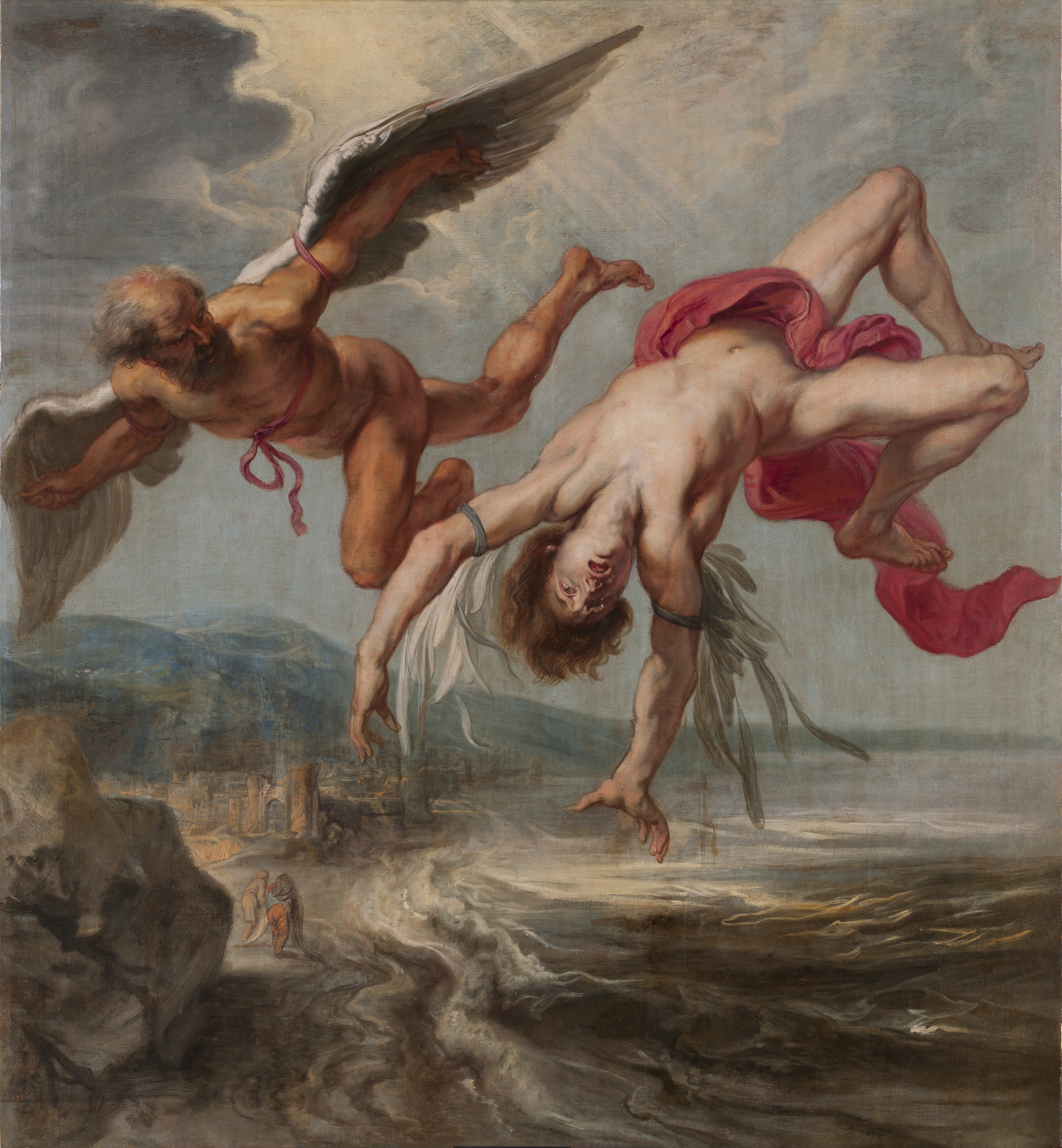


The founders of the Icarus Project believe that, just like Icarus' wings, madness can lift people to great heights or send them falling to their doom

Thirty years later, the study is still cited in debates
about the science and ethics of psychiatric diagnoses and treatments, often by those
critical of the field. One interesting and controversial voice active in this
debate is the mad pride movement.
3 In my previous post, I discussed the
neurodiversity movement’s views on autism
. Mad pride (which has recently
been
discussed
on this blog
) takes a similar approach to issues of mental health. Like neurodiversity
(and most movements and ideologies in general) mad pride encompasses a wide
variety of beliefs and causes, but the primary one is to give a voice to people
living with mental illness (although some in the movement dislike that term 
4)
in the hopes of educating the public, creating patient-run communities and support
networks, and pushing for reform in mental health systems.


Psychiatric Survivor Pride Day (considered one of the first mad
pride events) took place in Toronto, Canada in 1993, and was organized, in part,
in response to housing discrimination against former psychiatric patients.
5 The goal was to combat the stereotypes and stigma faced by current and former
consumers (a neutral term commonly used by mad pride activists) of mental
health services and to celebrate their contributions to culture and society.
The way in which mental illness is viewed by the public (which has been explored
previously
on this blog
) remains a key focus of the mad pride movement.


Another focus of the movement is to create communities (through,
for example, group meetings and online forums and blogs) where people with various
mental health issues can discuss their experiences for both educational and
therapeutic reasons. Two notable examples of such communities are The Icarus Project and the National Empowerment Center. The
creators of these communities believe that talking with others who have had
similar experiences and being able to describe their own unique situations
(which are more complex and specific than the broad diagnostic labels applied
to them) are good ways for people to improve their mental health, especially if
they feel marginalized and misunderstood in their day-to-day lives. 


Many mad pride organizations also advocate for changes in the
field of psychiatry and the mental health system. Just as they fight for a
voice in society, they fight for a voice in their treatment, arguing that, like
the Rosenhan study seemed to show, those diagnosed with mental illnesses are
often patronized and not taken seriously by doctors and therapists when, in fact, they need
to be heard both out of respect for them as people and because it is
beneficial to their treatment.


Advocating for giving patients a greater voice also extends
to supporting self-determination and choice when it comes to psychiatric
treatment. Mad pride and patient advocacy groups, like the Law Project for Psychiatric Rights and MindFreedom International, campaign
against involuntary treatment and involuntary institutionalization, seeing these
actions as human rights violations. Some take this argument further, casting
suspicion on mainstream psychiatry and arguing that the medical model of mental
health is not the only legitimate approach. To them, conditions labeled as psychiatric
disorders (particularly mood disorders like depression and bipolar disorder) might in fact be extreme forms of the non-pathological emotions and mental states we all
experience and which, while they can be unpleasant and even dangerous, can be
controlled and managed in ways other than medication or traditional psychotherapy.
While they do not oppose the use of psychiatric drugs by those who choose to do
so, their rejection of what they see as a healthy/sick duality leads them to also
support the freedom to reject treatment or to explore alternative therapies.6 


A MindFreedom protest against the American Psychiatric Association

These critiques of psychiatric treatment (both
compulsory and otherwise) and the support for non-traditional therapies are
where the controversy lies. I am personally very uneasy with the concept of
involuntary institutionalization; ideally all medical treatments should be
purely consensual. But when a person’s thoughts are possibly compromised, the
concepts of self-determination and autonomy obviously get murkier, especially
when the debilitating nature of some of these disorders and the risk of suicide
is taken into account.


Many of the outspoken critics of psychiatry in the mad pride
movement are current or former psychiatric patients whose opinions were formed
through their own experiences with involuntary treatment and abuses in the
system. But many of them were patients in the 1960s and 70s (or earlier)7 when
the state of the field was much different than it is now. Involuntary
commitments were more common and harmful and painful procedures were
performed (like insulin
shock therapy
and electroconvulsive
therapy
done without anesthesia) that are no longer used.8 I know that these
activists are aware of such changes in psychiatry and most likely are more
familiar with the current state of the mental health system than most people,
but in making their arguments they sometimes seem to present it as it was
decades ago.


The rejection of the medical model among some mad pride
advocates enters into anti-psychiatry
(a different, but related movement that opposes the foundations and activities
of the medical field of psychiatry), blurring the lines between the two
movements. The opponents of psychiatry claim that there is not enough evidence
to support purely biological models of mental illness and the use of
psychiatric drugs.6 While the effectiveness of such drugs and the accuracy
of such models are being questioned in the medical and scientific communities9,10 (including the controversy surrounding the newly released DSM-511),
anti-psychiatry takes those criticisms further and is (not surprisingly) denounced by psychiatrists.12 And those who are skeptical of psychiatric medication don’t apply the
same standards to their own claims since there is even less evidence to support
the alternative therapies they advocate. Though the alternatives usually
include diet, exercise, meditation and social support, which are supported by
medical professionals, just not as replacements for psychiatric help.  


Is the serotonin hypothesis of depression correct?

In addition, the rejection of the medical model of mental illness
might actually put some mad pride activists at odds with other mental health
activists. Mad pride advocates dislike portraying psychiatric conditions as
illnesses or diseases because they think that it increases the stigma around
them, making people see those diagnosed with such conditions as diseased and
abnormal. But some mental health professionals and patients encourage the
medical view of mental health, hoping that it will reduce stigma because such
disorders will seen as medical conditions (just like physical illnesses) rather
than character flaws or moral failings on the part of the patient (for example,
seeing a depressed person as being lazy) or their families (believing that all
mental health problems are the result of an abusive household).13,14


Still, the most visible and active elements of the mad pride
movement are working for the rights of those diagnosed with mental illnesses
both in society and in the psychiatric systems. Reducing stigma and giving
patients a greater voice in their treatment will only improve the current state
of psychiatry, and should be accepted by everyone, no matter where they stand
in this debate. Whether you see those with psychiatric conditions as people who
are sick and need help or as people whose emotions and mental states are more extreme
than usual, they are still people who deserve the same rights and respect as everyone
else.


References


1. Spitzer, Robert L. On
pseudoscience in science, logic in remission, and psychiatric diagnosis: A
critique of Rosenhan's "On being sane in insane places". Journal of
Abnormal Psychology, 1975, 84(5): 442-452
.


2.  “Rosenhan
Experiment,” the Psychology Wiki.


3. Gabrielle
Glaser. ‘Mad Pride’ Fights a Stigma. The New York Times, 2008.


4. David
Oaks. Let’s stop saying ‘Mental Illness”! MindFreedom International.


5. Consumer/Survivor Information
Resource Centre of Toronto. July 15, 2008 bulletin.


6.  David
Davis. Losing the Mind. Los Angeles Times, 2003.


7. MindFreedom International:
Personal Stories.


8. Eisenberg,
L. and Guttmacher, L. B. Were we all asleep at the switch? A personal
reminiscence of psychiatry from 1940 to 2010. Acta Psychiatrica Scandinavica, 2010,
122: 89–102.


9. Lacasse
JR, Leo J.  Serotonin and Depression: A
Disconnect between the Advertisements and the Scientific Literature. PLoS Med, 2005,
2(12): e392.


10. Moncrieff
J, Cohen D. Do Antidepressants Cure or Create Abnormal Brain States? PLoS Med, 2006,
3(7): e240.


11. Thomas
Insel. Director’s Blog: Transforming Diagnosis.


12. Nasrallah,
Henry. The antipsychiatry movement: Who and Why. Current Psychiatry, 2011,
10(12).


13. “Overcoming The Stigma
of Depression.” Healing From Depression.


14. Jennifer
Welsh. Blood Test may Reduce Stigma of Depression. Live Science, 2012.


Want to cite this post?


Queen, J. (2013). We’re All Mad Here. The Neuroethics Blog. Retrieved on

, from http://www.theneuroethicsblog.com/2013/07/were-all-mad-here.html.

Tuesday, May 14, 2013

Dancing with the Devil

Hysteria usually calls to mind thoughts of the Salem Witch Trials and delirious frenzies from history. However, mass hysteria, or mass psychogenic illness, is not simply an improbable, incomprehensible madness of the past. It has occurred throughout history and into our current generation, taking form as dancing plagues, dissociative possession of nuns, and involuntary twitches of high school girls in New York. Is it something they all ate? Or maybe there is something in the water… How is it that anxiety manifests itself into a dance that spreads among populations?


Fear and distress terrorized populations in Medieval

Europe and made them more prone to psychogenic illness. Certainly it seems there must be more to the story than merely these common denominators, for fear, anguish, stress, and trauma are commonly faced and dealt with sans mass hysteria. But the other factors needed for the exact formula of mass hysteria are difficult to pinpoint. 


Is it the perfect combination of despair, devastation, and distress that manifests itself into a psychosomatic reaction? Does it require a specific threshold of suggestion and susceptibility in our belief and cultural context? The panic and frenzy that overtook groups throughout history is a fascinating and frightening occurrence. Epidemics surged along the Rhine River, taking hundreds as victims to the dancing plague [8].  This affliction of compulsive dancing ran rampant in regions where the population believed dancing to be some sort of sickness or a curse that could be cast upon them. Once they formed the belief that they had caught the dancing disease, or they had been cursed to dance, dance, dance, there was no stopping them. People would dance until muscles were strained; they would even dance to their deaths. In 1374 a plague swept through Germany and France that drove thousands to dance in “agony for days or weeks, screaming of terrible visions and imploring priests and monks to save their souls.” Also, in years to come, people danced for as long as six months, some even dying after breaking “ribs or loins” [7].

In our scientifically-informed hindsight, the mass anxiety and physical hysteria that plagued hundreds in medieval Europe may seem improbable and unbelievable. It is difficult to understand by what means anxiety translates to such mysterious physical manifestations, especially in the form of a dance. Psychogenic illness continues to plague the modern world today. Usually occurring within tightly knit communities, a fearful belief manifests and spreads from one susceptible victim to another. Teenage girls in New York recently suffered from involuntary body movements [2]. Eleven people follow suit after one teenage girl fainted during Sunday mass at an Australian church [6] and then chemistry students in a lab suffered from nosebleeds and asthma-like symptoms one by one [5].


These physical manifestations create the impression of being contagious. Most of us know what it is to say that someone’s laugh is contagious, or that we suddenly yawn because someone next to us yawns. The imitation of these phenomena as well as other behavior within our society is an interesting aspect of human psychology. Much like a laugh or a yawn, these psychogenic symptoms are of an infectious nature. However, it seems much easier to imagine why laughter spreads rather than a compulsive dancing affliction. We all imitate behavior and mannerisms to a certain extent; this opens channels of interpersonal connection and is illustrated by our mirror system response. Mirror neurons are thought to play a role in action performance. In a study investigating the dissociation between object directed and non-object directed actions, Agnew, Wise, and Leech discuss the importance of mirror neurons in theories of motor simulation, “which proposes that observed actions are mapped onto existing motor schema, supporting both imitation and understanding” [1].


These means of imitation support give rise to a possible causal explanation of mass psychogenic illness. Our mirror response system observes and executes actions – lending to problematic consequences if left unchecked by the brain’s executive control. Perhaps mirror neurons were the perpetuators of the dancing plague.


But our brains’ abilities of executive control keep us in check and usually allow us to “opt out” of unwanted behaviors. The prefrontal cortex is the house of executive control in the brain and this self-control is an important social and evolutionary tool. Kühn, Haggard, and Brass investigated self-control in the “veto area” of the brain. “Activation of the dorsal fronto-median cortex (dFMC) was associated with vetoing the neural processes translating intentions into actions” [5]. Studies “suggest that dFMC provides an intentional mechanism for stopping an ongoing action in a top-down fashion. Inputs from dFMC to pre-SMA therefore potentially control whether actions occur or not” [5].


Executive control’s ability to interrupt lower levels of processes (veto power) seems to be missing in the instances of psychogenic illness. If that initial “opt out” checkpoint is bypassed, then the other checkpoints are easily bypassed as well, and we get lost in the hysteria. This raises the question if the individuals who endure psychogenic illness have free will. Don’t the involuntary dance movements impede upon the plagued dancers’ agency? A study of the neurology of volition looked at several types of movement disorders in relation to free will. Kranick and Hallett categorize psychogenic movement disorders (PMDs) from other tic disorders by way of saying that the movements often share features of volitional or intentional movement, but are experienced as involuntary: “what sets [patients with PMD] clinically apart from most patients with tics, however, is the denial of any sense of volition for the movements; they are not performed on a compulsory basis, but rather the patient states that the movements ‘just happen’ without any warning or opportunity for suppression. The patient with PMD often has a strong sense that their disorder is an organic disease, such as a brain tumor, and not psychological” [3]. 


Utilizing a model that illustrates the influence of top-down processing and belief systems on volition, they explain how an action might be generated while the agent denies their volition of the movement. 


Fig. 1 from Kranick and Hallett

Kranick and Hallett argue, “the structural and functional neuroimaging studies suggest a network of abnormal inputs from the limbic areas that may trigger movement (or block it in the case of paralysis), not producing a normal feedforward signal. With the resultant mismatch between the actual movement genesis, feed-forward signal and the prior expectation about how movements should be willed, there would be a loss of the sense of both willing and agency. Hypoactivation of the right temporoparietal junction with psychogenic movements is consistent with this idea” [3].


All possibilities considered (fainting, seizures, involuntary tics), why would the mass anxiety manifest itself as a dance? Of course, all I may offer forward is speculation on this point. As a dancer myself, I find it particularly intriguing that human beings suffered from dancing afflictions. Perhaps the mere force of groups gathering and dancing together has something to do with it. Dancing within a group is a powerful phenomenon, allowing for individuals to basically lose themselves to the group and to the movement. At a certain point, the dance “just happens."


This could easily account for the altered states of consciousness the dancers would have to achieve in order to dance for such extended amounts of time. It also accounts for the loss of volition and being consciously aware of intentions of movement. While dance itself is not some form of hysteria, it is easy to see how hysteria may take form as a dance. Dancing is an explicit from of expressive behavior, exaggerated when aggregated within a group. Easily, the power and feeling of dance could be fearfully misunderstood to be the hand of a malevolent supernatural being. Now, however, we know better than to believe dancing to be a plague from Saint Vitus and we no longer see psychogenic illness taking form as his dance, but in other forms as well. While I cannot address all types of psychogenic illness in one blog post, evaluating the manifestation of anxiety as a dance leads me to conclude that belief context (just as in Kranick’s Figure 1) plays a largely significant role in determining which path to physical manifestation the anxiety will take. Emerging neuroscience data suggests this occurrence is something beyond a simple distress or character flaw. Perhaps the neuroscience can illuminate which demons exactly are at work, exposing something less mysterious than a supernatural possession.


References

1. Agnew, Z.K., Wise, R.J.S., & Leech, R. (2012). Dissociating Object Directed and Non-Object Directed Action in the Human Mirror System; Implications for Theories of Motor Simulation. PloS One, 7 (4). doi: 10.1371/journal.pone.0032517. Retrieved from http://www.ncbi.nlm.nih.gov/pmc/articles/PMC3323585/


2. Dominus, Susan. (2012). What Happened to the girls in Le Roy. The New York Times. Retrieved from

http://www.nytimes.com/2012/03/11/magazine/teenage-girls-twitching-le-roy.html?pagewanted=all&_r=0


3. Kranick, S. M., & Hallett, M. (2013). Neurology of volition. Retrieved from

http://link.springer.com/article/10.1007/s00221-013-3399-2/fulltext.html


4. Kühn, S., Haggard, P., & Brass, M. (2009). Intentional Inhibition: How the “Veto-Area” Exerts Control. Human Brain Mapping, 30, 2834-2843. Retrieved from http://onlinelibrary.wiley.com/store/10.1002/hbm.20711/asset/20711_ftp.pdf;jsessionid=BFC7F45F52CDF163E90524534D335765.d02t01?v=1&t=hg3v2vyh&s=7de6586dff09a4a3240c872e281fa4ccda19792d


5. Moran, Lee. (2013). Dozens of students hospitalized from ‘adverse reactions’ after chemistry class experiment. New York Daily News. Retrieved from http://www.nydailynews.com/news/national/30-sickened-chem-class-villanova-university-article-1.1262919


6. Morri, Mark. (2013). Mystery mass fainting…at mass. The Daily Telegraph. Retrieved from

http://www.dailytelegraph.com.au/news/mystery-mass-fainting-at-church/story-e6freuy9-1226580274412


7. Waller, John. (2009). A forgotten plague: making sense of dancing mania. The Lancet, Volume 373 (Issue 9664). Retrieved from http://www.thelancet.com/journals/lancet/article/PIIS0140-6736(09)60386-X/fulltext


8. Waller, John. (2009). Looking Back: Dancing plagues and mass hysteria. The Psychologist. Volume 22, Part 7. Retrieved from http://www.thepsychologist.org.uk/archive/archive_home.cfm?volumeID=22&editionID=177&ArticleID=1541


Want to cite this post?

McCoyd, C. (2013). Dancing with the devil. The Neuroethics Blog. Retrieved on

, from