Pages

Showing posts with label self-identity. Show all posts

Tuesday, July 31, 2018

The Missing Subject in Schizophrenia


By Anna K. Swartz


Image drawn by Anna Swartz

Since this is, in many ways, a post about narratives, I have decided I should begin with mine. 


Every morning I take an oblong green and white pill, every night I take another of the same oblong green and white pill. I also take circle and oval pills. This helps in keeping me tethered to reality, functioning with fewer hallucinations and delusions. My official diagnosis is schizoaffective, bipolar type 1. Schizoaffective disorder is closely allied to schizophrenia but is rarer, striking about 0.3 percent of the population. It’s also by many accounts “worse” in that it incorporates the severe depression and psychosis that is characteristic of bipolar disorder, as well as the loss of touch with reality wrought by schizophrenia. I find it easier to admit to being bipolar than I do schizophrenic. I have found a much more positive reception to bipolar disorder. It’s a disease often associated with creative individuals who are highly intelligent and have traits that many see as advantageous, even covetous. That is, there is something romantic about the disease even as it wreaks havoc in a person’s life. It’s also much easier to talk about depression and mania because the chances are overwhelming that during the span of a normal lifetime, we will come face-to-face with some manifestation of mania or depression, either in ourselves or someone close to us. It’s familiar and understandable. That is less the case when it comes to hallucinations and delusions. Everyone has an inner voice that they can talk to sometimes in their thoughts. But hearing voices is not like that. Auditory hallucinations sound like they are coming from outside your head. Have you ever tried to write or read while people are having a loud conversation around you? Now imagine them screaming at you. This is how I feel most days. The voices are almost always caustic and denigrating, telling me that I would be better off dead. Delusions are also hard to explain. With a head fizzing with mad thoughts, I’ve stared up at ceilings with blue and brown swirling irises like cars in the center of a volcano. More often, I will see objects sitting on surfaces and watch them tip over or fall out of the corner of my eye only to blink and have them be static. I also experience paranoid delusions which are commonly manifested as thoughts that others are plotting against me, following me, watching me, or talking about me. 


More often, I am overcome by the so-called “negative” symptoms of schizophrenia where I exist in a numb fugue state that swallows me whole for months, punctuated occasionally by a jump in my mood and a frantic need for overachievement, which becomes even more frantic when I’m manic. During this time, I commit myself to grandiose plans, devour books about philosophy and theory, and generally pass myself off as an ambitious and successful scholar. However, for every seventy-two hours of blissful productivity, there are weeks of unrelenting depression, ruinous impulsivity, and monomania where I am terrified to be around people for fear of scaring them away; I stay in bed, hoping to sleep to quiet the world down. It’s these times when I about occasionally find a spark but not the creative or positive kind, the urge to problem solve, to solve my problems permanently. Not surprisingly, I have been hospitalized several times.  


Image drawn by Anna Swartz

Ultimately, having a sense of “who I am” is a profoundly problematic one. Identity is the structure and detail of a person, what you believe in and where you see yourself in relation to others and the world around you. When someone has a stable sense of self they are able to identify themselves as being the same person in their past, present and future, with of course the expected changes one goes through as time passes and events happen. So, what does it mean when your sense of self is disturbed? My delusions and hallucinations often occur with pained self-awareness, leaving me unable to trust who I am or where I am. For me, psychosis is not a single moment of “conversion” between one state of mind to the next. If there is a boundary between normal and insanity, I’m often in the liminal state of constantly questioning the reality that I had lived contently with for most of my life. The songs I hear playing in the wind and the nonexistent swat teams I see through my window at night are probably not real, but I worry of becoming addicted to the idea that they are. The boundary between fantasy and lived reality is porous, and when this happens, I worry that I have taken some irrevocable step toward willing illness upon myself.


The Disordered Concept of Schizophrenia


 “Schizophrenia” has demonstrated itself to be a slippery entity since the term was first introduced by Bleuler over a century years ago [1]. Disagreements over the definition of schizophrenia relate to some of the most fundamental aspects of the concept, such as whether it should be viewed as a social or medical problem, beliefs about its prognostic outcome, and treatment approaches towards those who are suffering from the disorder [2, 3].


Many now argue that “schizophrenia”—as a single unitary condition—simply does not exist. Instead, there may be a group of loosely related conditions we might consider to be “schizophrenias” (as Bleuler had originally believed), or it may be the case that we have mistakenly combined what are actually independent conditions. More than ever, psychiatrists around the world are pressing for the reconceptualization and rebranding of schizophrenia as a coherent disease entity, given the ambiguity, stigma, and barriers to care associated with the current diagnosis. 


The Limitations of Biological Explanations


Image drawn by Anna Swartz

Modern scientific understandings frame schizophrenia as a grim “disorder of the brain”—primarily biological or genetic in nature—whose causes and treatments can be tracked and developed only through continuous “cutting-edge” research in neuroscience [4, 5]. This mainstream “precision medicine” narrative has manifested in an “illness like any other” approach [6] that treats mental disorders including schizophrenia as “brain diseases” or harmful deviations of “normal” bodily function no different in kind from those diseases we have already come to accept as exclusively physical.


Unfortunately, progress has with a dark side. In the case of schizophrenia, where stereotypes and misinformation abide, ascendant neurobiological explanations—widely embraced as the antidote to stigma and harmful misinformation—are themselves attributing to negative perceptions towards those who experience this illness. Unfortunately, the consequences of these perceptions extend beyond stigma and stereotypes; they also vex and complicate treatment, contributing to low recovery rates and a frightening death toll. 


It is a banal but important point that how we conceive of a problem largely determines how we respond to it. There is nothing inherently wrong with arguing schizophrenia in and through the brain. The problem comes when an explanatory model holds to simplistic, totalizing, and often damaging theories of schizophrenia as pathological: an objective and locatable disease of the brain, amputated from the person to whom that brain belongs, that is committed to medical interventions that treat symptoms as meaningless, unrelated to life histories. 


Listening to the Voices of Others 
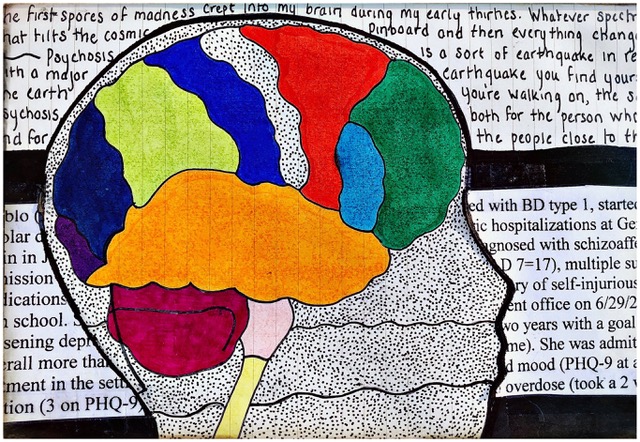


Image drawn by Anna Swartz

In biological psychiatry, the experience of schizophrenia, as told by the individual living under the diagnosis, are drowned out by the voices of outside experts (psychiatrists, clinicians, scientists, researchers), who are acknowledged as more reliable and authentic in their capacity as knowers and contributors to the epistemic effort to reach a correct diagnosis and treatment [7, 10]. First-person symptom testimonies are virtually non-existent in academic journals, professional reports, and clinical practice [8]. Patients are simultaneously locked into and out of the research and practices that involve and affect them most directly, based on a prevailing clinical stereotype that undermines their capacity to provide truthful and reliable accounts of their own lives [9, 10]. This is a form of epistemic injustice [11, 10]. 


Kristie Dotson identifies two forms of epistemic injustice that are relevant to patients with schizophrenia. These include “testimonial quieting” which happens when a speaker from a marginalized group is not seen as a “knower” which results in the subsequent dismissal of their testimony by the dominant group; and “testimonial smothering,” which happens when a speaker believes their testimony will be misinterpreted so they self-silence (see [12] page 242). 


This silence also attests to the stigmatized nature of psychotic experiences. Such stigma and stereotypes are problematic for many reasons, beyond their empirical inadequacy. They encourage unwarranted attitudes of suspicion and distrust towards people with schizophrenia, which, in turn, contribute to our social isolation; this is in itself epistemically impairing. Each reinforce the other. 


How clinicians listen—or don’t listen—to patients’ voices has profound implications for patients’ therapeutic recovery. The ability to claim and articulate one’s unique experience is a core feature of being human, and when access to treatment and support are restricted to the narrow, operational, and sometimes dehumanizing “common” language of biological psychiatry, the result is a loss of its healing power. Reducing the rich texture of madness to a series of vaguely understood biogenetic mechanisms becomes a project in self-alienation that is antithetical to recovery and the very goals of psychiatry. 


Recovering Ourselves Through Narrative


Image drawn by Anna Swartz

Researchers have acknowledged that to understand and promote recovery from serious mental illness, we must study the subjective experiences and personal perspectives of individuals who are recovering from and coping with mental health problems [13, 14]. Recovery can be defined in many ways and may hold different meanings for different people. In psychiatric terms, recovery is often defined as the treatment or abolition of symptoms. But many patients do not define the return to a previous “normal” state through cure and treatment in order to pursue their lives in the community alongside everyone else. Instead, they want the capacity to make their own decisions, follow their own dreams, and otherwise have a meaningful, productive, and fulfilling life, as they are [13].


In a qualitative study of more than 100 people with different experiences of schizophrenia, variable in intensity and duration, Larry Davidson observed that these individuals narrated a loss of self and a social abandonment as the most distressing features of their illness [14]. Recovery or the fundamental turning point in their illness that enabled them to experience themselves in the world in meaningful ways was voiced as a need for belonging and acceptance by at least one person who could be counted on to support and stand by them during all parts of their illness [14]. Thus, the rebuilding of broken identities is inextricably linked to an engagement with the social and destigmatization.  


A Way Forward: Understanding Rather Than Etiology


Image drawn by Anna Swartz

What practical lessons can be learned here? What are the ethical and pragmatic conclusions we can draw about the care of people with schizophrenia and disorders alike? The most important point I can make is that schizophrenia involves a fundamental change to not only a person’s interpretation of the world, but also their very sense of self. This fusion of diagnosis with identity is why Sue Estroff calls schizophrenia an “I am” illness, more in the company of conditions like epilepsy and alcoholism, as opposed to an “I have” illness, such as cancer or heart disease (see [15] page 189). In other words, schizophrenia is not an “illness like any other” because the content of delusions and hallucinations are susceptible to sociocultural pressures in ways that arteries and cancer cells are not [16]. What our confused and delusional minds think is not beside the point, because it is the point.


An ethical approach to understanding and treating schizophrenia must be responsible not only to the needs of science but also to the many consistencies, including patients affected by it. It must recognize that all ways of narrativizing an illness from the outside are only ever partial explanations. It is often forgotten that the experience of schizophrenia in the first-person is itself a privileged type of expertise different than any kind one is able to obtain in medical school, the clinic, or the lab. Therefore, any improvement in accuracy with respect to elucidating the precise cause and approach to treating and preventing schizophrenia of necessity demands the participation of patients’ voices and agencies at every step, since these individuals have the unique and individual knowledge of what schizophrenia “is” from the inside. This will ensure a richer and more accurate understanding and will benefit efforts to provide the best support for people living with this diagnosis. I would suggest that good place to start would be for neuroscience and psychiatry to supplement questions such as “where is the pathology” with “how can I help.”


_______________


Anna K. Swartz is currently taking graduate classes and applying to PhD programs. She earned a BA in anthropology from Wellesley College and a MS in Rhetoric, Theory and Culture from Michigan Technological University. The focus of her work in neuroethics has been on the brain disease model of mental disorders and how over-reliance on this paradigm might contribute to the stigmatization and marginalization of people with mental illness. She is especially interested in the development of classification systems for mental disorders, with special attention to schizophrenia.  


References


1. Bleuler, E. (1950). Dementia praecox or the group of schizophrenias (J. Zinkin, Trans). New York: International Universities Press. (Original work published in 1911).


2. Barrett, R. J. (1988). Interpretations of schizophrenia. Culture, Medicine and Psychiatry, 12(3), 357-388.


3. McNally, K. (2016). A critical history of schizophrenia. London: Palgrave Macmillian.


4. Heinrichs, R. W. (2001). In search of madness: schizophrenia and neuroscience. New York: Oxford University Press.


5. Vidal, F. (2009). Brainhood, anthropological figure of modernity. History of the Human Sciences, 22(1), 5-36.


6. Read, J., Haslam, N., Sayce, L., & Davies, E. (2006). Prejudice and schizophrenia: a review of the ‘mental illness is an illness like any other’ approach. Acta Psychiatrica Scandinavica, 114(5), 303-318.


7. Geekie, J. & Read, J. (2009). Making sense of madness: contesting the meaning of schizophrenia. New York: Routledge.


8. Geekie, J. (2016). Client’s understanding of psychotic experiences. In J. Read & J. Dillon (Eds.), Models of madness: psychological, social, and biological approaches to psychosis, 178-190. Oxford: Routledge.


9. Roe, D. & Davidson, L. (2005). Self and narrative in schizophrenia: time to author a new story. Journal of Medical Ethics, 31(2), 89-94.


10. Crichton, P., Carel, H., & Kidd, I. J. (2017). Epistemic injustice in psychiatry. BJPsych Bulletin, 41(2), 65-70.


11. Fricker, M. (2007). Power & the ethics of knowing. New York: Oxford University Press.


12. Dotson, K. (2011). Tracking epistemic violence, tracking practices of silencing. Hypatia, 26(2), 236-257.


13. Davidson, L. & Roe, D. (2007). Recovery from versus recovery in serious mental illness: one strategy for lessening confusing plaguing recovery. Journal of Mental Health, 16(4), 459-470.


14. Davidson, L. (2003). Living outside mental illness: qualitative studies of recovery in schizophrenia. New York: New York University Press.


15. Estroff, S. E. (1989). Self, identity, and subjective experiences of schizophrenia: in search of the subject. Schizophrenia Bulletin, 15(2), 189-196.


16. Luhrmann, T. M. (2016). Introduction. In T. M. Luhrmann & J. Marrow (Eds.), Our most troubling madness: case studies in schizophrenia across cultures, 1-25. Oakland, CA: University of California Press.


Want to cite this post?


Swartz, A. (2018). The Missing Subject in Schizophrenia. The Neuroethics Blog. Retrieved on , from http://www.theneuroethicsblog.com/2018/07/the-missing-subject-in-schizophrenia_28.html

Tuesday, February 7, 2017

Space to grow? Neurological risks of moving to Mars


By Carlie Hoffman


Artistic rendition of a human colony on Mars, image

courtesy of Wikimedia Commons

Humans have been venturing into space for over 50 years. Starting in 1961 when the Russian cosmonaut Yuri Gagarin became the first human to travel into space, by 1969 Neil Armstrong, Michael Collins, and Buzz Aldrin became the first humans on the moon, and by 1998 the International Space Station had launched its first module. More recently our exploration of space has started to reach new heights, with 2011 seeing the launch of the Mars One company and its mission to produce the first human colony on Mars by 2033.


Despite our half century of space exploration, scientists have only recently started researching the effects of space travel on the brain. The question of what our brains will look like after spending an extended amount of time in space is increasingly pressing with the impending inception of the Mars colony. The first group of Mars colonists are expected to begin training later this year and will undergo 14 years of training before departing Earth in 2031 and finally landing on Mars in 2032. Though establishing a human colony on Mars will be another giant leap for mankind, will the colonists that travel to and live on Mars have the same brains as when they left Earth? 


Scientists have known for some time that space travel is hard on the body. As astronauts become farther away from Earth, the pull coming from Earth’s gravitational field becomes weaker and astronauts experience weightlessness; however, the human body is not designed to live in a weightless state. When in microgravity (the condition colloquially called “zero gravity”), the orientation information provided by Earth’s gravitational pull is lost, causing the way that you perceive your environment to alter. Furthermore, your bones decrease in density at a rate of about 1% per month while in microgravity. By comparison, elderly men and women living on Earth experience bone loss at a rate of 1-1.5% per year. Moreover, without the need for walking and standing in microgravity, the muscles lose strength and endurance. As a result, astronauts must exercise at least two hours a day while in space and must undergo rehabilitation once they return to Earth.


Scientists are also learning that space travel is hard on the brain—both psychologically and physically. Though potential astronauts undergo behavioral health exams and are screened for mental illnesses before beginning training, being in space is psychologically challenging. Astronauts are isolated in a small ship for days or months at a time, are stuck with the same small number of co-workers for the duration of their trip, and are separated from all of their friends and family back on Earth. For the Mars colonists, these challenges will be taken to the extreme: they will be traveling to a planet with no human life where they will live out the rest of their lives in the company of their fellow colonists, potentially never to see their family and friends on Earth again. Being in extreme environments, including journeys into space, can also lead to negative effects on mood and performance and increased risk for anxiety and depression (1). Furthermore, the lack of a day/night cycle in space (and the 38 extra minutes present in a day on Mars) may lead astronauts to develop altered circadian rhythms. Such circadian alterations can lead to more substantial problems than just having problems sleeping and waking up: disruptions in the circadian clock have been linked to psychiatric disorders such as depression, schizophrenia, and mania (2).


Image courtesy of Wikimedia Commons.

Being separated from life on Earth can also have a huge effect on your psyche. Some astronauts experience “break-off” while in space, a term used to describe the feeling of being disconnected from Earth and potentially from reality itself. Other astronauts feel the opposite, a global consciousness and connectedness deemed the “overview effect.” Overall, the experience of traveling into space can wreak havoc on your mental state, and these psychological effects have been noted in astronauts that have spent about six months in space. The colonists traveling to Mars are intending to establish a permanent colony where they will live for the remainder of their lives. No one has ever spent this much time in space before. In fact, the longest consecutive period of time anyone has spent in space is 438 days (a record held by the Russian cosmonaut Valery Polyakov). As the colonists prepare to spend numerous years living on Mars, we currently cannot know what changes will be wrought on their psyches (though we do have some idea of how specific regions of the brain respond to being in space). Additionally, while the colonists remain on Mars without the intent of returning to their previous lives on Earth, they will not have the opportunity to reset their brains and bodies back to the “normal state” of being on Earth. Whatever mental changes the colonists undergo while en route to and living on Mars will become their new “normal selves” for the rest of their lives.


While space travel involves many psychological challenges, equally concerning (but less well known) are the physical challenges that being in space places on the brain. Of main concern is the high level of radiation that colonists will experience on both the journey to Mars and after landing on Mars. Astronauts’ exposure to radiation while in deep space is different than our exposure to radiation while on the Earth’s surface. On Earth, we are protected from 99.9% of deep space radiation by Earth’s magnetic field; however, when astronauts leave the Earth’s magnetic field, they become exposed to much higher levels of radiation. The radiation that an astronaut will be exposed to on a round-trip to Mars is about 0.66 sievert—the equivalent of receiving a whole-body CT scan every 6 days. Once on Mars, astronauts will also experience high levels of radiation: unlike Earth, Mars does not have a global magnetic field that will protect future colonists from radiation. Exposure to radiation can lead to DNA damage. As a person’s exposure to radiation increases, their cumulative amount of DNA damage will increase, thus increasing the person’s risk of developing cancer. Studies have also indicated that there are brain-specific consequences associated with radiation exposure. One group found that whole-body radiation led to decreased cell division in the hippocampus (3)—a brain region crucial for memory and one of the few areas in the brain that undergoes neurogenesis into adulthood. There is also evidence that radiation results in altered neurotransmission in the hippocampus (4), altered neuronal architecture in the prefrontal cortex, and deficits in cognitive performance, executive function, and memory (5).


Schematic of cosmic radiation coming from the sun and the

protection offered by Earth's magnetic field.  Image courtesy

of Wikimedia Commons.

In addition to studying the specific effects of radiation on the brain, several studies have compared the brains of astronauts before and after they travel into space. A recent study found that there are significant alterations in gray matter volume after being in space and that these changes are more pronounced in astronauts who have spent longer periods of time in space. Another study performed by the National Aeronautics and Space Administration (NASA) compared the brains of Scott Kelly (who spent nearly one year in space aboard the International Space Station) and his twin brother and retired astronaut, Mark Kelly. The study is still ongoing, but thus far researchers have found altered inflammation and telomere length in samples taken from Scott Kelly after he returned from the Space Station.


Essentially, current research indicates that our brains are not built to live in space. So, as humankind moves toward living in space full-time, we are going to do so with brains that operate differently than those of people living on Earth. But, if the brain is the seat of the identity, how will being in space fundamentally change who we are? Will the people who live on Mars act, think, and feel differently than people who live on Earth? And, given the neurological changes that take place while in space, is the trip to Mars even worth it?


The Mars One company identifies three main reasons to go to Mars: 1) it is a fantastic adventure, science fiction come to life; 2) it presents the opportunity to learn more about Mars; and 3) the trip will help the progress of humankind. Other sources state that we must go to Mars to ensure the survival of our species and to improve the quality of life on Earth with the new technologies that will be used to bring humans to Mars. But, there are many reasons not to go to Mars, including the fact that the colonists cannot return to Earth and must remain with their fellow colonists on Mars for the rest of their lives, and the numerous neurological alterations that will accompany traveling to and living on Mars. Others say that we should not go to Mars because it will be expensive and we already have robots on Mars. Ultimately, whether it is worth going to Mars is still largely a matter of personal conviction: given the risk of altering your brain and never living on Earth again, would you risk going to Mars and helping humankind advance into space?


Earth and Mars, image courtesy of Wikipedia.

Mars One recognizes that there are many risks and challenges associated with establishing a Mars colony, including the loss of life and running out of money. They also acknowledge that signing up for a one way trip to Mars is not an easy choice and that creating a Mars colony will be dangerous. To combat this risk, Mars One incorporated a risk analysis protocol into its mission plan that was built with the assistance of individuals with experience at NASA (NASA assesses risk for its space missions using quantitative measures). Mars One also states that its main ethical priority is to offer the Mars colonists as high a quality of life as possible, including the ability to keep in touch with friends and family on Earth, the chance to explore Mars and expand the colony once they arrive, and the promise that more colonists will be emigrating to Mars every two years to keep the colony expanding. It is also important to note that Mars One is not the only group planning on going to Mars in the coming decades. NASA is planning on a journey to Mars by the 2030s and started working on a new rocket last summer that will carry passengers into deep space.


The main ethical imperative for the Mars One group is to ensure that every volunteer embarking on the journey to Mars is made aware of the fact that long periods of time spent in space can irrevocably alter the brain and thus potentially change their mood, personality, and self-identity. But beyond that, no one is currently being forced to be a member of the first Mars colony—all  future colonists are willingly placing themselves (and their brains) at risk. However, this will not be the case once the colonists begin trying to procreate on Mars. If the goal of the Mars One company is to plant a human colony on Mars, at some point the colonists will have to replenish their colony with new children. We currently do not know how being in space or living on Mars will impact developing fetuses, whether fetal and postnatal development of both the brain and body will be altered on Mars, and what will happen to the brains of children that grow up exclusively with the reduced gravitational pull present on Mars. Moreover, how will space-related brain changes impact the development of behaviors, mental illnesses, and all of the other identity-forming attributes to which the brain is linked?


Ultimately, creating a human colony on Mars will give humans more space to grow, but will moving into space also cause us to grow into different human beings altogether?


References


1. De la Torre GG. Cognitive neuroscience in space. Life (Basel, Switzerland). 2014;4(3):281-94. Epub 2014/11/06. doi: 10.3390/life4030281. PubMed PMID: 25370373; PMCID: PMC4206847.


2. Karatsoreos IN. Links between Circadian Rhythms and Psychiatric Disease. Front Behav Neurosci. 2014;8:162. Epub 2014/05/17. doi: 10.3389/fnbeh.2014.00162. PubMed PMID: 24834040; PMCID: PMC4018537.


3. Sweet TB, Hurley SD, Wu MD, Olschowka JA, Williams JP, O'Banion MK. Neurogenic Effects of Low-Dose Whole-Body HZE (Fe) Ion and Gamma Irradiation. Radiat Res. 2016;186(6):614-23. Epub 2016/12/03. doi: 10.1667/rr14530.1. PubMed PMID: 27905869; PMCID: PMC5240657.


4. Lee SH, Dudok B, Parihar VK, Jung KM, Zoldi M, Kang YJ, Maroso M, Alexander AL, Nelson GA, Piomelli D, Katona I, Limoli CL, Soltesz I. Neurophysiology of space travel: energetic solar particles cause cell type-specific plasticity of neurotransmission. Brain structure & function. 2016. Epub 2016/12/03. doi: 10.1007/s00429-016-1345-3. PubMed PMID: 27905022.


5. Parihar VK, Allen BD, Caressi C, Kwok S, Chu E, Tran KK, Chmielewski NN, Giedzinski E, Acharya MM, Britten RA, Baulch JE, Limoli CL. Cosmic radiation exposure and persistent cognitive dysfunction. Sci Rep. 2016;6:34774. Epub 2016/10/11. doi: 10.1038/srep34774. PubMed PMID: 27721383; PMCID: PMC5056393.


Want to cite this post?


Hoffman, C. (2017). Space to grow? Neurological risks of moving to Mars. The Neuroethics Blog. Retrieved on , from http://www.theneuroethicsblog.com/2017/02/space-to-grow-neurological-risks-of.html


Tuesday, May 17, 2016

Cognitive Enrichment on Cognitive Enhancement at the Michigan Undergraduate Philosophy Conference

By Shweta Sahu


Photo Credit: Anne Trelfa

On February 19, the Michigan Undergraduate Philosophy Conference assembled for the 4th annual meeting at the Insight Institute of Neurosurgery and Neuroscience in Flint, Michigan. The program is jointly hosted by the Center for Cognition and Neuroethics and the University of Michigan-Flint Philosophy Department. I had the pleasure of attending and presenting at this incredible event through the generous support of the American Journal of Bioethics Neuroscience and the Neuroethics Program at Emory. The goals of the Center for Cognition and Neuroethics are to promote “the exploration of conceptual foundations of neuroscience” and to “study the implications of their advances for society in the legal, political, and ethical realms.” The conference, organized by Cody Hatfield-Myers, a senior at the University of Michigan- Flint, brought together students from multiple states in the US and even a few students from Canada.


The event, directed at undergraduate students, aimed to foster the sharing of students’ diverse papers, all linked by the common themes of cognition and neuroethics. Central topics of discussion included: philosophy of mind, cognitive science, neuroscience, philosophy of action and free will, identity, medical ethics and memory, learning, belief, and knowledge. Common questions that seemed to resurface included: What is self-identity? Can you freely alter your own self-identity? Are there aspects of one’s personal identity that it would be wrong to alter, eliminate or hide? If so, why? What is the proper role of medicine—to eliminate illness or to enhance people (physically, morally, psychologically) to make them “better than well”? What are the limits of parental control over the health and well-being of the body and mind of their child (as was the case with my talk)? Do children have the right to determine whether or not they are subjected to medical or psychological treatments? How are health, life and death, medicine, physical and mental illness portrayed in art, music, and in literature?


The conference was structured to facilitate discussion and interdisciplinary collaboration. Each session consisted of two talks. After some inspiring opening remarks by Cody Myers from University of Michigan-Flint, the first session consisted of talks from Albwin Wagner Scmitzer from University of Cincinnati, who presented his paper “Fantasy, Reality, and the Self,” and from Ryan Powers from Ohio University, who presented his paper, “Logical Fatalism: Origins as Essential Properties of Events.” In his talk, Schmitzer asked and expanded upon the question, if we usually discredit fiction as having value in the real world, is there any point to reading it? The second session featured a talk from Juensung Kim from University of Toronto on “Predicting Encoding of Acupuncture” along with my own talk, “Responsibility: Revis(ion)ing Brains via Cognitive Enhancement.” Kim’s talk was particularly engaging because he spoke more from a neuroscience background and found ties to connect his Asian culture back to early ancient medicinal rituals, like acupuncture.


The purpose of my paper was to explore the ethical issues surrounding cognitive enhancement, which is the augmentation of one’s intellectual ability via medicine or various methods of therapy, especially transcranial direct current stimulation (tDCS). I also wrote a bit about this in an earlier post here. I began by introducing tDCS and noting its rise in popularity, along with its growing fervor in the DIY community. I then reviewed and expanded on some of Dr. Anjan Chatterjee’s concerns regarding “cosmetic neurology,” including, but not limited to, whether cognitive enhancement is worth the potential risks; if we have the ability to enhance, should we enhance; and could we alter the individual and erode character through enhancement? I delved further into the personal realm and questioned whether my parents would have opted for cognitive enhancement for me, but from the unique perspective of a first generation student and the complications that ensued.


Image courtesy of Flickr user Steven S.


One fascinating question that fellow Emory University student, Lokita Rajan, brought up was whether the use of calculators could be considered a form of coercion. She astutely noted that teachers frequently write exams assuming that students use calculators on math or science exams, and that the time frame allowed for the test assumes the use of a calculator. However, in doing so, are they taking away our free will or are they enabling us to reach our full potential? She was prompted to ask this question in response to my statement that “enhancements just augment people’s existing capabilities, so they may enable them to lead a more 'authentic life' and reach their full potential.” Conversely, one may argue that “natural” excellence is worth more than bought talent. In my view, if there are shortcuts to excellence, then access to those shortcuts is what determines success or failures, not one’s inherent hard work. Moreover, some shortcuts in our society are completely acceptable. For example, performance enhancing athletic shoes and the use of calculators in high school physics promote authenticity by allowing a person to concentrate on more complex challenges that relate to goals rather than spending time developing thick soles or trudging through algebra. While we may be implicitly coerced into using calculators, I think it is acceptable because the use of a calculator allows us to focus our energies on the subject we are trying to master (whether it be using equations in biochemistry or formulas in physics), rather than “wasting time” doing the algebra and not grasping the main idea of the science we are learning.


Another question that was particularly intriguing was brought up by Cody Myers, the event coordinator. He asked about the cultural responses to enhancements. Since I came at my paper from more of a neuroscience and ethics view, and less of a sociological or anthropological background, I didn’t know much about the existing literature except to know that most cultures probably view it differently. However, based on personal experience, I can tell you that when speaking with my cousin my age in India, he does not know of peers with ADHD, has never heard of Ritalin, or even study drugs commonly used in colleges in the US, though he goes to a prestigious university in India. This got me wondering whether parents there immediately discredit those ideas and frown upon enhancements other than natural remedies. As a kid, I would always mix up my P’s, F’s and 5’s and I had a hard time sitting in one place, so I thought that maybe I needed to get tested for ADHD or dyslexia. I remember that when I voiced this thought to my parents, they immediately said nothing was wrong with me I just needed to focus better. A study done by Ilina Singh on kids with ADHD in the UK and the US backs up the idea that different cultures view enhancements differently. After asking children in both countries why they took Ritalin, the study found that kids in the UK mainly reported that they take Ritalin so they can “manage anger and bad behaviors,” but kids in the US reported that they take Ritalin to “be more productive and improve academic performance.”


Upon further investigation into the literature, it is found that traditional Chinese medicine and Indian ayurvedic treatments using a plethora of plants and naturally occurring substances are widely practiced in China and India, respectively. Moreover, one WHO report found that "up to 80% of people in developing countries use traditional medical therapies as the first line of defense against illness." Another study notes that these holistic systems of health care are commonly used in the "prevention and management of chronic, non-communicable and systemic disease." Yet another study has reviewed the applications of plants used in ayurvedic medicine and found that these natural treatments have been used in: "stimulating intellect and sharpening the memory... restoring youth, memory and longevity... combating physical and mental exhaustion..." Thus, we can see that some cultures do seem to prefer natural enhancements over "unnatural enhancements" such as pills. Extending this idea by association, therefore, leads us to believe these same cultures would most probably value natural cognitive enhancement methods (like exercise, meditation, and ayurvedic plants) over unnatural ones (noninvasive brain stimulation and pills). If presented with a pill containing a crushed up herb with added chemicals, perhaps these individuals would hesitate to comply with such medication.


Photo Credit: Cody Hatfield-Myers


Another stimulating question Juensung Kim brought up stumped me at first. He asked whether glasses and clothes are considered enhancements. The answer to this question lies in the definition. Though there are many definitions of cognitive enhancement, most say something among the lines of: “the use of drugs, biotechnological strategies or other means by healthy individuals aiming at the improvement of cognitive functions such as vigilance, concentration or memory without any medical need." So yes, while glasses can improve your ability to see what a professor is writing on the board, thereby allowing you to engage with the material more, they are not an enhancement, in my opinion because they are not augmenting your cognitive ability [memory, reasoning, problem solving, etc.] as do other enhancements.


Little did I know that my talk would be just one of the stimulating, spectacular talks given by my peers; a full itinerary of the talks and lecturers can be viewed here. Following each talk, there were several other enthralling debates, questions, and discussions brought up by conference members. Some questions that were discussed in depth were in regards to the role/extent of free will in determining responsibility in criminal trials, how much sensorimotor understanding was comparable to Kant's epistemology, how responsibility differs in parents putting their children to bed on time and dieting in comparison to applying some sort of noninvasive brain stimulation, whether the brain is more malleable if it has been primed earlier in life, and the uses of N, N-Dimethyltryptamine (similar to serotonin) in the brain and its role in evolution.


It was truly an engaging day filled with excellent questions. My hope is that more people will present and attend in the future, and I hope to attend next year for another wonderfully eye-opening event.


Want to cite this post?


Sahu, S. (2016). Cognitive Enrichment on Cognitive Enhancement at the Michigan Undergraduate Philosophy Conference. The Neuroethics Blog. Retrieved on , from http://www.theneuroethicsblog.com/2016/05/cognitive-enrichment-on-cognitive.html