Pages

Showing posts with label robotics. Show all posts

Tuesday, May 1, 2018

The Promise of Brain-Machine Interfaces: Recap of March's The Future Now: NEEDs Seminar


Image courtesy of Wikimedia Commons.


By Nathan Ahlgrim


If we want to – to paraphrase the classic Six Million Dollar Man – rebuild people, rebuild them to be better, stronger, faster, we need more than fancy motors and titanium bones. Robot muscles cannot help a paralyzed person stand, and robot voices cannot restore communication to the voiceless, without some way for the person to control them. Methods of control need not be cutting-edge. The late Dr. Stephen Hawking’s instantly recognizable voice synthesizer was controlled by a single cheek movement, which seems shockingly analog in today’s world. Brain-machine interfaces (BMIs) are the emerging technology that promise to bypass all external input and allow robotic devices to communicate directly with the brain. Dr. Chethan Pandarinath, assistant professor of biomedical engineering at Georgia Tech and Emory University, discussed the good and bad of this technology in March’s The Future Now NEEDs seminar: "To Be Implanted and Wireless". He shared his experience and perspective, agreeing that these invasive technologies hold incredible promise. Keeping that promise both realistic and equitable, though, is an ongoing challenge.


BMIs are currently designed as assistive technologies. They can take many forms: a cochlear implant, a cursor on a screen, a robotic arm, or even a complete exoskeleton. All serve the same general purpose: to restore a person’s ability to connect and communicate with the world. The most common patients are those with some form of paralysis. Given the potential to restore movement or speech to people, many see the development of BMIs as a moral imperative. However, agreeing that BMI research is a worthwhile and necessary endeavor cannot will these devices into being. There is a good reason why controlling a robot arm with your brain feels like something out of science fiction – it is incredibly difficult to do.


An example of an intracortical array.

Image courtesy of Wikimedia Commons.


Reliable BMIs depend on first being able to record brain activity. Scientists have been able to do this for decades at great precision, but the unfortunate trade-off is that the level of precision tracks directly with the level of invasiveness. As Dr. Pandarinath described, scalp electroencephalograms (EEGs) require no surgery at all, but analyzing the resulting data is like standing outside of a football stadium. You may hear the roar of the crowd, but you need to get in the stands before you can pick up individual conversations. For scientists, that means you need to open up the skull and place arrays of wires (known as intracortical microelectrodes) into the brain itself in order to eavesdrop on the brain’s conversations.


Display of the BrainGate system.

Image courtesy of Wikimedia Commons.

Figuring out what those brain conversations mean is the hard part. All our billions of neurons firing at once produce gigabytes of data, and the challenge of making sense of that data is what draws engineers and computer scientists towards neuroscience. Dr. Pandarinath is one of these people, a self-described “engineer that managed to run into the brain one day and thought it was pretty cool.” Approaching the problem as an engineer, he and many others have developed a host of technologies around the BrainGate system. Their tagline says it all: “Turning thought into action.” Targeting the motor cortex of the brain, which controls voluntary movements in healthy individuals, BrainGate technology allows paralyzed people to control robotics just by thinking about them (Pandarinath et al., 2017). Perhaps most shocking of all, learning to control the device is like learning to walk. At first it’s a struggle (there’s a reason we label toddlers as such), but adults do not consider walking a skill. As one patient described, “it was hard work getting [it to work]. I struggled greatly to [move the arm] up and down at the beginning, now up and down is so easy I don’t even think about it.” In effect, BrainGate lets patients control a robot as an extension of their own body. No mental gymnastics needed.


Is the ease of use a good thing? Once patients can “automatically” control BMIs, are they at fault for any harm caused by the machine? Dr. Karen Rommelfanger raised one possible scenario: following an argument between the patient and researcher, the patient’s robotic hand crushes the researcher’s hand during testing. Who is at fault? Did the patient misuse the technology, or did the researcher cause her own injury by creating a faulty system?


One possibility is to have a universal limit to the strength and ability of all BMIs. Even though we can create machines that rip cars apart like tissue paper, maybe we should never build a robotic arm to have more grip strength than that of a child. Such a solution prevents the person (or BMI) from doing any physical harm, but it then fails the primary goal of BMIs: to restore patients’ abilities. A universal set-point on what these abilities should be is problematic because, for better or worse, there is no singular ‘human ability.’


By the end of the seminar, the conversation landed on where to draw the line between restoration and enhancement. Of course, this debate is not new to BMIs. Everything from sports supplementation to psychostimulants like Adderall are subject to the same debate: who deserves to receive these treatments, and how much is too much? Researchers do not even need to design superhuman BMIs (although it is certainly possible) to join the conversation. The arm strength of an editorial intern is a far cry from Game of Thrones’ Hafþór Björnsson, but we are both decidedly human. If I became paralyzed, must I be restricted to my previous strength? I could always argue that I was just going to start a strongman program before I became paralyzed, and therefore I deserve a robotic arm to match.


Could and should BMIs make everyone

as strong as humanly possible?

Image courtesy of Wikimedia Commons.

The premise that researchers will be in charge of setting a limit (if any) may be inherently flawed, given that machine learning is starting to drive BMI research. Algorithms succeed by optimizing solutions, which in the case of BMIs would mean the most efficient, the most precise, and perhaps the strongest BMI possible. Normal humans are hardly the optimal physical form, so it is hard to imagine a sophisticated algorithm being complacent at returning me to my previous strength.


To many, “supplementing” people with artificial intelligence (AI)-guided BMIs is a good thing, and perhaps even necessary. Elon Musk, famous for his dire warnings on the impending AI threat, posits that coupling AI with humans via BMIs is the best protection our species has against it. By making ourselves more than human, we will at least have a fighting chance against the AIs we design with the express goal of being better than human.


In the end, BMIs do offer great promise. No, a paraplegic will not be able to walk normally in the next year using a BMI. Anyone who promises that is peddling in false hope and unrealistic expectations. But BMIs, like all other technologies, never stop improving. Questions about limits to and access to these incredible tools will only become more pressing as the technology improves. Who gets to set the limit? Who will act as gatekeeper? The patient or the manufacturer? Dr. Pandarinath does not think BMIs are different than any other cutting-edge product: “by default, it’ll be the wallet.” And adjusting for inflation, it will now take thirty-five million dollars to build the Six Million Dollar Man.


References


Pandarinath C, Nuyujukian P, Blabe CH, Sorice BL, Saab J, Willett FR, Hochberg LR, Shenoy KV, Henderson JM (2017) High performance communication by people with paralysis using an intracortical brain-computer interface. eLife 6:e18554.


Want to cite this post?


Ahlgrim, N. (2018). The Promise of Brain-Machine Interfaces: Recap of March's The Future Now: NEEDs Seminar. The Neuroethics Blog. Retrieved on , from http://www.theneuroethicsblog.com/2018/05/the-promise-of-brain-machine-interfaces.html

Tuesday, February 27, 2018

The Ethical Design of Intelligent Robots


By Sunidhi Ramesh


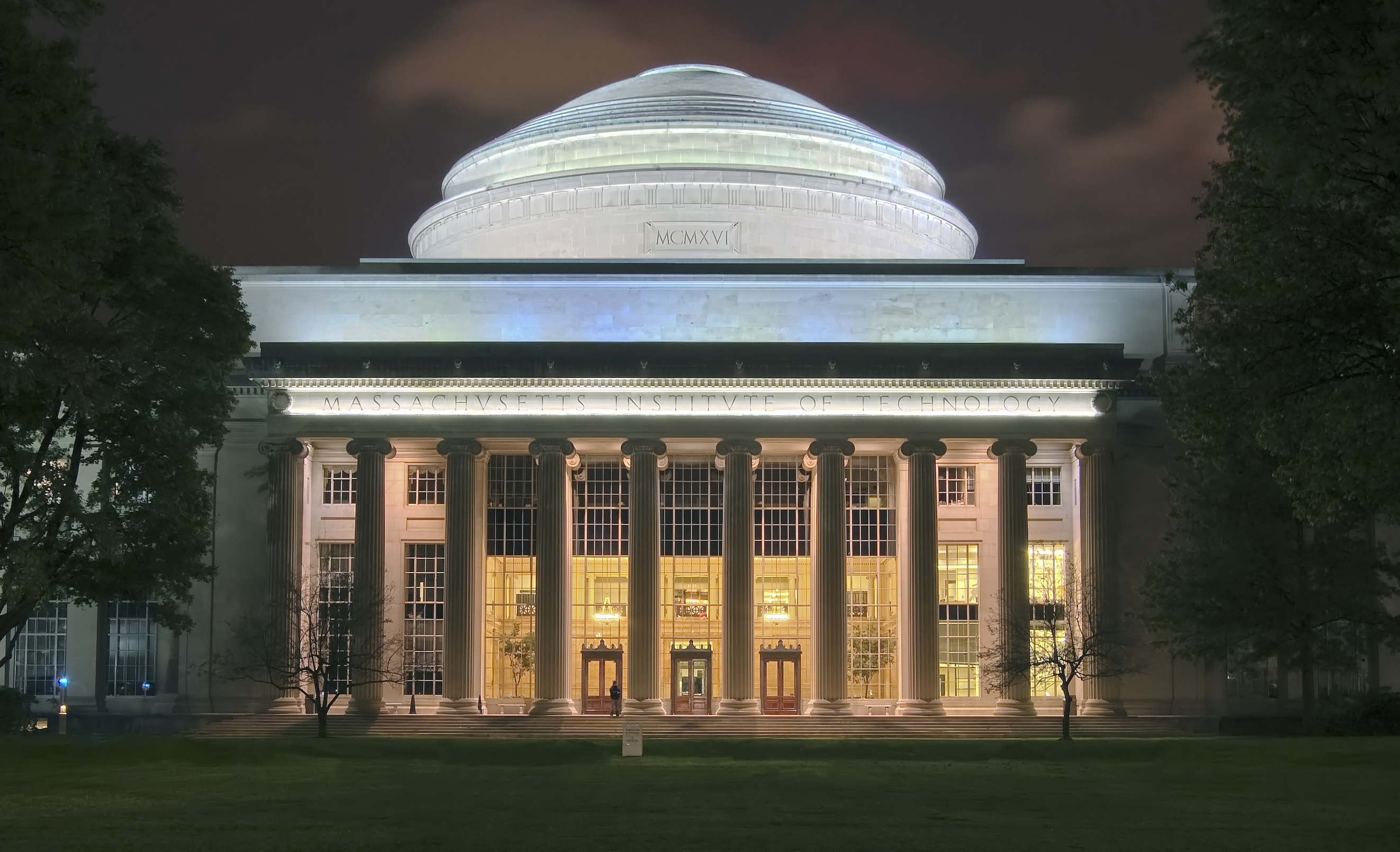
The main dome of the Massachusetts

Institute of Technology (MIT).

(Image courtesy of Wikimedia.)

The morning of February 1, 2018, MIT President L. Rafael Reif sent an email addressed to the entire institute community. In it was an announcement introducing the world to a new era of innovation—the MIT Intelligence Quest, or MIT IQ.


Formulated to “advance the science and engineering of both human and machine intelligence,” the project aims “to discover the foundations of human intelligence and drive the development of technological tools that can positively influence virtually every aspect of society.” The kicker? MIT IQ not only exists to develop these futuristic technologies, but it also seeks to “investigate the social and ethical implications of advanced analytical and predictive tools.”


In other words, one of the most famous and highly ranked universities in the world has dedicated itself to preemptively consider the consequences of the future of technology while simultaneously developing that same technology in hopes of making a “better world.”


But what could these consequences be? Are there already tangible costs incurred from our current advances in robotics and artificial intelligence (AI)? What can we learn from the mistakes we make today to cater to a more just, whole, and objective tomorrow?


These questions are similar to the ones posed by Dr. Ayanna Howard at the inaugural The Future Now NEEDs... (Neurotechnologies and Emerging Ethical Dilemmas) talk on January 29th at Emory University. Speaking to the Ethical Design of Intelligent Robots, Dr. Howard presented a series of lessons and considerations concerning modern-day robotics— many of which will guide the remainder of this post.


But, before I discuss the ethics hidden between the lines of robotic design, I’d like to pose a fundamental question about the nature of human-robot interactions: do humans trust robots? And I’m not talking about whether or not humans would say they do; I’m asking about trust based on behavior. Do we, today, trust robots so much that we would turn to them to guide us out of high-risk situations?


A line of prototype robots developed by Honda.

(Image courtesy of Wikimedia.)

You’re probably shaking your head no. But Dr. Howard’s research suggests otherwise.


In a 2016 study (1), a team of Georgia Tech scholars formulated a simulation in which 26 volunteers interacted “with a robot in a non-emergency task to experience its behavior and then [chose] whether [or not] to follow the robot’s instructions in an emergency.” To the researchers’ surprise (and unease), in this “emergency” situation (complete with artificial smoke and fire alarms), “all [of the] participants followed the robot in the emergency, despite half observing the same robot perform poorly [making errors by spinning, etc.] in a navigation guidance task just minutes before… even when the robot pointed to a dark room with no discernible exit, the majority of people did not choose to safely exit the way they entered.” It seems that we not only trust robots, but we also do so almost blindly.


The investigators proceeded to label this tendency as a concerning and alarming display of overtrust of robots—an overtrust that applied even to robots that showed indications of not being trustworthy.


Not convinced? Let’s consider the recent Tesla self-driving car crashes. How, you may ask, could a self-driving car barrel into parked vehicles when the driver is still able to override the autopilot machinery and manually stop the vehicle in seemingly dangerous situations? Yet, these accidents have happened. Numerous times.


The answer may, again, lie in overtrust. “My Tesla knows when to stop,” such a driver may think. Yet, as the car lurches uncomfortably into a position that would push the rest of us to slam onto our breaks, a driver in a self-driving car (and an unknowing victim of this overtrust) still has faith in the technology.


“My Tesla knows when to stop.” Until it doesn’t. And it’s too late.


What will a future of human-robot

interaction look like?

(Image courtesy of Wikimedia.)

Now, don’t get me wrong. Trust is good. It is something that we rely on every single day (2); in fact, it is a critical component of our modern society. And, in an increasingly probable future of commonplace human-robot interaction, trust will undeniably play an increasingly significant role. Not many will disagree that we should be able to trust our robots if we are to interact with them positively.


But what are the dangers of overtrust? If we already trust robots this much today, how will this trust evolve as robots become more versatile? More universal? More human? Is there a potential for abuse here? The answer, Dr. Howard warns, is an outright yes.


Within this discussion about trust lies another, more subtle line of questioning—one about bias.


Robots, engineered by the human mind, will inherently carry human biases. Even the best programmer with the best intentions will, unintentionally, produce technology that is partial to his/her own experiences. So, why is this a problem?


Consider the Google algorithm that made headlines in mid-2015 for “showing prestigious job ads to men but not to women.” Or the Flickr image recognition tool that tagged black users as “gorillas” or “animals.” Or the 2013 Harvard study that found that “first names, previously identified as being assigned at birth to more black than white babies… generated [Google] ads suggestive of an arrest.”


This problem is neither new nor unique; ads and algorithms programmed by humans (intentionally or unintentionally) inherit the sexist and racist tendencies carried by those humans.


(Image courtesy of Flickr.)

And there’s more. North Dakota’s police drones have been legally armed with weapons such as “tear gas, rubber bullets, beanbags, pepper spray, and tasers” for over two years. How do we know that the software being used in these systems are trustworthy? That they have been rigorously monitored and tested for aspects of bias? Whose value systems are being inputted here? And do we trust them enough to trust the robots involved?


As our world continues to tumble forward into a future immersed intricately with technology, these questions must be addressed. Robotics development teams should include members with an extensive diversity of thought, spanning economic, gender, ethnic, and even “tech” (referring to a diversity in technical training) lines to mitigate biases that may negatively impact the robots’, well, intelligence. (Granted, bias is inherent to humanity, so there is a danger in thinking that we could ever objectively produce robots that are entirely unbiased. Still, it is a step in the right direction to at least recognize that bias may present itself as a problem and to actively, proactively attempt to avoid blatant manifestations of it.)


To answer the question of reducing bias in the future, Dr. Howard ventured so far as to suggest a sort of criminal robot court— one that would rigorously and strenuously test our robots before they are put in the hands of the real world. Within it would be a “law system” that evaluates the hundreds of thousands of inputs and their associated outputs in an attempt to catch coding errors long before they have the potential to impact society on a larger level.


So, in a lot of ways, we are in the midst of a golden era. We can still ask these questions in the hope of presenting them to the world to answer; technology can be molded to be what we want it to be. And, as time goes on, robotics and AI will together become an irrefutable aspect of the future of the human condition. Of human identity.


What better time to question the social consequences of robotic programming than now?


Maybe MIT is up to something big after all.


References


1. Robinette, Paul, et al. "Overtrust of robots in emergency evacuation scenarios." Human-Robot Interaction (HRI), 2016 11th ACM/IEEE International Conference on. IEEE, 2016.


2. Zak, Paul J., Robert Kurzban, and William T. Matzner. "The neurobiology of trust." Annals of the New York Academy of Sciences 1032.1 (2004): 224-227.


Want to cite this post?


Ramesh, Sunidhi. (2018). The Ethical Design of Intelligent Robots. The Neuroethics Blog. Retrieved on , from http://www.theneuroethicsblog.com/2018/02/the-ethical-design-of-intelligent-robots.html