Pages

Showing posts with label neurotypicality. Show all posts

Tuesday, January 7, 2014

Autism and Well-Being

By Richard Ashcroft, MA, PhD


Professor Richard Ashcroft teaches medical law and ethics at both the undergraduate and postgraduate level in the Department of Law at Queen Mary, University of London. Previously, he was Professor of Biomedical Ethics in the School of Medicine and Dentistry, and before that he worked at Imperial College London, Bristol University and Liverpool University. Professor Ashcroft is Co-Director of the Centre for the Study of Incentives in Health, funded by the Wellcome Trust, with partners at Kings College London and the London School of Economics.  He is also working on the role of human rights theory, law and practice in bioethics policy, and on ethical challenges in public health. He has a longstanding interest in biomedical research ethics. 


I am both someone who writes and teaches on bioethics, and father of a son with autism.  He’s a delightful and happy child and he and I have good lives. But like most parents of children with autism I do worry about his future. I worry about social exclusion. I worry about mistreatment by others. I worry about education, employment, housing. I worry about how he’ll manage when I’m gone. I worry about whether he’ll meet someone to love, who will treat him right and value him for who he is. In other words, I worry about him the same way any parent worries about his or her child. His autism just gives me a hook to hang the worries on.


Nonetheless, there is something about autism which challenges our dominant accounts of well-being. There is a common and long-running debate about “stims”, which can crudely be described as repetitive, socially unusual behaviours which autistic people sometimes engage in. Common stims include humming, or spinning, or bouncing on one’s feet or certain kinds of hand gesture. The psychology of stims is related to “sensory issues” which often form part of autism, whereby the autistic person is more or less than usually sensitive to certain kinds of sensory input (light or sound or motion, for instance). Stims can be understood as a sort of self-regulatory behaviour to deal with under- or overstimulation of some sensory mechanism. Stims are just one example of visible autistic difference, in a condition which is sometimes described as an “invisible disability”: a disability where there is no obvious physical impairment which a third party would see with the untutored eye. Most autistic people who stim, if they are able to use verbal communication, say that stims are important to them, either as a coping mechanism, or as something which gives them pleasure – or both. Yet many parents, teachers, and passersby find stims bothersome, irritating, or worse. This is the case even when the stim has no direct impact on them.


As for stims, so for many other common behaviours in autism: for instance echolalic speech, perserveration, meltdowns, dietary intolerances or strong preferences may all be experienced as natural and authentic emotional and behavioural responses by the person with autism, and yet be experienced as problematic by the parent, friend, teacher or bystander. It should be noted that autism is very diverse in its presentation, both in the degree of impairment or disability experienced and the forms it may take or the behavioural traits seen.


One important debate about behavioural traits common in autism concerns whether these are signs and symptoms of disability, and whether in turn this disability is an inherent impairment or a social construct.  But the debate about well-being is just as interesting. Taking stims as our example again, is stimming a sign of well-being? A prejudiced bystander or an exhausted parent might well say no. The person who is stimming might say yes. Who has the authority to settle the question? One subtlety is that stimming may be calming, and being calm is a mark of well-being; but as a response to stress or distress it is a mark of relative lack of well-being. We have to work out whether stimming is a sign of enjoyment or stress.   This question of understanding is of enormous practical importance. Equally, however, we have to ask questions about the standard of evaluation. Should we assume that well-being and flourishing are entirely personal, or that there is some objective standard or list of features which is common to all people, or that there is such a thing as “autistic wellbeing” or “autistic flourishing” which is different in nature and scope from “neurotypical” variants of wellbeing and flourishing? Now, in the short run this is fairly easily settled pragmatically: I can usually tell you with some reliability whether my son is happy or not. More to the point, so can he. And we usually agree; and when we don’t I try to find out why not, and his view is probably more trustworthy than mine. It’s his life, after all. But in the long run, this is not such a helpful guide. No parent ever took for granted that moment-by-moment happiness over the course of a childhood is a recipe for, or predictive of, happiness in independent adulthood. The very idea of education militates against that notion too. So the problem is, if we don’t really know what flourishing or well-being is for autistic people in the here and now, how can we sensibly shape education and parenting, which aim at such flourishing as a long term goal? Is educating or training people with autism to “pass for normal” desirable, even if it is achievable?
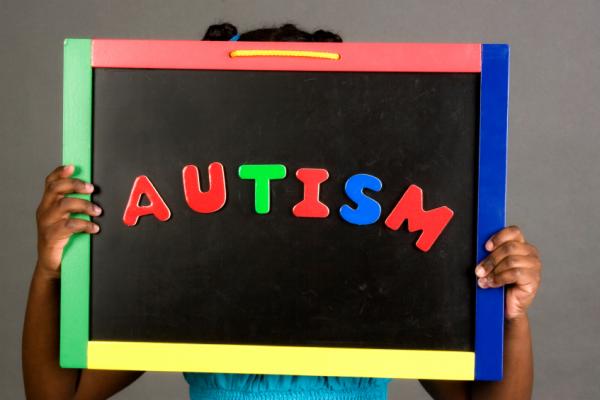


Source

Various philosophers have struggled with this problem, most notably Martha Nussbaum in her recent Frontiers of Justice and Eva Feder Kittay in many of her writings. Importantly, much of the best writing has been by philosophers with direct experience in raising a child or caring for a relative with a disability or impairment. But philosophers have still been too slow to take the experience and voice of people with autism seriously enough as giving reliable accounts of their own well-being and flourishing. And even when we do take these experiences seriously, we may be listening to too narrow a range of voices.


Recently (October 2013) I took part in a fascinating workshop on autism and wellbeing organised by a Danish philosopher, Raffaele Rodogno, at the University of Aarhus. In the morning I read a paper on the topic, as did Raffaele himself and Ingrid Robeyns (Erasmus University of Rotterdam) and Eva Billstedt (University of Gøteborg). But in the afternoon we had a roundtable discussion led by autistic young adults from a local self-help group. Two things became clear: first, that this was a very articulate and insightful group of young people who had a lot to say about well-being which certainly humbled me in light of my rather inchoate ramblings earlier in the day. Second, that what they had most to say about was not well-being but its lack. And this was not to do with “the miseries of autism”; far from it. They were proud of their interests and their achievements and this was very apparent. Rather it was to do with the mistreatment, discrimination, intolerance and lack of understanding they met on a daily basis: exclusion from school, ridicule of their differences, intolerance of their sensory needs, low expectations on the part of their teachers about what they might achieve in life.


What do I conclude from these reflections: first, we need to think harder about well-being and its diversity; second we need to listen to people’s own accounts of their well-being and flourishing; and third, we need to pay close attention to the ways in which our societies positively destroy well-being.


Want to cite this post?


Ashcroft, R. (2013). Autism and Well-Being. The Neuroethics Blog. Retrieved on
, from http://www.theneuroethicsblog.com/2014/01/autism-and-well-being.html

Tuesday, April 23, 2013

Appreciating Neurodiversity: Learning from Synesthesia

By Guest Contributor Katherine Bryant

PhD Candidate, Neuroscience

Emory University


Who are synesthetes?


[Describing the experiences of subject MMo] Eights are yellow, for example, a square feels like mashed potatoes, and the name Steve is somehow like poached eggs. (Cytowic p. 26)


“…I [asked the vendor] what kind of ice cream she had.  ‘Fruit ice cream,’ she said.  But she answered in such a tone that a whole pile of coals, of black cinders, came bursting out of her mouth, and I couldn’t bring myself to buy any ice cream after she’d answered that way…” (Record of patient “S”, Luria p. 82)


Colored alphabet,

via Wikipedia Commons

The unexpected sensory pairings described above are the experiences of a minority of people, perhaps 4% of the population (Simner et al., 2006), known as synesthetes. Synesthesia is a perceptual phenomenon in which unusual linkages occur between sensory modalities – sounds may evoke colors, tastes may evoke shapes, or numbers may evoke spatial patterns – in all, over 40 unique pairings have been documented.  Synesthesia creates problems – it defies normal categories of clinical pathology, and yet is clearly different from what we might call “normal” or neurotypical perception. But examining the phenomenon can help us gain a greater understanding of how synesthetes perceive the world, how others perceive them, and in what ways neuroscience can help us better understand unusual neurological phenotypes – what we might call neurodiversity.


A brief history of synesthesia


The earliest known documentation of synesthesia comes from an Austrian physician who provided a self-description of his own “colored ideas” (Sachs 1812, Jewanski et al., 2009).  Sir Francis Galton provided some of the first descriptions of individuals who conceive of numbers in specific, idiosyncratic spatial forms (Galton 1880, 1881). Not long after, physician and poet Victor Ségalen reported an even wider variety of linkages, drawn from multiple first-person accounts: The poet Arthur Rimbaud experiences the letter A as black; a math prodigy describes Monday as light chestnut brown; a Jesuit priest describes his sound to color synesthesia as an “ocular harpsichord” (Ségalen 1902).


Cytowic RE and Eagleman DM,

Wednesday is Indigo Blue:

Discovering the Brain of

Synesthesia

The unusual nature of these reports combined with inherent difficulty of verifying personal accounts has frequently lead researchers to conclude that synesthetes are either confabulating, schizophrenic, or using hallucinogens (Day 2002). As a result, many synesthestes feel their personal sensoria render them abnormal, alien - different from “normals” or non-synesthetes. Some who learned to suppress reports of their sensory experiences later borrow language from gay rights movement – “closet synesthetes” will “come out” to family and friends (Day 2002). Modern neuroscientific and psychological methodologies have established the synesthesia as empirically measurable and therefore valid discrete neurological “condition”. Medicalizing synesthesia in this way can both validate synesthetes’ experiences, but also raises some ethical problems.  Scientific researchers and clinicians are often ill-equipped to comment on diversity, but when neuroscientists and neurologists make scientific claims about “normal” and “non-normal” brains, they do, perhaps unintentionally, make identity claims about the owners of those brains. Referring to synesthesia as a “neurological condition” may marginalize and de-legitimize synesthetic experience in the eyes of some, even as it validates it as a “real” experience.  Next, we’ll the research of clinicians who have examined the cognitive impacts of synesthetic experience, without pathologizing the condition, in an attempt to understand the variation between synesthetes and neurotypicals.


Synesthesia and the mechanisms of metaphor


Metaphors like “sharp cheese” and “bitter cold” are understood by most English speakers, despite the seemingly arbitrary nature of the cross-modal pairings. The appreciation of metaphor by synesthetes and non-synesthetes alike suggests a tie between synesthesia and metaphor (Ramachandran and Hubbard, 2001a).  Other arbitrary pairings are appreciated by synesthetes and non-synesthetes alike - in one experiment, a soft curved shape and a sharp jagged shape are presented, and subjects are asked to guess which shape is named Kiki, and which Bouba.  Most pick Bouba for the curved shape, and Kiki for the jagged shape (Ramachandran and Hubbard 2001b; Köhler 1947). The cortical substrate responsible for the phenomenon is the angular gyrus (Ramachandran and Hubbard 2005), an area already implicated some number-spatial forms of synesthesia from a clinical case – a synesthete who lost his synesthetic number forms after a bullet tore through the same brain region (Spalding and Zangwill 1950).


Psychologist A. R. Luria’s patient S was a synesthete with multiple forms of intense synesthethias; so intense, they were impossible for him to ignore. Interestingly, he had great difficulty with metaphor. When asked to explain the expression “to weigh one’s words”, S responds:


“When I hear the word weigh, I see a large scale […] where they put bread on one side and a weight on the other.  The arrow shifts to one side, then stops in the middle… But what do you have here – to weigh one’s words!” [Luria p. 119]

But is S representative of all synesthetes?  Scores of talented synesthetic artists, writers, and musicians suggest otherwise (examples include Kandinsky, Nabokov, Itzhak Perlman, and Stevie Wonder).  The fact that synesthesia appears to play an important role in the art produced contradicts the notion of a trade-off – perhaps synesthetic perceptions support facility with metaphor, and other forms of artistic expression.


Kandinsky's Reiter, via Wikipedia Commons

The question remains - why do the arbitrary associations of metaphor appeal to so many? If linkages are arbitrary, shouldn’t they be idiosyncratic, as well? Surprisingly, recent work suggests that arbitrary cross-modal pairings in synesthetes may not be as arbitrary as we thought – among synesthetes who experience letter-color pairings, Baron-Cohen and colleagues (1993) discovered subtle, non-random patterns – U is often yellow to light brown, I and O are often white, and X is often black. Even among synesthetes, where idiosyncrasy is the rule – commonalities emerge.


Learning from Neurodiversity and the role of the neuroscientist


If non-synesthetes also appreciate and employ metaphor, is it possible that there are other features of experience that synesthetes and non-synesthetes share? Do these neurophenotypes overlap – and how?


JM: “…the name Paul is such an ugly color, its [sic] gray and ugly. I told her ‘anything but Paul’. And she couldn’t understand why and I said ‘it is such an ugly color, that name Paul.’ […] The name probably isn’t that bad, but in my mind it’s very awful. And that influences how I feel about people”. [Cytowic, p. 45]

Although synesthetic experiences blur the usually rigid boundaries of perceptual modalities and conceptual categories in ways that seem arbitrary, synesthesia offer a new framework for understanding how non-synesthete, or “normal” perceptual and conceptual processing are constituted.  I propose that although different from normal perception, synesthetic perceptions may be the manifestation of an extreme end of a continuum of human variation, in which implicit cross-sensory linkages “break through” into explicit perception. The ability of synesthetic artists of different kinds to reach broad audiences despite the idiosyncratic and rather arbitrary nature of their associations may belie some common, unconscious, less arbitrary associations that may resonate with neurotypicals. A final anecdote from a synesthete watching a figure skating routine seems to suggest that synesthetes, in their “abnormality”, see that which the non-synesthete cannot see but somehow also knows (emphasis mine):


“A young woman […] skated to a piece of music that was green and full of squares.  Her costume was totally black; her routine started out with curving motions.  It became uncomfortable to me to watch such a mismatch, so I just looked at my hands in my lap.  She placed last in her category at the end of the evening’s judging.” [Record of subject MLL; Cytowic p. 38]

Neuroscientists have an ethical obligation to take heed of these synesthete self-reports - not only do they underscore the rich neurodiversity that exists among us, but they also may lead to new, exciting areas for research. If, as I have suggested, cross-sensory pairings exist in all of us, studying the neural substrates that support synesthesia will illuminate common mechanisms of perception in synesthetes and non-synesthetes alike. Neuroscientists should remember that the boundaries between normal and abnormal are not always bright lines – and in the case of synesthesia, understanding synesthetes and neurotypicals as existing on a continuum of human neurodiversity can help us gain new insight into how perception operates in all of us.


References


Baron-Cohen S, Harrison J, Goldstein LH, Wyke M. 1993. Coloured speech perception: Is synaesthesia what happens when modularity breaks down? Perception 22: 419-426.


Cytowic RE. 2002. Synesthesia: A Union of the Senses. MIT Press. 394 pp.


Day S. 2005. Some demographic and socio-cultural aspects of synesthesia. In Robertson LC, Sagiv N, eds. Synesthesia: Perspectives from Cognitive Neuroscience. New York: Oxford University Press, Inc. 266 pp.


Galton Sir F. 1881. Visualized numerals. Journal of the Anthropological Institute of Great Britain and Ireland 10: 85-102.


Galton Sir F. 1880.Visualised Numerals. Nature. 252-256.


Jewanski J; Day SA, Ward J. 2009. A colorful albino: The first documented case of synaesthesia, by Georg

Tobias Ludwig Sachs in 1812. Journal of the History of the Neurosciences 18: 293-303.


Köhler W. 1947.Gestalt Psychology (2nd ed.). New York: Liveright.


Luria AR. 1968. The Mind of the Mnemonist: A Little Book About a Vast Memory. Cambridge, Mass: Harvard University Press.


Nabokov V. ed. 1999. Speak, Memory.  New York: Everyman’s Library. 344 pp.


Ramachandran VS, Hubbard A. 2001a. Psychological investigations into the neural basis of synesthesia. Proceedings of the Royal Society of London, B 268: 979-983.


Ramachandran VS, Hubbard A. 2001b. The Emergence of the Human Mind: Some Clues from Synesthesia. In Robertson LC, Sagiv N, eds. Synesthesia: Perspectives from Cognitive Neuroscience. New York: Oxford University Press, Inc. 266 pp.


Sachs GTL. 1812. Historiae naturalis duorum leucaetiopum. Auctoris ipsius et sororis eius. Erlangen [Online].


Ségalen, V. 1902. Les Synesthésies et l'Ecole Symboliste. Montpellier.


Simner J, Mulvenna C, Sagiv N, Tsakanikos E, Witherby SA, Fraser C, Scott K, Ward J. 2006.

Synaesthesia: The prevalence of atypical cross-modal experiences. Perception 35:1024-1033.


Spalding JMK, Zangwill O. 1950. Disturbance of number-form in a case of brain injury. Journal of Neurology, Neurosurgery, and Psychiatry 12: 24-29.


Want to cite this post?


Bryant, K. (2013). Appreciating Neurodiversity. The Neuroethics Blog. Retrieved on

, from http://www.theneuroethicsblog.com/2013/04/appreciating-neurodiversity-learning.html