Pages

Showing posts with label neuroimages. Show all posts

Thursday, May 31, 2012

Sex (in the) Machine


I have wanted to write about this issue for a few months now
and have finally gotten around to it. Science writer Kayt Sukel created a small
splash in the blogosphere in January when she wrote a few blog posts (see here
and here)
about her experiences orgasming in an MRI machine (or, as she puts it, “coming
for science”) as part of a study conducted by Barry Komisaruk and Nan Wise at Rutgers
University. Sukel’s posts were intended to serve as teasers for her book, Dirty
Minds: How Our Brains Influence Love, Sex, and Relationships
(full
disclosure, I haven’t read her book yet). For an earlier account of an attempt
to “come for science” see science writer Mary Roach’s highly entertaining book,
Bonk:
The Curious Coupling of Science and Sex
.


About the Research
and Its Contributions:


Barry Komisaruk
has been a pioneer in the use of fMRI to study orgasm (for an example of his
work, see here), and a
number of other researchers have also used PET and fMRI technologies to try to understand
what is going on in the human brain during sexual arousal and climax (for a
recent review of this research see Georgiadis
2012
).


Komisaruk method’s are interesting – the team creates a
plastic mask for each subject based on a mold taken of her face. After the
subject puts on the mask, the mask is bolted to the scanner. This helps to keep
movement to a minimum as the subject stimulates herself to orgasm. The results
are also interesting – the team created a video
showing the changes in activation that occurred in Nan Wise’s brain as she
stimulated herself to orgasm (I’m curious if Komisaruk has ever masturbated to
orgasm inside an MRI machine). In general terms, activation occurred first in
the genital regions of the sensory cortex, then the limbic system (emotions and
long-term memory), then the cerebellum and the frontal cortex. During climax,
activity was greatest in the hypothalamus (probably related to the release of
oxytocin) and the nucleus accumbens (probably related to the release of
dopamine). After climax, activation levels decreased across the brain.


This is undoubtedly valuable research, and, as both Sukel
and Roach point out, scientists studying sexuality often face both a lack of
funding and a lack of respect when attempting to investigate questions related
to sexuality. However, I have some misgivings about the study, related to the
purpose of the research and to its ecological validity and representativeness.


Misgivings: Purpose
of the Research


According
to Komisaruk
, one of the goals of the research is to understand how
pleasure works in the brain, which seems laudable. However, the goal of
understanding alone is rarely enough to get research funding, and, not
surprisingly, Komisaruk also sees “therapeutic” applications for his research,
specifically to address what he calls the “pathological” condition of
“anorgasmia.” Komisaruk is attempting to develop therapy for anorgasmia involving
neurofeedback, in which people are able to view their own brain activity on a
screen in “real time” and direct their bodies to respond.


Although this may be a useful tool for some people who are
trying to learn how to orgasm, I am wary of the language of pathology. Feminist
scholars have offered a number of critiques of the pathologization and
medicalization of benign sexual variation, pointing out that medicalization can
create unnecessary distress (why can’t I have an orgasm, why?) as well as puts
forth narrow solutions focused only on changing the individual rather than
society. I don’t have the space here to summarize these critiques fully;
instead, I refer you to the work of the New
View Campaign
and to Liz Canner’s documentary, Orgasm Inc.


I will note that many women are probably already under plenty
of pressure to achieve orgasm. I will also note that some reporting on
Komisaruk’s research (for example, this
article
) ties his research to the message that “sex is good for your
health,” a discourse that I have critiqued
extensively elsewhere
.


Misgivings: Ecological
Validity and External Validity/Representativeness


I also have some misgivings about the ecological validity
and external validity or representativeness of this work. In terms of
ecological validity, it is always worthwhile to ask, to what extent do the
laboratory conditions approximate the real-life situation under investigation?
Probably for most women, the experience of self-stimulating to orgasm in an MRI
machine is very different from the experience of self-stimulating to orgasm in
“real life.” One of the most interesting parts of Sukel’s story is where she
talks about how she prepared for the study – for two weeks, she practiced stimulating
herself to orgasm with a bell taped to her forehead, in an effort to learn how
to bring herself to climax without moving her head. I think that because of the
poor ecological validity of this research, we would be wise to avoid assuming a priori that what goes on in the brain
during orgasm in a MRI machine is the same as what goes on in the brain during
orgasm in “real life.” In other words, we can’t just assume that an orgasm is
an orgasm is an orgasm, even within subjects.


In terms of external validity, it is also worthwhile to ask,
to what extent are the results generalizable to a larger population? Komisaruk’s
study is not the first study of the biological aspects of sexuality to raise
questions about generalizability. In the 1960s, William
Masters and Virginia Johnson
undertook research into the physiology of sex.
Using a variety of instruments, they measured the physiological changes that
occurred in over 700 men and women engaging in masturbation and partnered
sexual intercourse in the laboratory. Masters and Johnson measured changes in
breathing, heart rate, genital swelling, muscle contraction, and genital color,
among other things. On the basis of their findings, they proposed a four-phase
model of “human sexual response” (excitement, plateau, orgasm, and resolution).
As many scholars have noted (Robinson
1976
; Tiefer
2004
; Irvine
2005
), their sample was potentially biased for a number of reasons, perhaps
most significantly by the fact that Masters and Johnson studied only men and
women who were able to regularly orgasm during masturbation and heterosexual
intercourse. As Leonore Tiefer suggests, in essence, Masters and Johnson chose
women – those (few?) who were able to orgasm regularly during masturbation and intercourse – whose sexuality most
closely resembled the sexuality of men. Yet, although their sample was not
necessarily representative, their data was incorporated into the Diagnostic and Statistical Manual of Mental
Disorders
and became the standard model of healthy sexual response. Even
today, a sexual response pattern that differs from that identified by Masters
and Johnson may be labeled pathological (Tiefer
2004
).


According to Sukel, Komisaruk told her that only a few study
volunteers have been unable to stimulate themselves to orgasm in the MRI
machine. This suggests a few things – first, that maybe a fair number of women
are perfectly comfortable with, or are even turned on by, loud noises, confined
spaces, curious spectators, and immobilization devices. It also suggests that
Komisaruk’s volunteers may be a very specific type of women, with a very
particularly type of sexuality (i.e. a woman who doesn't need to use a vibrator). This itself is not a problem, the only danger
is if the sexuality of these women is established as the “norm” against which all
other types of sexuality are judged (as in what happened with Masters and
Johnson’s research).


Concluding Thoughts


Despite these misgivings, I am excited about this research
and can think of an infinite number of follow-up studies: is brain activation
similar for orgasms achieved through different types of stimulation? Is brain
activation similar for heterosexual, lesbian, and bisexual subjects? What is
the activation pattern when someone fakes an orgasm? Does a “food-gasm” produce
the same activation pattern as a “sex-gasm”?


What brain imaging orgasm studies would you propose and how
might the data from these types of studies be used to benefit society?


Want to cite this post?


Gupta, K. (2012). Sex (in the) Machine. The Neuroethics Blog. Retrieved on
, from http://www.theneuroethicsblog.com/2012/05/sex-in-machine.html

Wednesday, March 21, 2012

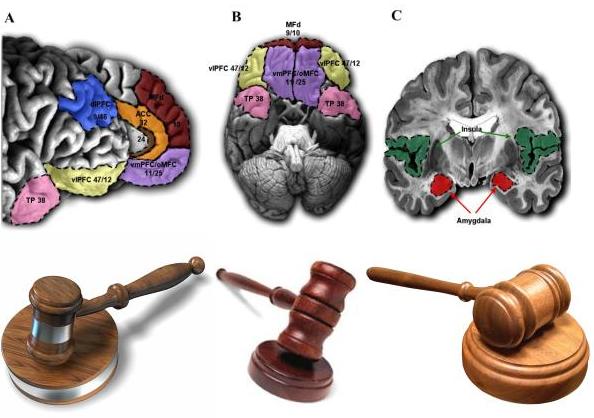
Daubert and Frye: Neuroscience in the Courtroom?

I recently found myself thinking about how we would allow evidence dealing with neuroscience into the courtroom. The question interested me because I wanted to know how our judicial system would differentiate between real and useful evidence versus what may seem no better than allowing a Shaman enter to argue a point based on "evidentiary mysticism".  What I found was that there are two different legal rules for allowing use of neuroscience evidence. The first is the Frye rule and the second is the Daubert rule. Daubert applies in Federal Courts and in States that have adopted it, while the Frye rule applies in all other courts.


The difference between the texts of the standards can seem nuanced but presents two different outcomes judicially. Joseph T. Walsh has a great primer on the two rules if you would like to explore them more, but the issue that I would like to deal with here is simple and does not require a complete knowledge of both rules. Basically you just have to understand the common interpretation of both rules.


For our purposes Frye states that: “Where novel scientific evidence is at issue, the Frye inquiry allows the judiciary to defer to scientific expertise precisely as to whether or not it has gained “general acceptance” in the relevant field. The trial court’s gatekeeper role in this respect is conservative, thus helping to keep “pseudoscience” out of the court”.


On the other hand Daubert states that: “General acceptance is an austere standard absent from and incompatible with the Rules of Evidence. “Scientific knowledge” must be derived from scientific method supported by “good grounds” in validating the expert’s testimony, establishing a standard of “evidentiary reliability”.


What we are concerned with is that under the latter rule the trial judge acts more as a gatekeeper. In this role s/he acts to keep evidence out of the courtroom, regardless of whether society has deemed it generally acceptable, because lay jurors should not consider neuroscience evidence unless it is deemed relevant and reliable by the judge. At first glance the change in rules stands against the beliefs that I hold. This is because, like most people, I believe that every American citizen is supposed to be guaranteed a right to a jury trial, but with our newer rule a judge can simply toss evidence out based on his subjective valuation of the evidence presented before him. This in effect denies someone a trial on that evidence.


Political beliefs aside we should still evaluate the rules objectively and neuroscience is but one method of looking at them. So what does neuroscience tell us about the two rules? Is a judge better suited to deal with judging neuroscientific evidence than a jury? To me the answer is a clear “yes”. The evidence I have found points to a jury being susceptible to being fooled by such evidence. For example, Weisberg et al. found that non-experts who are given the task to choose between two explanations for a problem view explanations with irrelevant neuroscience information as more satisfying than explanations without (1). McCabe and Castel published similar findings when looking at the effect that actual brain images had on our reasoning. They found that, when presenting articles summarizing cognitive neuroscience, articles featuring brain images received higher ratings with regards to scientific reasoning "as compared to articles accompanied by bar graphs, a topographical map of brain activation, or no image." (2)


This effect is explained by Jonathan Marks who issued a warning against what J.D. Trout has termed "explanatory neurophilia." (3) In coining this term Trout warns us that when faced with evidence, of any kind, "the promise of cognitive tractability enhances fluency, but not necessarily accuracy."(4) Marks uses Troudt's view to criticize the use of neuroscience in the national security apparatus and issues a warning against the fact that brain images are partly open to interpretation by experts and are ripe for misuse by government officials as a tool of interrogation (5).


Although I find Mark’s and Troudt’s arguments interesting I do not believe that we should be completely dissuade from using neuroscientific evidence in a court of law. This is because as Weisberg et al. found there is a limit to the impact that superfluous neuroscientific information can have on our judgments, and there is also a noticeable benefit to be gained from extended and specific training on the judgment of such explanations (6).  It is clear that neuroscience provides us with a clear-cut case in which the Frye rule as a standard is not as efficient as that of Daubert. This is because Daubert allows the judge to play a greater gate-keeping roll when allowing evidence into the courtroom. The judge, who we hope is an expert in dealing with such evidence, is less likely to face the same explanatory neurophilia which jurors and laymen are victim to. The Supreme Court agreed with this assessment in Allison v. McGhan Med. Corp., 184 F.3d 1300 (1999) when it stated that:


"While meticulous Daubert inquiries may bring judges under criticism for donning white coats and making determinations that are outside their field of expertise, the Supreme Court has obviously deemed this less objectionable than dumping a barrage of questionable scientific evidence on a jury, who would likely be even less equipped than the judge to make reliability and relevance determinations and more likely than the judge to be awestruck by the expert's mystique."


Even though giving the judge ultimate deciding authority supports the centralization of decision making in our court system, I wholeheartedly agree with the decision made in the Allison vs. McGhan Med. Corp. case. While as an individual, I typically advocate for a more democratic court system I believe this is a clear-cut situation in which my philosophical beliefs stand against reality.


With that said, however, I am curious. Faced with my arguments above, what do you, the reader, make of it all? Was moving away from Frye a good idea based on what we know of how our brains work? Can you suggest a more efficient way of evaluating scientific evidence?


--Jamie Witter (Guest Writer)

Law Student, Georgia State University


Want to cite this post?


Witter, J. (2012). Daubert and Frye: Neuroscience in the Courtroom? The Neuroethics Blog. Retrieved on
, from
http://www.theneuroethicsblog.com/2012/03/daubert-and-frye-neuroscience-in.htm


1. Weisberg, D. S., Keil, F. C., Goodstein, J., Rawson, E., & Gray, J. R. (2008). The seductive allure of neuroscience explanations. Journal of cognitive neuroscience, 20(3), 470-7. doi:10.1162/jocn.2008.20040

2. McCabe, D. P., & Castel, A. D. (2008). Seeing is believing: the effect of brain images on judgments of scientific reasoning. Cognition, 107(1), 343-52. doi:10.1016/j.cognition.2007.07.017

3. Marks, J. H. (2010). A Neuroskeptic ’ s Guide to Neuroethics and National Security. Defense, 1(2), 4-12.

4. Trout, J. D. (2008). Seduction without cause: uncovering explanatory neurophilia. Trends in cognitive sciences, 12(8), 281-2. doi:10.1016/j.tics.2008.05.004

5. Marks, J. H. (2010). A Neuroskeptic’s Guide to Neuroethics and National Security. Defense, 1(2), 4-12.

6. Weisberg, D. S., Keil, F. C., Goodstein, J., Rawson, E., & Gray, J. R. (2008). The seductive allure of neuroscience explanations. Journal of cognitive neuroscience, 20(3), 470-7. doi:10.1162/jocn.2008.20040


Editor's note: For more information on the McCabe & Castel article, please see our post here.  


Also, the Emory Neuroscience Graduate Students in partnership with Emory's Neuroethics Program will be hosting a symposium on this topic on May 25th: The Truth About Lies: the Neuroscience, Law, and Ethics of Lie Detection Technologies featuring  Drs. Hank Greely, director of the Center for Law and Biosciences at Stanford Law School, Daniel Langleben, a professor of Psychiatry at University of Pennsylvania and pioneer of using fMRI to detect lies, and Steven Laken, founder, president, and CEO of Cephos; a company that markets the use of fMRI for courtroom lie detection. Stay tuned for more information.