Pages

Showing posts with label moral enhancement. Show all posts

Tuesday, May 15, 2018

Regulating Minds: A Conceptual Typology


By Michael N. Tennison 


Image courtesy of Wikimedia Commons.

Bioethicists and neuroethicists distinguish therapy from enhancement to differentiate the clusters of ethical issues that arise based on the way a drug or device is used. Taking a stimulant to treat a diagnosed condition, such as ADHD, raises different and perhaps fewer ethical issues than taking it to perform better on a test. Using a drug or device to enhance performance—whether in the workplace, the classroom, the football field, or the battlefield—grants the user a positional advantage over one’s competitors. Positional enhancement raises issues of fairness, equality, autonomy, safety, and authenticity in ways that do not arise in therapy; accordingly, distinguishing enhancement from therapy makes sense as a heuristic to flag these ethical issues. 


These categories, however, do not capture the entire scope of the reasons for and contexts in which people use drugs or devices to modify their experiences. Consider psychedelic drugs like psilocybin and LSD that induce mystical-type experiences. Studies show that these drugs also have the potential to treat depression, anxiety, and addiction. They can even lead to positive changes in the personalities and behaviors of healthy subjects, such as increased openness and altruism, that can persist long-term without retaking the drug—effects that are neither therapeutic in the sense of treating a diagnosable condition, nor are they positional enhancements akin to taking steroids to gain a leg up on one’s athletic competition. 


Legal regimes that regulate drugs in the United States present a different dichotomy for distinguishing uses of drugs, ostensibly based on their risk/benefit ratios. In general, FDA laws and regulations authorize the therapeutic use of drugs proven to be sufficiently safe and effective, and controlled substance laws criminalize the use of drugs determined to lack medical value or that are obtained and used outside the scope of medical treatment. Unfortunately, the “War on Drugs”—the laws and policies implementing controlled substance restrictions—produces myriad side effects. These include unintuitive, unscientific, and politically-motivated drug classifications, interference with medical research, misinformation about the risks and benefits of drugs, stigmatization of non-problematic drug use, and the privileging of medical value as the only redeeming benefit an illegal drug can have, not to mention the panoply of harms imposed by criminalization. 


In a step toward developing a robust assessment of drug harms, a UK study ranked drugs based on their harm to users and others, using physical, psychological, and social criteria.  The findings, later endorsed by a panel of experts from across the EU, suggest a mismatch between the legal treatment of drugs and their comparative harms.  


Although ensuring the safety and effectiveness of drugs is an absolutely essential government function, generalizing and criminalizing non-medical use as “recreational drug use” or “drug abuse” fails to account for, and stifles, the other ways drugs can and do benefit individuals and society. Again, consider psilocybin, a drug designated in the United States as having no accepted medical value, a high potential for abuse, and no capacity to be used safely under medical supervision—a stricter legal classification than for cocaine, methamphetamine, and fentanyl. Even if conclusively proven safe and effective for medical or enhancement purposes, it would still be illegal to obtain and use psilocybin to enhance insight, catalyze personal development, and cultivate altruism and openness. Short of congressional action, there is no legal mechanism to acknowledge the scientific evidence of a scheduled drug’s safety and effectiveness for enhancement, and therefore authorize its non-medical use. 


The legal classification scheme fails, therefore, to accurately represent and respond to rapidly-accumulating, novel evidence about the actual risk/benefit ratios of certain drugs like psilocybin, while the neuroethical enhancement/therapy paradigm fails to account for the uses of drugs and devices that fall outside the boundaries of medicine and positional enhancement. I propose creating a single framework of functional categories that serves as both a descriptive typology and a normative spectrum that balances a higher level of precision and accuracy with the categorical bundling of thematic clusters of ethical issues. Ordered from the most to least ethically-justified, based on risk/benefit ratios at individual and collective levels, this framework comprises therapy, virtue enhancement, utility enhancement, and recreation enhancement. 


Therapy 


Therapy aims to restore the health and “normal” functions of individuals impaired by disease or injury. In discussions about enhancement, therapy tends to be the normative baseline against which enhancement is compared and contrasted because, over time, we have accrued a set of familiar attitudes, norms, and legal structures that drive our understanding of medical treatment. We understand that health and healthcare are prerequisites to flourishing as individuals and societies. 


Virtue Enhancement 


Image courtesy of Flickr.

Studies show that the controlled and supervised administration of psychedelics reliably induces a “peak” or “mystical” subjective experience of altered perceptions, mood, and cognition characterized by feelings of oneness, transcendence, and ineffability. Anxiety and fear are not uncommon elements, but careful management of the “set and setting” of the experience successfully protects the psychological safety of study participants. In a 2006 study, most subjects rated their psilocybin experience as “either the single most meaningful experience of his or her life or among the top five most meaningful experiences of his or her life.” Further research recently demonstrated that this may lead to sustained, positive changes in personality, worldview, or behavior that may benefit society, especially if reinforced by personal development practices such as meditation. 


I differentiate virtue enhancement from the kind of “moral enhancement” envisioned by bioethicists that would neurologically force the expression of a pro-social behavior, such as honesty, and that would only be effective so long as the individual is under the enhancement’s neurochemical influence. By contrast, studies show that psychedelic experiences may prompt a more “natural” or authentic pursuit of personal development that persists long after the drug experience itself has passed. 


Utility Enhancement 


This category refers to the use of a drug or device to enhance performance in an outcome-based endeavor. Whereas virtue enhancement is valuable in itself and in consequence for individuals and society, utility enhancement is valuable primarily in consequence. And despite enhancing performance on collectively-valued activities, such as work, academics, and sports, the overall value of utility enhancement is limited by the myriad of ethical issues raised. 


Utility enhancements are typically positional enhancements that grant leverage in zero-sum endeavors where people are competing for limited resources. For example, it is generally considered unfair for an athlete to use steroids to enhance performance in sports, because a better outcome for the enhanced individual or team automatically means a worse outcome for the opponent. Additionally, players may not have equal or affordable access to the most effective, least detectable, and safest enhancements, and many athletes may not want to risk professional or legal penalties if they are caught. Yet to remain competitive, they may feel forced to enhance themselves, thereby reducing their freedom and autonomy. 


Recreation Enhancement 


Image courtesy of Pxhere.

On one hand, recreation enhancement entails the use of a drug or device to enhance one’s experience of a recreational activity. Using a transcranial stimulation device to enhance video game performance, for example, provides some individual benefit without raising substantial ethical issues at the collective level. Studies now show that psychedelics can enhance the emotional appreciation of music, a finding that spans recreation, virtue enhancement, and even therapy—depending on the context and intent of use—and could have both individual and collective benefit. 


On the other hand, people also modify their minds with drugs and devices as a form of recreation itself. This parallels the concepts of “recreational drug use” and Robert Nozick’s “experience machine”—a critique of hedonism—entailing escapism or “tuning out” from reality. By chemically or electrically inducing a desired state, such as satisfaction or pleasure, one circumvents the natural process of effort and achievement, raising concerns about authenticity and the prospect of an unfavorable ratio between benefits and health risks. If a user seeks a change in consciousness as a short-term end goal in itself, without harnessing it to pursue other ethically-sound ends, it may provide little overall benefit to the individual or society. However, it is not necessarily harmful if not pursued to the point of interference with health or responsibilities. 


None of the above categories should be conflated with use disorders. In fact, a use disorder could result from the inappropriate pursuit of any of the above categories of substance use. According to SAMHSA, the DSM-5 defines a substance use disorder as being present when “the recurrent use of alcohol and/or drugs causes clinically and functionally significant impairment, such as health problems, disability, and failure to meet major responsibilities at work, school, or home.” Despite the prevalence of use disorders revealed by the nation-wide opioid crisis in the United States, it is important to remember that 80-90% of users of illegal drugs do not have a drug problem, according to Dr. Carl Hart, neuroscientist and chair of psychology at Columbia University. Similarly, data from a 2017 report of the UN Office on Drugs and Crime show that globally, almost 90% of people who use internationally-controlled drugs do not have substance use disorders. Indeed, by taking seriously the studies that demonstrate the non-problematic and even beneficial uses of drugs legally-classified as necessarily harmful, we are better equipped to identify risk factors of addiction and problematic use. 


Laws should encourage activities that benefit individuals and society and discourage those that do not. Creating a unified and coherent approach to understanding how and why people manipulate their consciousness with drugs and devices is a first step toward systematically incorporating intuitive, evidence-based risk/benefit analyses into our ethical, legal, social, and policy discussions. This facilitates the accurate identification and assessment of the unique clusters of ethical issues associated with different purposes and outcomes of drug and device use. Such assessments could be translated into laws and regulations that promote the discovery and application of beneficial manipulations of consciousness, even if non-medical, while implementing structures and processes to reduce their risk of harm. The next steps entail sorting out how drugs and devices could be approved and administered for different kinds of enhancement, including the requisite thresholds of scientific proof of safety and effectiveness and the proper context of use to minimize risks—whether inpatient, over the counter, by prescription, or after demonstrating sufficient knowledge and competence, as with obtaining a driver’s license. A model like the one proposed above can enhance our neuroethical analyses and help us to overcome our dangerous experimentation with harmful drug laws and policies.


_______________


Michael N. Tennison is a Senior Law & Policy Analyst at the University of Maryland Center for Health and Homeland Security. His research interests focus on the ethical, legal, social, and scientific issues associated with drug policy. The opinions expressed are the author's own and do not represent the view of the Center for Health and Homeland Security or the University of Maryland. Portions of this post are adapted from the author’s poster presentation at the 2017 Annual Meeting of the International Neuroethics Society. 


Want to cite this post?


Tennison, M. (2018). Regulating Minds: A Conceptual Typology. The Neuroethics Blog. Retrieved on , from http://www.theneuroethicsblog.com/2018/05/regulating-minds-conceptual-typology.html


Tuesday, February 20, 2018

One Track Moral Enhancement


By Nada Gligorov


Nada Gligorov is an associate professor in the Bioethics Program of the Icahn School of Medicine at Mount Sinai. She is also faculty for the Clarkson University-Icahn School of Medicine Bioethics Masters Program. The primary focus of Nada’s scholarly work is the examination of the interaction between commonsense and scientific theories. Most recently, she authored of a monograph titled Neuroethics and the Scientific Revision of Common Sense (Studies in Brain and Mind, Springer). In 2014, Nada founded the Working Papers in Ethics and Moral Psychology speaker series–a working group where speakers are invited to present well-developed, as yet unpublished work.


Within the debate on neuroenhancement, cognitive and moral enhancements have been discussed as two different kinds of improvements achievable by different biomedical means. Pharmacological means that improve memory, attention, decision-making, or wakefulness have been accorded the status of “cognitive enhancers,” while attempts to improve empathy or diminish aggression have been categorized as “moral enhancements.” According to Ingmar Persson and Julian Savulescu (2008; 2012), cognitive enhancement could outstrip our natural abilities to improve commonsense morality. The view of commonsense morality as static motivates Persson and Savulescu (2008) to establish two distinct tracts of enhancement and to argue that cognitive enhancement needs to be coupled with moral enhancement to prevent the negative impact of rapid scientific progress that might be precipitated by the use of cognitive enhancers. To argue that cognitive enhancement might lead to improvements both in science and in commonsense morality, I will propose that commonsense morality is a folk theory with features similar to a scientific theory.


Persson and Savulescu describe commonsense morality in the following manner:


“By ‘common-sense morality’ we mean a set of moral attitudes that is a common denominator of the diversely specified moralities of human societies over the world. We take it that the explanation of why there is a set of moral attitudes that is a common feature of culturally diverse moralities is that it has its origin in our evolutionary history” (Persson and Savulescu 2012, 12)."


To redefine commonsense morality as a folk theory, I will utilize some established views about commonsense psychology and then apply them to commonsense morality. Commonsense psychology can be understood as an empirically evaluable folk-psychological theory that seeks to predict and explain human behavior by attributing psychological states, such as beliefs, desires, and sensations, to individuals (Sellars 1977; Churchland 1992). Commonsense psychology is a folk psychology (FP), with all the features of a scientific psychology. Just like a scientific theory, FP introduces unseen entities or processes to explain and predict observable phenomena. For example, FP introduces psychological states, which are not directly observable, to account for overt behavior. Additionally, similar to a scientific theory, FP explains and predicts human behavior by specifying law-like relations between psychological states, external stimuli, and overt behavior (Churchland 1992).


Image courtesy of Pixabay.

For example: Alex believes that the dog will stop barking if she gives him a treat, so she reaches for a treat and places it in front of the dog. Here Alex perceives a bothersome auditory stimulus, which causes her to believe that the dog will be assuaged by the treat; this explains why she reaches for the treat and puts it in front of the barking dog. In everyday life, we often use similar psychological explanations to describe the behavior of those around us and we can draw the boundaries of our current folk psychology by collecting commonly used and universally accepted psychological statements that feature psychological concepts, such as ‘belief,’ ‘desire,’ and ‘sensation’ (Lewis 1972; Stich 1996). This collection contains both the law-like generalization of FP and the definitions of folk-psychological concepts.


A consequence of this characterization of commonsense psychology is that our shared dispositions to predict and explain overt behavior by ascribing psychological states to others is the outcome of adopting folk psychology. Given that both our observations of people’s behavior and our habit of attributing psychological states are theory-laden, to change them, we need changes in our background theory. In fact, proponents of the view that commonsense psychology is an empirically evaluable theory often argue that it is false, and they make the prediction that FP will eventually be replaced by a neuroscientific theory that does not utilize psychological states at all (Churchland 1992). This change would affect how we observe and describe human behavior; instead of attributing beliefs and desires to people, we would explain their behavior as being caused by neurological processes.


There are a number of ways in which I see this view of commonsense psychology applying to commonsense morality. It is possible to characterize commonsense morality as a tacitly endorsed theory, i.e., a folk morality (FM). Persson and Savulescu offer a way of demarcating commonsense morality as a common feature of culturally diverse moralities, which is similar to the method of identifying the boundaries of FP by collecting commonly known psychological explanations. To identify FM, we would collect generally accepted moral statements that feature moral concepts. To circumscribe the concept of justice, for example, we would identify commonly accepted generalizations that feature the term ‘justice,’ say to describe an individual’s behavior as just, or to describe a punishment as just, or to categorize a certain allocation of resources as just, and so forth. This collection would yield the folk theory of justice, which forms the basis for the concept of justice we use in everyday life. The scope of other folk moral concepts, such as the notions of rights or moral responsibility, could be identified in similar ways.


Image courtesy of Pixabay.

By adopting a folk concept of justice, we become able to make judgments about whether something falls under that concept. We become able to observe certain actions or even certain individuals as conforming to the folk concept of justice. For example, we interpret a person giving money to a homeless individual as just. We perceive certain events, such as an older lady being mugged, as unjust. Familiarity with the concept of justice supports our ability to appraise a situation and to feel appropriate emotions. For example, thinking that you are witnessing a theft, a young man snatching an elderly woman’s bag, will provoke anger; but realizing that the young man was only taking back what was his from the old lady, who stole his bag hours earlier, will change anger to a more positive emotion. Going back to Persson and Savulescu’s characterization of commonsense morality as a set of psychological dispositions, I would argue that instead of those dispositions being the basis of our commonsense morality, they are the result of the tacit endorsement of a folk morality.


As folk psychology could be revised and in principle replaced by a better theory, so could our current folk morality be revised and replaced. Furthermore, just like changes in folk psychology would lead to changes in how we explain and predict human behavior, changes in folk morality would lead to changes in our moral attitudes and judgments. This would run counter to the conclusion by Persson and Savulescu (2012) that our commonsense morality is in principle static and that it is not able to adjust to changes in the world caused by rapid scientific development.


Persson and Savulescu think moral attitudes are static because they maintain that commonsense morality is rooted in and limited by biology. This does not distinguish the ability to be moral from any other abilities, including cognitive abilities, which are also the product of our biology. Even if commonsense morality is limited by biology, this does not undermine the argument that it constitutes a folk theory. Again, I will draw a parallel between folk psychology and folk morality. There are those who accept that FP is a theory, but because they think it is innate, they argue that it cannot be replaced by a more suitable psychology (Fodor 1975; Carruthers 1996). So even if we assume that we have a biological or evolutionary predisposition to develop a particular type of folk morality, it is still possible to maintain that this type of morality is a theory. The question of whether commonsense morality can be revised is distinct from whether it is a theory.


Adopting the view that commonsense morality is a theory, however, can lead to an answer about how to promote changes in FM. If folk morality has the same features as a scientific theory, then cognitive enhancers that would lead to advancements in scientific theories would also lead to changes in folk morality. Additionally, if commonsense morality is limited by biology, as Persson and Savulescu argue, neuroenhancement might be required to extend those biological limits. Redefining commonsense morality as a folk theory would remove the need for two separate tracks of enhancement, one moral and one cognitive because if improvements in cognitive processes such as attention, learning, and memory improve our abilities to generate adequate theories in science, they would have those same effects on our abilities to generate moral theories.


References


1. Carruthers, P. (1996). Language thought and Consciousness. Cambridge: Cambridge University Press.


2. Churchland, P. M. (1992). A neurocomputational perspective: The nature of mind and the structure of science. Cambridge, MA: MIT Press. Fodor, J. (1975.) The language of thought. New York: Thomas Cromwell


3. Lewis, D. (1972). Psychophysical and theoretical identifications. Australasian Journal of Philosophy, 50 (3), 207–215; Stich, S. (1996). Deconstructing the mind. Oxford: Oxford University Press.


4. Persson, I. & Savulescu, J. (2008). The Perils of Cognitive Enhancement and the Urgent Imperative to Enhance the Moral Character of Humanity. Journal of Applied Philosophy, 25(3): 162-177


5. Persson, I. & Savulescu, J. (2012). Unfit for the Future: The Need for Moral Enhancement. Oxford University Press.


6. Sellars, W. (1977, 1997 ed.). Empiricism and the philosophy of mind. Cambridge, MA: Harvard University Press. 2


Want to cite this post?


Gligorov, N. (2018). One Track Moral Enhancement. The Neuroethics Blog. Retrieved on , from http://www.theneuroethicsblog.com/2018/02/one-track-moral-enhancement.html

Wednesday, August 30, 2017

What can neuroethicists learn from public attitudes about moral bioenhancement?


By Peter Reiner


Dr. Reiner is Professor and co-founder of the National Core for Neuroethics at the University of British Columbia where he is a member of the Department of Psychiatry and the Centre for Brain Health. Dr. Reiner began his research career studying the cellular and molecular physiology of the brain, with particular interests in the neurobiology of behavioural states and the molecular underpinnings of neurodegenerative disease. In 1998, Dr. Reiner became President and CEO of Active Pass Pharmaceuticals, a drug discovery company that he founded to tackle the scourge of Alzheimer's disease. Upon returning to academic life in 2004, Dr. Reiner refocused his scholarly work in the area of neuroethics, co-founding the National Core for Neuroethics with Dr. Judy Illes in 2007. Dr. Reiner has championed quantitative analysis of public attitudes towards diverse issues in neuroethics including the propriety of cognitive and moral enhancement, the contours of autonomy in the real world, and the neuroethical implications of Technologies of the Extended Mind.


Moral behavior is fundamental to human society. Wherever one goes on the planet, one finds a set of norms that guide behavior, and following these norms is a basic tenet of peaceful coexistence with one’s fellow humans. Despite abundant evidence that the arc of human history trends towards decreased violence (Pinker, 2011), a proxy for moral behavior, scholars have suggested that society might be better off were we to enhance our moral capacities, and that using biological methods to do so is warranted (Douglas, 2008; Persson and Savulescu, 2008). This has engendered a vigorous debate that goes beyond the usual divide between bioconservatives and technoprogressives (Reiner, 2013a); in this arena, even ardent proponents of enhancement technologies have registered dissent (Harris, 2010).


The debate has been ongoing for nearly a decade, with no resolution in sight. In an effort to add a new voice to the discussion, Jona Specker and Maartje Schermer of Erasmus University joined me in querying the public about the issue. Our results are forthcoming in the journal Neuroethics (Specker et al., 2017), and I won’t steal our thunder by reviewing the entirety of our results. What I want to highlight here is our key finding – that the public overwhelmingly found moral bioenhancement to be deeply problematic.


Image courtesy of Flickr user Victor.


Our experimental design was intended to make acceptance as likely as possible: we chose an essentially non-controversial form of immoral behavior – bullying – as our target, thereby largely sidestepping the unresolvable issue of which moral framework should be used when considering moral bioenhancement. Moreover, we strove to make the biological treatment as innocuous as possible by describing the use of the natural hormone oxytocin as a means of increasing empathy. The experiment involved both quantitative and mixed-methods survey methdologies (Reiner, 2013b); all respondents read a vignette that described a child in school who had been a bully, but half the respondents read about a treatment program that involved oxytocin use, while the other half read about a treatment program that involved a video game. When asked whether they thought it was a good idea for the bully to participate in a program that used oxytocin as a moral bioenhancer, they resoundingly objected; unsurprisingly, they were no more enthusiastic when the program was described as mandatory. In contrast, there was widespread endorsement of the use of the video game as a means of moral enhancement. It is clear from further analysis of the data that the public welcomes moral enhancement by means of appealing to reason, but they recoil at the prospect of moral bioenhancement in large part because it is reasons-bypassing. Thus, the results provide empirical support for a proposition that Farah Focquaert and Maartje Schermer have previously put forth: means matter morally (Focquaert and Schermer, 2015).


Our study is but one way of exploring the issue, and is open to a variety of critiques; given the tenor of the debate, we fully expect both roses and arrows to arrive at our doorstep. To those who have an interest in the topic, reading the published paper will give you a sense of the full range of its implications.


Image courtesy of Flickr user

US Census Bureau.

What I want to highlight here is not just the results of our study, but rather the importance of querying the public on this issue. In my view, the question of moral bioenhancement is a paradigmatic instance in which understanding public attitudes is critical. While some issues in the field of neuroethics may sometimes seem arcane, changing the mores of society – really, a form of social engineering – is not to be embarked upon lightly. Morality is a highly personal property of societies, and as is evident by the vehemence of the culture wars, is one that many people feel strongly about. The dangers inherent in moral bioenhancement are not limited to the usual side effects of pharmaceuticals; the public also perceives danger in the instrumental bypassing of the sort of moral skill development that has been valorized in the virtue ethics tradition.


Pragmatic considerations also apply. For if there exists a yawning gap between the learned opinion of philosophers and the sentiments of the general public – if the very people whose mores are to be modified reject the approach – then not only must one overcome the normal regulatory restraints on pharmaceutical development but also the desire of the public to use such means of moral enhancement.


There is one final peril worth contemplating. At a moment in history when even in mature democracies autocratic sentiments are on the rise, suggesting that we engage in a form of social engineering that runs counter to public opinion is surely ill-advised.


References


Douglas T (2008) Moral Enhancement. Journal of Applied Philosophy 25:228–245.


Focquaert F, Schermer M (2015) Moral Enhancement: Do Means Matter Morally? Neuroethics 8:139–151.


Harris J (2010) Moral Enhancement and Freedom. Bioethics 25:102–111.


Persson I, Savulescu J (2008) The Perils of Cognitive Enhancement and the Urgent Imperative to Enhance the Moral Character of Humanity. Journal of Applied Philosophy 25:162–177.


Pinker S (2011) The Better Angels of Our Nature. Viking.


Reiner PB (2013a) The Biopolitics of Cognitive Enhancement. In: Cognitive Enhancement: An Interdisciplinary Perspective (Hildt E, Franke A, eds), pp 189–200. Springer Science+Business Media.


Reiner PB (2013b) Experimental Neuroethics. The Neuroethics Blog Available at: http://www.theneuroethicsblog.com/2013/11/experimental-neuroethics_5.html [Accessed January 19, 2013].


Specker J, Schermer M, Reiner PB (in press) Public attitudes towards moral enhancement: evidence that means matter morally. Neuroethics.


Want to cite this post?


Reiner, P. (2017). What can neuroethicists learn from public attitudes about moral bioenhancement? The Neuroethics Blog. Retrieved on
, from http://www.theneuroethicsblog.com/2017/08/what-can-neuroethicists-learn-from_25.html

Tuesday, May 5, 2015

So You Want to be a “Successful” Psychopath?


The following post is part of a special series emerging from Contemporary Issues in Neuroethics, a graduate-level course out of Emory University’s Center for Ethics.


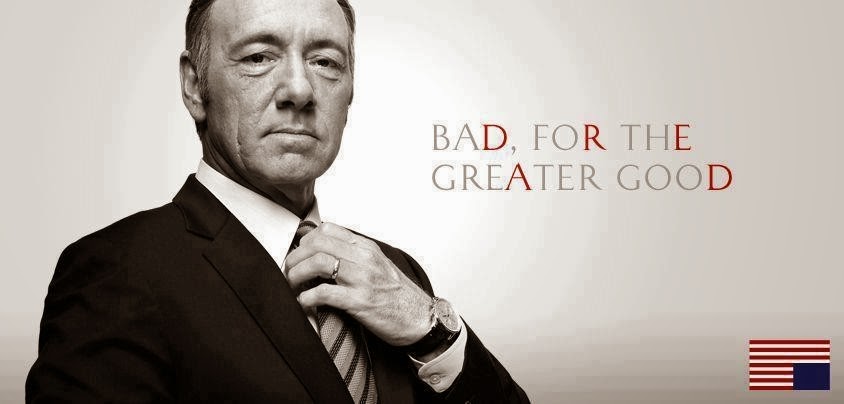
Within the past two years, the media has followed the recent turn toward exploring the characteristics of a “successful” psychopath. A simple Google search on “successful psychopathy” now renders a slew of attention-grabbing articles ranging from How to Protect Yourself from a Successful Psychopath to Why Psychopaths are More Successful to Is Your Boss a Psychopath? Together, these articles reference some of America’s more fascinating psychopathic fictional characters, such as Dexter, Jordan Belfort from The Wolf of Wall Street, and Frank Underwood from House of Cards, to create a case for an adaptive psychopath. The recent discussion about the successful psychopathic personality in the media most certainly raises questions about the nature of psychopathy and the ethical implications of concluding that some psychopathic tendencies may be adaptive.


From iDigitalTimes


Before delving into the nuances of successful psychopathy, one must first understand the basic characteristics of psychopathy more generally. Psychopathic personality, or psychopathy, is a disorder often characterized by a constellation of affective, interpersonal, and behavioral deficits. Psychopaths have been known to be especially callous, cold-hearted, impulsive, and superficially charming. This subset of people has also often been characterized as not possessing empathy and as unable to feel remorse for their actions. Criminal anthropologist Havelock Ellis (1890) portrayed psychopaths as “instinctive criminal[s]” and “moral monsters” (p.2.). Furthermore, in his pioneering work The Mask of Sanity, Hervey Cleckley (1941) described a psychopath as unable to “accept substantial blame for the various misfortunes which befall him and which he brings down upon others” (p. 343).


This characterization of psychopaths is largely negative. It is hard to think about how an uncaring, impulsive, cold-hearted person could seemingly flourish in any endeavor in life. The debate over whether certain psychopathic qualities could manifest adaptively remains a question that will largely be decided through refining the measurement techniques for assessing psychopathy. Of course, this will not be an easy debate to resolve. Throughout the history of psychopathy research, there has also been significant controversy over the criteria required for a psychopathy diagnosis. In an effort to elucidate some confusion, Robert Hare (1991/2003) developed the Psychopathy Checklist (PCL). The PCL is the most commonly used method to measure psychopathy traits. Factor analytic measures on the PCL have shown that psychopathy is supported by two factors: (1) interpersonal and affective traits and (2) disregard for social conventions. The first factor more closely aligns with typical conceptions of psychopathy, whereas the second factor captures a tendency to engage in maladaptive antisocial and lifestyle behaviors.


Aside from merely discerning the characteristics of a psychopath, researchers have also debated whether psychopathy is a categorical or dimensional construct. More recent scholarship suggests that there are not “psychopaths” or “non-psychopaths,” but individuals possess varying degrees of psychopathic tendencies (Lilienfeld, 1998). In my opinion, viewing psychopathy on a continuum helps to frame a case for the successful psychopath because one psychopath will vary from another.


People with psychopathic personality disorder may express certain personality tendencies to differing degrees and these differences are usually captured and clarified though developing more precise measuring tools and examining different underlying factors of psychopathy. The range of characteristics associated with psychopathy run the gamut from boldness, heightened levels of focus, superficial charm, intelligence, and carelessness. The quality most closely related to successful psychopathy is perhaps boldness and fearlessness (Smith, Watts, & Lilienfeld, 2014). Psychopaths that exhibit these qualities may perform exceedingly well in stressful business, legal, or academic environments. Nonetheless, more research is needed to examine what arrangement of traits is correlated with adaptive outcomes in psychopathic individuals.


To better illustrate the theoretical possibility of a successful psychopath: say that there exists a type of person that is especially bold, devoid of anxiety, and manipulative in a way that helps her advance in her career. It is not hard to envisage this type of person succeeding in her professional life because she may more readily engage in risky yet potentially profitable business ventures and exude a great deal of self-confidence in the face of uncertainty. This combination of traits may even appear enviable. There are most certainly times in which I wish I were less anxious about an important meeting or more bold when making important decisions. However, the successful psychopathy discussion must be careful not to venerate the notion of a so-called high-functioning psychopath. Just because a successful psychopath may very well exist does not mean that psychopathy in many other cases is not associated with highly problematic behavior.


In discussing successful psychopathy, we must be clear about what successful means and who makes that determination. For instance, a successful psychopath could be considered adaptive because she hasn’t been caught engaging in inappropriate actions, but other people may not think of her as successful if her behaviors were uncovered. Take Dexter the so-called “Avenging Angel” for example—he could be considered a very successful psychopath because he kills people without getting caught and subsequently punished. I would argue that he is successful in a sense, but not in an enviable way. Frank Underwood from House of Cards serves as another example: he is an especially astute political manipulator and lacks remorse for many of his morally questionable actions. I find these individuals fascinating, but I am not so sure many people would want to possess the characteristics of these individuals.


From Erwin Reviews

Alternatively, another conceptualization of a successful psychopath may stem from the idea that a psychopath recognizes her psychopathic tendencies but channels them in societally appropriate ways, such as acting in a heroic manner or taking necessary risks in the face of uncertainty or having great economic success. For instance, a person with a variant of psychopathic personality may find the job of a firefighter fitting for her fearlessness. Society would likely deem this person’s choice to seek out an occupation that matches with her interests admirable and respectable. This existence of such a person is still contentious and more research is needed to determine which underlying factors of psychopathy manifest into adaptive behaviors (Smith, Watts, & Lilienfeld, 2014). In the end, the intentional firefighter differs from sly, undercover serial killer, and we must be careful not to throw the word successful around without defining what one means by its use.


Regardless, the media’s portrayal of successful psychopathy ought to include a discussion of these nuances because these differences in the definitions of successful psychopathy are distinctions that make a difference in how the public perceives mental disorders, such as psychopathy. On one side, it would be problematic for the media to perpetuate a stigma against psychopaths or stigma against mental illness in general. It would be equally problematic if the media framed a successful psychopath as having a desirable personality disorder. The truth of the matter is that we simply do not know enough about successful psychopathy to make any generalizations about successful psychopathy. Just because a psychopath need not always be equivalent to Ted Bundy does not necessarily mean that a non-criminal psychopath is the type of person our society ought to deem “successful.”


Or does it? Only further research and time will begin to shed light on the curious character of a successful psychopath.


References

Ellis, H. (1916). The criminal (Vol. 7). W. Scott.

Cleckley, H. (1941/1976). The mask of sanity; an attempt to reinterpret the so-called psychopathic

    personality.

Hare, R. D. (1999). The Hare Psychopathy Checklist-Revised: PLC-R. MHS, Multi-Health Systems.

Lilienfeld, S. O. (1998). Methodological advances and developments in the assessment of

    psychopathy. Behaviour Research and Therapy, 36, 99-125.

Smith, S. F., Watts, A. L., & Lilienfeld, S. O. (2014). On the trail of the elusive successful

    psychopath. Psychological Assessment, 15, 340-350.


Successful Psychopathy Books of Potential Interest

The Psychopath Inside: A Neuroscientist’s Personal Journey into the Dark Side of the Brain

Snakes in Suits: When Psychopaths Go To Work

The Psychopath: A Journey Through the Madness of Industry

The Good Psychopath's Guide to Success


Want to cite this post?


Marshall, J. (2015). So You Want to be a “Successful” Psychopath? The Neuroethics Blog. Retrieved on , from http://www.theneuroethicsblog.com/2015/04/so-you-want-to-be-successful-psychopath.html


Tuesday, June 24, 2014

Should you read more because a neuroscientist said so?

By Lindsey Grubbs


Lindsey Grubbs is a PhD student in the English Department at Emory University, where she is also working on a certificate in bioethics. She holds a master’s degree in English and gender studies from the University of Wyoming. She is interested in the relationship between literature and science, and works with American literature from the nineteenth century until today to interrogate and complicate the boundaries between health and wellness, normalcy and aberrance, and physical and mental complaints.


As neuroscientists begin to approach topics usually falling under the purview of other specialties, how can they ethically incorporate various forms of knowledge rather than provide simplified metrics that will, in a data hungry society, be easier for most to latch onto?


In 2013, we saw the publication of at least two high profile studies claiming neuroscientific proof for the potential moral benefits of reading fiction. Greg Berns and his associates published “Short- and Long-Term Effects of a Novel on Connectivity in the Brain” in Brain Connectivity (Berns, Blaine, Prietula, & Pye, 2013), and David Comer Kidd and Emanuele Castano published “Reading Literary Fiction Improves Theory of Mind” in Science (Kidd & Castano, 2013). The Berns article makes a relatively modest claim: the day after an evening session reading a novel, test subjects had short-term increased brain connectivity in areas of the brain associated with taking perspectives and understanding narratives, and longer-term connectivity that lasted several days in the bilateral somatosensory cortex, which the authors suggest could help explain the mechanism of “embodied semantics,” the idea that there is somatosensory involvement in the processing of language, as when tactile metaphors like “I had a rough day” activate the somatosensory cortex (Lacey, Stilla, & Sathian, 2012). As suggested by its title, the Kidd and Castano piece makes a more dramatic claim: the authors conducted five experiments and write that reading award-winning literary fiction improves subjects’ theory of mind both alone and in comparison to nonfiction or popular bestselling fiction. The reaction to these studies in the press follows the trend of a mania for neuroscientific evidence and colorful images of the brain1.  Why is it necessary, though, to grant scientific authority more weight as evidence than other forms of knowledge?


Via The Wire


Our society values information that seems objective over that which seems subjective—at times a value that makes sense, but one that is exaggerated in the case of something like responses to literature, which are inherently subjective. Writing for the New York Times, Alissa Quart writes, “The problem isn’t solely that self-appointed scientists often jump to faulty conclusions about neuroscience. It’s also that they are part of a larger cultural tendency, in which neuroscientific explanations eclipse historical, political, economic, literary and journalistic interpretations of experience” (Quart, 2012). The reading studies and the press reactions to them clarify the need for interdisciplinary work that truly engages with, rather than pays lip service to, multiple sources of knowledge—not just scientific protocol, but also generations of thoughtful work in the humanities.


Kidd and Castano’s study highlights the need for truly engaged interdisciplinary work, as it engages with literary topics without full consideration of the dynamics of reading—they perform what ought to be an interdisciplinary study without the necessary expertise, leading to a weaker study compounding the type of media “neurohype” this one received. While Kidd and Castano acknowledge literary theory by employing literary critic Roland Barthes’ differentiation between “readerly” texts, which encourage passive reading, and “writerly” texts, which engage the reader and require them to produce their own meanings (a move demonstrating that they’ve done some homework in literary theory), they use the terms imprecisely (Barthes likely would have classed all of the books in the study as “readerly”—none were “weird” enough to garner a “writerly” diagnosis, which describes text like James Joyce’s Finnegans Wake) and perhaps to the point of inaccuracy. Anyways, the terms originate over forty years ago, and hardly reflect more contemporary, nuanced understandings of how texts engage the reader.


More recent literary theory suggests that the value and substance of a text is not an inherent quality of a work; rather, the meaning of a text is created in the relationship between the reader and the page, both enmeshed in a complex context of race, class, gender, and other factors. By making the claim that “literary fiction” improves theory of mind while “popular fiction” does not—a messy distinction framed as though it were a straightforward one (it seems important to note that the results of Berns’ study—which used a “popular,” not “literary” novel—would suggest that this is wrong, and that reading need not be literary to improve empathy), Kidd and Castano’s study also risks propping up class-based distinctions. Supporting the bias that reading “high-culture” literature, which is undeniably bound up in classed, racialized, and gendered inequalities, is more morally salutary than reading other texts on the basis of one measure is irresponsible, and shows an inadequate engagement with the politics of reading. Despite a brief nod to the class-based distinctions between the two groups, the authors maintain that the notion of “literary value” has “ecological validity” because it can be detected by readers. But it is precisely this ecological validity that changes how the text will be read: we live in a culture that values certain types of writing from certain types of authors (most typically, dead white men), and this value is necessarily historically contingent—not “objective.” Today, we know when we pick up a mystery or sci-fi novel that we are supposed to read it easily, quickly, and probably with a bit of embarrassment. In contrast, when we pick up “serious” literature, we are supposed to engage and work at meaning—which we can easily imagine would impact the neural mechanisms at play.


Via stanford.edu


Incorporating an expert in literary study could have helped the experiment design avoid this problem. Consider the work of Natalie Phillips, an English professor working with neuroscientists and radiologists on a study of the neuroscience of reading and attention. Subjects read Jane Austen in an MRI and alternated between skimming casually and reading closely—revealing that the two types of reading produced very different patterns on the MRI. Her familiarity with literature allowed her to realize that there are not simply different types of texts, but also different types of reading—a key oversight in the Kidd and Castano study. Future research into the relationship between reading and the brain would be more thorough, convincing, and conceptually and ethically sound if it includes humanities scholars, who contribute a different kind of knowledge. Conversely, the growing body of work in the humanities that incorporates a cognitive approach must be vigilant about including science ethically, which is to say scientifically—not “pop-scientifically.”


As neuroscientists become more deeply engaged with social questions, as Berns and Kidd and Castano have done with these recent studies, we will need to begin sorting through a complex series of questions. Julianne Chiaet writes in Scientific American that Kidd and Castano’s study could influence educational programs, prison reform, and the treatment of autism. But how well supported does a scientific claim have to be before we use it to shape policy? Kidd and Castano acknowledge that the research is preliminary, focused on only one of a wide array of possible benefits of reading, and that much research remains—however, that doesn’t stop them from suggesting potential policy implications based on the limited knowledge they propose. They point to the new Common Core State Standards and argue that more fiction ought to be included in the curriculum (at the expense of other subjects of study). Alternatively, what are the implications of “prescribing” reading as a kind of social medication for those deemed pathologically asocial? Writing for Slate, Mark O’Connell expresses concern about looking at reading in a "morally instrumentalist" way. What are the dangers of suggesting that mandated reading programs could “fix” our criminals and children with autism at the expense of broader social reforms that would reduce the incentives to commit crimes or the stigma our culture aims at people with disabilities? Moving forward, tackling these types of questions will require the pooled expertise of those in the sciences and humanities.


1 Berns uses neuroimaging, while Kidd and Castano use measures of theory of mind like “reading the mind in the eyes” tests.


Bibliography


Berns, G. S., Blaine, K., Prietula, M. J., & Pye, B. E. (2013). Short- and Long-Term Effects of a Novel on Connectivity in the Brain. Brain Connectivity, 3(6), 590–600. doi:10.1089/brain.2013.0166


Chiaet, J. (2013). Novel Finding: Reading Literary Fiction Improves Empathy. Scientific American. Retrieved June 16, 2014, from http://www.scientificamerican.com/article/novel-finding-reading-literary-fiction-improves-empathy/


Kidd, D. C., & Castano, E. (2013). Reading Literary Fiction Improves Theory of Mind. Science, 342(6156), 377–380. doi:10.1126/science.1239918


Lacey, S., Stilla, R., & Sathian, K. (2012). Metaphorically feeling: Comprehending textural metaphors activates somatosensory cortex. Brain and Language, 120(3), 416–421. doi:10.1016/j.bandl.2011.12.016


O’Connell, M. (2013, October 28). 10 Novels to a Better You. Slate. Retrieved from http://www.slate.com/articles/arts/culturebox/2013/10/does_reading_fiction_make_you_a_more_empathic_better_person.2.html


Quart, A. (2012, November 23). Neuroscience: Under Attack. The New York Times. Retrieved from http://www.nytimes.com/2012/11/25/opinion/sunday/neuroscience-under-attack.html


"This is your brain on Jane Austen, and Stanford researchers are taking notes." (2012, September 7). Stanford University. Retrieved June 11, 2014, from http://news.stanford.edu/news/2012/september/austen-reading-fmri-090712.html


Want to cite this post?


Grubbs, L. (2014). Should you read more because a neuroscientist said so? The Neuroethics Blog. Retrieved on , from http://www.theneuroethicsblog.com/2014/06/should-you-read-more-because.html

Tuesday, May 13, 2014

When is diminishment a form of enhancement? Another twist to the “enhancement” debate in biomedical ethics

By Brian Earp, MSc


Photo by Rob Judges


Brian Earp is a Research Fellow at the Uehiro Centre for Practical Ethics at the University of Oxford. He is an interdisciplinary researcher with training in cognitive science, experimental (social) psychology, philosophy, and ethics. With Professor Julian Savulescu, Brian is writing a book on the neuroenhancement of love and marriage, to be completed this year.


There is a big debate going on about “enhancement.” For many years now, people have realized that new technologies, along with discoveries in neuroscience and pharmacology, could be used in ways that seem to go beyond mere “medicine” – the treating of deformity or disease. Instead, to use a phrase popularized by Carl Elliot, they could make us “better than well.” Faster, stronger, smarter, happier. Quicker to learn, slower to forget. It has even been suggested that we could use these new technologies to “enhance” our love and relationships, or make ourselves more moral. 


These kinds of prospects are exciting to some. To others, they are frightening, or at least a cause for concern. As a result, there has been a stream of academic papers—alongside more popular discussions—trying to get a handle on some of the ethics. Is it permissible to take “medicine” even if we aren't “sick”? Should we be worried about “Playing God”? Do some people have an obligation to enhance themselves? And so on.


At least one major problem has been lurking in the background. And that is that, quite simply, “enhancement” could mean almost anything. Definitions are often vague, if they’re attempted at all. Some authors resort to simply listing out various interventions, with the hope that the reader will somehow “intuit” how they all hang together. But there are some common themes. In a recent paper with my colleagues Anders Sandberg, Guy Kahane, and Julian Savulescu, I called attention to at least two major “approaches” to understanding the term enhancement that seem to crop up in the academic literature.


The first is the Functional-Augmentative Approach to Enhancement. According to this type of approach, “interventions are considered enhancements insofar as they improve some capacity or function (such as cognition, vision, hearing, alertness) by increasing the ability of the function to do what it normally does.” The debate then usually turns on whether it’s OK to “enhance” someone (in this sense) who doesn’t have a “medical” problem, at least not on that particular dimension. This then leads to a second way of understanding enhancement, which we called:


The Not-Medicine Approach to Enhancement. According to this type of approach, to quote the bioethicist Eric Juengst, “the term ‘enhancement’ [characterizes] interventions designed to improve human form or functioning beyond what is necessary to sustain or restore good health.” This is the sense of “better than well” that many people (seem to) have in mind when they are engaging in these kinds of debates.


Both of these definitions have flaws. For one thing, they focus almost exclusively on the “augmentation” of capacities or functions—on “going beyond” the ordinary limits of medicine, or even human nature. But what about interventions that work in the opposite direction? One common example of “enhancement”—found throughout the neuroethics literature—is the use of drugs or other technologies to “blunt” painful memories (for example, after a breakup). Although such an intervention is clearly relevant to these discussions, it seems a little bit more like a “diminishment” than an “enhancement.” How should we consider cases like this?


Here are some other examples. What about the use of “anti-love biotechnology” to help a victim of domestic abuse break ties with her abuser? Or voluntary “chemical castration” for pedophiles seeking to change? To pick something less disturbing, how about appetite suppressants to help someone with her dieting goals? Enhancements? Diminishments? Both?


There’s a simple solution to this puzzle. All of these interventions are “enhancements” in the sense that they are geared toward improving well-being. “That is, once we shift our focus from the particular capacity or function being modified, to the overall normative goal of the modification itself” we stumble upon a third approach to understanding enhancement, which we call:


The Welfarist Approach to Enhancement. On this approach, “enhancement” is defined as “any change in the biology of psychology of a person which increases the chances of leading a good life in a given set of circumstances.” As we explore in our paper—see below for the reference and a link—we think that this approach resolves a number of conceptual ambiguities in the bioethics literature, and offers a useful framework for thinking through the use of new technologies in terms of how they can promote human flourishing. We look forward to hearing what you think!


This post can also be viewed on the Psychiatric Ethics Blog. 


Highlighted paper [open access]


Earp, B. D., Sandberg, A., Kahane, G., and Savulescu, J. (2014). When is diminishment a form of enhancement? Rethinking the enhancement debate in biomedical ethics. Frontiers in Systems Neuroscience, Vol. 8, Article 12, 1-8.


Related reading [open access]


Earp, B. D., Sandberg, A., & Savulescu, J. (2014). Brave new love: The threat of high-tech “conversion” therapy and the bio-oppression of sexual minorities. American Journal of Bioethics: Neuroscience, Vol. 5, No. 1, 4-12.


Earp, B. D., Wudarczyk, O. A., Sandberg, A., & Savulescu. J. (2013). If I could just stop loving you: Anti-love biotechnology and the ethics of a chemical breakup. American Journal of Bioethics, Vol. 13, No. 11, 3–17.


Earp, B. D., Sandberg, A., & Savulescu, J. (2012). Natural selection, childrearing, and the ethics of marriage (and divorce): Building a case for the neuroenhancement of human relationships. Philosophy & Technology, Vol. 25, No. 4, 561-587.


Wudarczyk, O. A., Earp, B. D. , Guastella, A., & Savulescu, J. (2013): Could intranasal oxytocin be used to enhance relationships? Research imperatives, clinical policy, and ethical considerations. Current Opinion in Psychiatry, Vol. 26, No. 5, 474-484.


Want to cite this post?


Earp, B. (2014). When is diminishment a form of enhancement? Another twist to the “enhancement” debate in biomedical ethics? The Neuroethics Blog. Retrieved on , from http://www.theneuroethicsblog.com/2014/05/when-is-diminishment-form-of.html