
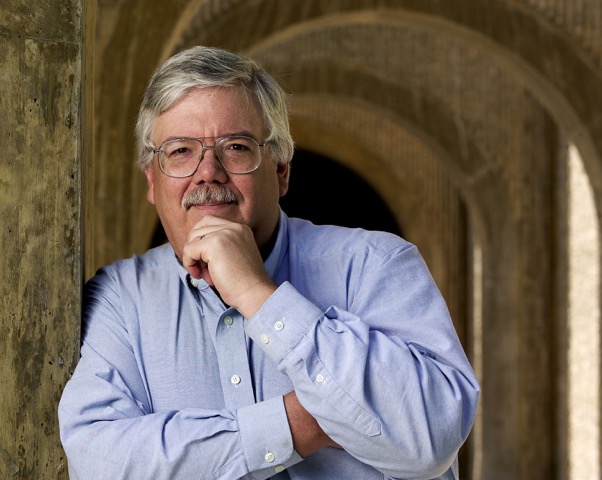
 Hank Greely is the Deane F. and Kate Edelman Johnson Professor of Law and Professor, by courtesy, of Genetics at Stanford University. He specializes in ethical, legal, and social issues arising from advances in the biosciences, particularly from genetics, neuroscience, and human stem cell research. He directs the Stanford Center for Law and the Biosciences and the Stanford Program in Neuroscience in Society; chairs the California Advisory Committee on Human Stem Cell Research; and serves on the Neuroscience Forum of the Institute of Medicine, the Advisory Council for the National Institute for General Medical Sciences of NIH, the Committee on Science, Technology, and Law of the National Academy of Sciences, and the NIH Multi-Council Working Group on the BRAIN Initiative. He was elected a fellow of the American Association for the Advancement of Science in 2007. His book, THE END OF SEX AND THE FUTURE OF HUMAN REPRODUCTION, was published in May 2016.
Professor Greely graduated from Stanford in 1974 and from Yale Law School in 1977. He served as a law clerk for Judge John Minor Wisdom on the United States Court of Appeals for the Fifth Circuit and for Justice Potter Stewart of the United States Supreme Court. After working during the Carter Administration in the Departments of Defense and Energy, he entered private practice in Los Angeles in 1981 as a litigator with the law firm of Tuttle & Taylor, Inc. He joined the Stanford faculty in 1985.
On April 2, 2013, President Obama launched the Brain Research through Advancing Innovative Neurotechnologies (BRAIN) Initiative®. (Neuroscience has yet to reveal why an initiative about the brain had to have an acronym that spelled BRAIN; * legal issues explain the trademark notation.) Built on the report, BRAIN 2025: A SCIENTIFIC VISION, of a committee created to advise Francis Collins, the NIH Director, and chaired by neuroscientists Cori Bargmann of Rockefeller University and Bill Newsome of Stanford, the Initiative, in spite of political deadlock and budgetary woes, has survived and, in some respects, even thrived.
At its launch, the BRAIN Initiative was hailed as a project that would bring together at least three U.S. government agencies, charitable foundations, and industry. In reality, the initiative has been more decentralized. It has no overall director and no dedicated staff; it will only get an overall web page this summer. The various federal agencies stay in regular communication, some foundations and some foreign funders have played important roles, three international memoranda of understanding have been completed, and the Initiative has sponsored annual meetings of all BRAIN investigators whatever their funding. Still, it is more a confederation of individual activities, however inter-communicating, than a unitary project [1].
The National Institutes of Health (NIH) has taken the leading role in organizing the Initiative. This is partially because of its large financial stake in it; this fiscal year the NIH budget for the BRAIN Initiative is about $150 million. But other agencies are also spending large amounts on BRAIN – the Defense Advanced Research Projects Administration has a $95 million budget for it this year, the National Science Foundation expects to spend $72 million, and the Intelligence Advanced Research Projects Administration and the Food and Drug Administration both have multi-million dollar BRAIN budgets.
NIH’s role may be more a function of its own complexity than the size of its BRAIN budget. Ten Institutes and Centers at NIH are part of the BRAIN Initiative: the National Institutes of Aging, Alcohol Abuse and Alcoholism, Biomedical Imaging and Bioengineering, Child Health and Human Development, Deafness and Other Communication Disorders, Drug Addiction, Mental Health, Neurological Disorders and Stroke, the National Eye Institute, and the National Center for Complementary and Integrative Health. Many other Institutes and Centers have at least some central nervous system connection (the National Cancer Institute, for example, studies brain tumors). NIH needed to organize its own response to, and its role in, the Initiative.
 |
| President Obama speaking on the BRAIN initiative, image courtesy of Flickr user Open Knowledge. |
To do so, in 2014 it created the “Multi-Council Working Group on the NIH BRAIN Initiative,” happily shortened to MCWG. (I have tried to get people to pronounce the acronym as “McWig” but with very limited success.) MCWG has 14 members, one from each of the Advisory Councils for the 10 participating NIH Institutes and Centers and four “at large” members, including me. The directors of the relevant NIH entities normally attend; in addition there are “ex officio” members representing BRAIN activities at DARPA, FDA, IARPA, and NSF.
Since its first meeting in late August 2014, MCWG has met twice a year, summer and winter. Co-chaired by the directors of the National Institute of Neurological Disorders and Stroke, Dr. Walter Koroshetz, and the National Institute for Mental Health, initially Dr. Thomas Insel and now his acting successor, Dr. Bruce Cuthbert, MCWG tries to provide some of the kind of guidance that their Advisory Councils give NIH Institutes and Centers. The group is briefed on current funding areas and grants as well as proposed new funding areas and in turn provides its thoughts to the NIH.
“Thriving,” though doesn’t just mean “has big budgets and a fancy committee.” The BRAIN Initiative is funding exciting and important work. It has no grand substantive goal akin to “sequencing the human genome,” but instead wants to create tools to help us understand the brain (and, after all, the most important product of the Human Genome Project was nearly infinitely cheaper, faster, better sequencing, not the actual sequence). You can find out more about BRAIN’s progress with things like photoacoustic imaging and miniaturized and highly sensitive electrophysiology and optical imaging instruments at the BRAIN Update blog.
Fine, you say, but what does all of this have to do with neuroethics?
Ethical questions were seen as part of the Initiative from before its beginning. BRAIN 2025 recognized that “Because the brain gives rise to consciousness, our innermost thoughts and our most basic human needs, mechanistic studies of the brain have already resulted in new social and ethical questions.” When President Obama announced the Initiative, he asked the President’s Commission for the Study of Bioethical Issues (PCSBI) to report to him on ethical issues it raised. It did, twice, in GRAY MATTERS, Volumes 1 and 2, which can be found here.
I was asked to serve as an at-large member of MCWG not just (?) for my good looks, but in the hope that I could bring some neuroethics experience to the group. It was immediately clear to me, and quickly became clear to the rest of MCWG, that the BRAIN Initiative needed more neuroethics input. The importance of those issues was also highlighted by a November 2014 neuroethics workshop held by NIH, discussed here.
 |
| The NIH has played a large role in the BRAIN initiative, image courtesy of Wikipedia |
For one thing, particular research areas or grants could raise very specific questions that were more granular than the recommendations in GRAY MATTERS. MCWG also recognized that there might be possibilities for the Initiative to lead to some general guidelines for approaching recurring problems in neuroscience research ethics, particularly in work with human subjects but also in research with non-humans. And finally the Working Group realized that the BRAIN Initiative might also be interested in funding some neuroethics research that could, by recommendations or criticism, support its work.
So, at the MCWG co-chairs suggestion, Dr. Christine Grady, Chief of the Department of Bioethics at the NIH Clinical Center and a member of PCSBI, and I were asked to prepare and present a plan for neuroethics activities to MCWG at its summer 2015 meeting. As a result MCWG approved the creation of a MCWG Neuroethics Work Group, co-chaired by Dr. Grady and myself and reporting to MCWG and its co-chairs. (Very happily for us, Dr. Koroshetz threw in from NINDS the very able support of Dr. Khara Ramos from his office as the Work Group’s Executive Secretary and liaison to NIH.) That fall the Work Group was chosen with members from both inside MCWG – Drs. James Eberwine of Penn, Bradley Hyman of Mass. General Hospital, and Rafael Yuste of Columbia – and outside it – Drs. Nita Farahany of Duke, Steve Hyman of the Broad Institute, Karen Rommelfanger of Emory, and Chandra Sripada of Michigan. Some of us met for a working dinner at the International Neuroethics Society annual meeting last fall in November, we’ve had several conference calls, and we held our first in-person meeting on February 9.
So, after just over a thousand words – what does this mean and why should you care?
Well, the MCWG Neuroethics Work Group is working. We are preparing two draft documents laying out ethical issues around data sharing in neuroscience research and about long-term obligations to human research participants who received implanted devices. We are working with other interested parties in cosponsoring workshops on neuroethics issues relevant to the BRAIN initiative. And, although we cannot claim too much credit for it, the NIH recently announced that it would be able to use funds from this fiscal year to support administrative supplements to existing NIH BRAIN Initiative Awards, including those about neuroethics.
Specifically, the PIs on BRAIN Initiative grants have been told that if there are any ethical considerations involved in their research, a supplement to explore those questions, as they fall within the funded specific aims of a given award, would be appropriate. The relevant grants are listed here. Applications for supplements are due May 2, and should follow these instructions. We hope that these will just be a new start for NIH-supported research on neuroethics.
We will have to see where neuroethics goes within the BRAIN Initiative, and, for that matter, what a future Administration holds for the whole initiative. But I think good starts have been made on both points. And I promise you that the MCWG Neuroethics Work Group will continue to look for good ways to apply neuroethics to the BRAIN Initiative – and to apply the BRAIN Initiative, and NIH more broadly, to neuroethics. Feel free to contact me, Dr. Grady, or Dr. Ramos directly with your thoughts or questions at hgreely@stanford.edu, CGrady@cc.nih.gov, or ramoskm@ninds.nih.gov. You can also read a bit about the work group on the NIH BRAIN Initiative website [2].
[1] It may be a case of what Steve Hyman has called a “COA” – a “Crypto-Orwellian Acronym.”
[2] My sincere thanks to Drs. Grady and Ramos for their help with this blog post.
Want to cite this post?
Greely, H.T. (2016). Neuroethics and the BRAIN Initiative. The Neuroethics Blog. Retrieved on , from http://www.theneuroethicsblog.com/2016/04/neuroethics-and-brain-initiative.html

