Pages

Showing posts with label neuroprivacy. Show all posts

Tuesday, September 19, 2017

The Neuroethics of Brainprinting


By Anna Farrell 


Anna Farrell is a rising second year undergraduate student at Emory University. Early on in her Neuroscience major she became interested in Neuroscience’s interdisciplinary nature and continued on to declare a second major in English. 


As cyber espionage and hacking are on the rise (Watson, 2016), major corporations, governments, and financial systems have pushed for using biometrics as a more secure way to guard their data. Biometrics measures unique physical characteristics as a way of ascertaining someone’s identity. A wide range of physical characteristics are currently used in biometrics, including DNA, iris, retina, face, fingerprint, finger geometry, hand geometry, odor, vein, and voice identification (Types of Biometrics). Governmental uses for biometrics span border control, customs services, and online access to critical systems. However, fingerprint and iris identification results are becoming more replicable as hacker’s abilities advance (Watson, 2016), causing researchers to begin to look beyond the typical biometric features. One of the new methods being studied is electroencephalogram (EEG)-based neurological identification. However, using brain wave biometrics as a means of identification establishes a framework which, if underestimated, could put sensitive personal data in jeopardy. 


Lawrence Farwell invented Brain Fingerprinting as a method of determining what information is contained in the brain (Ahuja, & Singh, 2012). This began in 1986 with the investigation of event related potentials. Event related potentials under the P300 response category are electrical signals that occur 300 milliseconds after the subject has been shown a stimulus that is recognized as familiar (Farwell, 2014). Over time, many Brain Fingerprinting methods developed with additional factors supplementing the analysis of the P300 brain response. One of the more prevalent approaches produces a neurological reaction named the “memory and encoding related multifaceted encoding electroencephalographic response” or MERMER (Ahuja, et al., 2012). 


This image depicts Dr. Lawrence Farwell conducting a Brain

Fingerprinting test on Terry Harrington.

(Image courtesy of Wikimedia Commons.)

In 1977, Terry Harrington was convicted of murder and 22 years later Farwell performed a MERMER test on him that was influential in the decision to release him from prison (Farwell, 2014). The crime-related stimuli did not produce a MERMER signal, while the alibi-related stimuli produced a MERMER signal, thus implying that Harrington’s brain contained information concerning the alibi and not the details of the crime. However, it was ultimately due to a Brady violation that the Iowa court overturned the case (Harrington vs State, 2003). Some researchers are suspicious about the highly acclaimed accuracy of brain fingerprinting, as the results have not been verified by researchers extending beyond Farwell’s lab (Holley, 2009). 


Now, Farwell’s brain fingerprinting is being researched so that it can be applied to neurological authentication systems. The argument for the development of neurological authentication systems is compelling because brains are physically less accessible to hackers than are fingerprints or DNA, and are thus harder to falsify. However, interference from the skin and skull can make it difficult to get a good signal from an EEG (Usakali, 2010), which may lead to inconsistencies in signal identification. More recently, functional near-infrared spectroscopy (fNIR) security systems have been developed, which have a much higher signal-to-noise ratio than EEG. While EEG systems measure electrical brain activity (Spine, 2016), fNIR measures blood flow in the brain like a fMRI, allowing the method greater spatial resolution but with the mobility of the EEG system (Strait, & Scheutz, 2014). 


A sample of human EEG data.

(Image courtesy of Wikimedia Commons.)

These neural authentication systems herald a new wave of neurotechnology with heightened efficiency, demanding a greater analysis of the privacy violations that may arise. While this constant mining of brain data can offer better security, it also poses a potential threat to the individual. Texas Tech researcher Abdul Serwadda and graduate student Richard Matovu discovered that a six electrode EEG authentication system leaked personal information while verifying the identity of the user. In a study with 25 clinically diagnosed alcoholics and 25 non-alcoholics, the EEG security system recognized the alcoholics with approximately 68-75% accuracy (Matovu, & Serwadda, 2016). These results were obtained through a mutual information metric, which compared the alcoholic sample user EEG data to alcohol usage behavior (Matovu, et al., 2016). However, by only slightly compromising authentication accuracy, this private information could not be extracted from the EEG data (Matovu, et al., 2016). Another study has shown that all three beta bands, brain waves within signature frequency ranges, displayed an unmistakable amplification in EEG readings with alcohol dependent subjects (Rangaswamy et al., 2002). 


Although these technologies are not ready for commercial use, ethical complications ought to be analyzed before the hypothetical becomes reality. Serwadda states that in the wrong hands, these brain waves could be used to gain insight into employees’ possible mental health conditions, learning disabilities, substance abuse, and more (Watson, 2016). Although this is speculative, it rightly emphasizes precaution as we continue to develop authentication measures. If this sort of sensitive information could be gleaned from the EEG system, the unwarranted access that could be surrendered with the data collected by the fNIR security system should certainly not be underestimated. 


Image courtesy of Pexels.

The use of neural authentication security systems turns brain data, previously only accessible to health care professionals, into a commodity. Some companies only make raw EEG data available to the consumer in their more expensive products, turning others’ neurological data into a tool that can be easily sold for greater profit. Such brain data provides corporations and governments with a whole new database of personal data that they can access in the name of quality assurance or national security. Without dialogue to educate the public on EEG systems and the information that can be derived from an EEG signal, many of us may be unaware of the richness of personal information that can be channeled through an electrode. 


Other concerns about neural fingerprinting focus on how their implementation may infringe on our constitutional rights. Should neurological data be treated like other non-invasive physiological samples, such as blood or urine? Or does it qualify as testimony, deserving protection under privacy? As brain fingerprinting data does not fit into either realm fully, some are advocating for a new legal framework to address possible violations of constitutional rights, specifically the fourth (Farahany, 2012) and fifth (Waller, Bernstein, & Ladov, 2012) amendments. The 4th amendment protects the individual from unreasonable searches and seizure. The 5th amendment guarantees that no one should have to testify against themselves. Possible inaccuracies of the proposed methods further cloud the discussion if these technologies are ever to be called upon in a legal setting. 


Image courtesy of Wikimedia Commons.

Americans have compromised on privacy (Larkin, 2011) many times, with post 9/11 airport security initiatives as an example, to better protect the general population. However, the violation of neuroprivacy is unlike previous breaches of privacy executed in the name of security, for none of the other compromises intrudes so personally and directly into the workings of the mind. Situational justification does not validate this abuse; instead, it sets a precedent, which eventually could lead to a wide and indiscriminate acceptance of brain fingerprinting. Championing efficiency, safety, and convenience to push new biometric brain authentication methods misleads the public into thinking that these methods are both harmless and guarantee protection from hackers. 


Dialogue revolving around ownership of brain data and how security systems should go about receiving consent for brain data access is essential to creating a safe and effective means of security authentication services. Research highlighting the possible compromises we may face with brain biometrics is guided by the above principles and must continue to be so guided, to ensure our autonomy over our brain data in the face of technological advances. 


References 


Ahuja, D., & Singh, B. (2012). Brain fingerprinting. Journal of Engineering and Technology Research ,4(6), 98-113. doi: 10.5897/JETR11.061 


Basulto, D. (2014, November 21). The heartbeat vs. the fingerprint in the battle for biometric authentication. Retrieved March 28, 2017, from https://www.washingtonpost.com/news/innovations/wp/2014/11/21/the-heartbeat-vs-the-fingerprint-in-the-battle-for-biometric-authentication/?utm_term=.ad6577f7b338 


Behavioral Biometrics. (n.d.). Retrieved April 20, 2017, from https://www.secureauth.com/products/secureauth-idp/behavioral-biometrics 


Beyond therapy: biotechnology and the pursuit of happiness. (2004). Choice Reviews Online, 42(03). doi:10.5860/choice.42-1550 


Bonaci, T., Calo, R., & Chizeck, H. J. (2015). App Stores for the Brain : Privacy and Security in Brain-Computer Interfaces. IEEE Technology and Society Magazine,34(2), 32-39. doi:10.1109/mts.2015.2425551 


Chuang, J., Nguyen, H., Wang, C., & Johnson, B. (2013). I Think, Therefore I Am: Usability and Security of Authentication Using Brainwaves. Financial Cryptography and Data Security Lecture Notes in Computer Science, 1-16. doi:10.1007/978-3-642-41320-9_1 


Dalbey, B. (1999, August 17). Farwell's Brain Fingerprinting traps serial killer in Missouri. Retrieved May 18, 2017, from http://www.cutbankpioneerpress.com/news/article_a0efcd6e-a9df-57f9-bbcf-5b71f9f2f44b.html 


Farah, M. (2015). An Ethics Toolbox for Neurotechnology. Neuron, 86(1), 34-37. doi:10.1016/j.neuron.2015.03.038


Farahany, N. A. (2012). Searching Secrets. University of Pennsylvania Law Review,160(5), 1239-1308. Retrieved August 13, 2017. 


Farwell, L. A. (2014). Brain Fingerprinting: Detection of Concealed Information. Wiley Encyclopedia of Forensic Science, 1-12. doi:10.1002/9780470061589.fsa1013

Farwell, L. A., & Makeig, T. H. (2005). 


Farwell Brain Fingerprinting in the case of Harrington v. State. Open Court X, Indiana State Bar Assoc., 7-10. Retrieved May 17, 2017. 


Goodman, M. (2015, February 24). Fingerprint and Iris Scanners Seem Secure, but They Aren’t Hack-Proof. Retrieved March 10, 2017, from
http://www.slate.com/articles/technology/future_tense/2015/02/future_crimes_excerpt_how_hackers_can_steal_fingerprints_and_more.html 


Harrington v. State (February 26, 2003), FindLaw 01-0653.
Holley, B. (2009). It’s All in Your Head: Neurotechnological Lie Detection and the Fourth and Fifth Amendments . The Institute of Law, Psychiatry & Public Policy-The University of Virginia,28(1), 1-76. Retrieved April 20, 2017. 


Jimmy Ray Slaughter. (n.d.). Retrieved May 18, 2017, from http://www.clarkprosecutor.org/html/death/US/slaughter955.htm 


Matovu, R., & Serwadda, A. (2016). Your substance abuse disorder is an open secret! Gleaning sensitive personal information from templates in an EEG-based authentication system. 2016 IEEE 8th International Conference on Biometrics Theory, Applications and Systems (BTAS). doi:10.1109/btas.2016.7791210 


Larkin, P. (2011, December 9). How Must America Balance Security and Liberty. Retrieved March 26, 2017, from http://www.heritage.org/homeland-security/report/how-must-america-balance-security-and-liberty 


Liberatore, S. (2016, August 04). Hackers could get inside your BRAIN: Experts warn of growing threat from monitoring and controlling neural signals. Retrieved April 21, 2017, from http://www.dailymail.co.uk/sciencetech/article-3722558/Hackers-inside-BRAIN-Experts-warn-growing-threat-monitoring-controlling-neural-signals.html 


Purcell, R., & Rommelfanger, K. (2015). Internet-Based Brain Training Games, Citizen Scientists, and Big Data: Ethical Issues in Unprecedented Virtual Territories.Neuron,86(2), 356-359. doi:10.1016/j.neuron.2015.03.044 


Rangaswamy, M., Porjesz, B., Chorlian, D. B., Wang, K., Jones, K. A., Bauer, L. O., . . . Begleiter, H. (2002). Beta power in the EEG of alcoholics. Biological Psychiatry, 52(8), 831-842. doi:10.1016/s0006-3223(02)01362-8 


Strait, M., & Scheutz, M. (2014). What we can and cannot (yet) do with functional near infrared spectroscopy. Frontiers in Neuroscience, 8. doi:10.3389/fnins.2014.00117


Strong, K. (2014). “Pass-thoughts” and non-deliberate physiological computing: When passwords and keyboards become obsolete. The Neuroethics Blog. Retrieved on April 20, 2017, from http://www.theneuroethicsblog.com/2014/07/pass-thoughts-and-non-deliberate.html 


Spine, M. B. (2014, April). Electroencephalogram (EEG). Retrieved March 26, 2017, from http://www.mayfieldclinic.com/PE-EEG.htm 


The issues with biometric systems. (n.d.). Retrieved March 10, 17 from
http://www.biometricnewsportal.com/biometrics_issues.asp 


Types of Biometrics. (n.d.). Retrieved March 26, 2017, from http://www.biometricsinstitute.org/types-of-biometrics 


Ulman , Y. I., Cakar, T., & Yildiz, G. (2015). Ethical Issues in Neuromarketing: “I Consume, Therefore I am!”,. Science and Engineering Ethics,20. doi:DOI 10.1007/s11948-014-9581-5 


Usakli, A. B. (2010). Improvement of EEG Signal Acquisition: An Electrical Aspect for State of the Art of Front End. Computational Intelligence and Neuroscience,2010, 1-7. doi:10.1155/2010/630649 


Waller, G., Bernstein, S., & Ladov, L. (Directors). (2012, March 20). Neuroimaging in the Courtroom: Video by Neuroethics Creative Team[Video file]. Retrieved August 13, 2017, from http://www.theneuroethicsblog.com/2012/03/neuroimaging-in-courtroom-video-by.html 


Watson, G. (2016, September 30). Professor Shows Brain Waves Can be Used to Detect Potentially Harmful Personal Information. Retrieved February 20, 2017, from http://today.ttu.edu/posts/2016/09/brain-waves


Want to cite this post?


Farrell, A. (2017). The Neuroethics of Brainprinting. The Neuroethics Blog. Retrieved on
, from http://www.theneuroethicsblog.com/2017/09/the-neuroethics-of-brainprinting.html

Tuesday, September 27, 2016

Digital Immortality of the Future – Or, Advancements in Brain Emulation Research


By Kathy Bui


This post was written as part of a class assignment from students who took a neuroethics course with Dr. Rommelfanger in Paris of Summer 2016.


Kathy Bui is a 4th year undergraduate at Emory University, majoring in Neuroscience and Behavioral Biology and Psychology. She hopes to pursue a PhD in neurobiology after graduation. Her current interests include social justice topics of class disparities and human health rights. 


Introduction: “How do you want to be remembered?” 


The fear of our looming death has haunted us since human life began. It’s not hard to believe that the quest of human immortality has not changed since Gilgamesh’s quest for immortality in 22nd century BC. However, with the technological strides in conjunction with ambitious billionaires, the cure to death may be closer than we think. Life expectancy has been steadily increasing over decades, and yet, Americans seem to look forward to the inevitable prospect of immortality. According to a survey conducted by the Pew Research Center, 44% of Americans would want to extend their life to age 120 if given the opportunity [1, 2].


An integral part of human life is our biological death. We have sought to create artworks, legends, monuments that would outlive us – to show that we have made a mark on this world. In fact, they have: the Great Sphinx of Giza in Egypt, the Pantheon in Rome, and the Nanchan Temple in Wutai are only a few examples of the remaining buildings, surviving for centuries beyond their makers.


Interestingly enough, there is something else that has not only survived but is growing and expanding beyond expectation: the internet [3]. The internet allows us to preserve some of our memories by uploading photos onto our Instagram accounts, retaining videos of our adventures on YouTube, and keeping full-length conversations on our Gmail accounts. Now, what if we could upload all of our memories online – every meeting, every action, every decision? What if we could upload our brain – the compass of our thoughts and emotions – online? Let’s take it a step further as human innovation always does: digital immortality through brain emulation. 


Image courtesy Wikimedia.

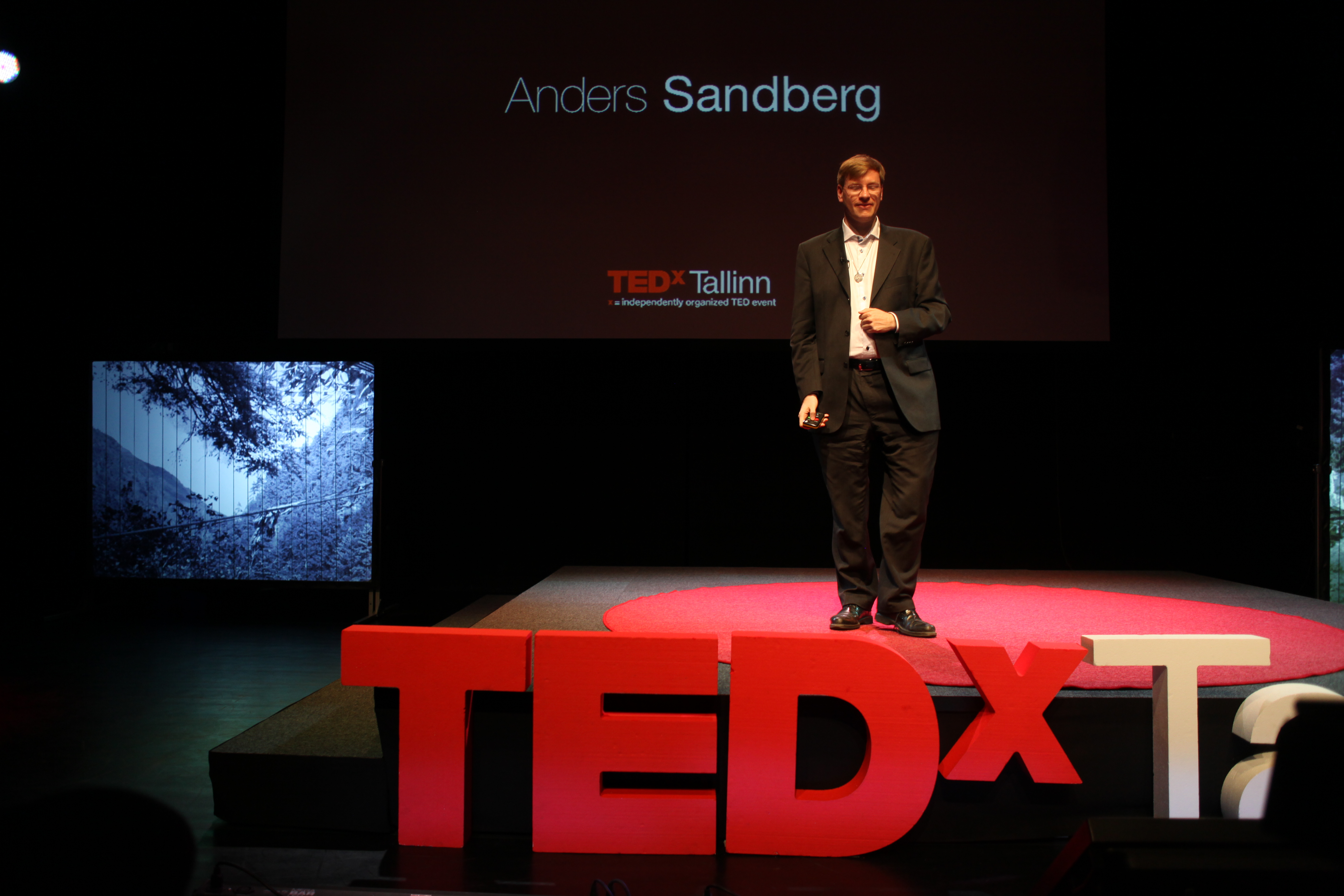
According to Anders Sandberg, a research associate at Future of Humanity Institute at Oxford University, the idea is “to take a particular brain, scan its structure in detail at some resolution, construct a software model of the physiology that is so faithful to the original that, when run on appropriate hardware, it will have an internal causal structure that is essentially the same as the original brain” [4]. This may seem like bizarre science fiction. However, this goal may not so far off in the distant future. In 2011, Dmitry Itskov, a Russian entrepreneur, found the 2045 Initiative, a project working with a network of global scientists towards cybernetic immortality by “[creating] an artificial brain in which to transfer the original individual consciousness” [5, 6]. Massive computational power and multiple brain scans are rapidly developing these holistic large-scale computational brain models and algorithms, making it possible to upload the entirety of our memories onto the computer in the future [3, 7, 8]. Immortality, what once was a historical precedent failure, is becoming a feasible and inevitable feature to human life – which we should be allowed to pursue if we see death as a mass epidemic. 


Immediate ethical questions to consider 


It will not be our technology that will limit us but our ethical guidelines for brain emulation research. A string of ethical questions beg from this topic: 


  • Should we be testing animals for brain emulation research? 


    • With brain emulation research, animal experiments will be required. The progression of the research will most like start with in vitro experiments followed by experimentation of invertebrates and eventually, to primates before we can emulate human brains [4]. However, the question lies more with: how much suffering is necessary for this research? Quantifying and justifying suffering is difficult in itself and will vary depending on the study. Animal experimentation for brain emulation research should continue to fall under the current status quo animal research ethics guideline [10]. However, poor outcomes of the animal model brain emulation should halt human brain emulation research. 


  • Who owns the brain emulation products? 


    • In animal brain emulations, the company that funds the experiments owns the products, results, and intellectual property of the research. In human brain emulations, all parties involved: the company who owns the technology, the original, and the upload will inherently handle the memories but ownership should reside in the original and the upload, assuming both have the same consciousness. Technically, the company should only be able to use the information however they want (the same terms when we upload files on Google Drive) but they do not own it [11]. In a study, the participants and researcher should own that data after the study is complete.


  • How do you upload a continuous stream of memories without the invasion of privacy? On the same train of thought, can the memories be sorted out? 


    • By uploading a continuous stream of memories, the consenting person is waiving his/her right to the privacy of the memories. Human brain emulation requires the entirety of the memories, so it should not be dissected and picked apart [3]. Since people are the components of their experiences, there should not be experiences added or removed. Otherwise, there is the risk of the emulated brain not representing the original human. 


  • Will everyone have an equal chance for immortality? 


    • This boils down to the question of access. Realistically no, not everyone will have an equal chance, and certainly not when the technology is first available – especially if this research is privately funded [5, 6]. The rich will have access to digital immortality first, and this limited access will widen the gap between rich and poor [9]. Even if the technology became more affordable, the rich will continue to have the most advanced updates while the rest receive the trickle-down of the technology. However, this does not mean we should not continue to pursue this technology. If one group’s lives cannot be elongated, this does not mean we should not elongate the other group’s lives.


  • Do the uploads get the same rights as humans? 


    • Yes, the uploads should get the same rights as originals’ rights because they are the extension of the previous life. This is in the case of the originals who have their rights taken (ex: prison). 


Conclusion 


Transhumanism. Image courtesy of Gizmoto.


Overall, recommendations would be for further research into animal experiments before we continue the trajectory towards brain emulation. The best measurable way to see whether the animal’s self is simulated is based on its behaviors (i.e. do the emulated behaviors correspond to intact animal behaviors). Only then can we work towards human brain emulation and see whether the self can be cognitively simulated as well. The prospect of immortality is a heavy topic and should be handled cautiously, even if this debate decelerates our rapid advances towards immortality. If the animal shows depressive or self-harm tendencies, the experiment should halt immediately, following euthanasia – for humane reasons [12, 13]. The outcomes of the brain emulation research on animals will determine whether we should continue to proceed or ban this research. A poor prognosis in the animal model is a key indicator. If the outcomes are fatal or debilitating to the animal during the process of uploading memories, then we should ban brain emulation research. There is a chance for a good animal prognosis, yet a poor translational human prognosis. Of course, the first human experiment must be a success before brain emulation becomes commercially available. So, should brain emulation continue without missteps, then we should see this project to the end because humans will always continue the quest of immortality. Our goal should not decide whether we should ban human brain emulation but to take precautions to make sure the first human brain emulation is safe. 


In addition, federal regulations should specifically address and oversee the privately-funded research on brain emulation and the products of the experiments. There are currently no regulations for this research topic and the consequences [4]. Before the first successful human brain emulation, federal law should grant the uploads all of the rights that the original had, assuming that the upload behaves and thinks exactly the same way as the original. However, if the upload differs from the original, then there should be a period of adjustment to society, and federal law should give pardon to the uploads by giving them access to all the rights a law-abiding citizen has. We must assume the uploads are inherently good and must have rights; otherwise, we will be abusing their human rights. 


These are only a few of the immediate policies we should implement before we continue with the first human brain emulation. Of course, with the advent of the first emulated human brain, there will be further complications that we won’t be able to foresee no matter how much we debate; unfortunately, many of the cases against emulated human brains will have to set precedent to future federal policies. 


References 


1. Pew Research Center. 2013. Living to 120 and Beyond: Americans’ Views on Aging, Medical Advances and Radical Life Extension. Available at: http://www.pewforum.org/2013/08/06/living-to-120-and-beyond-americans-views-on-aging-medical-advances-and-radical-life-extension/ (accessed June 19, 2016).


2. Friedman, L. 2015. 'One of society’s greatest achievements' — in a simple chart of the past 175 years. Insider UK, June 19. Available at: http://uk.businessinsider.com/how-has-life-expectancy-changed-throughout-history-2015-6?r=US&IR=T (accessed June 19, 2016).


3. Parkin, S. 2015. Back-up brains: The era of digital immortality. BBC Future, January 23. Available at: http://www.bbc.com/future/story/20150122-the-secret-to-immortality (accessed June 19, 2016).


4. Anders Sandberg (2014) Ethics of brain emulations, Journal of Experimental & Theoretical Artificial Intelligence, 26:3, 439-457, DOI: 10.1080/0952813X.2014.895113


5. 2045 Initiative. 2012. 2045 Strategic Social Initiative. Available at: http://2045.com/ (accessed June 19, 2016).


6. Bolton, D. 2016. Russian billionaire Dmitry Itskov seeks 'immortality' by uploading his brain to a computer. Independent UK, March 14. Available at: http://www.independent.co.uk/news/science/dmitry-itskov-2045-initiative-immortality-brain-uploading-a6930416.html (accessed June 19, 2016).


7. Beloussov, S. 2016. Digital immortality: How to create an external copy of yourself. Beta News, February 26. Available at: http://betanews.com/2016/02/26/digital-immortality-how-to-create-an-eternal-copy-of-yourself/ (accessed June 19, 2016).


8. Than, K. 2006. The Ethical Dilemmas of Immortality. Live Science, May 23. Available at: http://www.livescience.com/10465-ethical-dilemmas-immortality.html (accessed June 19, 2016).


9. National Academy of Sciences. 2011. Guide for the Care and Use of Laboratory Animals. 8th ed. Available at: https://grants.nih.gov/grants/olaw/Guide-for-the-Care-and-use-of-laboratory-animals.pdf (accessed June 19, 2016).


10. Whittaker, Z. 2012. Who owns your files on Google Drive? CNET, April 24. Available at: http://www.cnet.com/news/who-owns-your-files-on-google-drive/ (accessed June 19, 2016).


11. NPR. 2012. What Animals Can Teach Humans About Healing. Available at: http://www.npr.org/2012/06/12/154523594/what-animals-can-teach-humans-about-healing (accessed June 19, 2016).


12. Yuan, X., & Devine, D. (2016). The role of anxiety in vulnerability for self-injurious behaviour: Studies in a rodent model. Behavioural Brain Research, 311, 201-209. doi:10.1016/j.bbr.2016.05.041


Want to cite this post?


Bui, K. (2016). Digital Immortality of the Future – Or, Advancements in Brain Emulation Research. The Neuroethics Blog. Retrieved on , from http://www.theneuroethicsblog.com/2016/09/digital-immortality-of-future-or.html

Wednesday, April 22, 2015

Hot off the presses! Ethical issues with direct-to-consumer neuroscience

Ethical issues with Lumosity and other Direct-to-Consumer Brain Training
Games by Emory Neuroethics Program Director and AJOB Neuroscience Editor-in-Residence, Dr. Karen Rommelfanger and AJOB Neuroscience editorial intern Ryan Purcell.


Article is open access here for the next 50 days until June 11, 2015.


"Internet brain training programs, where consumers serve as both subjects and funders of the research, represent the closest engagement many individuals have with neuroscience. Safeguards are needed to protect participants’ privacy and the evolving scientific enterprise of big data."

Tuesday, October 29, 2013

Neuroethics Journal Club: The Ethical Issues behind Brain-to-Brain Interface (BTBI) Technologies

The first Neuroethics Journal Club of the Fall 2013 semester was a discussion led by graduate student John Trimper on the ethical implications behind brain-to-brain interface (BTBI) technologies. John introduced the topic by presenting the experimental details and results from a recent paper, published by the Nicoleis lab at Duke University (Vieira et al.), where researchers utilized a BTBI to transfer sensorimotor information between two rats. The BTBI technology allowed for a transfer of information from an “encoder” rat to a “decoder” rat, not using typical bodily interactions, but instead through intracortical microstimulation (ICMS).


"Rodent Mind Meld" (Via Wired)


The researchers conducted three experiments that demonstrated an artificial communication channel where cortical sensorimotor signals, coded for a specific behavioral response, were recorded in the encoder rat and transmitted to the decoder rat. Once received from the encoder rat, the decoder rat was instructed by these signals in making behavioral choices.  In the first experiment, a motor task, the encoder rat pressed one of two levels indicated by a LED light. This information was transferred via ICMS to the decoder rat, who would then choose the same lever without the help of the LED light. While the encoder rat performed better than the decoder rat, the decoder rat did perform correctly at levels significantly above chance. In the second experiment, the decoder rat again performed significantly better than chance, but in a tactile discrimination task. The encoder rats were trained to discriminate the size of an aperture with their whiskers; if the aperture were narrow, then the rats would nose poke on the left, while if the aperture were wide, the rats would nose poke on the right. Encoder rats explored the aperture, nose poked the right or the left, and then again, through ICMS, this information was sent to the decoder rat. The decoder rat would then also poke to the right or the left, but without any hint about the size of the aperture. Not only did researchers conduct this experiment with encoder and decoder rats residing in the same Duke laboratory, but impressively the same tactile discrimination task was also completed with an encoder rat in Brazil and a decoder rat at Duke, showing the potential of long-distance BTBI technology.


The authors state at the end of the paper (Vieira et al.) that “multiple reciprocally interconnected brains,” as opposed to the dyad formed by one encoder rat and one decoder rat, would represent the “first organic computer capable of solving heuristic problems that would be deemed non-computable by the general Turing-machine,” and there is no doubt that this research is at the forefront of BTBI technology. While many of the mass media outlets sensationalized this story with headlines like “Two rats, thousands of miles apart, cooperate telepathically via brain implant” (NBC News) or “Rodent Mind Meld: Scientists Wire Two Rats’ Brains Together” (Wired), many of the journal club audience members were a bit more skeptical regarding the experimental details and the immediate consequences of the research on society. It was pointed out by more than one member of the audience that the decoder rat making the correct lever or nose poke choice was not a result of direct communication from the encoder rat, but instead was due to conditioning resulting from the training program. Both the encoder rat and the decoder rat underwent extensive training before being connected and allowed to communicate through ICMS. Potential encoder and decoder rats were first trained to respond to either the LED visual stimulus or the width of the aperture, the tactile stimulus, until 95% accuracy was reached. Rats then chosen for the decoder position underwent further training after being implanted with microstimulation electrodes; these mice were trained to recognize that multiple ICMS pulses were associated with the right lever/left nose poke, whereas a single ICMS pulse was associated with the left lever/right nose poke. When the encoder rat chose the right lever over the left lever, the decision was sent by ICMS to the encoder rat, where the encoder rat would perceive multiple ICMS pulses, a sequence that the animal had already been trained to associate with the right lever. It was generally agreed that the decoder rat’s choice is not completely due to a “mindmeld” like popular media would suggest, but also involves the rat’s ability to perceive a difference in stimulation.


The encoder and decoder rats (Pais-Vieira et al.)


Even if directly transferring complex thoughts among individuals will remain science fiction for now, this research and other experiments, such as the BTBI between a human and rat (Yoo et al.), are important because of the numerous ethical issues that accompany BTBI. BTBI takes brain-machine interface (BMI) to a new level, and for that reason, BTBI is already associated with multiple ethical issues, such as the likelihood of the extraction of incidental information, neurosecurity to protect individual neural mechanisms, and the potential of hacking. Since BTBI is a direct transfer of thoughts though, BTBI takes many ethical issues to a new level as well, and journal club took time to discuss many of these concerns. If two individuals are sharing ideas, then does a collective identity result? Who is responsible for the actions committed by the decoder if the encoder is on the other end of the communication line dictating the decoder’s moves? If responsibility for any decision is shared or not, does the encoder or the decoder have ownership over any ideas? In an ideal situation, the communication line would never be flawed, but what if the computer’s algorithm made a mistake and the wrong information was transferred? Many of these questions were framed for a discussion involving a military scenario: The encoder is a soldier, completely removed from combat, but still with a complete view of the battlefield, and the decoder is an active duty military personnel physically experiencing the fighting. A friendly fire ensues and the decoder kills a fellow solider due to the transfer of information from the encoder. Who should be held accountable for the kill – the decoder, encoder, or the scientists responsible for BTBI military setup? This kind of long-distance combat could also lead to new and complex forms of PTSD for the decoder and the encoder, which could potentially require new research and treatments. After discussing many of these questions, it was agreed that not only will many more scientific breakthroughs have to accompany the transition from the current BTBI set-up with rats pushing levers or nose poking to a militaristic BTBI, but so will many more important ethical discussions and decisions. Perhaps BTBI is a novel form of social interaction as well, and in the future, journal club meetings with powerpoints and spoken dialogue will become archaic – we will instead use BTBI to communicate and transfer the material.


References


Trimper, J. (2013). Let’s Put Our Heads Together and Think About This One: A Primer on Ethical Issues Surrounding Brain-to-Brain Interfacing. The Neuroethics Blog. Retrieved on October 1, 2013, from http://www.theneuroethicsblog.com/2013/05/lets-put-our-heads-together-and-think.html.


Pais-Vieira, M., Lebedev, M., Kunicki, C., Wang, J., & Nicolelis, M.A.L. (2013). A Brain-to-brain interface for real-time sharing of sensorimotor information. Scientific Reports, 3, 1319.


Subbaraman, N. (2013). Two rats, thousands of miles apart, cooperate telepathically via brain implant. NBC News Science. Retrieved on October 1, 2013, from http://www.nbcnews.com/science/two-rats-thousands-miles-apart-cooperate-telepathically-brain-implant-1C8608274.


Miller, G. (2013). Rodent Mind Meld: Scientists Wire Two Rats’ Brains Together. Wired. Retrieved on October 1, 2013, from http://www.wired.com/wiredscience/2013/02/rodent-mind-meld/.


Yoo, S-S., Kim, H., Filandrianos, E., Taghados, S.J., Park, S. (2013). Non-Invasive Brain-to-Brain Interface (BTBI): Establishing Functional Links between Two Brains. PLoS ONE, 8(4), e60410.


Want to cite this post?


Strong, K. (2013). Neuroethics Journal Club: The Ethical Issues behind Brain-to-Brain Interface (BTBI) Technologies. The Neuroethics Blog. Retrieved on
, from http://www.theneuroethicsblog.com/2013/10/neuroethics-journal-club-ethical-issues.html

Tuesday, May 28, 2013

Let’s Put Our Heads Together and Think About This One: A Primer on Ethical Issues Surrounding Brain-to-Brain Interfacing

By John Trimper

Graduate Student, Psychology

Emory University

This post was written as part of the Contemporary Issues in Neuroethics course


Remember the precogs in Minority Report? The ones who could sync up their brains via the pale blue goo to see into the future?


The precogs from the movie Minority Report

Recent findings published in Scientific Reports (Pais-Vieira et al., 2013) suggest that the ability to sync up brains is no longer purely sci-fi fodder, and instead, has moved into the realm of laboratory reality. The relevant set of experiments, conducted primarily at the Nicolelis laboratory at Duke University, demonstrated that neural activity related to performance on a discrimination task could be recorded from one rat (“the encoder”) and transferred into a second rat’s brain (“the decoder”) via electrical stimulation. This brain-to-brain transfer of task-relevant information, provided the encoder rat was performing the task correctly, significantly enhanced the decoder’s ability to perform the task correctly (see Figure 2 for task description). That is, the decoder rat, who received no external clues as to which of two levers would provide a food reward, responded to the brain-to-brain transfer of information as if it cued him to choose the correct, food-rewarding lever. As a further proof of concept, the experimenters demonstrated that it wasn’t necessary for the rats to be hooked up to the same laboratory computer. In fact, it wasn’t even necessary for the rats to be on the same continent. Using the internet, the researchers were able to transfer information from the brain of an encoder rat at Duke University in real time to the brain of a decoder rat located in Brazil. Performance enhancements in this scenario were similar to those noted above (i.e., decoders chose the correct lever more often if brain-to-brain transfer was allowed).


The work by Pais-Vieira and colleagues (2013) is an important step forward for the field. As the authors suggest, the present findings mark progress towards “an organic computer capable of solving heuristic problems that would be deemed non-computable by a general Turing machine” (Pais-Vieira et al., 2013, p. 8-9). Indeed, Nicolelis’s group continues to be at the forefront of brain interfacing technologies. For example, in previous experiments, Carmena, Nicolelis, and colleagues (Carmena et al., 2003) trained monkeys to reach for and grasp virtual objects with a robotic arm using only their brains and visual feedback (i.e., without moving their own arms). Task relevant neuronal activity was recorded with implanted microelectrode arrays and computer algorithms converted the recorded signals into commands for the robot arm. The technologies hold great promise for the future of prosthetics and stroke rehabilitation.


Two of the mice (an "encoder" and a "decoder") from the experiment


But do the present findings mean that a brain-net is right around the corner? That human brains can be synced up to exchange to the kind of complex thoughts that one intuitively associates with terms like “telepathy”?


Well, no – not quite. Despite what the titles of many popular press articles seem to suggest (search Google for ‘telepathy rat brain transfer' for a laugh), at present, progress is hampered by several considerable limitations. These include the number of neurons that can be sampled, their neuroanatomical locations, and neural decryption/encryption capabilities. Brain-to-brain transfer of complex human thoughts will have to remain a sci-fi fantasy for the time being.


But, given that we’re at least at the point where this sort of technology is being discussed in earnest, it’s appropriate for ethical discourse surrounding the topic to receive a proportional degree of attention. Brain-to-brain interfacing (BTBI), in its current embodiment, involves extracting information from one individual’s brain and delivering this information to a second individual via implanted microstimulation electrodes (microstimulation electrodes, which are similar to the recording microelectrode arrays noted above, allow for the delivery of highly spatio-temporally precise stimulation patterns into the brain).  Thus, BTBI is associated with the same sorts of ethical issues that surround mind-reading (e.g., Kuebrick, 2012), deep brain stimulation (e.g., Schermer, 2011), and brain-computer interfacing (BCI) technologies (e.g., Vlek et al, 2012). However, given that BTBI involves a direct transfer of information between two individuals’ brains, the technique is also privy to its very own host of other ethical issues (e.g., legal and moral responsibility, issues of identity, and privacy).


Consider an illustrative example that is at least somewhat grounded within the framework of the technique’s current capacity. It’s not unreasonable to think that the military, with its appreciably liberal approach to “enhancement,” would be the first to employ BTBI technologies in humans. Imagine that one soldier in ground combat (“the decoder”), fitted with microstimulation electrodes and a helmet-mounted 365-degree camera, was able to neurally receive information directly from a second soldier (“the encoder”) watching the video-feed in a separate location. When the encoder detected a threat on the video feed, this information could be immediately transferred to the decoder, who could respond appropriately. This brain-to-brain transfer of threat information has the potential to be far faster than verbal transmission, and could potentially save many lives. Now imagine that the encoder, watching the video feed, accidentally recognizes a fellow soldier as a threat and a friendly-fire incident ensues. The decoder soldier fires the bullet that ends his comrade’s life. Who is responsible for the soldier’s death – decoder or encoder? What if the neural stimulation pattern was misinterpreted by the encoder (or, importantly, by the computer’s transfer algorithm)? What if the transfer was intentional on the part of the decoder?


According to some, issues surrounding liability as it relates BCI (e.g., one brain only) already have a strong framework for legal consideration. Tamburrini (2009) points out that by using the technology, the decoder is accepting some degree of responsibility for actions of the machine he/she becomes integrated with. To extend this to the current context, one would assume that the encoder individual would also be acknowledging his/her responsibility by taking part. Does this suggest that both would be tried as equally responsible if something went awry?


Of extreme importance for assessing liability would be the transfer algorithm’s ability to accurately decode the extracted neural information. Recording this information would ideally facilitate the post-hoc dissociation between transferred information and decoded/interpreted information, as well as, perhaps, providing some information regarding intention. A feat such as this, however, capable of identifying neural information content with 100% confidence, may be even farther out of reach than the transfer technology itself. As is currently the case for brain-interfacing technologies, each decoding algorithm employed must be carefully and rigorously calibrated (and re-calibrated later on) based on the individual implanted (e.g., “Nigel” in Vlek et al., 2012). One-hundred percent accuracy for the decoding of an intricate neural representation may not be feasible. Thus, a general decoding algorithm that could also extract intention, especially considering the brain regions that would be sampled from, seems unlikely (at present).


Of course, as is the case with any ethical dilemma, each scenario would need to be considered in terms of the specific conditional variables surrounding the event. The findings of Pais-Vieira and colleagues (2013) suggest an exciting future with BTBI technologies, and an equally spirited future of ethical discourse on the topic.


References


Pais-Vieira, M., Lebedev, M., Kunicki, C., Wang, J., & Nicolelis, M.A.L. (2013). A Brain-to-brain interface for real-time sharing of sensorimotor information. Scientific Reports, 3, 1319.


Wessberg, J., Stambaugh, C.R., Kralik, J.D., Beck, P.D., Laubach, M., Chapin, J.K., Kim, J., Biggs, S.J.,Srinivasan, M.A., & Nicolelis, M.A. (2000). Real-time prediction of hand trajectory by ensembles of cortical neurons in primates. Nature, 408(6810), 361-365.


Carmena, J.M., Lebedev, M.A., Crist, R.E., O’Doherty, J.E., Santucci, D.M., Dimitrov, D.F., & Nicolelis, M.A. (2003). Learning to control a brain-machine interface for reaching and grasping by primates. PLoS Biology, 1(2), E42.


Kuebrich , B. (2012). When the government can read your mind. The Neuroethics Blog. Retrieved on April 13, 2013, from http://www.theneuroethicsblog.com/ Schermer, 2011


Vlek, R.J., Steines, D., Szibbo, D., Kubler, A., Schneider, M-J., Haselage, P., & Nijboer, F. (2012). Ethical issues in brain-computer interface research, development, and dissemination. Journal of Neurologic Physical Therapy, 36(2), 94-99.


Tamburrini, G. (2009). Brain to computer communication: Ethical perspectives on interaction models. Neuroethics, 2, 137-149.


Want to cite this post?

Trimper, J. (2013). Let’s Put Our Heads Together and Think About This One: A Primer on Ethical Issues Surrounding Brain-to-Brain Interfacing. The Neuroethics Blog. Retrieved on , from

Thursday, February 28, 2013

I know what you’re thinking…

“I know what you’re thinking….”


It’s a common saying and one that belies any functional capacity to predict another’s thoughts. Yet our drive to uncover arguably the most secretive and private form of information – thoughts – has led to major advances in the science of “reading one’s mind.”


Current technologies are able to perform generally accurate predictions about robust neurologic phenomena such as distinguishing if an individual is looking at (or imagining) a face or a home (Haynes and Rees, 2006). However, as technologies advance it may well soon be possible to detect and identify more complex and covert thoughts – lies (Langleben et al., 2005) and even subconscious thought (Dehaene et al., 1998). With this ability, we must question the ethics surrounding the pursuit of this knowledge.


Figure 3 from Haynes and Rees, 2006


The foremost concern with use of this technology is the right to privacy. At what length are we able to sidestep an individual’s basic right to privacy? If an individual is unaware of their thoughts, is it subject to the same privacy rules? In order to even begin addressing this question we would have to establish the nature of privacy as it relates to our thoughts. Popular opinion would hold that thoughts are private, pure and simple, off limits to anyone but those who experience them.


But what of more ambiguous situations?


Would it be ethical to use thoughts as a means of evidence? Conceivably, there would be a push to use this technology to try defendants (Dickson and McMahon, 2005) but we call into question the nature of the information we obtain from a defendant. Perhaps they are experiencing a subconscious thought, rather than actively lying. Is it possible to distinguish between these two states? Even if we could, what is the quality of the evidence garnered? It’s possible that the defendant exhibits thought in a pattern that suggests a lie, when in reality it is the superimposition of both a subconscious thought and a truthful one.


Of further concern, thoughts cannot be assumed to translate to action and so we again must question what the acquisition of a thought means. Take for example the common scenario of road rage. We have all experienced annoyance at a reckless driver that nearly clips your vehicle. In the instant after their car narrowly evades yours, a variety of shock induced thoughts come to mind. Granted while some individuals may put such thoughts to action, a large majority grumbles under the breath and carries on with their day. Knowing that all these people experience similar thoughts after an incident such as this; can we associate a thought in line with road rage to an action in line with road rage? Clearly we cannot as a thought in this case does not equate to action. Thus, returning to the notion of reading these thoughts, what would a read thought mean; how should it be interpreted?


Clearly, most of these concerns address the technical limitations of the technology in its current state (Haynes and Rees, 2006) and so perhaps the mature technology could be limitedly applied to cases such as these. However, no matter how refined the technology we cannot readily solve the dilemma of what thoughts should be read and what should be left to the individual and therein lays our greatest quandary.


Ultimately, I believe we will inevitably come to see the use of this technology in limited realms as we have an important history outlining when privacy can be impinged upon. Notably, cases such as legal wiretapping, or search warrants are justified breaches of privacy. Conceivably this technology will in time be utilized in a similar fashion. In addition, there will cases where individuals either provide consent to having their brain activity recorded or are required by law to do so. Still while these possibilities are near certain, the question remains where we as a society will place limits on using and accessing this information – since while I soon may be able to know what you’re thinking, would we even want to know?


--Gordon Dale


Want to cite this post?


Dale, G. (2012). I know what you’re thinking…. The Neuroethics Blog. Retrieved on

-->, from http://www.theneuroethicsblog.com/


References


Haynes, J., & Rees, G. (2006). Decoding mental states from brain activity in humans. Nature Neuroscience, 7, doi: 10.1038/nrn1931


Dickson, K., & McMahon, M. (2005). Will the law come running? the potential role of "brain fingerprinting" in crime investigation and adjudication in australia. Journal of Law and Medicine, 13(2), 204-22.


Dehaene, S., Naccache, L., Le Clec, G., Koechlin, E., Mueller, M., Dehaene-Lambertz, G., van de Moortele, P., & Le Bihan, D. (1998). Imaging unconscious semantic priming. Nature, 395(6702), 597-600. doi: 10.1038/26967


Langleben, D. D., Loughead, J. W., Bilker, W. B., Ruparel, K., Childress, A. R., Busch, S. I., & Gur, R. C. (2005). Telling truth from lie in individual subjects with fast event-related fmri. Human Brain Mapping, 26, 262-72.

Wednesday, February 27, 2013

Brain reading and the right to privacy

With advances in neuroimaging the ability to decode mental states in humans by recording brain activity has become a reality. In a review for Nature Neuroscience that is now six years old, John-Dylan Haynes and Geraint Rees detail how fMRI can be used to accurately predict visual perception. They explain that with advanced statistical pattern recognition, not only can the perception of broadly different visual inputs be differentiated, such as faces versus landscapes, but even the perception of subtly distinct objects, such shoes versus a chair, can be recognized. Further, fine details can also be distinguished, including image orientation, direction of motion, and perceived color. Indeed, the orientation of masked images can even be discriminated by activity in the primary visual cortex despite the subject being unable to consciously distinguish the orientation of the image.


Decoding unconscious processing (from Haynes and Rees, 2006)


While the power of fMRI and other imaging techniques to extract information from the brain without the consent of the subject may not yet warrant serious concerns about the subject’s privacy, young neuroscientists face the distinct possibility that during their careers neuroimaging techniques will advance to the point that these ‘non-invasive’ techniques will have the power to invade the subject’s privacy in ways the subject does not want and may not understand. Therefore, young neuroscientists have a responsibility to be prepared to answer the ethical questions that could plausibly arise as a result of their work in the not too distant future.


Major Ethical Questions


The first topic that comes to mind is the question of the use of fMRI for lie detection. This is a popular idea that has even made its way onto Mythbusters with the show concluding that it was plausible to fool the test in its current state. This topic has also appeared previously on The Neuroethics Blog with Dr. Julie Seaman discussing whether fMRI, possibly in conjunction with the polygraph test, could eventually be used to help a jury determine the credibility of a witness. Dr. Seaman points out that thus far courts have been reluctant to allow lie detection tests despite evidence of humans being very poor at determining truth from lies. Use of lie detection may well be desirable to aid an imperfect human system, but several questions arise: What level of sensitivity would need to be achieved before a test should be considered accurate enough for the court room? What happens if a test shows a witness is lying? Can that witness then be tried? Who administers the test? If possible, should the test be fully automated?


While lie detection may be the most dramatic topic, other uses of neuroimaging raise similarly important questions: Should fMRI be used to potentially reveal cognitive functions in fully paralyzed patients? Could prospective employees be asked to submit brain scans as part of job applications? How about politicians running for office? What responsibility do neuroscientists have to filter this information?


The Role of Neuroscientists


Neuroscientists will need to be cautious in reporting results that could potentially lead to abuse related to brain scanning. While scientists may have limited control over the rules established to govern any rights to mental privacy, they are likely to be called upon for expertise in interpreting potentially misleading results. As neuroscience findings become widely publicized certain topics, such as the ones discussed above, may become controversial and neuroscientists have a responsibility to learn from mistakes of the past that have led to public misinterpretation of important scientific findings such as evolution and climate change. Few realms of science have as great a potential to produce as controversial findings in the near future as neuroscience and thus neuroscientists need to discuss ethical implications before they arise and be prepared to responsibly handle the extraordinary powers they may be granted; including the power they may be well be granted to read minds by imaging brains.


--Eric Maltbie


Want to cite this post?


Maltbie, E. (2012). Brain reading and the right to privacy. The Neuroethics Blog. Retrieved on
, from http://www.theneuroethicsblog.com/2013/02/brain-reading-and-right-to-privacy.html

Thursday, January 26, 2012

Neuroethics Debates by Emory Neuroscience Graduate Students

In addition to writing blog posts about neuroethical issues provided to each group (as posted on the blog already), Emory neuroscience graduate students in the Neuroscience: Communication and Ethics Seminar held debates on neuroethical issues of their choosing. The idea behind the debates came from trying to develop better ways for the students to be engaged with concepts of neuroethics. Whereas discussions about neuroethical issues in a classroom often become discussions between the more vocal students and leave quieter students voiceless, the debate format would allow each student a set amount of time to voice their opinions. Course director Dr. Andy Jenkins arranged an instructional session for the class with Bill Newman, coach of the Barkley Forum, Emory’s award winning debate team. At the beginning of the semester, the instructors provided a handful of potential debate topics and allowed the students to contribute ideas that they came up with throughout the semester. A few weeks before the debates, the student groups selected the topics they wanted to debate.


The format for the debates was established as follows to allow each student time to speak and equal time for the affirmative and negative sides:
First Affirmative Speech 6 min
Cross examination by 2nd Negative Speaker 3 min
First Negative Speech 8 min
Cross examination by 1st Affirmative Speaker 3 min
Second Affirmative Speech 5 min
Negative Rebuttal 6 min
Affirmative Rebuttal 3 min


Following each debate, the audience was allowed to discuss the issues raised in the debate and discuss elements each side did well and could have improved on. These open discussions became quite lively and without the time constraints of the class could have continued on indefinitely. In addition, votes were taken before and after the debate to see which side was more persuasive and where the audience fell on the debate topics.


The first debate topic was “Use of cogniceuticals by healthy persons should be encouraged”.


The second debate topic was “Religion provides the best guide for the ethical conduct of science”. 


The third debate topic was “fMRI represents an invasion of privacy”. 


With all said and done, the students seemed to enjoy participating in the debates. Some students indicated that whereas other classroom discussions merely presented neuroethics issues, the debate format allowed each student to dive in and be fully engaged with a topic of interest and work to communicate their viewpoints. Watching the videos definitely prove that to be the case!


--Karl Schmidt
Emory Neuroscience Graduate Student, Weinshenker laboratory


Want to cite this post?


Schmidt, K. (2012). Neuroethics Debates by Emory Neuroscience Graduate Students. The Neuroethics Blog. Retrieved on
, from http://www.theneuroethicsblog.com/2012/01/neuroethics-debates-by-emory.html