Pages

Showing posts with label Evidence. Show all posts

Tuesday, August 12, 2014

Brain Imaging in the Courtroom: The Quest for Legal Relevance


By Stephen J. Morse, JD, PhD


Stephen J. Morse is Ferdinand Wakeman Hubbell Professor of Law, Professor of Psychology and Law in Psychiatry, and Associate Director of the Center for Neuroscience & Society at the University of Pennsylvania. He is also a board-certified forensic psychologist. His areas of expertise are criminal law, mental health law, and law and neuroscience. He is the recipient of the American Psychiatric Association’s 2014 Isaac Ray Award for distinguished contributions to forensic psychiatry and the psychiatric aspects of neuroscience. He is also a member of the AJOB Neuroscience editorial board.


What is the relevance to the law’s behavioral criteria of the “new” cognitive, affective and social neuroscience that has been fueled by non-invasive techniques for studying the brain? By behavioral criteria, I mean those that require evaluation of the subject’s acts and mental states. For example, did a defendant charged with homicide kill the victim intentionally? Brain imaging has always been admissible to answer questions about brain injuries and lesions that are medically well-characterized. In such cases, the image is directly relevant to the question of whether the plaintiff had an injury or lesion. In the behavioral cases, however, the imaging will be inferentially relevant and inherently more problematic.


The two basic questions about scientific or technical expert testimony are whether the testimony is scientifically or technically valid and even if so, whether it is legally relevant. In the rest of this blog, I will assume that any proffered expert testimony based on scanning is scientifically or technically valid. Also, I will use examples from the criminal law, but the analysis generalizes to behavioral criteria in the civil law, such as whether a person was competent to contract.


In short, the question is, “How, precisely, does the proffered scan or data based on scanning answer the specific legal question it supposedly helps answer?” I conclude that, at present, brain imaging has little relevance to behavioral legal criteria. The primary exception is cases in which the subject has a well-characterized brain abnormality, such as epilepsy, that may be probative of a legal question such as whether a criminal defendant’s harmful bodily movements were “acts” as the criminal law defines action.


The criteria for criminal responsibility are completely folk psychological—actions and mental states. Neuroscience is a completely mechanistic science. Neurons, neural networks, and the connectome do not have mental states such as intentions, they do not have a sense of past, present, and future, and they do not have aspirations. These are properties of persons. Is the apparent chasm between those two types of discourse bridgeable? Neuroscience eschews folk-psychological concepts and discourse (although, amusingly, much neuroscientific writing sounds very dualistic by suggesting that regions of the brain do things and that the brain and the self are often in a struggle). Thus, the task of translation from the science to the law’s folk psychological criteria will be hard.


The brain does enable the mind (even if we do not know how this occurs). Facts we learn about brains in general or about a specific brain could in principle provide useful information about mental states and about human capacities in general and in specific cases. The question is whether some concededly valid neuroscience is legally relevant because it makes a proposition about responsibility more or less likely to be true. Biological variables, including abnormal biological variables, do not per se answer any legal question because the law’s criteria are not biological. Any legal criterion must be established independently, and biological evidence must be translated into the criminal law’s folk-psychological criteria. That is, the advocate for using the data must be able to explain precisely how the neurodata bear on whether the agent acted, formed a required mental state, or met the criteria for an excusing or mitigating condition. If the evidence is not directly relevant, the advocate should be able to explain the chain of inference from the indirect evidence to the law’s criteria. At present, few data exist that could be the basis of such an inferential chain of reasoning (Morse & Newsome, 2013), but neuroscience is advancing so rapidly that such data may exist in the near or medium term.
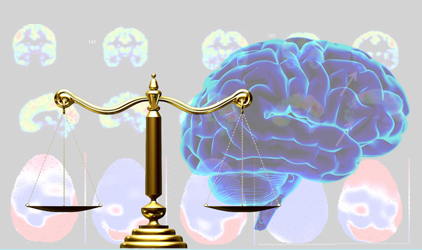


From clbb.mgh.harvard.edu


A pressing concern is the value-added of imaging. A scan is relatively expensive and somewhat time-consuming. It thus has the potential for waste and delay unless there is genuine value-added. More important, legally relevant neuroimages must be based on good prior behavioral science that identifies clearly the behavior to which the brain structure or function will be correlated. This raises the problem of cumulation, the danger of unnecessary additional evidence that clutters the courts. For example, the law has treated adolescents differently from adults for centuries based on undoubted average behavioral differences between them. What does scanning data about incomplete brain maturity among adolescents add to what we already knew beyond some potentially causal information? It is unsurprising in light of the behavioral differences that there are brain differences, but would we believe adolescents are not behaviorally different if the current brain imaging data did not show a difference?


In individual cases where the behavior is clear, the imaging data will be cumulative and unnecessary. But, might not neuroscience be especially helpful in cases in which the behavioral evidence is unclear? The answer in principle is that of course it would be helpful, but, as a practical matter it will not be because the neurodata is based on correlations with clear behavioral data, a problem I call the “clear cut” issue. Where the behavior is unclear, the neurodata will not be sufficiently sensitive to help resolve the behavioral issue even if the neurodata can distinguish the already behaviorally clear cases.


The generally pessimistic conclusions I have reached concerning the relevance of imaging to behavioral legal criteria is unsurprising. Cognitive, affective, and social neuroscience, the sub-disciplines most relevant to law, are in their infancy and they work on one of the hardest problems in science—the relationship of the brain to mental states and action. Most of what we know generally is correlational and coarse rather than causal and fine-grained (Miller, 2010). Replications are few, so the data-base necessary to reach firm conclusions simply does not exist. These problems may be substantially ameliorated by advances in neuroscience.


From nextnature.net


Actions almost always speak louder than images. If the finding of a scan is contradicted by actual behavioral evidence, then we must believe the behavioral evidence because it is more direct and probative of the law’s behavioral criteria. For example, if an agent behaves rationally in a wide variety of circumstances, the agent is rational even if his or her brain appears structurally or functionally abnormal. In contrast, if the agent is clearly psychotic, then a potentially legally-relevant rationality problem exists even if the agent’s brain looks entirely normal.


If a biomarker were virtually perfectly correlated with a legal criterion and it was less expensive to obtain than behavioral data, the biological variable might be a good proxy for the legal criterion. But this would be possible only with clear, legal rules and not with vaguer standards, such as whether a reasonable person would be aware of a particular circumstance. The latter have an inevitable normative component for the decision maker to assess. Moreover, such markers are beyond present neuroscientific expertise.


I believe that many of the claims for the relevance of neuroscience are best characterized as “rhetorically relevant” than genuinely relevant. For example, advocates in capital punishment proceedings hope that the fetching images produced by “real” neuroscience will be more persuasive to decision makers than evidence provided by apparently more suspect social and behavioral science, even if the advocate cannot say precisely how the neuroscience bears on a genuinely mitigating or aggravating condition. Having a brain lesion or injury is not a mitigating or aggravating condition per se. The actual relevance of such brain abnormality evidence therefore requires an account of why the brain evidence makes it more likely that a genuine legally-relevant condition obtains.


There are promising, potentially legally relevant advances in neuroscience, such as an objective neural measure for pain, but for the most part, neuroscience is not yet ready for prime time in the courtroom.


References


Miller, G. 2010. Mistreating psychology in the decades of the brain. Perspectives on Psychological Science 5(6): 716-743.


Morse, S., and B. Newsome. 2013. Criminal responsibility, competence and prediction. In Primer on criminal law and neuroscience, ed. S. Morse and A. L. Roskies, 150-178. Oxford: Oxford University Press.


Want to cite this post?


Morse, S. (2014). Brain Imaging in the Courtroom: The Quest for Legal Relevance. The Neuroethics Blog. Retrieved on , from http://www.theneuroethicsblog.com/2014/08/brain-imaging-in-courtroom-quest-for.html


Tuesday, February 21, 2012

Insanity, Law, and the Pedophilic Brain Tumor

Given the subject of last month’s Journal Club meeting and the current poll, I wanted to take a moment to talk about issues of volition, cognitive impairment and impulse control in law, especially as they relate to sex offenses, and the way neuroscience research is beginning to impact these relationships. I am going to consider the following as a general question, rather than analyzing the details of the particular case:[1]


If a man is discovered to have committed sex crimes against children due to uncontrollable pedophilic urges, and those urges were proven to be caused by a brain tumor, is he guilty of his crimes?


As I write this, votes on the blog have “not guilty” beating “guilty” by 32 to 25. Honestly, the number of “not guilty” votes surprised me a bit, as there really isn’t a question about whether or not he committed the crimes. As I thought about it, I realized that perhaps for some the question of guilt isn’t whether he did it, but whether or not he should be held responsible, and then, if responsible, whether he should be punished. How we answer those questions depends on, one, our understanding of what it means to be responsible under the law, especially where neurological impairment is involved, two, what the purpose of punishment is, and three, the unique position of sex offenders, particularly pedophilic ones, within the United States. 


For most of us reading this poll, I am willing to bet that the question of this man’s responsibility comes down to a sense that he is probably legally insane. Insanity in the law is distinct from insanity in a psychiatric sense, in as much as legislators and judges are not held to psychiatric standards when creating law.[2] “Legal insanity” may refer to a declaration of: incompetence, not guilty by reason of mental disease or defect, or a danger to self and others. The first standard is used to determine whether someone can participate in legal proceedings, the second can be offered as a criminal defense, and the third is used as a standard for involuntary or civil commitment (sometimes called a psych hold or “sectioning”.) A declaration of incompetence or a civil commitment would apply if the tumor, or its removal, caused significant cognitive impairments beyond the uncontrollable urges. In either case, he might never be convicted of the crimes in question, and therefore would never be declared “guilty,” but would be subject to lifetime monitoring and/or institutionalization to prevent re-offending. Whether he would be eligible to plead not guilty by reason of insanity is more complicated. The definition of insanity in this portion of the law may mean cognitive, emotional, or behavioral impairment, depending not only on the type of offense and the context under which it was committed, but also the jurisdiction, the admissibility of scientific evidence, and the timeline of discovery.[3] (This fact alone sometimes makes mental health professionals, behavioral biologists and neuroscientists want to tear their collective hair out.) 


Actus non facit reum nisi mens sit rea? What is this, the dark ages?!


In jurisdictions that allow the insanity defense, there are two major standards for determining legal insanity: the cognitive test and the control test. The cognitive test, where the standard is whether the defendant knew right from wrong, is the most common. Having strong urges to commit sex acts with children is not, in and of itself, enough to pass the cognitive standard, and thus in most jurisdictions the insanity defense would not be a good option.[4] The control test, also known as the irresistible impulse test, is rarer, and allows for a person to enter a plea of insanity if they can prove that they could not control their behavior, even if they knew what they were doing was wrong. Most jurisdictions have abandoned this standard over the last 30 years since, as one lawyer argued in 1983, psychiatry and psychology had found “no objective basis for distinguishing between offenders who were undeterrable and those who were merely undeterred.”[5] Recently, neuroethics and neurolaw scholars have argued for increased use of the control test. Most of these arguments center on the fact that it is possible, due to discoveries in neuroscience, to obtain admissible scientific evidence of frontal lobe dysfunction and impaired impulse control.[6] These authors argue that it is unjust to hold someone with such an impairment to be more responsible for his or her actions than someone with cognitive impairment, as this is “tantamount to saying that some brain lesions are morally superior to others.”[7]


Morally superior brain tumor.
What makes the case of the pedophilic brain tumor so interesting is that many of the authors arguing for a neuroscientifically-based control standard draw a distinction between compulsive disorders and impaired impulse control. Pedophilic urges, according to Redding, like kleptomania, pyromania, and compulsive gambling, are “compulsions, extreme desire, or inner cravings, not the inability to inhibit highly impulsive, reactive episodic behavioral responses due to substantial FLD [Frontal Lobe Disorder], a very different kind of impairment.”[8] The control standard, to use a metaphor, is not a matter of how fast the car is going when you try to stop it, but whether your braking mechanism is functioning properly. It is unclear whether the control test for insanity, as it is interpreted here, applies in a case where there is a tumor that creates an impulse control disorder by strengthening impulses rather than by causing a deficit in control. Was the strength of the impulses caused by his tumor so great that no one could have resisted them? If that is the case, further research in this area may challenge the line Redding draws between compulsions and inability to inhibit, and may result in a change of the control test. 


As of right now, though, it is very unlikely that this man could mount a credible not guilty by reason of insanity defense. In the end, the question of legal insanity, although interesting, is probably not relevant. The most likely outcome in a case like this would be a guilty plea and then an argument for diminished capacity as a mitigating factor. He would receive a very reduced sentence compared to someone who committed the same crimes without a brain tumor, but it would not make him not guilty of his crimes. Whether or not this outcome appeases your sense of justice depends on whether you think the purpose of punishment is to prevent future crimes (which seems unnecessary if removing the tumor eliminates the urges) or if the purpose is retribution (which, given the psychological and social damaged caused by sex crimes to children, might be an impossible standard to meet.) 


This brings me to the final point of interest. Sex crimes against children are generally seen as so egregious that were the man with the brain tumor to go to trial and have his guilt determined by a jury, it is likely that the fact that he ever had pedophilic desires, and the fact that he harmed children, would outweigh any evidence of medical causes.[9] The crime committed was so horrible and its impact so wide, restoring the community's sense of moral order and safety requires punishment that is both public and severe. [10] The special status of sex offenders has led to the creation of unique laws in the United States. There is actually a subset of civil law that allows for the indeterminate civil commitment of violent sex offenders, after the completion of their sentences, based on a determination of mental abnormality that relies in part on the volitional control test. This civil commitment process, used for a legal class called “sexually violent predators,” would likely not apply in the case of the man with the brain tumor, simply because in his case the cause of the loss of control and the pedophilic urges could be quantified and effectively treated. But let’s just think about that for a second: that means this is a law that exists primarily to deal with cases in which there is evidence of mental illness causing both loss of control and the urge to commit sexual crimes, but neither can be fully quantified or effectively treated. And it also means that, according to the law, sexual impulse control disorders are real enough to justify lifetime civil commitment, but not real enough to use as a defense in criminal court. Guilty, or not guilty? 


--Cyd Cipolla Emory Women's, Gender, and Sexuality Studies Ph.D. Candidate Emory Neuroethics Scholars Program Fellow


Want to cite this post?


Cipolla, C. (2012). Insanity, Law, and the Pedophilic Brain Tumor. The Neuroethics Blog. Retrieved on
, from http://www.theneuroethicsblog.com/2012/02/insanity-law-and-pedophilic-brain-tumor.html


[1] Original case here.
[2] This distinction that has been upheld by the Supreme Court, see Kansas v. Hendricks.
[3] And I am not even mentioning the "automatism defense," which is allowed in cases where the crime was determined to be reflexive or unconscious.
[4] Although this does not necessarily stop defense lawyers from trying, most notably in the trail of Jeffrey Dahmer. See: Dennis M. Doren, "Inaccurate Arguments in Sex Offender Civil Commitment Proceedings," The Sexual Predator: Law and Public Policy, Clinical Practice, ed. Anita Schlank, vol. 3 (Kingston, New Jersey: Civic Research Institute, Incorporated, 2006) and this article on an expert witness.
[5] Richard J. Bonnie, American Bar Association Journal 69.2 (1983): 196. For general arguments against the control test, see the work of Stephen J. Morse.
[6] Richard E. Redding, "The Brain-Disordered Defendant: Neuroscience and Legal Insanity in the Twenty-First Century," American University Law Review; Penney Steven, "Impulse Control and Criminal Responsibility: Lessons from Neuroscience," International Journal of Law and Psychiatry; and Adam Lamparello, "Cognitive Neuroscience and Involuntary Confinement: The Model Statute", available at SSRN.
[7] Harold V. Hall, "Criminal-Forensic Neruopsychology of Disorders of Excutive Functions," Disorders of Executive Functions: Civil and Criminal Law Applications, eds. Harold V. Hall and Robert J. Sbordone (Boca Raton, FL: CRC Press, 1998) 72.
[8] Redding, 92.
[9] For some excellent research on the impact of different factors on jury decisions about sex offenders, see Cynthia Mercado, Brian Bornstein and Robert Schopp, "Decision-Making About Volitional Impairment in Sexually Violent Predators," Law and Human Behavior 30.5 (2006). [10] For more on sex offenders and expressive punishment, see: John Steele, "Seal Pressed in the Hot Wax of Vengeance: A Girardian Understanding of Expressive Punishment" Journal of Law and Religion 16 (2001) 35.